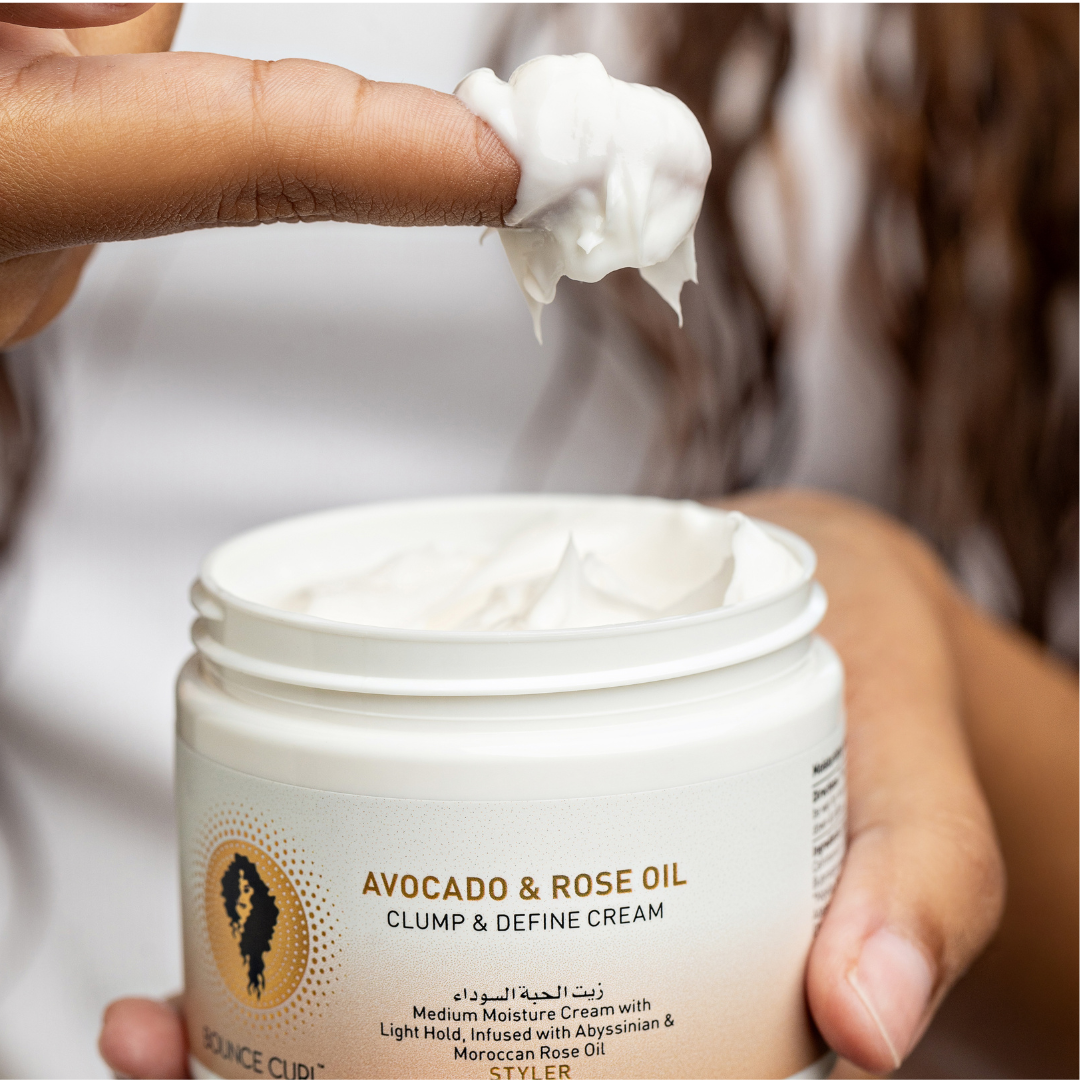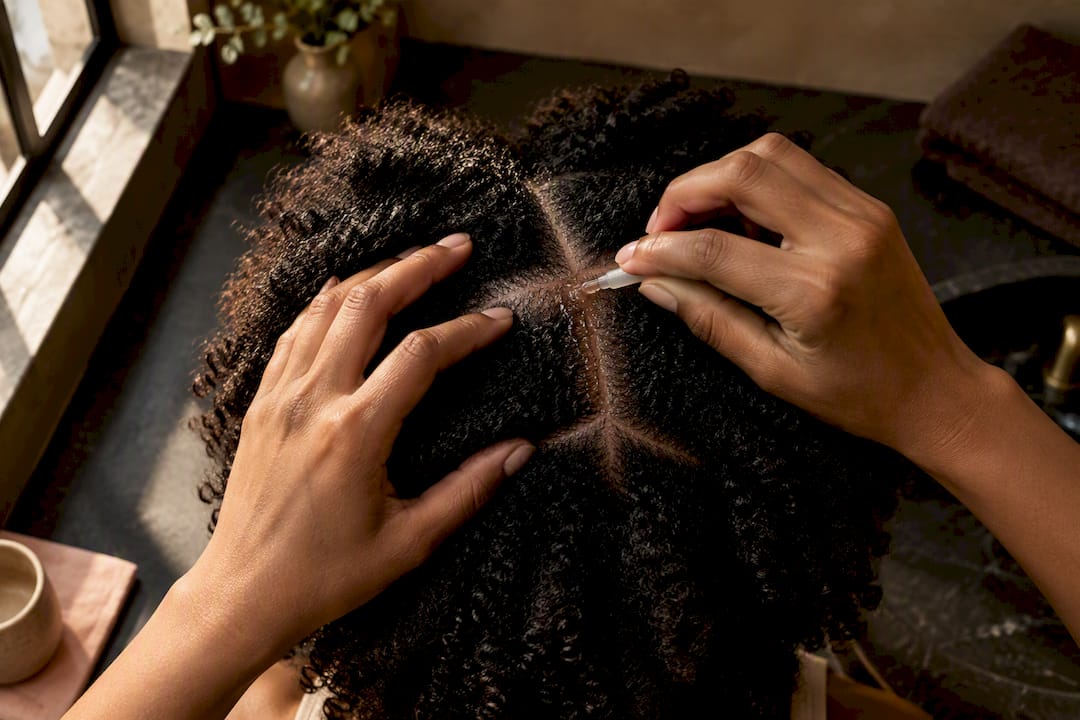
Glycolic acid works as a pre-shampoo scalp exfoliant that breaks down product buildup and excess sebum before you wash. It is not an antifungal, so it will not treat Malassezia-driven dandruff on its own. Start with a low concentration and a short contact time, usually just a few minutes, until you know how your scalp reacts.
Table of Contents
- How Glycolic Acid Works on the Scalp
- How to Use Glycolic Acid on Your Scalp Before Shampooing
- Choosing the Right Concentration and Format
- How Often to Use It and Signs You’re Overdoing It
- Buildup vs. Dandruff: Which One Are You Actually Dealing With
- What Glycolic Acid Does for Your Hair Beyond the Scalp
- Cocomera’s Take on Fitting This Into a Textured Hair Routine
- Building a Routine Around Glycolic Acid, Not Just a Product
- Glycolic Acid vs. Other Scalp Exfoliants: What Sets It Apart
- Patch Testing and Extra Care for Sensitive Scalps
- Does Glycolic Acid Interact Badly With Other Scalp Products
- How Climate and Habits Change the Results You’ll See
- What Customers Ask Us Most About Scalp Exfoliation
- Ready to Start? Here’s Where to Begin
- Sources
- FAQ
How Glycolic Acid Works on the Scalp
Glycolic acid belongs to a family of ingredients called alpha hydroxy acids, or AHAs. On skin, these acids loosen the bonds holding dead skin cells together in the outermost layer, the stratum corneum, which is why they exfoliate rather than just clean. The research on alpha hydroxy acids and skin describes this same bond-weakening action as the core mechanism behind AHA exfoliation, and it applies to the scalp the same way it applies to facial skin, just with a thicker layer of hair sitting on top.
On the scalp specifically, that film you feel between washes isn’t just oil. It’s a mix of sebum, dead skin cells, styling product residue, and environmental grime, all bonded together into something closer to a light lacquer than a simple layer of dirt. Glycolic acid dissolves the “glue” holding that film together, which lets a regular shampoo actually rinse it away instead of just washing over it.
Here’s where people get confused, though. Not every flake on your scalp is buildup.
- Buildup flakes are usually dry, come off easily when you scratch or brush, and tend to show up along the roots where product accumulates.
- Dandruff flakes linked to Malassezia, a yeast that lives on everyone’s scalp but overgrows in some people, tend to be oilier, come with more persistent itching, and often recur no matter how well you clean the scalp.
That distinction matters clinically. Glycolic acid has no antifungal action, and American Academy of Dermatology guidance on seborrheic dermatitis names ketoconazole and zinc pyrithione, not exfoliating acids, as the first-line treatments for Malassezia-driven dandruff and seborrheic dermatitis. A glycolic acid rinse can make your scalp feel cleaner temporarily, but if the itching and oily flaking come back within days, you’re likely dealing with a fungal issue that needs a medicated shampoo, not a stronger exfoliant.
What the evidence actually supports: Clinical literature on AHA use, including recent reviews on glycolic acid applications, backs the exfoliation mechanism and flags concentration and formulation as the main variables that determine irritation risk. The Cleveland Clinic’s explainer on glycolic acid draws the same line: effective exfoliant, not a cure for inflammatory or fungal scalp conditions.
How to Use Glycolic Acid on Your Scalp Before Shampooing
The order of operations matters here almost as much as the acid itself. Apply glycolic acid to your scalp before you shampoo, not after, and not mixed into your regular wash. Treating it as a distinct pre-wash step is what separates a controlled exfoliation from an unpredictable one.
- Section your hair. Use clips or your fingers to part your hair into four to six sections so the product actually reaches your scalp instead of sitting on your strands. This step matters more for curly and coily hair, where dense curl patterns can trap product away from the roots.
- Apply to a dry or slightly damp scalp. Most rinse-off scalp formulas work best applied before you step into the shower, while your scalp is dry or just misted with water. A dropper, applicator tip, or comb applicator helps you get the product directly onto skin rather than onto hair.
- Focus on the roots. Target areas with visible flaking or a waxy feel, typically the crown and hairline, where product and sebum accumulate fastest.
- Massage in with fingertips, not nails. Use gentle, circular pressure for thirty to sixty seconds. Fingernails can create micro-scratches that turn a mild exfoliant into an irritant.
- Let it sit for five to ten minutes.** This is the window where most rinse-off formulas, typically in the 2 to 5 percent range, do their work. The FDA’s guidance on alpha hydroxy acids notes that concentration and contact time are the two biggest levers on irritation risk, so resist the urge to leave it on longer for a “deeper” effect.
- Rinse thoroughly, then shampoo and condition as normal. A full rinse before shampooing prevents any residual acid from mixing unpredictably with your regular cleanser.
Pro Tip: Set a timer instead of guessing. Five extra minutes rubbed into a tingling scalp is the single most common way people turn a helpful exfoliation into an irritated, flaky mess the next morning.
A few hard rules apply regardless of your hair type. Never apply glycolic acid over broken skin, active sores, or a scalp that’s currently inflamed. Skip it entirely for at least two weeks after a relaxer, perm, keratin treatment, or any chemical service, since those treatments already compromise the scalp’s surface barrier and stacking an acid exfoliant on top raises irritation risk significantly. If you color-treat your hair, apply the acid to your scalp only, not down your strands, to avoid speeding up fade.
Choosing the Right Concentration and Format
Glycolic acid scalp products come in two broad categories, and picking the wrong one is the fastest route to irritation.
- Rinse-off treatments (roughly 2 to 7 percent): These are meant to sit for minutes, not hours, and get washed out completely. Because contact time is short, formulators can use a higher concentration without pushing past the skin’s tolerance.
- Leave-on serums (roughly 2 to 4 percent): These stay on the scalp between washes, so the concentration runs lower to account for the extended exposure. If a serum on the market claims a much higher percentage for leave-on use, treat that as a red flag rather than a selling point.
One mistake shows up constantly in comment sections and forums: people repurposing a facial glycolic toner as a scalp treatment because “it’s the same ingredient.” It usually isn’t the same product in any way that matters. Facial toners are formulated for thinner facial skin, often without the buffering agents or delivery systems that scalp-specific formulas use to control how fast the acid penetrates. Background reporting on AHA misuse consistently flags this substitution as a leading cause of unnecessary scalp irritation, since a facial-strength acid applied to already-sensitized scalp skin can sting or burn in ways the product was never designed to handle.
If you’re new to glycolic acid entirely, start with a rinse-off product at the lower end of that 2 to 7 percent range. It’s easier to control, easier to rinse out completely, and far more forgiving if your scalp turns out to be more reactive than you expected.
How Often to Use It and Signs You’re Overdoing It
Once a week is the right starting frequency for almost everyone, regardless of hair type. This isn’t a conservative suggestion to pad out a routine. It’s the cadence that clinical and consumer guidance on scalp-specific glycolic acid use both converge on, largely because the scalp is harder to inspect visually than facial skin, so problems can develop before you notice them.
After three or four weeks at once weekly, you can consider moving up to twice a week, but only if two things are true: you’re seeing genuine buildup between treatments, and you’ve had zero irritation at the lower frequency. Twice weekly is a ceiling, not a target to work toward by default.
Know the difference between normal and problematic:
- A mild tingling sensation during the five to ten minute contact window is normal and expected. It usually fades within an hour of rinsing.
- Persistent burning that doesn’t settle down after rinsing is not normal.
- Redness that lasts more than a couple of hours signals you’ve overdone concentration, frequency, or contact time.
- Flaking or itching that gets worse after a few weeks of treatment, rather than better, often points to an underlying condition the acid isn’t addressing, or to irritation from overuse.
If you notice any of the warning signs above, stop the treatment and give your scalp a full week off before reassessing. If symptoms persist beyond that, a dermatologist visit makes more sense than experimenting further on your own.
Certain scalp conditions rule out glycolic acid entirely, at least temporarily. Active inflammation, open sores or wounds, and any scalp that’s within two to three weeks of a relaxer, perm, or other chemical service are all situations where an AHA exfoliant will do more harm than good. The FDA’s cosmetic ingredient guidance on AHAs specifically calls out formulation and use conditions as the deciding factors in irritation risk, which is a polite way of saying: context matters as much as the ingredient itself.
Buildup vs. Dandruff: Which One Are You Actually Dealing With
Most people reach for a scalp exfoliant because their scalp feels “dirty” between washes, but that feeling has at least two very different causes, and only one of them responds to glycolic acid.
Signs you’re dealing with product buildup:
- Flakes are dry and come off in small, dust-like pieces, mostly near the roots.
- Your scalp feels waxy or coated rather than oily, especially if you use heavy stylers, edge control, or leave-in creams regularly.
- A single glycolic acid pre-shampoo treatment noticeably reduces the flaking and the “coated” feeling within one or two washes.
Signs you’re dealing with Malassezia-driven dandruff or seborrheic dermatitis:
- Flakes are larger, oilier, and cling to hair strands rather than falling away easily.
- Itching is persistent and doesn’t track cleanly with how long it’s been since your last wash.
- Symptoms return within days of a wash, no matter how thoroughly you clean.
Here’s a detail that gets overlooked: these two things aren’t mutually exclusive, and glycolic acid can actually support antifungal treatment rather than compete with it. Heavy scale from a fungal scalp condition can physically block a medicated shampoo from reaching the skin. Clearing that scale layer with a glycolic acid pre-treatment can let an antifungal active penetrate more effectively, an approach that lines up with AAD guidance on seborrheic dermatitis treatment, which names ketoconazole and zinc pyrithione as first-line actives once a fungal cause is confirmed. If you suspect a fungal component, look for a medicated anti-dandruff shampoo formulated for dry or itchy scalps rather than relying on exfoliation alone.
What Glycolic Acid Does for Your Hair Beyond the Scalp
The benefits of glycolic acid aren’t limited to what happens at the root. Once the buildup layer is gone, hair that grows out of a cleaner scalp tends to look less weighed down and more voluminous almost immediately, simply because it’s no longer coated in residue from the base.
There’s a second, separate benefit that’s easy to conflate with scalp exfoliation but works differently: acid-based treatments applied along the lengths of the hair, not the scalp, can smooth the outer cuticle layer. A cosmetic chemist’s explanation of glycolic acid for hair describes how these acids interact with hair’s protein structure to improve slip and shine, the same general principle behind glossing treatments at the salon.
Keep those two applications mentally separate. Scalp exfoliation targets the skin at the root; hair-length glossing targets the cuticle along the strand. They can use similar ingredients but serve different purposes, and a product built for one usually isn’t built for the other.
- If your hair is color-treated, patch test any acid-based length treatment on a small section first, since color and chemically lightened hair is more porous and can react unpredictably.
- Recently relaxed, permed, or keratin-treated hair should skip acid treatments on the lengths for at least two to three weeks, the same waiting period recommended for scalp use.
- Textured hair types 3 and 4, which tend to run drier, generally need a heavier conditioner or leave-in immediately after any acid-based treatment, scalp or length, to replace moisture the process can temporarily strip.
Cocomera’s Take on Fitting This Into a Textured Hair Routine
Textured hair, especially types 3 and 4, holds onto styling product differently than straighter hair types, which means buildup tends to concentrate at the crown and hairline rather than spreading evenly. Sectioning before applying any scalp treatment isn’t optional here; it’s the difference between the product reaching skin and it just sitting on your curls.
After a glycolic acid pre-shampoo treatment, textured hair generally needs more conditioning attention than usual, not less, since exfoliation can leave strands feeling slightly drier at the ends even when the scalp itself feels great. Following up with a gentle, sulfate-free cleanse and a richer conditioner or oil treatment helps rebalance that.
For the wash step itself, a gentle scalp-focused cleanser like the Innersense Hair Renew Scalp Hairbath works well immediately after exfoliating, since it’s designed to clean without stripping. On alternate wash days, or for anyone easing into a new scalp routine, a cowash such as the As I Am Dry & Itchy Scalp Care Olive Tea Tree cowash offers a softer option that still supports scalp comfort.
Building a Routine Around Glycolic Acid, Not Just a Product
A single glycolic acid treatment doesn’t work in isolation. It works best as one step inside a routine that supports the scalp before and after exfoliation, rather than as a standalone fix applied whenever buildup gets bad enough to notice.
Before exfoliating, avoid piling on heavy stylers or dry shampoo in the day or two leading up to your treatment. That just adds to the layer the acid needs to break down, and it makes the massage step less effective since you’re working through more residue.
After rinsing the acid out and shampooing, follow with a lightweight conditioner focused on the mid-lengths and ends rather than the roots. Weighing down freshly exfoliated roots with heavy conditioner undercuts the volume benefit you just created. If your scalp tends to run dry between washes, a targeted oil treatment, like the As I Am Dry & Itchy Olive and Tea Tree Oil Treatment, applied a day or two after exfoliating can restore comfort without undoing the exfoliation itself.
Spacing matters too. Treat glycolic acid day as its own wash day, separate from deep conditioning or protein treatments, so you’re never stacking multiple active ingredients on the scalp at once. A regular scalp exfoliation schedule built around this kind of spacing tends to produce more consistent results than sporadic, reactive treatments.
Glycolic Acid vs. Other Scalp Exfoliants: What Sets It Apart
Glycolic acid isn’t the only exfoliating option for the scalp, and it’s worth knowing where it sits relative to the alternatives. As an alpha hydroxy acid, it’s water-soluble and works primarily on the surface bonds between dead skin cells, which is why it rinses out cleanly and suits a quick pre-shampoo treatment.
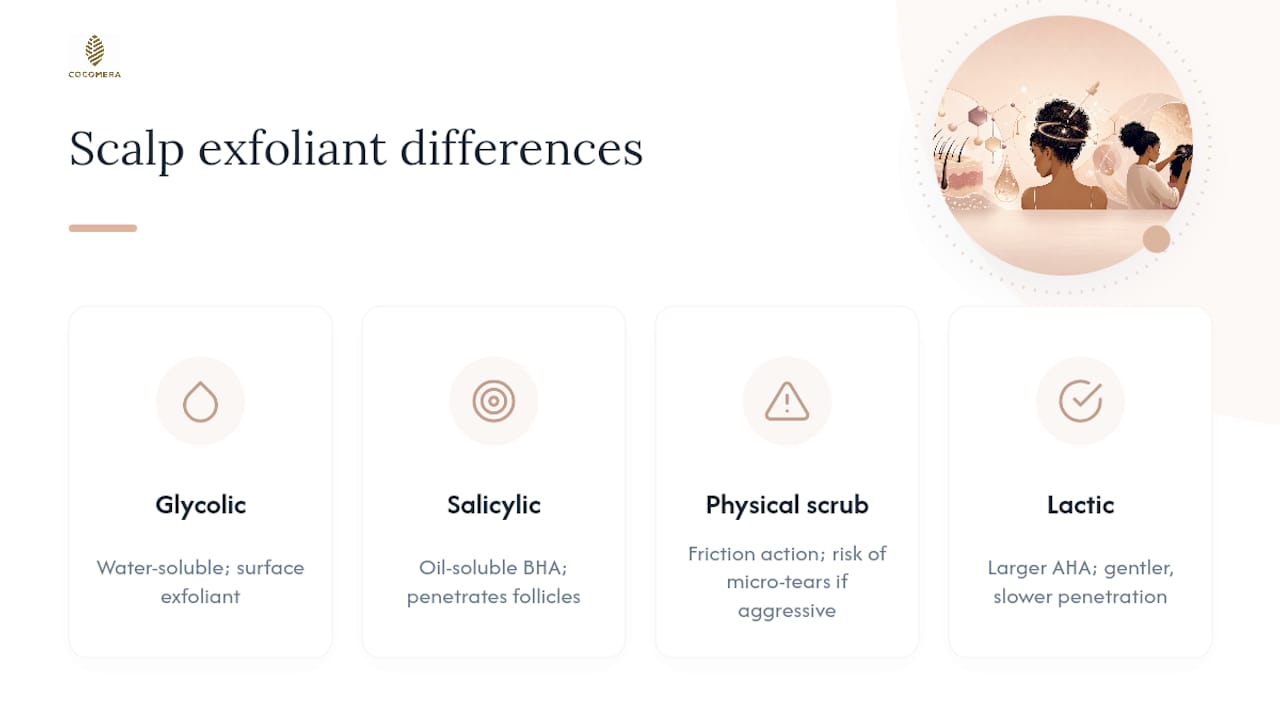
Salicylic acid, a beta hydroxy acid, is oil-soluble instead of water-soluble, which lets it penetrate into the pore or follicle lining rather than just working on the surface. That makes salicylic acid a common choice for oilier scalps or for people dealing with clogged follicles alongside buildup, though it can be more drying for some.
Physical exfoliants, like scalp scrubs with granular texture, work through friction rather than chemistry. They can feel satisfying but carry a higher risk of micro-tears if scrubbed too aggressively, especially on a scalp that’s already sensitized.
Lactic acid, another AHA, is gentler than glycolic acid because it has a larger molecular size that slows penetration. It’s a reasonable substitute for anyone who finds glycolic acid too strong but still wants a chemical exfoliant rather than a physical scrub.
None of these are strictly better across the board. Glycolic acid’s advantage is its smaller molecule size, which lets it work faster and more thoroughly in a short contact window, making it well suited to the quick pre-shampoo format most people actually use.
Patch Testing and Extra Care for Sensitive Scalps
If you’ve never used glycolic acid on your scalp before, or your scalp reacts easily to new products in general, patch testing isn’t optional. Apply a small amount behind your ear or at the nape of your neck, leave it on for the same contact time you’d use on your scalp, and wait 24 to 48 hours before judging the result.
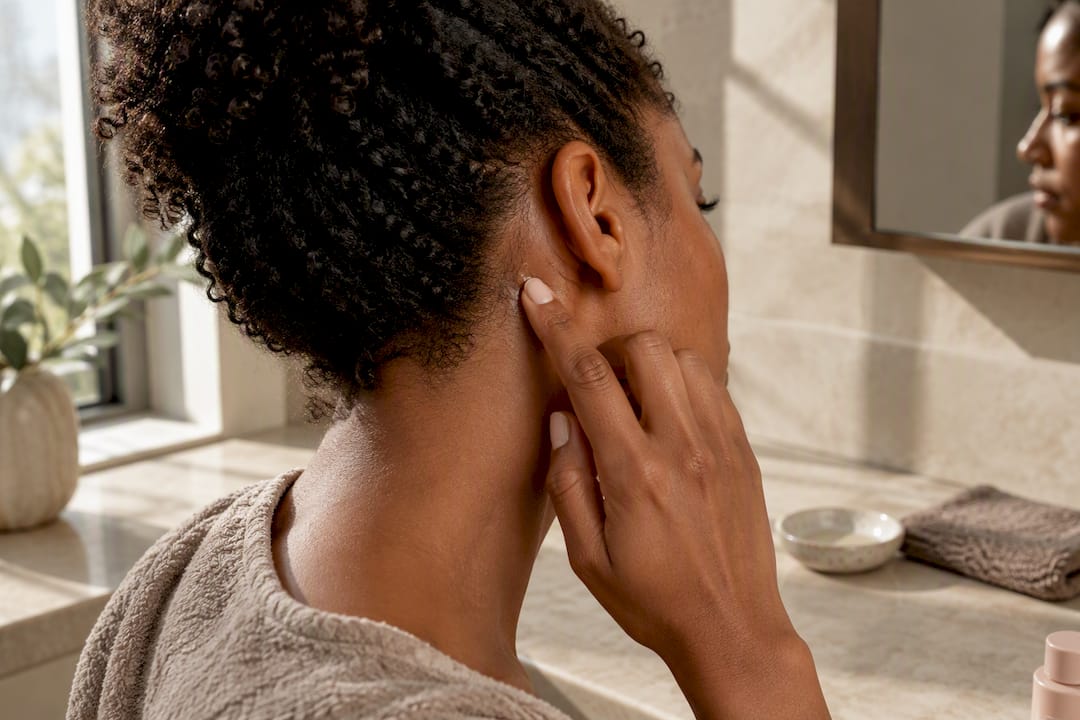
Look for anything beyond mild, brief tingling. Redness that lingers, itching that intensifies, or any burning sensation means that product or concentration isn’t right for you yet, and you should try a lower percentage or a different format before attempting a full scalp application.
For scalps that run sensitive generally, whether from eczema, psoriasis, or just a history of reacting to new hair products, start at the lowest concentration available, cut the recommended contact time roughly in half for the first two or three uses, and extend the gap between sessions to every ten days instead of every week. Sensitive scalps benefit from a slower ramp far more than they benefit from rushing to a “normal” schedule.
Does Glycolic Acid Interact Badly With Other Scalp Products
Stacking active ingredients on the scalp is where most avoidable irritation comes from, and glycolic acid has a few combinations worth watching. Using it alongside other exfoliating actives, like salicylic acid shampoos or retinoid scalp serums, on the same day multiplies irritation risk rather than multiplying benefit.
Minoxidil and other scalp treatments for hair thinning are generally fine to use on separate days from a glycolic acid treatment, but applying them back to back on the same day, onto a scalp that’s just been chemically exfoliated, can sting more than either product would alone. Space them out by at least a full day.
Sulfate-heavy shampoos used right after a glycolic acid treatment can compound dryness, since both work to strip away oils and residue. Following up with a gentler, sulfate-free cleanse gives your scalp a chance to reset rather than getting hit twice in one wash.
If you use a leave-in scalp oil or serum for moisture, apply it several hours after a glycolic acid treatment rather than immediately, once any tingling has fully subsided.
How Climate and Habits Change the Results You’ll See
Where you live and how you style your hair both affect how well glycolic acid works and how often you actually need it. Humid climates tend to accelerate sebum production and product residue buildup, which can push some people toward the higher end of the once-to-twice-weekly range. Dry, cold climates often mean less buildup but more risk of dryness after exfoliation, so pairing it with richer aftercare matters more.
Heavy use of styling products, protective styles worn for extended periods, or frequent workouts that increase sweat and oil production all speed up how fast buildup returns. If you fall into any of those categories, expect to lean toward the more frequent end of the recommended schedule rather than the minimum.
Hard water, common in many regions, can leave mineral deposits on the scalp that mimic product buildup but respond differently to acid treatment. If glycolic acid isn’t clearing flaking the way you’d expect despite consistent use, a clarifying routine aimed at mineral buildup specifically may address what the acid alone can’t.
What Customers Ask Us Most About Scalp Exfoliation
Most people who start using a glycolic acid scalp treatment notice a visible reduction in root buildup within one to three uses, which is usually enough to convince them it’s worth keeping in rotation. Anyone using heavier stylers or protective styles regularly sometimes needs two sessions a week for a short stretch, but that should be the exception, not the starting point.
The advice we repeat most often: patch test before your first full application, check your scalp carefully after rinsing rather than just how your hair feels, and expect to increase conditioner slightly on the lengths afterward if you have textured hair. None of that is complicated, but skipping it is where most bad experiences with scalp acids come from.
For more on building out the rest of the routine around this step, our guides on scalp care for afro hair and scalp exfoliation frequency go deeper into the surrounding routine.
— Cocomera
Ready to Start? Here’s Where to Begin
Cocomera stocks scalp care products chosen specifically for wavy, curly, coily, and afro hair, which means you’re not sorting through formulas built for straight hair and hoping they translate. That specialization matters here because buildup patterns, conditioning needs, and tolerance for exfoliation all shift depending on curl pattern, and a curated catalog saves you the guesswork of matching a generic product to your specific hair type.
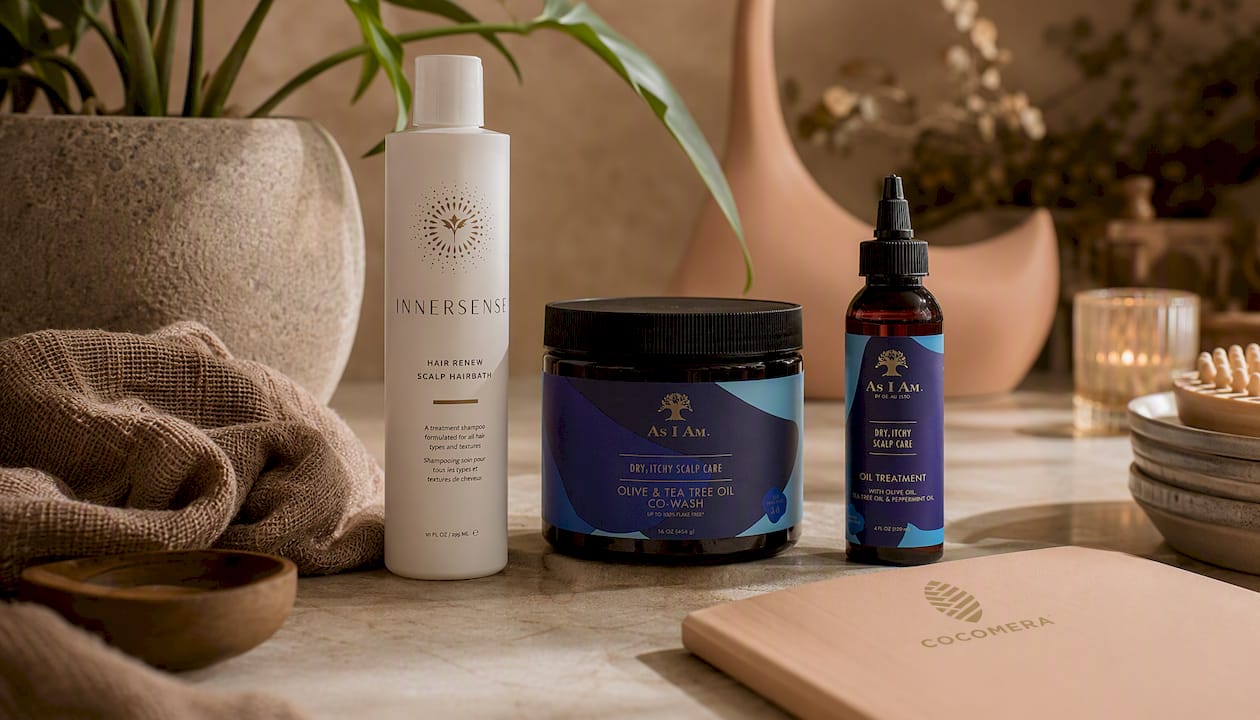
If you’re ready to build a pre-shampoo routine around scalp exfoliation, start with a gentle, scalp-focused cleanser like the Innersense Hair Renew Scalp Hairbath to pair with your exfoliation step, and keep a soothing option like the As I Am Dry & Itchy Olive and Tea Tree Oil Treatment on hand for aftercare. Browse the full catalog to find the rest of the pieces that fit your specific curl pattern and wash-day routine.
Sources
- PubMed — recent clinical review (example source provided)
- PubMed article on alpha hydroxy acids and skin
- FDA — Alpha hydroxy acids (AHAs)
- Cleveland Clinic — Glycolic acid explainer
- American Academy of Dermatology — Seborrheic dermatitis treatment
This article is general information, not a substitute for advice from a qualified doctor. Consult a qualified healthcare professional about your own circumstances before acting on anything here.
FAQ
Can You Use Glycolic Acid on Your Scalp?
Yes, glycolic acid is commonly used on the scalp as a pre-shampoo exfoliant to clear product buildup and excess sebum. It works through the same bond-loosening mechanism it uses on facial skin, but scalp-specific formulas typically use gentler concentrations and delivery systems designed for hair-covered skin.
How Long Can I Leave Glycolic Acid on My Scalp?
Most rinse-off scalp formulas are designed for a five to ten minute contact time before rinsing and shampooing. Leaving it on longer doesn’t improve results and raises the risk of burning, redness, or lasting irritation.
Can I Use Glycolic Acid on My Hair for Dandruff?
Glycolic acid can help with dandruff caused by dry product buildup, but it is not an antifungal and won’t treat Malassezia-driven dandruff or seborrheic dermatitis on its own. For fungal dandruff, AAD guidance recommends antifungal actives like ketoconazole or zinc pyrithione, and a medicated anti-dandruff shampoo alongside or instead of an acid exfoliant.
Can I Use The Ordinary Glycolic Acid on My Hair?
Facial glycolic acid toners aren’t formulated for the scalp, and using one on hair or scalp skin can increase irritation risk since they lack the buffering and delivery systems built into scalp-specific products. It’s safer to choose a product formulated for scalp use rather than repurposing a facial toner.