Hair breakage occurs when strands snap along the shaft due to damage, unlike shedding that happens at the root. Recognizing signs like split ends, frizz, and short wispy pieces helps distinguish breakage from natural hair loss or shedding. To prevent breakage, minimize heat and chemical damage, handle wet hair gently, and prioritize moisture with protective styles and regular trims.
You notice it on your pillowcase, in your brush, along the edges of your wash-day towel — short pieces of hair that seem to be going everywhere. If you have wavy, curly, coily, or afro hair, you’ve probably wondered whether something is wrong. Many women with textured hair mistake hair breakage (strands snapping along their length due to damage) for hair loss. They’re two very different problems, and confusing them leads to the wrong solutions. This guide walks you through the real signs, the real causes, and exactly how to tackle breakage at every step of your routine.
Table of Contents
Key Takeaways
| Point | Details |
|---|---|
| Breakage vs. hair loss | Breakage means strands snap above the root, not from the follicle like true hair loss. |
| Biggest triggers | Heat, chemicals, rough detangling, and tight styles are leading causes, especially for types 2-4 hair. |
| Prevention works best | Gentle handling, moisture, and protective styles greatly reduce breakage. |
| Seek help for persistent issues | If breakage continues despite routine changes, consult a hair or health professional. |
Understanding hair breakage: What it really is
Hair breakage happens when the strand snaps somewhere along its length, not at the scalp. That distinction matters more than you might think. When you lose a full strand from the root, that is shedding or hair loss. When a strand breaks midway, that is breakage — and breakage from shaft damage is its own category that requires its own response.
Breakage looks different depending on your curl pattern, but some signs are universal. You might notice:
-
Short, wispy pieces that appear on your brush or comb after styling
-
Split ends that travel up the strand (called “splits” or “fairy knots” in coily hair)
-
Flyaways and frizz along the crown or edges that stand apart from the rest of your curl pattern
-
Hair that never seems to grow past a certain length even when you’re consistent with your routine
That last one confuses many people. If your ends keep disappearing, your hair is probably growing but breaking off at the same time. Your hair isn’t getting longer.
Breakage is easier to see and more common in types 2, 3, and 4 hair because the curls create weak spots. Every coil or wave bends the hair, and bends are weaker than straight parts. A tight 4C coil has more bends per inch than a loose 2A wave. That’s why curly hair is more likely to break.
To tell the difference between breakage and shedding, check the hair strand. Does it have a small white or clear bulb at one end? If yes, it shed from the root — this is normal shedding. No bulb, uneven length, or frayed edge? That’s breakage. You need to stop hair breakage at the source.
| Feature | Breakage | Shedding | Hair loss |
|---|---|---|---|
| Where it starts | Along the shaft | At the root | At the follicle |
| What you see | Short, uneven pieces | Full-length strands | Thinning patches |
| Root bulb present | No | Yes | Sometimes |
| Normal? | No | Yes (50–100/day) | Depends on cause |
“If you are losing full hairs from the root, that points more toward shedding or loss rather than breakage — the two require completely different approaches.” Think of it like a rope fraying in the middle versus being cut at the base.
What causes hair breakage? The biggest culprits for textured hair
Textured hair faces mechanical, chemical, and environmental stress that straight hair simply does not experience in the same way. Understanding the specific risks in your daily routine is the fastest route to change.
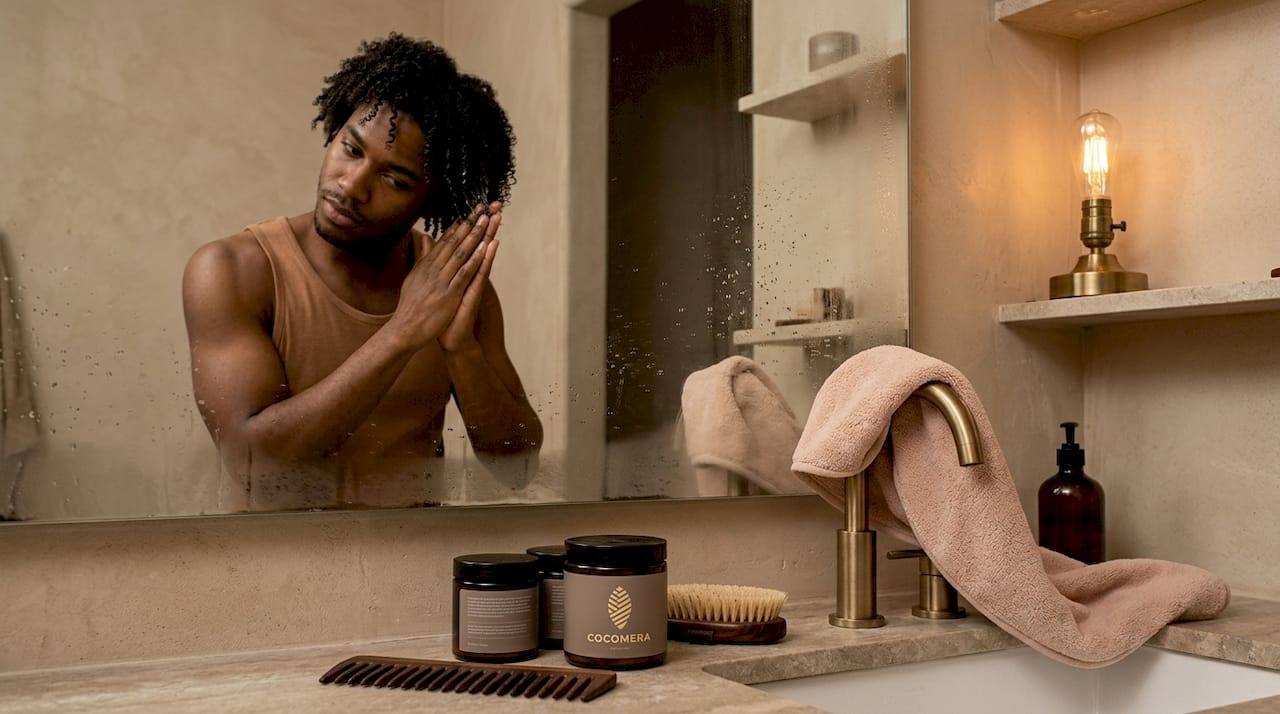 Common breakage causes for textured hair include heat, chemicals, rough wet handling, tight styles, and lack of moisture. Here’s a quick overview:
Heat damage. Using heat tools without protection can damage the cuticle, especially in dry textured hair, leading to moisture loss and brittleness.
Chemical processing. Bleach, relaxers, perms, and dyes weaken internal bonds. Bleach is particularly harsh, opening the cuticle and removing pigment, with overlapping chemicals worsening damage.
Rough wet handling. Wet hair is elastic and fragile. Detangling with a fine comb while wet causes stress and breakage, common in curly and coily hair.
Tight styles. Braids, ponytails, and buns pull on hair, stressing strands, especially at the scalp and edges, which are finer.
Lack of moisture. Dry hair breaks easily. Textured hair struggles to retain moisture, worsened by cold and indoor heat. Relying only on wash-day hydration leads to brittleness between sessions.
| Cause | Risk level for textured hair | Easiest fix |
|---|---|---|
| High heat without protection | Very high | Lower heat setting, heat protectant spray |
| Chemical overlap | Very high | Stretch time between processes |
| Rough wet detangling | High | Detangle on conditioner-soaked hair |
| Tight styles | High | Loosen installation, take breaks |
| Low moisture retention | High | Weekly hydrating mask or oil treatment |
Check out practical curly hair care tips and learn how pure haircare solutions with minimal ingredients can reduce the chemical load on your strands.
Pro Tip: If you must use heat, apply a heat protectant to each section before touching a hot tool. A five-second step can make a significant difference in cuticle damage over time.
How to recognize: Breakage vs. shedding vs. hair loss
Some broken pieces are the same length as shed hairs, which is where the confusion really sets in. Here’s a clear way to sort them out.
-
Collect hairs from your comb or brush after detangling.
-
Lay them flat on a white surface. You’ll see length differences much more clearly.
-
Look for the root bulb. A tiny rounded tip at one end means the hair completed its growth cycle and shed naturally.
-
Check the ends. Breakage strands often have split or frayed ends, while shed strands tend to taper naturally.
-
Assess the length. Shed hairs are close to your full hair length. Broken pieces are significantly shorter, sometimes just a centimeter or two.
Understanding where you fall on this spectrum also helps you figure out whether this is a product and routine issue or something to look into medically. The Mayo Clinic notes that hair loss involving thinning patches, receding areas, or sudden volume reduction is a distinct condition from mechanical breakage and often requires a different kind of attention entirely.
If you have multiple curl patterns across your head, understanding your specific zones is important. Read the multi-textured hair guide to learn how to care for different sections differently. And if breakage is persistent despite routine changes, it may be worth exploring non-invasive hair loss treatments with a specialist who works with textured hair.
| Situation | Most likely cause | Action to take |
|---|---|---|
| Short pieces, no bulb | Breakage | Adjust routine, add moisture |
| Full-length hairs, bulb present | Normal shedding | No action needed |
| Thinning patches or bald spots | Hair loss | See a dermatologist |
| Sudden dramatic increase in loss | Internal health issue | Medical evaluation |
Preventing and managing hair breakage in textured hair
Once you know what’s causing breakage, the path forward becomes much clearer. Here are the most effective strategies for textured hair specifically.
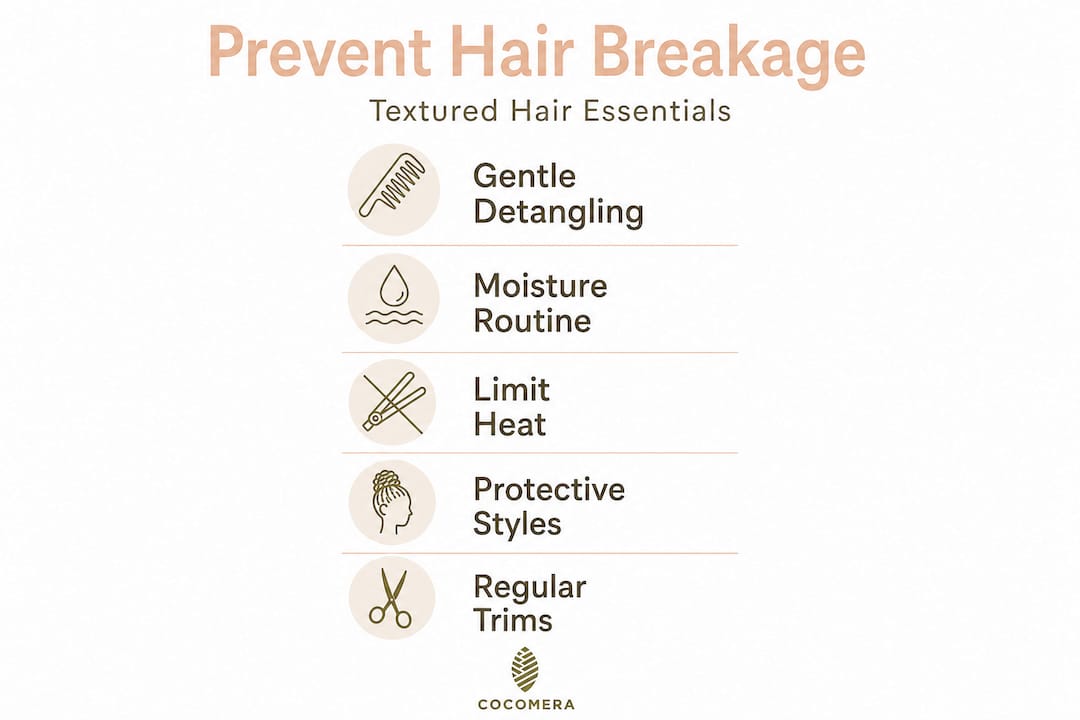
Detangle gently and strategically. Always start at the ends and work your way up to the roots, section by section. Use your fingers first to remove large tangles, then switch to a wide-tooth comb. Brushing wet hair too aggressively is one of the most reliable ways to create breakage, so do it on conditioner-soaked strands and let the slip do the work.
Give heat a serious break. Try air drying or diffusing on low heat. If you use a flat iron or curling tool, keep the temperature below 375°F for fine or color-treated textured hair. Heat-free styling methods like braid-outs, twist-outs, and roller sets give your hair time to recover while still looking polished.
Prioritize moisture, always. Moisture is the foundation of healthy textured hair. Use a deep conditioning mask at least once a week, and follow up with an oil or butter to seal the moisture in. The LOC method (liquid, oil, cream) or LCO method works well for types 3 and 4 hair to layer products for maximum retention.
Choose protective styles wisely. Low-manipulation styles like loose twists, buns, or braids that don’t pull at the edges can actually support length retention. The key word is loose. If you feel tension at the scalp when a style is installed, that’s already too tight. Take protective style breaks so your hair can breathe.
-
Avoid sleeping without a satin bonnet or satin pillowcase — cotton pillowcases absorb moisture and create friction that leads to breakage overnight
-
Trim split ends every 8 to 12 weeks to prevent splits from traveling up the strand
-
Be honest about overlapping chemicals and give your hair time to recover between processes
A solid wash day routine for coily hair sets the foundation for everything else. Find a detangling conditioner that gives enough slip to work through knots without forcing them.
Pro Tip: For extra protection on wash day, apply your deep conditioner to dry hair before getting in the shower. It penetrates better and your hair soaks up more moisture before the steam opens the cuticle further.
When breakage signals a deeper issue: Health and next steps
Most breakage comes from the routine habits we’ve covered. But sometimes, persistent breakage despite routine changes is your body’s way of signaling something internal. Nutritional deficiencies (especially iron, zinc, biotin, and protein), thyroid imbalances, hormonal shifts, and chronic stress can all weaken the hair shaft from the inside out.
If you’ve tightened up your routine, introduced moisture, dropped the heat, and your hair is still snapping at an alarming rate after two to three months, it is time to look beyond the bathroom cabinet.
A visit to your doctor for blood work can reveal deficiencies that topical products simply cannot fix. This is not a failure — it is smart self-care. Your hair is a visible reflection of your overall health, and sometimes it tells you things before other symptoms show up.
If the problem is structural damage from repeated chemical processing, a professional stylist who specializes in textured hair can assess the integrity of your strands and help you create a recovery plan. There are also hair restoration options available for more advanced cases where breakage has contributed to significant thinning.
The truth most guides miss about breakage in textured hair
Here’s the honest take: most breakage guides give you a checklist and send you on your way. Switch products, do a protein treatment, stop using heat — done. And while all of that is valid, it skips something important. Breakage in textured hair is rarely a one-time fix situation. It reflects the cumulative history of everything your hair has been through.
We see this constantly in the textured hair community. Someone does everything right for six weeks, sees some improvement, and then slips back into old habits because the urgency fades. Real, lasting change in hair health takes consistency over months, not days. Your hair grows roughly half an inch per month. Significant improvement in length retention and strength takes at least three to six months of committed, gentle care.
The textured hair community in Sweden and globally has built an incredible body of shared knowledge — but one thing that doesn’t always get said is that sometimes the kindest thing you can do for your hair is to admit you need a professional. A curl specialist or trichologist is not a last resort. They’re a resource, and reaching out early tends to produce better outcomes than waiting until the breakage is severe.
Understanding the best ingredients for curls also helps you make smarter product decisions instead of chasing trends. Ingredients like hydrolyzed protein, aloe vera, glycerin, and shea butter have track records for a reason. They work because of how textured hair is structured, not because of clever marketing.
The biggest shift in thinking we’d encourage: stop treating breakage as an emergency to fix and start treating healthy hair as a lifestyle to maintain. That mindset change is what actually moves the needle.
Ready for healthier, stronger hair? Discover tailored care
At Cocomera, we’ve curated hair care products with women who have textured hair in mind. Finding the right treatment or mask for your specific curl type can feel overwhelming when every product promises results. We’ve made it easier by selecting only brands and formulas that genuinely serve wavy, curly, coily, and afro hair.

Browse our treatments for curly hair to find targeted solutions for strengthening and repairing damaged strands. If deep moisture is your priority, explore our selection of hair masks for deeper moisture — these are some of the most effective options available for type 3 and 4 hair that needs serious hydration. Your hair deserves a routine built around what it actually needs, and we’re here to help you build it.
Frequently asked questions
How can I tell if my hair is breaking or just shedding?
Check whether the strand has a small bulb at one end. A bulb at the root means the hair shed naturally, while short pieces with no bulb and frayed ends point to breakage.
Are tight braids bad for breakage?
Yes. Tension from tight styles stresses the hair shaft over time and can cause breakage along the strand, especially at the hairline and edges where the hair tends to be finer.
Can I repair hair breakage once it happens?
Consistent gentle care and moisture can stop further breakage and allow healthy new growth, but a strand that has already snapped cannot be fully repaired — only trimmed away and replaced with new growth.
What products help reduce hair breakage?
Moisturizing masks, leave-in conditioners, and products reducing breakage like gentle detanglers and sealing oils are most effective for preventing breakage in textured hair types 2, 3, and 4.