Hair loss in afro-textured hair is treatable in most non-scarring cases, especially traction alopecia caught early, but conditions like advanced central centrifugal cicatricial alopecia (CCCA) can cause permanent follicle loss. The single best move you can make right now is booking a consult with a dermatologist who has real experience treating textured hair, before trying to self-diagnose with a new oil or a stricter protective style.
TL;DR:
- Traction alopecia is reversible if detected early, but advanced CCCA causes permanent follicles damage, making timely dermatology consultation crucial.
- Curved follicles increase breakage risk and dryness, requiring specialized examination techniques and tailored treatment routines for textured hair.
- Moisture-focused weekly routines, gentle detangling, and protective styling are essential for maintaining retention and preventing further hair loss.
- Proper dermatologist selection involves experience with textured hair, diagnosis methods, and avoidance of premature surgical interventions.
- Products should support medical treatments, with scalp hydration and low-tension styles prioritized to optimize hair health and growth.
Table of Contents
- What Makes Hair Loss in Afro-Textured Hair Different?
- What Conditions Cause Hair Loss in Afro Hair?
- Can Hair Loss in Afro Hair Be Reversed?
- Why Is Hair Transplantation Harder for Afro Hair?
- How Can You Prevent Further Hair Loss?
- How Do You Choose a Dermatologist for Textured Hair?
- A Practical Weekly Routine for Curl Types 3 to 4
- Where Cocomera Sees Readers Go Wrong
- Where to Find the Right Products for Your Routine
- Sources
What Makes Hair Loss in Afro-Textured Hair Different?
Afro hair grows from an elliptical, curved follicle rather than a round one, and that curve is the root of nearly every fragility problem you’ll deal with. Curl geometry creates natural points of weakness along the shaft, so a strand snaps under far less tension than straight or wavy hair would tolerate. Sebum, the scalp’s natural oil, has to travel down a coiled path instead of a straight one, which means afro hair reaches the ends drier and builds up near the roots faster. That combination of dryness and buildup complicates diagnosis, because flaking and thinning can look like several different conditions at once. Dermatologists examining textured scalps also need to angle a biopsy punch differently to avoid transecting curved follicles, a technique adjustment that a narrative review on afro-textured hair care specifically recommends preventing false negatives.
What Conditions Cause Hair Loss in Afro Hair?
A significant proportion of Black women experience some form of hair loss, and Johns Hopkins Medicine points to traction from tight styles and chemical straighteners as leading, preventable causes. A handful of distinct conditions account for most cases:
- Traction alopecia develops from sustained pulling: tight braids, weaves, or ponytails worn for months. Early signs include a smooth, shiny patch at the hairline with no scarring, and it’s often reversible if you catch it before scarring starts.
- Central centrifugal cicatricial alopecia (CCCA) starts at the crown and spreads outward, scarring the follicle permanently. It’s more common in women who’ve used chemical relaxers for years, though the exact trigger isn’t fully settled.
- Alopecia areata causes sudden, round patches of hair loss unrelated to styling, often with no scalp inflammation.
- Telogen effluvium produces diffuse thinning weeks after a stressful event, illness, or medication change.
- Seborrheic dermatitis shows up as flaking, itching, and redness, sometimes mistaken for dryness from product buildup.
Can Hair Loss in Afro Hair Be Reversed?
Regrowth depends entirely on whether the follicle is still alive. Early traction alopecia often responds to simply removing the tension, sometimes paired with topical minoxidil or a short course of anti-inflammatory treatment, with visible improvement in three to six months. Once scarring sets in, as with advanced CCCA, the follicle is gone, and treatment shifts to stopping further spread rather than reversing existing loss. Adjunct therapies like platelet-rich plasma (PRP) injections and low-level laser devices show some supportive evidence for stimulating follicles, though results vary and neither works on scar tissue.
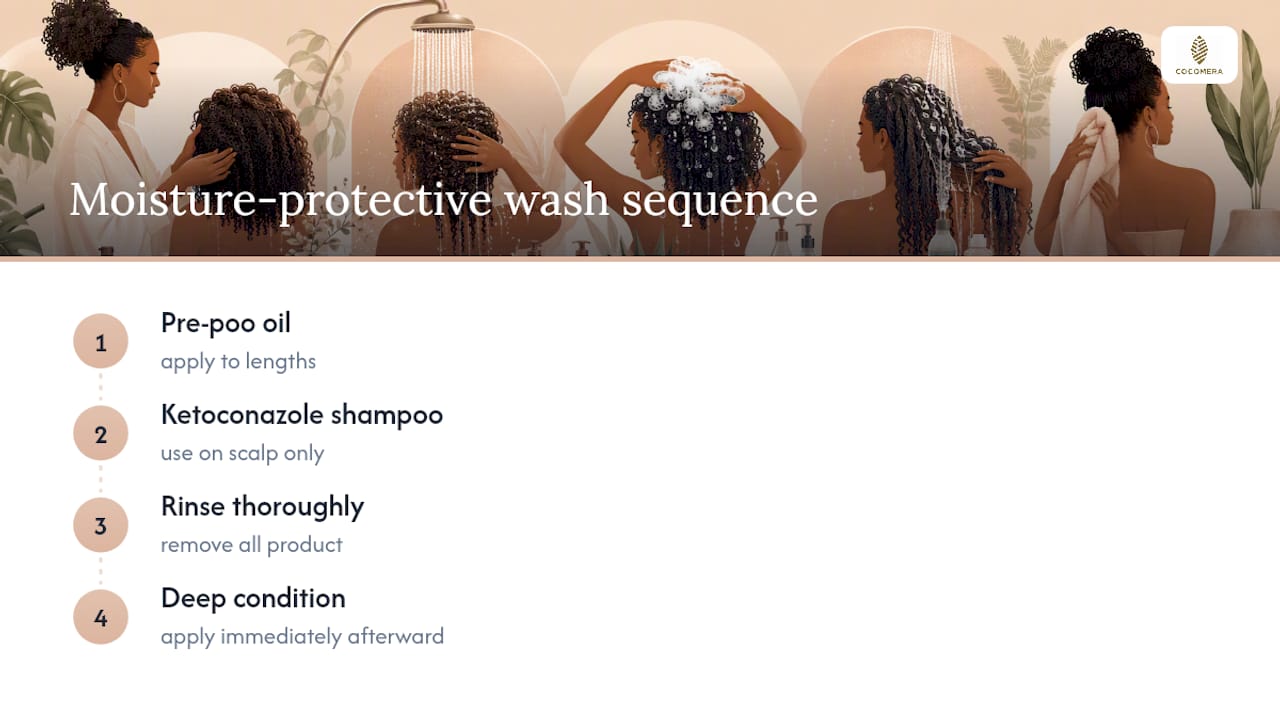
Medicated shampoos containing ketoconazole treat seborrheic dermatitis effectively, but they strip moisture fast from coily hair — see product science and formulation options in this hair loss collection for textured hair. A modified routine helps: apply a pre-poo oil to your lengths first, use the ketoconazole shampoo on the scalp only, rinse thoroughly, then deep condition immediately afterward. This sequence, detailed in dermatology literature on afro-textured hair, keeps the treatment working on your scalp without dehydrating the shaft.
Why Is Hair Transplantation Harder for Afro Hair?
Curly follicles curve beneath the skin, sometimes at a sharp angle, which makes extraction far less forgiving than it is with straight hair. A surgeon pulling a follicular unit straight out risks transecting the graft below the surface, killing it before it’s even transplanted. This is why technique choice and surgeon experience matter more here than in almost any other hair type:
- FUE (follicular unit extraction) requires the surgeon to track each follicle’s curve individually, which slows the procedure and demands more skill than with straight hair.
- FUT (strip harvesting) can sometimes preserve curl orientation better in experienced hands, but it leaves a linear scar that’s harder to camouflage on tightly coiled hair.
- Graft orientation and angling during implantation has to match the natural curl pattern, or new growth twists awkwardly and sheds prematurely, a challenge specialized transplant teams train specifically to manage.
Recovery typically runs 10 to 14 days before scabs clear, with full graft security taking a few months. Aftercare means avoiding tight styles, harsh detangling, and direct sun on the scalp for at least six weeks.
How Can You Prevent Further Hair Loss?
A moisture-first weekly routine, paired with smarter styling choices, does more for retention than any single product. Curated 4C hair care guidance frames the weekly wash day as the anchor of the entire routine, and it holds up under dermatology recommendations too.
- Wash day sequence: pre-poo with oil, cleanse gently, detangle on soaked or conditioner-slicked hair, deep condition under heat if possible, then seal moisture with the LOC or LCO method (liquid, oil, cream, or liquid, cream, oil).
- Protective styles should rest, not strain. Rotate styles, keep braid tension light at the hairline, and give your scalp two to four weeks between installs.
- Detangle wet, never dry, starting from the ends and working up, and skip high-heat styling tools whenever you can. A heat-free styling approach preserves the curl pattern you’re trying to protect.
- Sleep on silk or satin. Cotton pillowcases pull moisture from your strands overnight.
Pro Tip: Gentle fingertip scalp massage for a few minutes daily increases blood flow to the follicle and can support retention around thinning edges, as long as you skip added tension from brushes or tight sections.
How Do You Choose a Dermatologist for Textured Hair?
See a dermatologist promptly if you notice scarring, rapid shedding, or a scalp that’s painful, red, or swollen. Those symptoms suggest active inflammation that worsens the longer it’s untreated, and early intervention preserves more follicles than waiting does.
Not every dermatologist has training in afro-textured hairstyling practices, and that gap shows up in missed diagnoses. Ask a prospective clinician directly: how many textured-hair patients have they treated, do they use trichoscopy for diagnosis, and do they adjust biopsy technique for curved follicles? A clinician who answers vaguely, or who pushes toward surgery before ruling out reversible causes, is a signal to look elsewhere.
A Practical Weekly Routine for Curl Types 3 to 4
Turning clinical advice into a repeatable routine is where most people get stuck. Start with a weekly wash-day framework built around moisture retention rather than frequency of washing.
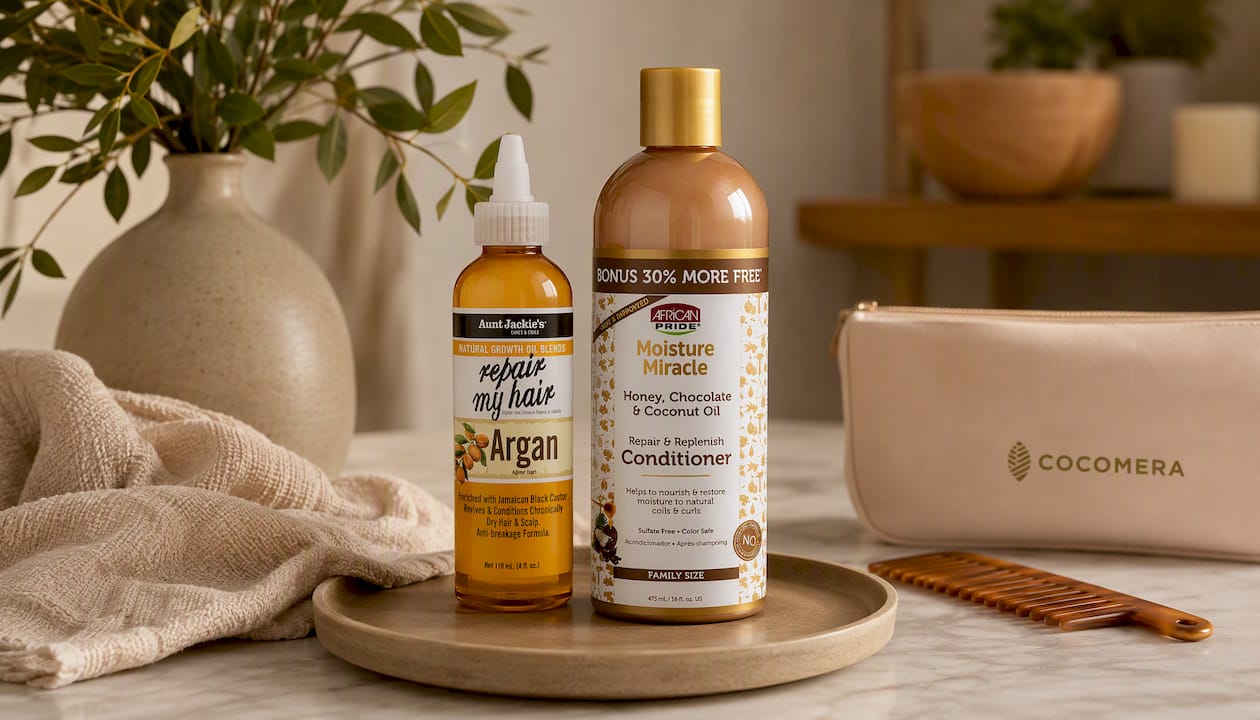
- Pre-poo and scalp massage: work a lightweight growth oil, such as Aunt Jackie’s Repair My Hair Argan Natural Growth Oil Blend, into the scalp before shampooing to soften buildup and support circulation.
- Deep condition weekly: African Pride Moisture Miracle Honey, Chocolate & Coconut Oil Conditioner replenishes moisture lost between washes and softens hair enough for gentle detangling.
- If using a medicated shampoo, follow the pre-poo, scalp-only application, and immediate deep condition sequence to avoid overdrying the shaft.
- Seal and style with the LOC method once hair is damp, then choose a low-tension protective style for the week ahead.
These products support a healthier routine. They don’t replace a diagnosis or a treatment plan from a clinician.
Where Cocomera Sees Readers Go Wrong
The three mistakes we see most: styles worn too tight for too long, oil piled onto dry buildup instead of clean strands, and detangling done dry under time pressure. None of those habits feel dramatic in the moment, which is exactly why they add up. Get checked by a specialist if something feels off, then rebuild your routine slowly. Understanding your curl type first makes every product choice after it easier.
— Cocomera
Where to Find the Right Products for Your Routine
A treatment plan from your dermatologist handles the medical side. Your daily routine handles everything else, and that’s where the right products either help or quietly work against you. Aunt Jackie’s Repair My Hair Argan Natural Growth Oil Blend works well for pre-shampoo scalp massage and sealing moisture in afterward, while the African Pride Moisture Miracle Honey, Chocolate & Coconut Oil Conditioner handles the deep hydration step your wash day needs most.
Neither product treats CCCA, traction alopecia, or scalp disease. Think of them as the routine layer that supports whatever your dermatologist prescribes, not a substitute for it. Carefully selected hair care products for curl types 2 through 4 help you find formulas suited to coily or afro texture. Browse the full Cocomera catalog to build out a routine around your specific hair goals, from moisture retention to scalp care.
Sources
- Hair loss in Black women: Tips from an expert | Johns Hopkins Medicine
- Afro-textured hair care: a narrative review and recommendations for dermatologists
- 4C Hair Care: Complete Routine, Products & Growth Guide