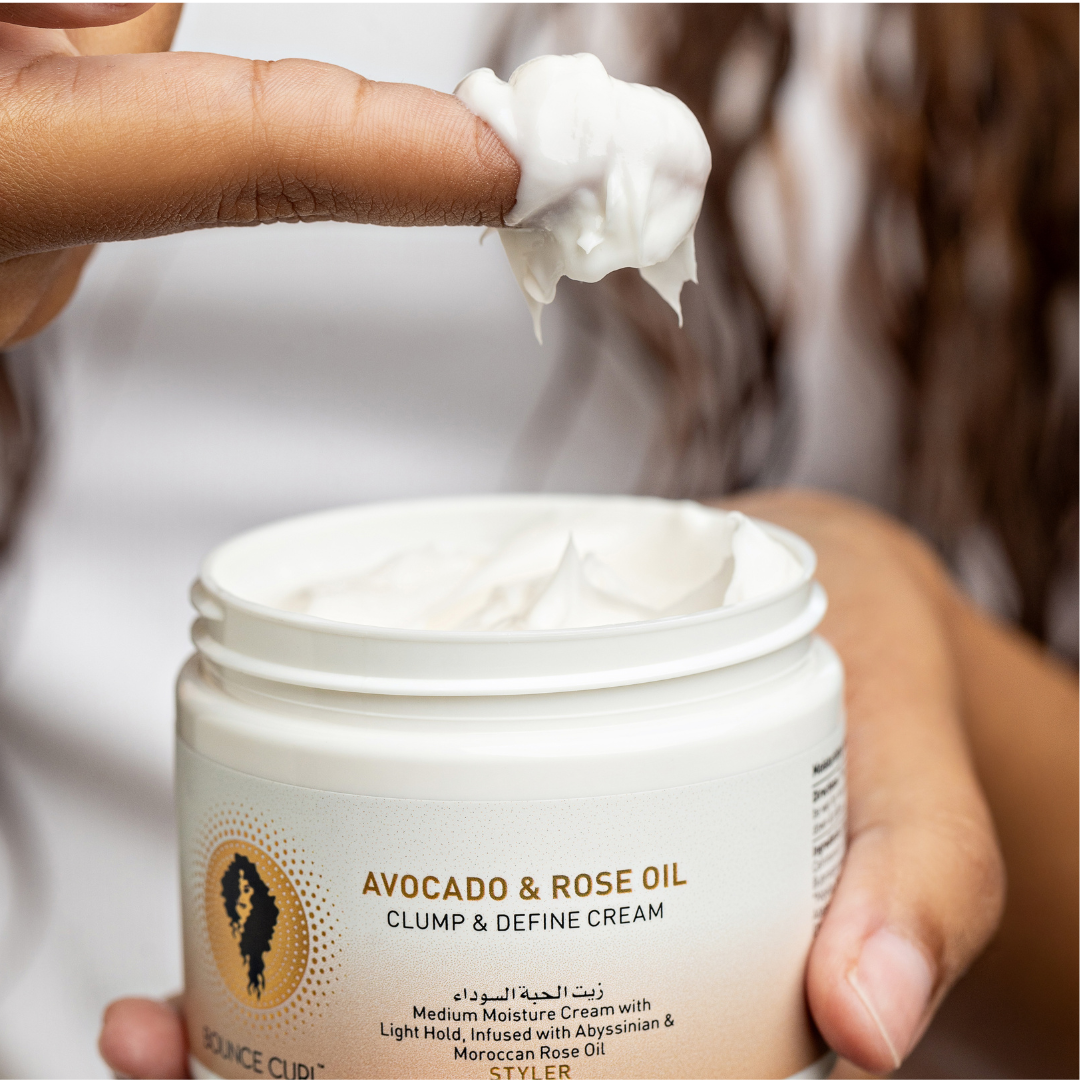
Choosing gentle, properly fitted accessories made from silk or satin can protect textured curls from damage and breakage. Proper tension, size, and material are essential in supporting curl health during daytime styling and overnight protection. Accessories enhance overall hair care but should complement a healthy routine for optimal results.
Many women with textured hair have a complicated relationship with hair accessories. You try a cute clip, and your curl pattern is dented for two days. You grab a random elastic, and three weeks later you notice breakage along your hairline. The frustration is real, and it’s led a lot of curly, wavy, and coily women to just give up on accessories altogether. But here’s what most people don’t realize: the problem is almost never the idea of accessories. It’s the material, the fit, and the placement. Get those three things right, and accessories can actively support your curl health instead of working against it.
Table of Contents
-
Choosing the right hair accessories: Materials, size, and fit
-
Styling for curl definition and volume: Clips, pins, and placement
-
Our take: Where most advice about hair accessories goes wrong
Key Takeaways
| Point | Details |
|---|---|
| Material matters most | Silk, satin, and soft fabrics reduce breakage and help maintain curl definition. |
| Gentle placement protects curls | Loose tension and the right fit prevent dents, pulling, and edge damage. |
| Accessories support routines | Accessories are most effective when combined with daily curl-care steps. |
| Fit outperforms trend | The best accessory is one that matches your texture, size, and comfort—trends aren’t always gentle. |
Why hair accessories matter for textured curls
Textured hair is structurally different from straight hair in a way that makes it more vulnerable to mechanical damage. The curl in each strand means the cuticle (the outer protective layer) is naturally more raised and irregular. That makes it easier for rough surfaces to snag, lift, and eventually break the cuticle.
There are two main forces at play when you use a hair accessory. The first is friction, which is the rubbing or snagging that happens when an accessory drags across the hair shaft. The second is tension, which is the pulling force applied at your roots and hairline. Hair accessories affect curls primarily through these two mechanisms: friction management and how pressure is distributed at the roots and hairline. Understanding this immediately changes how you shop and how you style.
Key things that friction and tension affect in textured curls:
-
Frizz: Rough materials disrupt the cuticle and cause individual strands to swell and separate
-
Curl definition: Tight accessories flatten curl formation and leave dents that resist re-curling
-
Breakage: High-friction materials and tight tension break fragile, already-curled strands
-
Traction alopecia: Repeated, chronic pulling at the hairline can cause permanent hair loss over time
-
Scalp comfort: Too-tight placements cause headaches and soreness, especially around Type 4 edges
The good news is that accessories made from gentler materials like silk, satin, or soft microfiber dramatically reduce friction. They allow the hair to glide instead of snag. Paired with proper moisture and textured curls habits, the right accessories become a real part of your protection routine.
“Choosing accessories for textured hair is not just a styling decision. It is a care decision. The material and how you apply pressure will determine whether you support or stress your curl pattern.” — Curl care specialist perspective
Choosing the right hair accessories: Materials, size, and fit
The market is full of options, and not all of them are created equal. Here is a practical comparison of common accessory types so you can see at a glance what works best for textured hair.
| Accessory type | Friction potential | Tension control | Best for curl types | Curl-friendly rating |
|---|---|---|---|---|
| Satin/silk scrunchie | Very low | Adjustable | 2A to 4C | ⭐⭐⭐⭐⭐ |
| Silk scarf or bonnet | Very low | Customizable | All types | ⭐⭐⭐⭐⭐ |
| Fabric-covered claw clip | Low | Wide pressure | 2C to 4B | ⭐⭐⭐⭐ |
| Plastic snap clip | Medium | Minimal | 2A to 3B | ⭐⭐⭐ |
| Standard hair elastic | High | Very tight | Not recommended | ⭐ |
| Metal or thin barrette | High | Point pressure | Not recommended | ⭐ |
The benchmark for selecting accessories is straightforward: prioritize gentler materials like silk or satin, correct tension that is loose enough for style retention, and secure but non-damaging fastening at the hairline. This three-part test is more useful than any trend guide.
Essential criteria to keep in mind when shopping:
-
Material softness: Run the accessory across the back of your hand. If it snags skin, it will snag hair
-
Width and size: Wider bands and larger clips distribute pressure over a bigger surface area
-
Elasticity: Overly tight stretch will create tension even if the material is soft
-
Closure type: Snap closures and adjustable ties are far safer than fixed-loop elastics
-
Edge of the accessory: Rough seams, exposed metal, and sharp plastic edges are breakage risks
Understanding which best ingredients for curls help with moisture retention also matters here, because well-moisturized hair is more elastic and resilient, meaning it handles even occasional mechanical stress better.
Pro Tip: Before adding any accessory to your routine, do a 30-second home test. Loop it loosely around two fingers and gently tug. If it digs into your skin or leaves a mark, it will do the same to your hair. Then unfasten it slowly. If it catches or resists, that friction will transfer directly to your curls.
Bonnets and turbans: The care essential for curl protection
Sleeping is when a lot of damage quietly accumulates. Cotton pillowcases are highly absorbent. Every hour you spend on one, moisture is being pulled from your hair and friction is disturbing your curl pattern. Bonnets and turbans solve this, but only if you choose and fit them correctly.
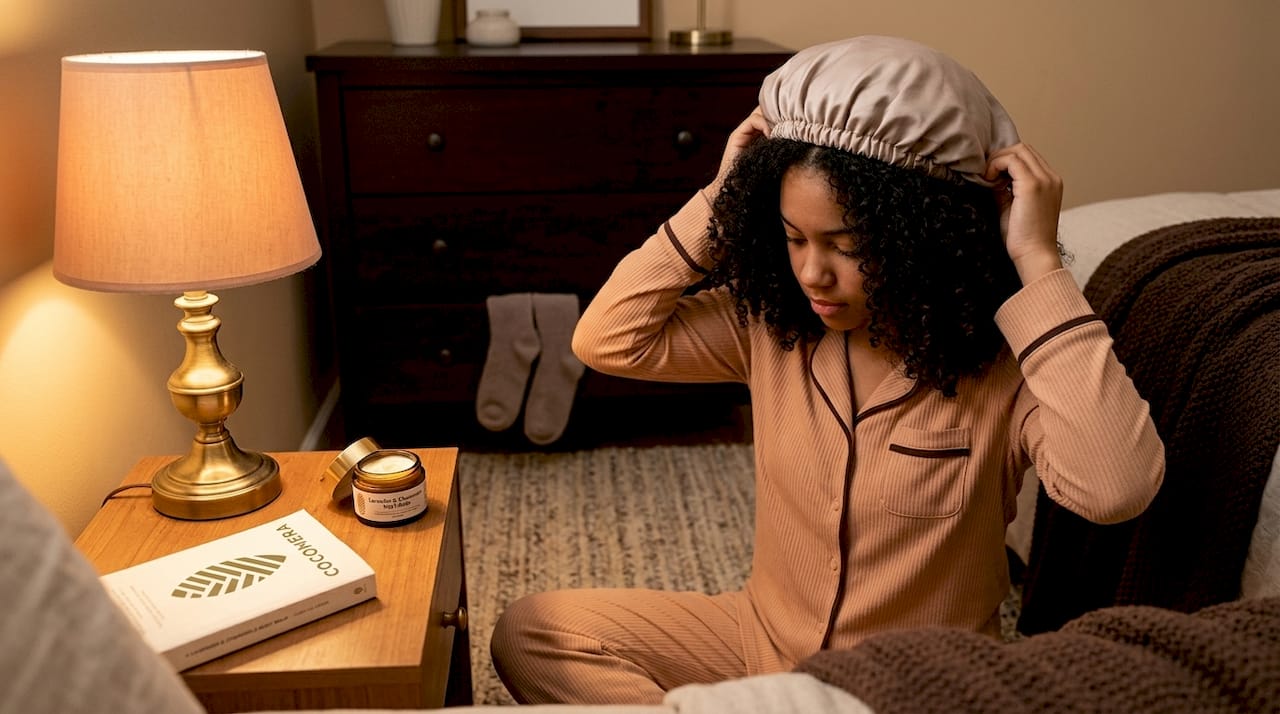
Here is how silk, satin, and synthetic bonnets compare on the metrics that matter most for curly care:
| Material | Moisture retention | Frizz prevention | Edge safety | Durability |
|---|---|---|---|---|
| Silk | Excellent | Excellent | Very high | Medium |
| Satin (polyester based) | Very good | Very good | High | High |
| Cotton | Poor | Poor | Low | High |
| Synthetic (non-satin) | Poor | Fair | Medium | High |
Bonnets and turbans do more than just look cute at night. They retain moisture, reduce frizz, and protect curl structure while you sleep. But the fit is the part most people get wrong. Too tight, and the band pulls at your edges and hairline, creating exactly the kind of chronic tension that leads to traction alopecia. Too loose, and the bonnet falls off at 2 a.m., leaving your hair exposed on a cotton pillowcase.
How to check bonnet fit step by step:
-
Put the bonnet on normally, tucking in all your hair
-
Slide two fingers under the band at your forehead. You should feel light resistance, not tightness
-
Turn your head sharply to each side. The bonnet should stay in place without pulling your hairline
-
Wait 10 minutes. If you feel any headache or scalp pressure building, the band is too tight
-
Check the back of your neck. The band should sit flat without digging in
Pro Tip: To avoid indentation lines and protect your definition overnight, flip the bonnet inside out so the seam sits against the hair rather than pressing into a single curl cluster. You can also loosely pin a few key curls at the crown before putting on the bonnet to maintain their shape through the night. Good curly hair care habits extend to nighttime, and the bonnet is one of the most underrated tools in the routine. Pairing this with strong moisture essentials for curls like a leave-in conditioner applied before bed means you wake up with far more defined, hydrated results.
Styling for curl definition and volume: Clips, pins, and placement
Daytime accessories are a different game. The goal here is not just protection. It is enhancing your curl pattern, adding lift, and expressing personal style without compromising what you have built with your wash day routine.
The key principle is this: accessories should rest on top of or beside curls, not compress them. Using clips correctly means positioning them to secure or anchor curls while allowing the curl shape to remain full and rounded, not flattened. Volume loss is one of the most common complaints textured-hair women have about accessories, and it almost always comes from placement, not the accessory itself.
Practical placement tips for maximum definition and volume:
-
Root lift with clips: Use volume root clips at the root section while hair is still damp and freshly styled. Clip perpendicular to the scalp to lift without pressing down. Remove when fully dry for instant volume at the crown.
-
Side placement for definition: Slide a claw clip or decorative pin just behind the ear, anchoring a section of curls without disturbing the spiral. This creates shape without compression.
-
Updo anchoring: When pulling hair up for exercise or heat, gather loosely and secure high on the head with a wide-jaw clip or silk scrunchie. The wider the gathering, the less tension on individual strands.
-
Accent accessories: Bobby pins and slide clips used on top of a defined curl cluster add visual interest without flattening the curl below.
Risks to avoid include using heavy ornamental accessories that pull the hair down by weight, over-sectioning your hair with multiple tight clips at once, and securing hair too tightly for workouts just because you want it to stay put. A looser hold with a soft material is always better for tips for healthy textured hair in the long run.
Pro Tip: On days when you are using a deep conditioning treatment or a hair oil, clip your hair up with a loose satin scrunchie or a large clip rather than letting it fall heavy and tangled. The clip helps the treatment distribute evenly and prevents the weight of wet, product-heavy hair from stretching your curl pattern while you wait.
Do hair accessories really make a difference?
Let’s be honest for a moment. Accessories are not a magic fix. If your wash day routine is not working, if your hair is chronically dry, or if your product choices are not right for your curl type, no bonnet or silk scarf is going to fully compensate.
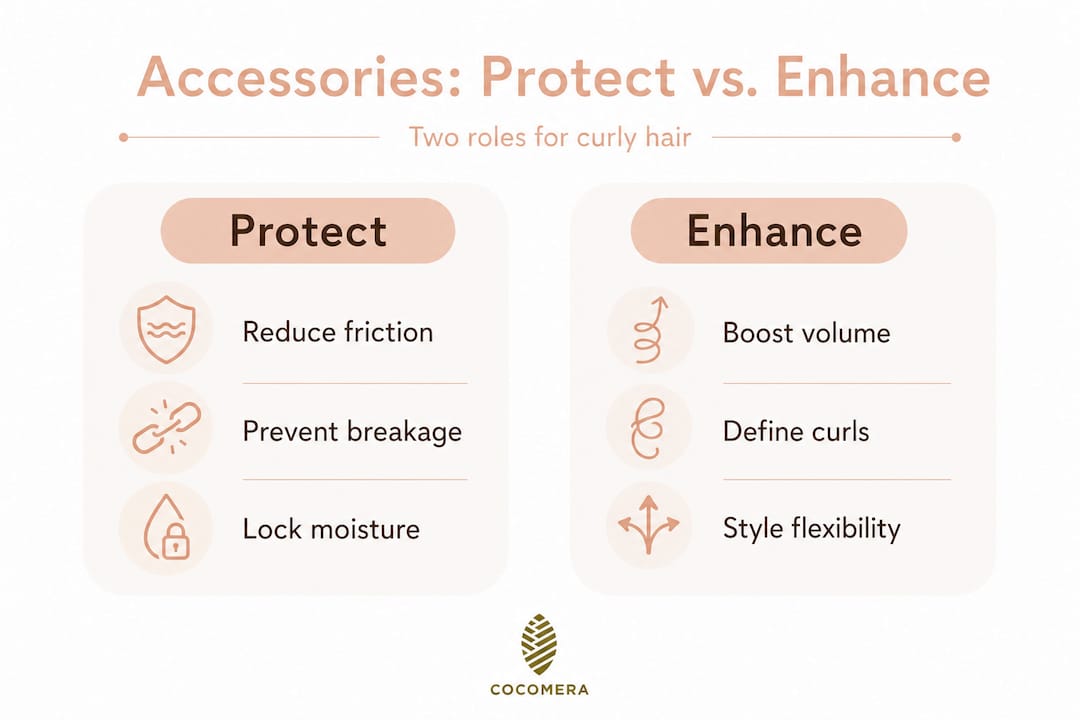
One practical perspective from the curly travel community makes a fair point: hairbands and scrunchies may not be the single defining variable when compared to other curl-care steps like hydration, product choice, and technique. This is worth taking seriously. Accessories support a good routine. They don’t replace one.
That said, there are specific situations where the right accessory is absolutely the game-changer:
-
Overnight protection: This is where accessories deliver the highest return. A silk bonnet or satin-lined sleep cap preserves days of curl work in a single night.
-
Exercise and sport: Without a gentle updo, friction and sweat can fully undo a wash day. The right high-pineapple with a satin scrunchie keeps curls intact through a full workout.
-
Travel: In dry airplane air or humid climates, a silk scarf wrapped loosely around your hair protects against environmental moisture changes.
-
Protective styling transitions: When going between wash days, accessories help protect ends and fragile sections without requiring full restyling.
“Accessories are most powerful when your baseline routine is already solid. Think of them as the finishing layer of a healthy hair practice, not the foundation.” — Integrated curl care perspective
Exploring single-ingredient hair care alongside mindful accessory use is a great way to simplify your routine while still getting maximum results.
Our take: Where most advice about hair accessories goes wrong
Here is what frustrates us about most accessory guides. They focus almost entirely on which product to buy. Silk scrunchie? Buy this one. Satin bonnet? Here are five options. The buying decision gets all the attention, and the actual use gets almost none.
The truth is that a $3 satin scarf used with intention, proper tension, and correct placement will protect your curls better than an expensive, trendy clip that is applied too tightly or positioned wrong. We see this constantly in the textured hair community. Someone invests in a beautiful silk-lined bonnet and then wraps it so tightly that their edges are thinning within months.
The most overlooked variable in every accessory guide is fit. Every head is shaped differently. Every curl type has different volume needs. Type 4C hair may need a much larger bonnet cap than a Type 2B wave pattern. Type 3 curls in the front may need much looser tension than the back sections when pinning up an updo. There is no universal fit, and pretending there is leads to real damage.
Another blind spot is the edges. The hairline and nape of the neck are where the finest, most fragile hair grows. They are also where most accessories apply the most tension. Conventional advice often treats all hair as equal, but your edges are genuinely different and they need the gentlest treatment.
What we recommend is this: treat accessory selection and use as seriously as you treat product selection. Test each item. Notice how your scalp feels. Check your edges weekly. And connect it all back to your overall healthy textured hair tips routine so you are protecting your hair from every angle, not just one.
Explore top products for care and styling at Cocomera
If this guide has you thinking more carefully about what goes in and on your hair, we have built the kind of curated space that makes those decisions easier.
At Cocomera, every product in our catalog is chosen with textured hair types in mind, from wavy Type 2 patterns all the way to tight Type 4 coils. Whether you are looking for styling products for curls that work with your accessories and wash-day results, hair treatments for curls to support the overall health of your strands, or hair masks for textured hair that pair perfectly with your protective nighttime routine, you will find them organized by curl type and hair need. No more guessing. No more wasted products. Just a thoughtful selection that supports your specific hair from root to tip.
Frequently asked questions
Which hair accessories should women with textured hair avoid?
Avoid accessories with rough metal edges, tight bare elastics, or sharp plastic closures, since these create friction that snags the cuticle and leads to breakage and frizz over time.
Is it better to sleep in a bonnet or use a silk pillowcase for curls?
A properly fitted silk or satin bonnet offers more complete protection than a pillowcase alone, because it retains moisture and reduces frizz on all sides of your hair through the night.
How tight should a hair accessory be for curly hair?
An accessory should feel secure but never tug or leave indentation marks. Too-tight bands create chronic tension at the hairline and raise the risk of traction alopecia over time.
Can the wrong accessories actually change the curl pattern?
Yes. Tight or rough accessories can cause dents, flatten curl formation, and lead to breakage specifically at the roots and hairline where pressure concentrates.
Are accessories or products more important for curl health?
Both are part of the same system. Gentle accessories preserve the results your products create, while good products give your hair the strength and moisture to better handle daily styling. Neither works as well without the other.