TL;DR:
- Natural ingredients for textured hair primarily draw moisture, soften strands, lock hydration, and soothe the scalp. Their effectiveness depends on formulation, concentration, and proper pairing with other ingredients, not just botanical origin. Patch testing and label reading are crucial, as “natural” labels lack regulation and do not guarantee safety or performance.
Natural ingredients primarily do four things for textured hair: they draw in and hold moisture (humectants), soften and smooth the cuticle (emollients), lock hydration in place (occlusives), and reduce scalp inflammation (anti-inflammatories). When well-formulated, they can also protect strands from oxidative stress and support a healthy scalp barrier. Two caveats belong at the top: the FDA does not define “natural” for cosmetics, so the label means nothing without an INCI list, and dermatologists Courtney Blair Rubin and Bruce Brod of the University of Pennsylvania have cautioned that natural does not mean hypoallergenic.
At a glance:
- Moisturize: humectants (glycerin, honey, aloe vera) pull water into the hair shaft
- Seal: occlusives and emollients (shea butter, jojoba, argan) reduce moisture loss
- Protect: antioxidants (green tea catechins, vitamins C and E) fight oxidative damage
- Soothe: anti-inflammatories (aloe vera, oat extract) calm scalp irritation
- Formulation matters: bioavailability and stability depend on how an ingredient is extracted and preserved, not just whether it is plant-derived
- Safety first: patch-test every new product; contact dermatitis risk is real with botanicals
Table of Contents
- How do natural ingredients actually help textured hair?
- Which natural ingredients work best for your curl type?
- Why formulation decides whether a natural ingredient actually works
- How to read labels and choose the right product for your curl type
- Building a practical routine with natural-ingredient products
- Key Takeaways
- Cocomera’s take on choosing well-formulated natural products
- Find well-formulated natural products at Cocomera
- Useful sources
How do natural ingredients actually help textured hair?
Textured hair — types 2 through 4 — has a curved follicle that makes it harder for sebum to travel from root to tip. The result is chronic dryness, higher porosity in many cases, and a cuticle that lifts easily. That structural reality is exactly why the functional roles of natural ingredients matter so much here.
Humectants draw water into the hair shaft from the surrounding air. Glycerin and honey are the most studied examples; aloe vera contributes humectant polysaccharides alongside anti-inflammatory glycoproteins that calm a reactive scalp. In high-humidity climates, glycerin works brilliantly. In very dry air, it can pull moisture out of the hair instead, so pairing it with a sealant is non-negotiable.
Emollients fill gaps between lifted cuticle cells, making strands feel smoother and reducing breakage at friction points. Jojoba oil closely mimics the molecular weight of sebum, which is why it absorbs without greasiness. Argan oil and squalane (increasingly derived from plant fermentation rather than shark liver) are replacing some petrochemical emollients in natural-focused formulations because they hydrate effectively with a lower environmental footprint.
Antioxidants protect against oxidative stress from UV exposure and pollution. Green tea catechins, particularly EGCG, are among the most researched. Vitamins C and E work synergistically: C neutralizes free radicals in the water phase, E in the lipid phase. For textured hair worn in protective styles, oxidative buildup on the scalp is a real concern, and antioxidant-rich rinses or scalp serums address it directly.
Pro Tip: If your hair is high-porosity, prioritize emollients and occlusives over humectants alone. High-porosity strands absorb water fast but lose it just as quickly — you need something to seal that moisture in.
Consumer demand is driving formulators to invest heavily in plant-derived bioactives. The natural cosmetics ingredient segment has shown strong growth as shoppers move away from synthetic chemicals — and that commercial pressure is producing genuinely better extraction and delivery technology, not just better marketing.
Which natural ingredients work best for your curl type?
The short answer: match the ingredient to your primary concern, then check porosity. Here is a compact reference for curl types 2–4.
| Ingredient | Primary role | Best use case | Caution |
|---|---|---|---|
| Glycerin | Humectant | Leave-ins, refreshers in humid climates | Avoid in very dry air without a sealant |
| Honey | Humectant + antimicrobial | Masks, co-washes | Can cause buildup; rinse thoroughly |
| Aloe vera | Humectant + anti-inflammatory | Scalp treatments, leave-ins | Latex allergy (rare); patch-test |
| Jojoba oil | Emollient | Daily sealant, pre-poo | Very low allergy risk; suits all types |
| Argan oil | Emollient + antioxidant | Finishing, frizz control | Light; better for low-porosity hair |
| Squalane | Emollient | Leave-ins, scalp oils | Extremely low irritation risk |
| Shea butter | Occlusive + emollient | Deep masks, sealants for type 3–4 | Can be heavy for type 2 wavy hair |
| Castor oil | Occlusive + strengthening | Scalp massage, edge care | Very thick; dilute with lighter oil |
| Rice bran oil | Strengthening emollient | Pre-poo, protein-adjacent care | Mild; suits sensitive scalps |
| Green tea extract | Antioxidant + anti-inflammatory | Scalp serums, rinses | Evidence varies by formulation |
| Vitamins C/E | Antioxidant | Scalp treatments, leave-ins | Vitamin C oxidizes fast; check stability |
| Turmeric | Anti-inflammatory | Scalp masks | Can stain; use sparingly |
A few ingredient-specific notes worth knowing:
- Coconut oil is often promoted as universal, but it penetrates the cortex and can make low-porosity hair feel stiff. High-porosity hair tends to respond better.
- Essential oils (tea tree, peppermint, lavender) are active at very low concentrations. Undiluted application to the scalp is a common cause of contact dermatitis.
- For a deeper look at ingredients for textured hair, Cocomera’s ingredient guide covers curl types 2–4 in detail.
Why formulation decides whether a natural ingredient actually works
The same plant extract can perform brilliantly in one product and do almost nothing in another. Concentration, extraction method, solvent system, and preservation all determine whether a bioactive reaches the hair shaft or just sits on the label.
Natural Deep Eutectic Solvents (NaDES) are one of the more significant advances here. These plant-derived solvent systems improve extraction efficiency, stability, and bioavailability of delicate botanicals, meaning a green tea extract formulated with NaDES delivers more active EGCG to the scalp than a conventionally extracted version at the same listed concentration. For consumers, this is invisible on the label, which is why brand transparency about formulation method matters.
Preservation is the other major variable. Water-based products — leave-ins, co-washes, liquid masks — need an effective preservative system or they grow mold and bacteria within weeks. Nature-identical preservatives such as benzoic and sorbic acid variants allow formulators to meet “natural” positioning while maintaining antimicrobial efficacy. Phenoxyethanol is another common option. A product with no listed preservative and a water phase is a red flag, not a purity signal.
The allergy risk deserves plain language. About 6% of users in some studies reported skin reactions to botanical-containing cosmetics. Fragrant essential oils, cinnamal, linalool, and certain plant proteins are among the most common triggers. Natural extracts are not inherently gentler than synthetics for sensitive scalps.
Pro Tip: Scan the INCI list for the preservative system before you buy. If a water-based product lists no preservative at all, skip it. Effective preservation is a sign of a serious formulator, not a compromise.
For more on bioavailable skincare ingredients and how delivery systems affect performance, Fierce Nature’s formulation notes are worth reading alongside your label checks.
How to read labels and choose the right product for your curl type
Start with the INCI list, not the front-of-pack claims. The order tells you concentration: ingredients appear highest-to-lowest, so a humectant listed after fragrance is present in trace amounts only.
Checklist before you buy:
- Humectant appears in the top half of the INCI list (glycerin, aloe vera, panthenol)
- At least one emollient or occlusive follows it (jojoba, shea, argan, squalane)
- A preservative system is present for any water-containing product
- No essential-oil–heavy fragrance blend if your scalp is sensitive
- Claims match the ingredient list (a “protein treatment” should list hydrolyzed protein, not just wheat germ oil)
| Product type | Best for | Expected results | Watch for |
|---|---|---|---|
| Lightly formulated leave-in | Type 2–3, low-porosity hair | Daily moisture, frizz reduction | Insufficient occlusives for type 4 |
| Deep conditioning mask | All types, especially high-porosity | Elasticity, softness, reduced breakage | Heavy butters that cause buildup on fine waves |
| Single-ingredient oil | Sealing, pre-poo, scalp massage | Targeted sealing or scalp nourishment | No humectant — must layer over wet hair |
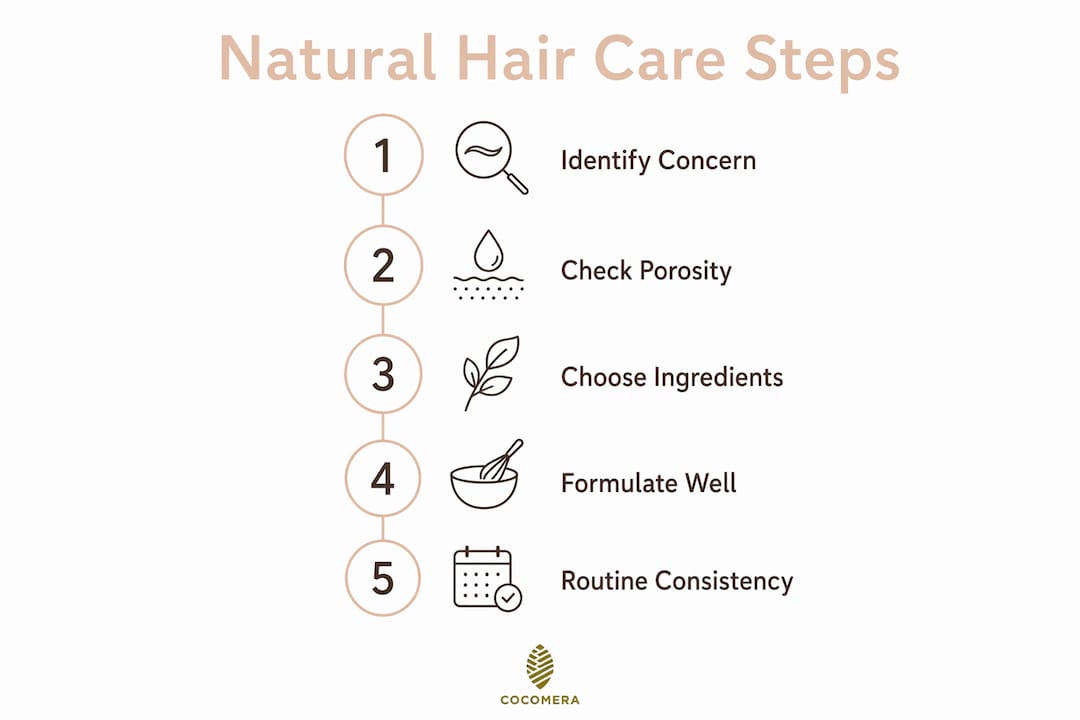
For a full natural hair checklist tailored to textured curls, Cocomera’s guide walks through each step in order.
Building a practical routine with natural-ingredient products
Start with clean hair. Buildup from heavy butters and oils blocks new ingredients from penetrating. A clarifying wash every 2–4 weeks keeps the slate clean.
A simple weekly framework for types 2–4:
- Pre-poo (optional, recommended for type 3–4): Apply a lightweight oil (jojoba, argan) to dry hair 30 minutes before washing. This reduces hygral fatigue — the swelling and contracting that weakens strands during wetting.
- Cleanse: Use a sulfate-free or low-poo shampoo. Strengthening options with rice bran or keratin-adjacent botanicals suit breakage-prone hair.
- Deep condition: Apply a mask from mid-length to ends. Add a shower cap and gentle heat (a warm towel or hooded dryer) for 20–30 minutes. Heat lifts the cuticle slightly, allowing emollients to penetrate further.
- Leave-in: Apply to soaking-wet hair. The water is the moisture; the leave-in seals it. Use more product on thicker, coilier sections.
- Seal: Follow with an oil or butter appropriate to your porosity. Low-porosity hair: lighter oils (argan, squalane). High-porosity hair: heavier occlusives (shea, castor blended with a carrier).
- Midweek refresh: Mist with water, scrunch in a small amount of leave-in, re-seal if needed.
- Patch test any new product: Apply a small amount to the inner forearm, wait 24 hours, check for redness or itching before full application.
One myth worth addressing directly: not all natural oils strengthen hair. Oils do not add protein. They coat, seal, and reduce friction. Castor oil’s reputation for growth is largely anecdotal; its real value is as a thick occlusive for scalp massage and edge care. If breakage is your concern, look for products with hydrolyzed proteins alongside the oils, not oils alone.
Humidity affects performance significantly. In high humidity, humectant-heavy products work well. In dry winter air, lean heavier on occlusives and reduce glycerin concentration to avoid moisture being pulled from the strand rather than the air.
Key Takeaways
Natural ingredients work for textured hair when they are matched to your hair’s specific needs and backed by a formulation that delivers them effectively — not just listed on the label.
| Point | Details |
|---|---|
| Match function to concern | Use humectants for dryness, emollients for softness, occlusives for sealing, antioxidants for scalp protection. |
| Formulation determines results | NaDES and proper preservative systems decide whether a botanical actually reaches the hair shaft. |
| “Natural” is not regulated | The FDA sets no legal standard; INCI order and preservative presence are your real quality checks. |
| Patch-test every new product | About 6% of users in some studies reported reactions to botanical cosmetics — natural does not mean hypoallergenic. |
| Cocomera for curated choices | Cocomera selects products for curl types 2–4 with INCI transparency and functional pairing in mind. |
Cocomera’s take on choosing well-formulated natural products
The biggest gap in the natural hair care conversation is the assumption that “plant-derived” automatically means effective. It does not. A botanical extract listed at the bottom of an INCI list, in a poorly preserved water base, with no emollient to support it, is essentially decoration. What actually moves the needle for textured hair is a product where the humectant, emollient, and occlusive are all present in meaningful concentrations, the preservative system is honest, and the claims on the front match what the back of the bottle says.
Cocomera’s curation approach starts with the INCI list, not the marketing copy. Products that lead with functional ingredients — not fragrance, not filler, not a single hero extract at trace levels — are what make it onto the shelves. That means prioritizing formulation transparency and brands that publish their ingredient rationale, whether they are international names or smaller independent labels.
The U.S. regulatory gap is real: because the FDA does not define “natural” for cosmetics, the label is a marketing choice, not a quality standard. That puts the responsibility on the shopper. Ingredient-level literacy is the most reliable protection available, and building that literacy is exactly what Cocomera’s educational content is designed to support. For a broader look at why natural hair care matters for curly and coily hair, the brand’s perspective piece covers the reasoning in full.
Find well-formulated natural products at Cocomera
Cocomera curates hair care for curl types 2–4 with one filter that most general retailers skip: does the formulation actually deliver what the label promises? Every collection is organized by function, so you are not guessing whether a product suits your porosity or curl pattern.
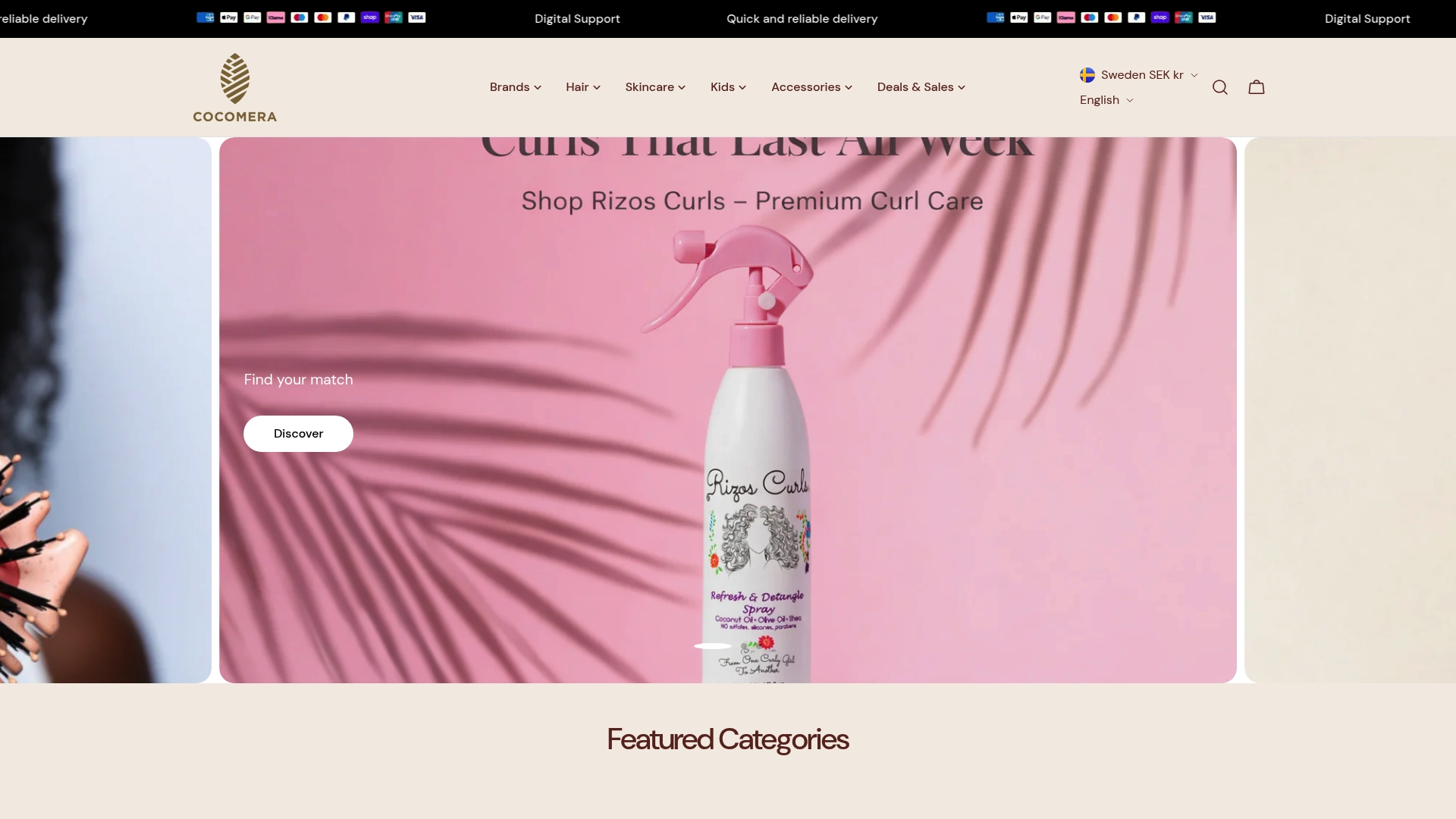
For deep hydration and elasticity, the hair masks collection is the place to start. If sealing and pre-poo are your priority, the hair oils collection covers single-ingredient and blended options for every porosity level. For leave-ins and daily styling, leave-in styling products are filtered by curl type so you can find what works for a type 2 wave or a type 4 coil without sorting through products built for straight hair. Browse by your curl type, check the INCI list on any product page, and reach out to the Cocomera team if you need a recommendation for your specific routine.
Useful sources
The claims in this article draw on the following research and regulatory sources. Where evidence is mixed or limited, that is noted in the text.
- Harvard Health: What you should know about clean and natural cosmetics — Covers the FDA’s lack of a legal definition for “natural” in cosmetics and dermatologist cautions on contact dermatitis risk from botanical products.
- CAS Insights: The rise of natural ingredients for cosmetics — Industry analysis of NaDES formulation technology, natural emollient trends, and preservative strategies.
- Springer: Natural ingredients and the cosmetics market — Review of market growth and consumer demand for plant-derived bioactives.
- Journal of Medicinal Chemistry review: Natural products for skincare — Mechanisms and functions of green tea catechins, aloe vera polysaccharides, and botanical oils.
- Wikipedia: Natural skin care — clinical literature summary — Overview of in vitro and in vivo studies on botanicals; notes variability in evidence strength.
- Scoping review: Natural ingredients in skincare — efficacy and benefits — Calls for standardized extraction and concentration reporting; notes small-scale study limitations.
- PMC: Aromatic plants as cosmeceuticals — Comprehensive review of phytochemicals (flavonoids, phenolics, terpenes) and their antioxidant, anti-inflammatory, and antimicrobial roles in cosmetic formulations.
This article is general information, not medical or dermatological advice. If you experience a reaction to any cosmetic product, discontinue use and consult a dermatologist. For ingredient-specific guidance, check the FDA’s cosmetics resources or speak with a qualified professional.