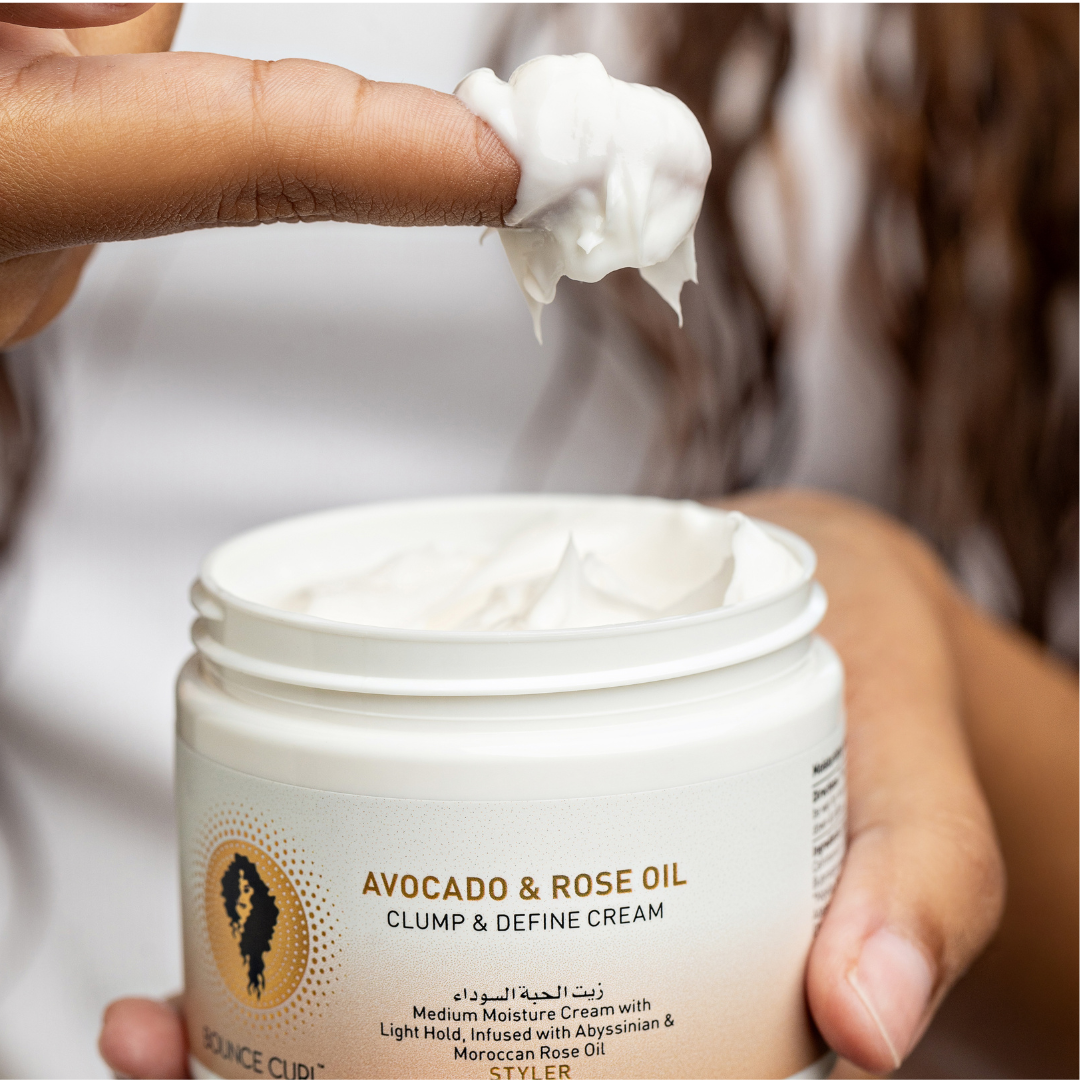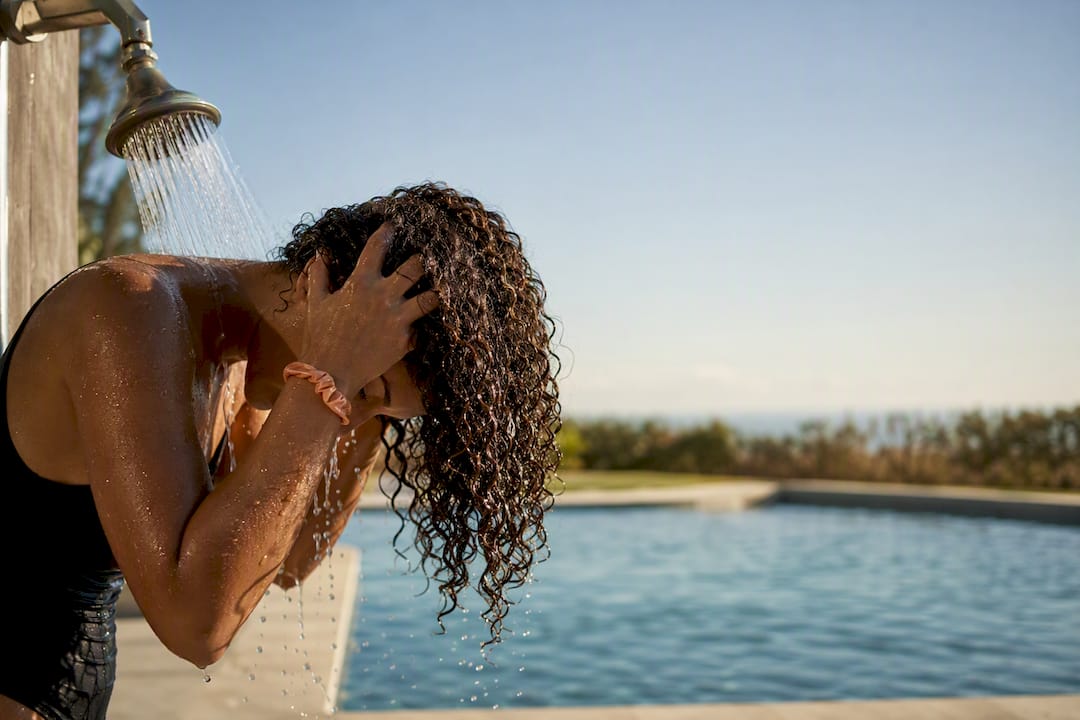
Yes, you can swim regularly and keep your curl pattern intact. The routine that works: soak hair with fresh water first, seal it with a lightweight leave-in, tuck it under a roomy swim cap or protective style, then rinse and restore moisture the moment you’re out. The leave-ins and detangling sprays that support this routine, such as LETS DRED Locks and Braid Spray, help make it realistic for daily swimmers.
TL;DR:
- Using extra-large silicone swim caps, paired with pre-swim pre-wetting and lightweight leave-ins, reduces chlorine contact and helps maintain curl integrity.
- Applying a lightweight leave-in section by section while hair is still wet ensures even distribution and better protection during swimming.
- Rinsing hair with fresh water immediately after swimming and using a pH restore rinse followed by moisture-rich conditioner minimizes damage and restores curl definition.
- Deep conditioning weekly is recommended for frequent swimmers, with rinsing after each pool session to prevent excessive buildup and dryness.
- Heavy oils and sulfate shampoos should be avoided before swimming, as they can trap chlorine or strip moisture and weaken curls over time.
Table of Contents
- How Do You Prepare Curly Hair Before Swimming?
- What Swim Cap Works Best for Curly or Voluminous Hair?
- What Should You Do During Swimming to Protect Curls?
- What’s the Best Post-Swim Routine for Curly Hair?
- How Often Should You Deep Condition After Swimming?
- Which Products Actually Help and Which Should You Skip?
- Why Cocomera Understands Curl-Specific Pool Care
- Does Your Swim Routine Change by Curl Type or Frequency?
- Try LETS DRED Locks and Braid Spray for Pool Days
- Sources
- FAQ
- A Quick Perspective on Pool Routines
How Do You Prepare Curly Hair Before Swimming?
Hair works like a sponge. Curly and coily strands are more porous than straight hair, so whatever liquid gets there first tends to stay put. That’s the entire logic behind pre-swim prep: soak your hair with clean tap water before you get in the pool, and there’s less room left for chlorinated water to penetrate the cuticle. Chlorine damages hair through penetration, oxidation, and dehydration, breaking down keratin bonds and lipids with every exposure. Beating it to the punch with plain water is the cheapest defense you have.
After the pre-wet, add a barrier. A lightweight leave-in or detangling spray coats the hair shaft without weighing curls down. Skip heavy coconut oil before you swim. It sounds protective, but coconut oil can actually trap chlorine against the strand instead of blocking it. Save coconut oil for after your swim, when you want deep nourishment, not a chlorine trap.
Then protect the style itself:
- Gather hair into a loose braid or bun to reduce surface area exposed to water.
- Try a pineapple style if your curls are shorter or you want less bulk under a cap.
- Combine any of these with a swim cap for the best coverage.
Pro Tip: Apply your leave-in section by section while hair is still wet from the shower, not dry. It distributes more evenly and won’t leave dry patches once you’re submerged.
What Swim Cap Works Best for Curly or Voluminous Hair?
Standard swim caps were not designed with thick curls in mind, and most people with type 3 or 4 hair already know that frustration. The fix is sizing up. Extra-large silicone or latex “long hair” caps give buns and braids room to sit without flattening the curl pattern, and they reduce direct chlorine contact roughly in half compared to swimming bareheaded. Fabric caps look more comfortable but let far more water through, which defeats the purpose if your goal is minimizing chlorine exposure.
Fit matters as much as size:
- Gather hair into a pineapple or loose bun before pulling the cap on, rather than stuffing loose strands in.
- Pull the cap on from the back to the front, easing it over your hairline instead of stretching it straight down.
- Reposition the cap if it slips during the swim rather than fighting it while you’re doing laps.
Set your expectations honestly. Even the best long-hair cap will not keep hair completely dry. Water seeps in at the edges, especially during longer swims. Retailers across Europe, including Zoggs long-hair caps sold through Swedish outlets, stock these extra-large models specifically because demand for textured-hair coverage has grown.
What Should You Do During Swimming to Protect Curls?
Small habits during the swim matter more than most people realize.
- Rinse hair with fresh water between long sets if a shower is nearby, rather than waiting until you’re fully done.
- Skip rough towel-drying at poolside. Rubbing wet curls with a rough towel while chlorine is still sitting in the hair adds mechanical stress on top of chemical damage.
- Re-tuck loose strands back under the cap as soon as you notice slippage, instead of letting them trail in the water for the rest of your session.
- If no shower is available poolside, a quick rinse with bottled water plus a dab of leave-in prevents chlorine from drying directly onto the strand.
What’s the Best Post-Swim Routine for Curly Hair?
The first ten minutes after you leave the pool decide how much repair work you’ll need later. Follow this order:
- Rinse with fresh water immediately, ideally before you even towel off.
- Follow with a clarifying or swimmer-specific shampoo if you can feel product or chlorine buildup on the scalp. Not every swim demands a full wash. A rinse alone often does the job for a quick dip.
- Use a diluted rinse to restore pH. A common ratio is one part apple cider vinegar to three parts water, applied as a final step to help close the cuticle back down.
- Apply a moisture-rich conditioner and detangle with fingers or a wide-tooth comb while hair is still saturated. Skip the heat tools until hair has fully recovered.
This sequence lines up with what stylists and pool-day curl routines consistently recommend: wet, protect, rinse, restore, repeat.
Pro Tip: Keep a small spray bottle with diluted vinegar rinse in your swim bag. Mixing it fresh at home saves you from scrambling at a public pool without ingredients on hand.
How Often Should You Deep Condition After Swimming?
Recovery isn’t a one-size-fits-all schedule. It depends on how often you’re in the water.
- Swim once or twice a week: deep condition every one to two weeks.
- Swim daily or almost daily: deep condition weekly, and rinse with fresh water after every single swim even on days you don’t shampoo. A full shampoo every time you swim can over-strip hair. Rinsing daily and reserving clarifying shampoo for every second or third swim day balances buildup removal against dryness.
- Notice loss of elasticity or new breakage: add a protein treatment, then alternate it with moisturizing masks the following week rather than repeating protein back to back.
Hold off on heat styling until curls start bouncing back on their own. Chlorine damage builds up gradually, and prevention through barriers and pH restoration works faster than trying to repair already-damaged strands. Most swimmers notice a real difference in curl definition within two to four weeks of sticking to a consistent routine. Our hydration guide breaks down the moisture side of that recovery in more detail.
Which Products Actually Help and Which Should You Skip?
Look for four categories on pool days: lightweight leave-ins or detangling sprays for pre-swim prep, a clarifying or swimmer-specific shampoo for wash days, a bond-repair mask for weeks when hair feels weak, and a diluted acidifying rinse to finish. Some swim-specific rinse formulas include ingredients like sodium benzoate, which neutralizes chlorine on contact and can cut down on scalp irritation and green discoloration.
Skip heavy coconut oil before you swim, and go easy on strong sulfate shampoos if you’re washing more than a couple of times a week. Both strip or trap moisture in ways that fight against what you’re trying to achieve.
A lightweight spray earns its place both before and after the swim. LETS DRED Locks and Braid Spray works well tucked into braids or twists pre-swim as a light seal, or applied post-rinse to smooth strands while you detangle. See the clarifying shampoo guide for advice on picking one that removes buildup without over-drying.
Why Cocomera Understands Curl-Specific Pool Care
This pool-care advice focuses on textured hair types 2 through 4, drawing from expertise in textured hair rather than generic haircare that treats curls as an afterthought. Fitting a long-hair swim cap over thick coils, layering a leave-in under braids, and picking a clarifying shampoo that won’t strip color-treated curls: these are recurring questions from customers building their own pool-day kits. Guides such as the wash-day steps guide and summer curl care guide explore the wetting, leave-in, and lightweight-oil techniques referenced throughout this routine.
Does Your Swim Routine Change by Curl Type or Frequency?
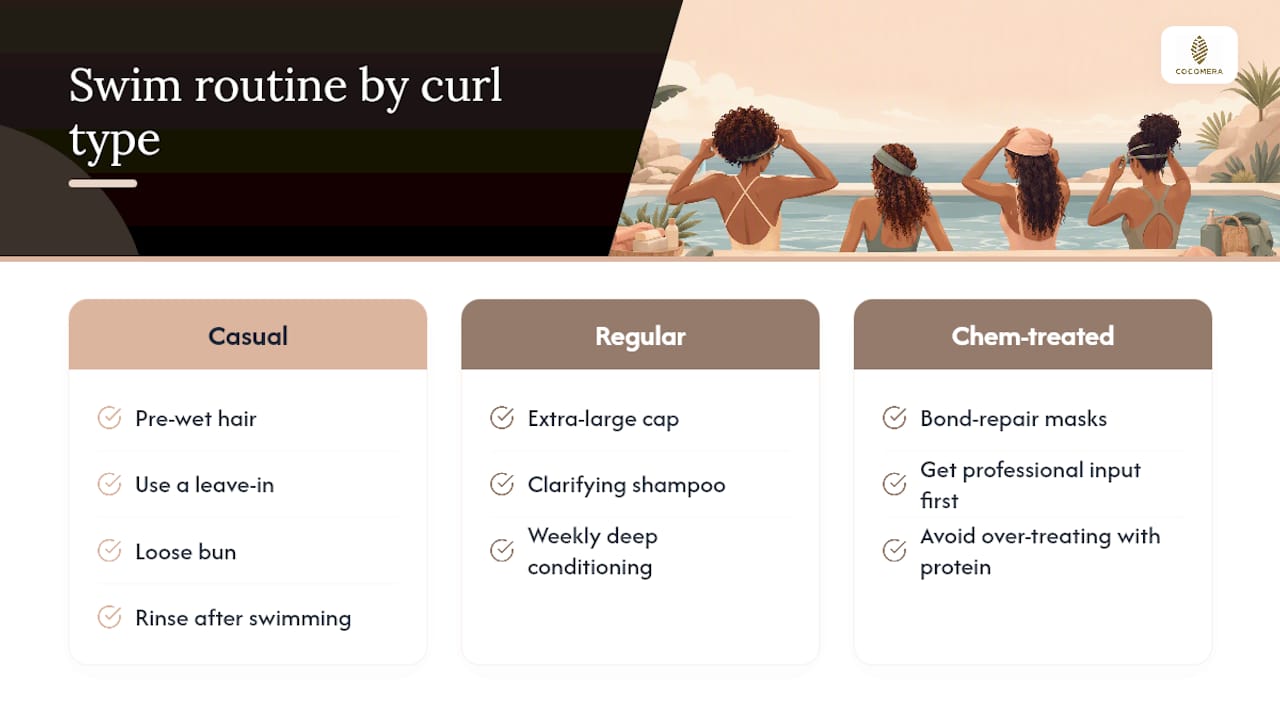
Casual swimmers need the basics: pre-wet, a leave-in, a loose bun, and a rinse when you’re done. Regular lappers should invest in an extra-large cap, a clarifying shampoo, and weekly deep conditioning. Chemically treated curls need bond-repair masks and a professional’s input before adding protein treatments, since over-treating weakened bonds can backfire.
Try LETS DRED Locks and Braid Spray for Pool Days
If you’re tucking curls into braids or twists before a swim, LETS DRED Locks and Braid Spray gives you a lightweight option that won’t trap chlorine the way heavier oils do. It detangles, adds a light seal, and conditions strands without the greasy buildup that makes rinsing harder afterward.
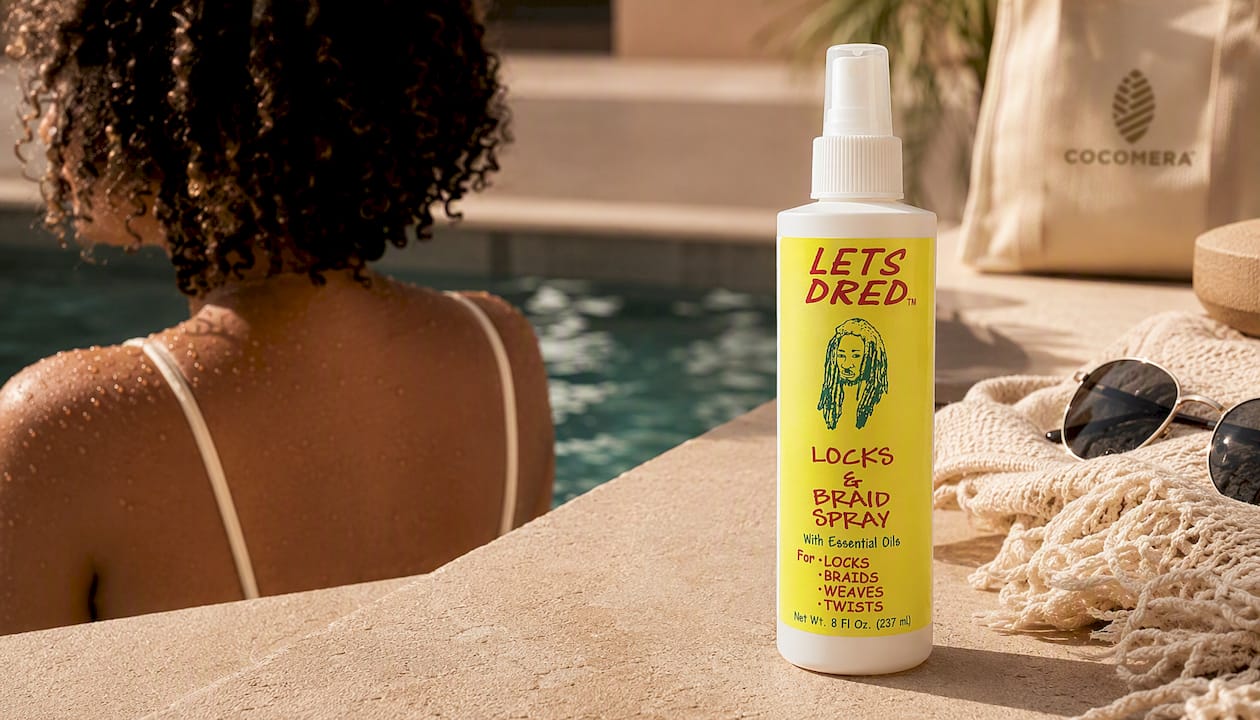
On pool days, it fits into your routine two ways. Mist it into braids or twists right before you tuck hair under your swim cap, or spritz it onto damp hair after your post swim rinse to ease detangling before you apply a deeper conditioner. Either way, it’s doing the same job: keeping strands smooth and manageable through a process that usually leaves curls tangled and rough.
For readers building out a full pool kit, from caps to rinses to leave-ins, Cocomera’s full range for curly and coily hair is worth browsing before your next swim. Consider ordering the spray to have it ready before your next pool session.
Sources
This guide draws on chlorine-chemistry research, retail product listings for extra-large swim caps, and practical pool-day routines tested across curly hair communities.
- How to protect curly hair from chlorine: science-backed strategies
- Speedo long hair cap product listing
- Curly hair and swimming: how to protect your curls | Pool & Ocean
For readers shopping for gear beyond hair caps, European retailers like Pimpertz’s swim accessories collection carry additional options worth comparing.
FAQ
How Far Is 1 Km of Swimming, Really?
For a typical swim session, longer exposure to chlorine increases the importance of pre-swim prep and wearing a solid cap to protect curly hair.
How Can I Bring Out My Natural Curl Pattern After Swimming?
Chlorine and repeated friction flatten curl definition over time, so restoring it starts with a clarifying wash to strip buildup, followed by a moisture-rich conditioner and gentle finger detangling while hair is still wet. Avoid brushing dry curls, since that breaks up the clumping pattern that gives curls their shape.
Is Swimming Better Than Going to the Gym?
Both offer real cardiovascular benefits, and which is “better” depends on your goals, joint health, and what you’ll actually stick with consistently. For curly hair specifically, swimming carries an added maintenance cost that gym workouts don’t, since chlorine exposure means factoring in a pre-swim and post-swim hair routine every session.
What’s the Difference Between “Curly” and “Coily” Hair?
Curly hair typically falls into looser S-shaped patterns (often labeled type 2 to 3), while coily hair has a tighter, more compact Z-pattern with less defined spacing between curls (type 4). Coily hair tends to be more fragile and prone to shrinkage, which often means it needs richer moisture and gentler detangling, including during pool routines.
Should I Wash My Hair Before Swimming?
Yes. Wetting hair with fresh water and adding a lightweight leave-in before you swim reduces how much chlorinated water your strands absorb, since already-saturated hair has less room to soak up pool water.
A Quick Perspective on Pool Routines
Most advice about swimming and curly hair treats the topic like a binary: either you protect your hair perfectly, or you accept damage as the cost of swimming. That framing doesn’t hold up. Chlorine damage is cumulative, not immediate, which means a handful of good habits done consistently beat one expensive product used occasionally. A $15 leave-in used every swim day outperforms a premium mask applied once a month after the damage is already done.
The bigger misconception is that swim caps make prep unnecessary. Caps reduce contact; they don’t eliminate it, and treating a cap as full protection is how people end up surprised by dryness and breakage months into a swim habit. Pair the cap with a pre-wet and a barrier product every time, not just on the days you remember.
— Cocomera