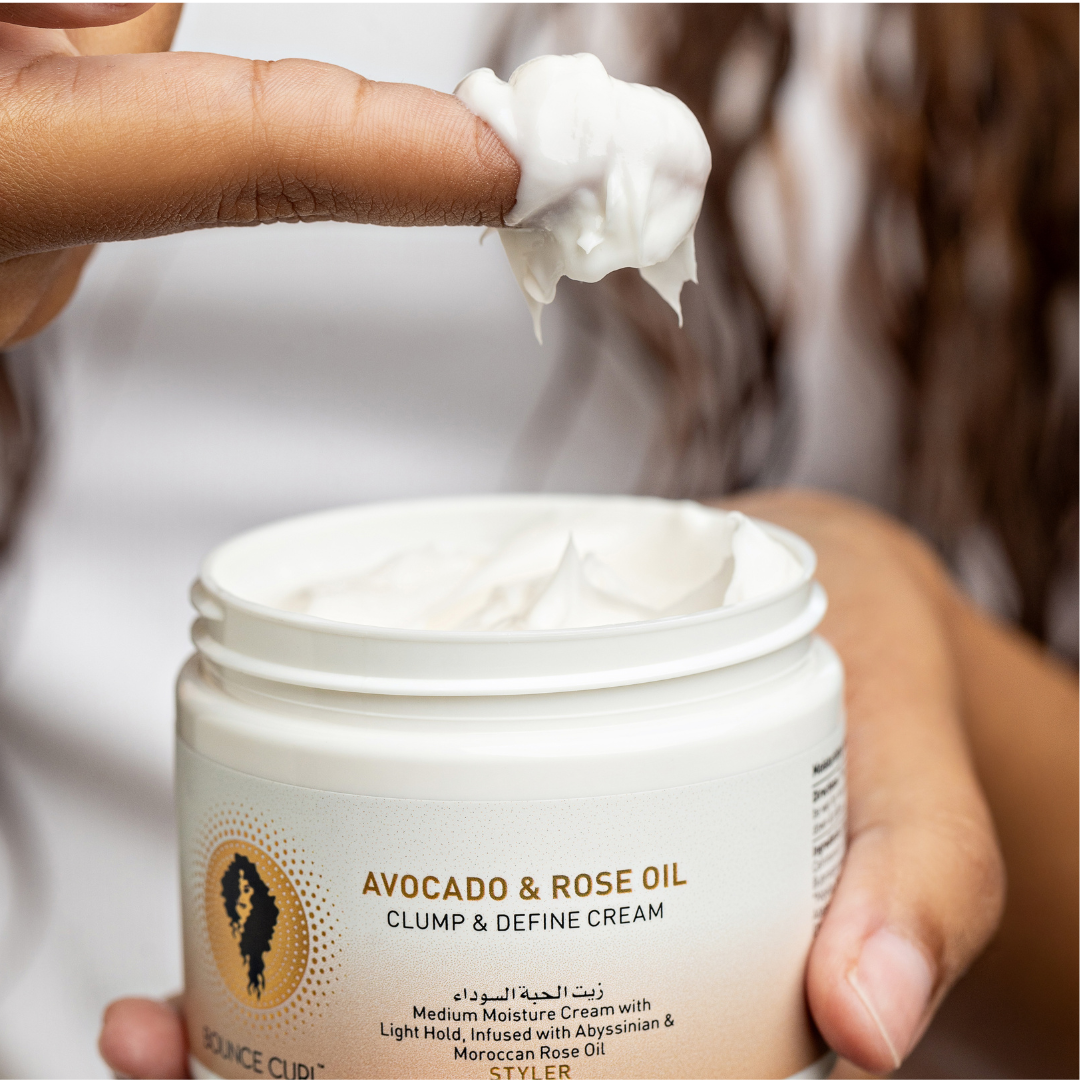
Stearyl alcohol in conditioner is a good thing. Full stop. It’s a long-chain fatty alcohol that softens, thickens, and stabilizes your conditioner formula. It does not dry your hair out. The confusion comes from the word “alcohol,” which gets lumped in with the drying solvents (ethanol, isopropyl) that belong in toners and hand sanitizers, not cream conditioners. Stearyl alcohol belongs to an entirely different chemical class, and dermatologists consistently confirm it acts as an emollient, not a solvent.
Quick verdict by hair type:
- Dry, coarse, or curly/coily hair (types 3–4): Stearyl alcohol is a genuine asset. The heavier conditioning feel helps with detangling, softness, and moisture retention.
- Fine or oily hair: You’ll likely prefer conditioners built around lighter fatty alcohols like cetyl, or formulas with lower fatty-alcohol concentrations.
- Sensitive scalp: Low irritation risk overall, but a patch test is still worth doing before committing to a new product.
Table of Contents
- What stearyl alcohol actually is
- How stearyl alcohol functions inside a conditioner formula
- Benefits you’ll notice on your hair from conditioners with stearyl alcohol
- Fatty alcohols vs. short-chain drying alcohols: what’s the difference?
- Is stearyl alcohol safe for your hair and scalp?
- How to find stearyl alcohol on labels and choose the right conditioner
- What dermatologists and formulators say about stearyl alcohol
- Key Takeaways
- Cocomera’s take on stearyl alcohol and textured hair
- Find conditioners formulated for textured hair at Cocomera
- Useful sources and further reading
What stearyl alcohol actually is
Stearyl alcohol is an 18-carbon fatty alcohol, classified in chemistry as a long-chain primary alcohol. Its INCI name is simply “Stearyl Alcohol,” though you’ll also see it listed as 1-octadecanol on technical documents. At room temperature it’s a white, waxy solid with a faint characteristic odor. Most commercial grades are plant-derived, typically from coconut oil or palm kernel oil through a hydrogenation process.
On ingredient labels, it often appears alongside its close relative cetyl alcohol (C16) or as part of the blend cetearyl alcohol, which is a mixture of cetyl and stearyl alcohols. PubChem’s entry for cetostearyl alcohol lists the identifiers and synonyms for that blend, which is worth knowing because “cetearyl alcohol” on a label means you’re getting both. Stearyl tends to produce a slightly heavier, richer feel than cetyl alone, which is why formulators reach for it specifically in products targeting dry or textured hair.
Pro Tip: When scanning an ingredient list, look for “Stearyl Alcohol,” “Cetearyl Alcohol,” or “1-Octadecanol.” If any of these appear in the top third of the list, the concentration is meaningful enough to affect texture and conditioning performance.
How stearyl alcohol functions inside a conditioner formula
Stearyl alcohol does four things at once inside a conditioner, and each one translates directly into what you feel in the shower.
| Function | What it does in the formula | What you feel |
|---|---|---|
| Emollient | Fills gaps in the hair cuticle, reduces friction | Softness, smoothness |
| Thickener / viscosity control | Raises the product’s viscosity at room temp | Creamy, spreadable texture |
| Emulsion stabilizer | Prevents oil and water phases from separating | Consistent product shelf life |
| Slip provider | Lowers inter-fiber friction | Easy detangling, reduced breakage |
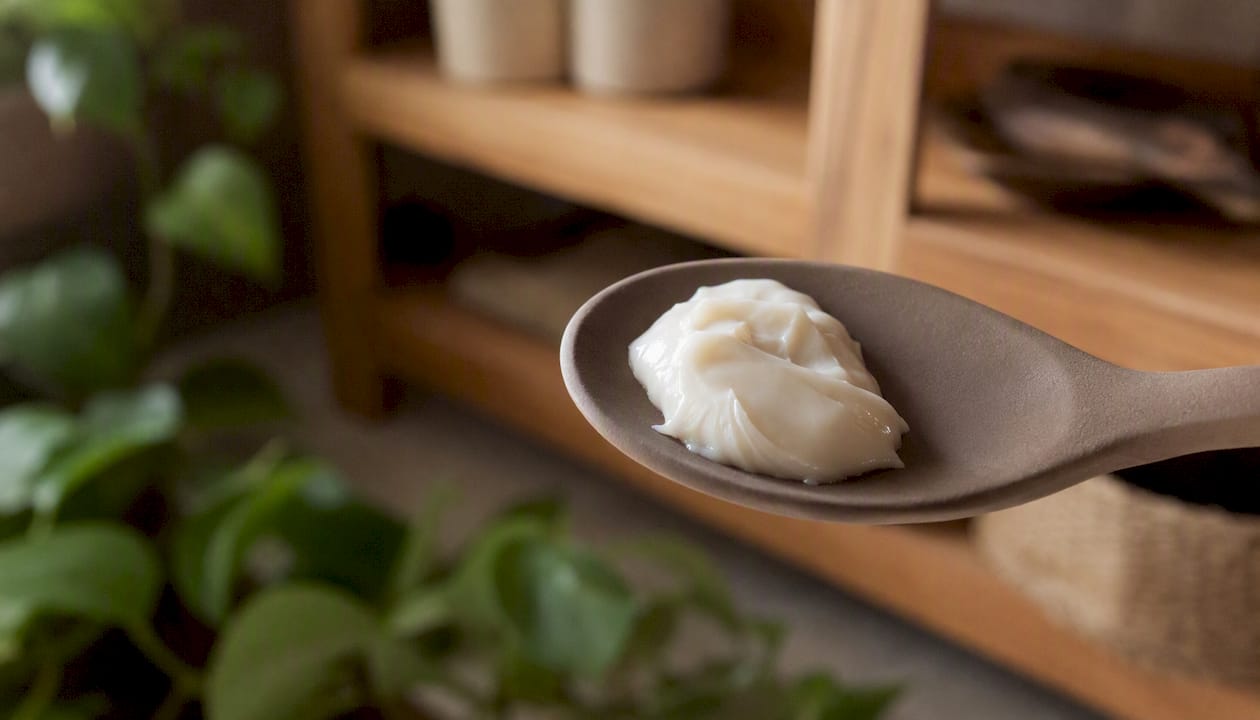
The technical specs explain why it works so well in cream conditioners. According to manufacturer technical data, stearyl alcohol has a melting point of 56–60°C and an HLB of approximately 15.5, which makes it compatible with oil-in-water emulsion systems. Typical usage in conditioners runs up to moderate concentrations, with a broader range across other product types.
The manufacturing step matters too. Stearyl alcohol must be added during the heated lipid phase, when the batch temperature is high enough to melt it completely. If a formulator adds it too late or at insufficient temperature, the result is a grainy, unstable product. That’s why well-made conditioners have that smooth, uniform consistency rather than a lumpy or separated texture.
SpecialChem’s ingredient profile also notes its role as a foam booster and emulsion stabilizer in oil-in-water systems, confirming that its usefulness goes beyond simple thickening.
Benefits you’ll notice on your hair from conditioners with stearyl alcohol
The formulation functions above translate into real, tangible results on your strands.
Tactile benefits:
- Softness: the emollient effect fills surface irregularities on the cuticle, so hair feels smoother to the touch
- Slip: reduced fiber-to-fiber friction means a wide-tooth comb or your fingers move through wet hair with far less resistance
- Cuticle smoothing: a smoother cuticle surface reflects light more evenly, which reads as shine
- Reduced breakage: less mechanical friction during detangling means fewer snapped strands
Performance benefits:
- Cream texture: the thickening effect gives conditioners that satisfying, spreadable consistency that distributes evenly through thick or dense hair
- Better coverage: the HLB value helps encapsulate oils and distribute them evenly along the hair shaft
- Product stability: a well-stabilized emulsion doesn’t separate in the bottle, so the formula performs the same way from the first use to the last
INCIdecoder’s ingredient entry specifically notes that stearyl alcohol provides a heavier conditioning feel than cetyl alcohol, making it a better fit for coarse or very curly hair. For textured hair types, that extra weight is often exactly what’s needed to manage shrinkage, dryness, and detangling.
Pro Tip: If you have type 3b–4c hair and your conditioner feels watery or doesn’t give you enough slip, check whether it contains stearyl or cetearyl alcohol. A formula without any fatty alcohol often lacks the body and glide that textured hair needs for safe detangling.
Fatty alcohols vs. short-chain drying alcohols: what’s the difference?
The word “alcohol” covers a wide chemical family, and the difference between a fatty alcohol and a short-chain alcohol is the difference between a moisturizer and a solvent.
Short-chain alcohols (ethanol, isopropyl alcohol, SD alcohol) have 2–3 carbons. They evaporate fast, which is why they’re useful in sprays and toners, but that same volatility strips moisture from hair and skin. Fatty alcohols like stearyl, cetyl, cetearyl, and behenyl have 16–22 carbons. They’re waxy solids at room temperature, they don’t evaporate, and they sit on the hair surface as emollients rather than dissolving into it as solvents.
| Type | Examples | Carbon chain | Effect on hair |
|---|---|---|---|
| Fatty (conditioning) | Stearyl, cetyl, cetearyl, behenyl | C16–C22 | Emollient, softening, thickening |
| Short-chain (drying) | Ethanol, isopropyl, SD alcohol | C2–C3 | Solvent, drying, fast-evaporating |
A simple label heuristic: if you see “alcohol” near the top of a cream conditioner’s ingredient list, look at the full name. “Cetearyl Alcohol” or “Stearyl Alcohol” means conditioning. “Alcohol Denat.,” “SD Alcohol,” or “Isopropyl Alcohol” near the top of a leave-in or spray means the formula leans drying. In rinse-off cream conditioners, short-chain alcohols are rarely present at all.
CosmeticsInfo’s overview of cetearyl alcohol confirms the emollient and viscosity-control roles for fatty alcohols and distinguishes them clearly from solvent-type alcohols in cosmetic use.
Is stearyl alcohol safe for your hair and scalp?
The safety record for stearyl alcohol is strong. The Cosmetic Ingredient Review (CIR), the independent expert panel that evaluates cosmetic ingredient safety in the United States, has assessed long-chain fatty alcohols and found them safe for cosmetic use at typical concentrations. The consensus across regulatory and industry bodies is that stearyl alcohol carries a low irritation risk and a low sensitization risk for most people.
That said, a few edge cases are worth knowing:
- Allergic contact dermatitis: — Rare, but documented. If you notice redness, itching, or swelling after using a product, fatty alcohols can occasionally be the trigger, particularly in people with existing skin sensitivities.
- Scalp sensitivity: For a sensitive or dry scalp, stearyl alcohol is generally well-tolerated, but if you’re already reacting to multiple ingredients, isolating the cause with a patch test is the cleaner approach.
How to patch test: Apply a small amount of the conditioner to the inside of your wrist or behind your ear. Wait 24–48 hours. If there’s no redness, itching, or swelling, the product is likely fine for your scalp and skin. If you develop a reaction, stop use and consult a dermatologist before trying similar formulas.
This article is general information, not medical advice. If you experience a persistent reaction to a cosmetic ingredient, confirm with a dermatologist or your primary care provider.
How to find stearyl alcohol on labels and choose the right conditioner
Reading a conditioner label takes about 30 seconds once you know what to look for.
Label-reading checklist:
- Look for “Stearyl Alcohol,” “Cetearyl Alcohol,” or “1-Octadecanol”
- Position matters: ingredients are listed in descending order of concentration. Stearyl alcohol in the top five to eight ingredients means a meaningful, functional amount. Near the bottom, it’s present but minimal.
- “Cetearyl Alcohol” is a blend of cetyl and stearyl; it counts as a fatty alcohol and behaves similarly
- Avoid confusing it with “Alcohol Denat.” or “SD Alcohol,” which appear in different product types entirely
Hair-type guidance:
- Fine or low-porosity hair: Stearyl alcohol at high concentrations can feel heavy. Look for conditioners where it appears lower in the list, or choose formulas built around cetyl alcohol instead, which is lighter.
- Normal or medium-porosity hair: Stearyl alcohol works well at moderate concentrations. Most standard rinse-off conditioners fall in this range.
- Dry, coarse, high-porosity, or curly/coily hair: This is where stearyl alcohol earns its place. A conditioner listing it in the top five ingredients, paired with humectants like glycerin or panthenol, will give you the slip and softness that textured hair needs.
Shopping tips:
- Pair stearyl alcohol with a humectant (glycerin, panthenol, aloe vera) for moisture plus softness.
- If you use heavy oils or butters on top, watch for buildup. A clarifying wash every two to four weeks keeps the scalp clear.
- For intensive treatments, hair masks for curly hair often list stearyl or cetearyl alcohol near the top, which is exactly what you want in a deep-conditioning formula.
For a deeper look at reading ingredient labels for textured hair, Cocomera’s ingredient guide breaks down the most common conditioning agents by hair type.
What dermatologists and formulators say about stearyl alcohol
The expert consensus on stearyl alcohol is unusually consistent, which is worth noting in a category where ingredient debates can get heated.
“Fatty alcohols like stearyl alcohol are hydrating emollients. Consumers often fear the word ‘alcohol’ on a label, but fatty alcohols are the opposite of drying — they stabilize formulations and condition the hair and skin. The confusion comes from conflating them with short-chain solvent alcohols like ethanol or isopropyl alcohol, which behave completely differently.”
Dermatologist commentary via Byrdie
From a formulator’s standpoint, stearyl alcohol is chosen for two reasons: texture and stability. The melting point of 56–60°C means it must be incorporated during the heated manufacturing phase, which is why professional conditioners have that uniform, creamy consistency. A formula where stearyl alcohol wasn’t properly melted in will feel grainy or separate in the bottle. The technical data confirms this manufacturing requirement.
For readers who want to go deeper, the primary sources are worth bookmarking: the CIR safety supplement covers the regulatory safety assessment, PubChem’s cetostearyl alcohol entry gives the chemical identifiers, and SpecialChem and CosmeticsInfo both provide accessible ingredient overviews.
Key Takeaways
Stearyl alcohol is a safe, effective conditioning ingredient that softens, thickens, and stabilizes conditioners, making it especially valuable for dry, coarse, and curly hair types.
| Point | Details |
|---|---|
| It’s a fatty alcohol, not a drying one | Stearyl alcohol is a C18 emollient; it conditions rather than strips moisture from hair. |
| Best for dry, coarse, and curly hair | Types 3–4 benefit most; fine hair may prefer lighter cetyl-based formulas or lower concentrations. |
| Safe at typical cosmetic concentrations | CIR safety review supports low irritation and sensitization risk for long-chain fatty alcohols. |
| Easy to spot on labels | Look for “Stearyl Alcohol” or “Cetearyl Alcohol” near the top of the ingredient list for meaningful amounts. |
| Cocomera curates for this | Cocomera selects conditioners and hair treatments based on ingredient profiles suited to textured hair types 2–4. |
Cocomera’s take on stearyl alcohol and textured hair
The “alcohol = bad” rule is one of the most persistent myths in the textured-hair community, and it causes real harm. People avoid conditioners that would genuinely help their hair because they see “alcohol” on the label and assume the worst. Stearyl alcohol is not the enemy. In fact, for type 3 and type 4 hair, it’s often the ingredient that makes the difference between a conditioner that detangles and one that doesn’t.
At Cocomera, ingredient profiles are part of how products get selected for the store. A conditioner that lists stearyl or cetearyl alcohol near the top, paired with a cationic emulsifier and a humectant, is a conditioner built to perform on textured hair. That’s not marketing language; it’s formulation logic. The products in the Cocomera catalog reflect that standard.
What’s worth saying plainly: not every fatty alcohol formula is right for every curl type. Fine wavy hair (type 2a–2b) may find a stearyl-heavy conditioner too rich. Cocomera carries options across that spectrum, from lighter formulas for waves to richer treatments for coily hair, precisely because one formula doesn’t fit all. The goal is to make it easier to find what actually works for your specific pattern, not to push a single product at everyone.
Find conditioners formulated for textured hair at Cocomera
Knowing what stearyl alcohol does is one thing. Finding a conditioner that uses it well, alongside the right humectants, emulsifiers, and oils for your curl pattern, is the next step.
Cocomera curates conditioners and deep treatments specifically for wavy, curly, coily, and afro hair. Every product in the collection is selected with ingredient quality and hair-type fit in mind, not just brand recognition. The hair treatments collection is the best starting point for anyone looking for rinse-off conditioners and masks that list fatty alcohols at meaningful concentrations. For intensive deep conditioning, the hair masks collection includes richer formulas built for types 3 and 4. Browse by hair type, read the ingredient lists, and if you’re unsure whether a formula is right for your porosity or curl pattern, the product pages include guidance to help you decide.
Useful sources and further reading
- Stearyl Alcohol: Benefits, Uses, Side-Effects & More — Byrdie
- Stearyl Alcohol TDS ENG — AvenaLab
- Final Report on the Safety (CIR supplement) — CIR
- Cetostearyl alcohol — PubChem
- Cetearyl Alcohol — CosmeticsInfo
- Stearyl alcohol — SpecialChem
- Stearyl Alcohol — INCIdecoder
- Stearyl alcohol — TheSkinFormulary