TL;DR:
- Hair butters are occlusive sealants that lock in moisture and protect textured hair, especially for high-porosity types. Their effectiveness depends on choosing the right butter for your porosity and applying it after water-based moisturizers using proper layering techniques. Consistent, correct use of hair butters enhances moisture retention, reduces breakage, and improves hair health over time.
Hair butters are semi-solid, fat-rich emollients defined by their ability to seal moisture into the hair shaft and form a protective barrier over the cuticle. For textured hair types, specifically type 2 wavy, type 3 curly, and type 4 coily and afro patterns, the role of butters in hair care goes far beyond simple conditioning. These products address the structural reality of textured strands: the tighter the curl, the harder it is for the scalp’s natural oils to travel down the hair shaft, making external sealing agents like butters not optional but necessary. Understanding how to choose and use them correctly is what separates a routine that works from one that leaves your hair greasy and weighed down.
What makes butters beneficial for textured hair?
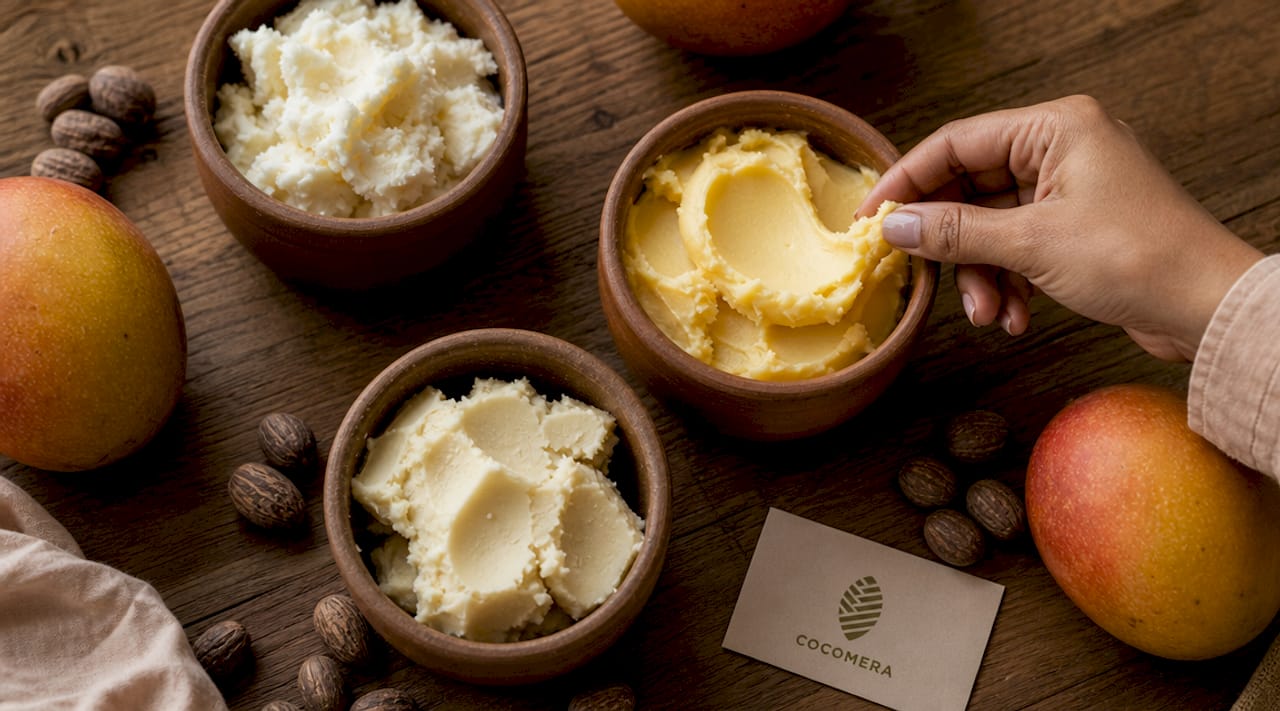
Hair butters work because of their fatty acid composition. Butters like mango are rich in stearic and palmitic acid, which mimic the natural lipids found in the hair cuticle. This chemical similarity allows them to integrate with the hair’s surface rather than just sitting on top of it, reducing friction between strands and reinforcing the cuticle’s protective layer.
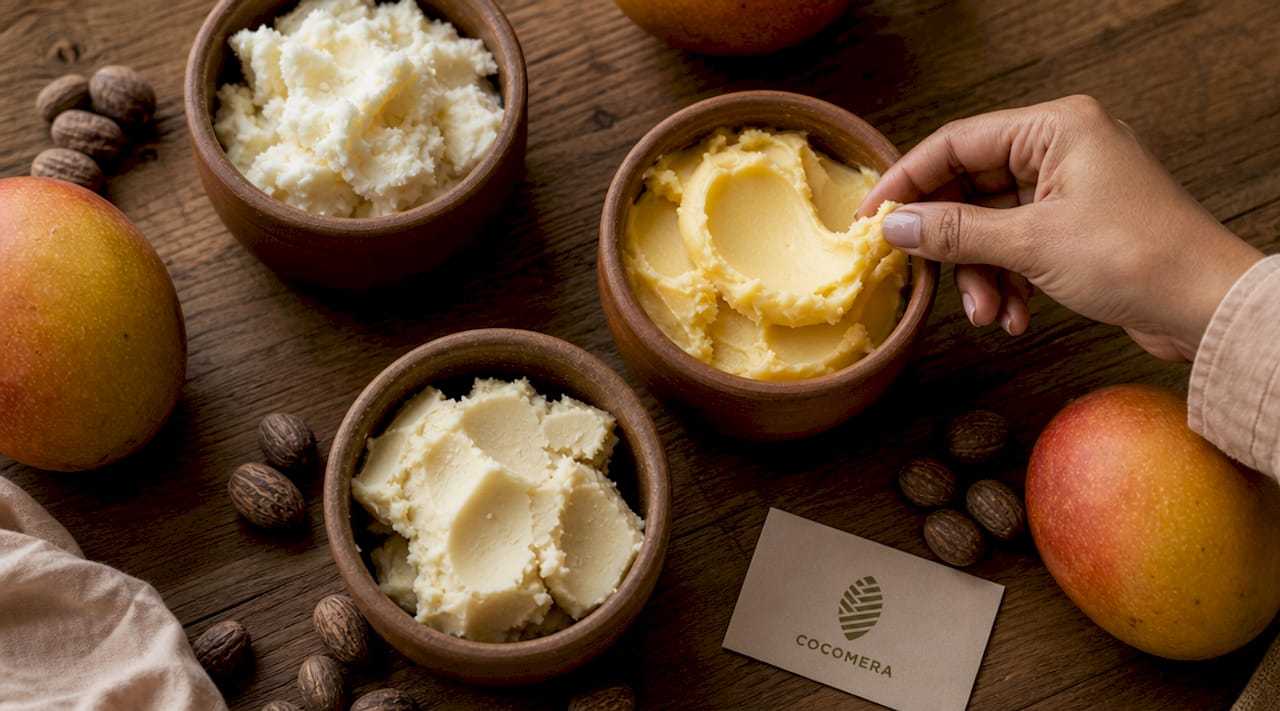
The fatty acids in natural butters fall into two categories: saturated and unsaturated. Saturated fats, like those dominant in shea and cocoa butter, create a firm, stable barrier that resists moisture evaporation. Unsaturated fats, found in higher concentrations in mango and kokum butter, offer lighter coverage with added antioxidant activity. The polyphenols and vitamins present in many raw butters also protect hair from oxidative stress caused by UV exposure, pollution, and chemical processing. For melanin-rich hair, which is already more susceptible to UV-induced protein degradation, this antioxidant protection matters.
Shea butter specifically contains vitamins A, E, and F, which nourish the scalp, promote strand elasticity, and reduce brittleness over time. This combination of nutrients makes shea one of the most studied and widely recommended butters for type 3 and type 4 hair.
Pro Tip: Warm a small amount of butter between your palms before applying. This lowers the viscosity and helps it distribute evenly across strands without clumping at the roots.
How do hair butters compare with oils and creams?
The most common misconception in textured hair care is treating butters, oils, and creams as interchangeable. They are not. Each product type performs a distinct function, and using them in the wrong order or for the wrong purpose cancels out their benefits.
| Product type | Primary function | Penetrates hair shaft? | Best used |
|---|---|---|---|
| Water-based cream or leave-in | Moisturizes and hydrates | Partially | First, on wet or damp hair |
| Hair oil (e.g., argan, jojoba) | Nourishes and strengthens internally | Yes (lighter oils) | Second, after leave-in |
| Hair butter (e.g., shea, mango) | Seals and protects externally | No | Last, to lock in moisture |
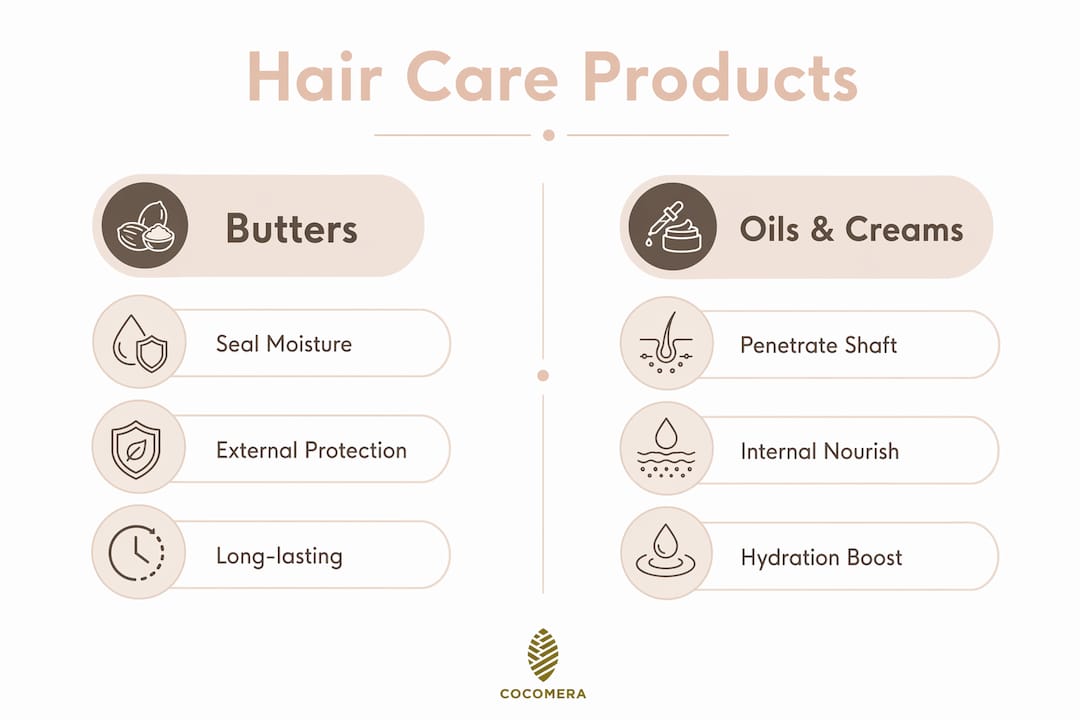
Oils penetrate the hair shaft for internal nourishment, while butters provide longer-lasting external protection and moisture locking. Creams deliver water-based hydration that butters alone cannot provide. This is why hairstylists consistently recommend using all three in sequence rather than choosing one over the others.
The LOC method (Liquid, Oil, Cream) and the LCO method (Liquid, Cream, Oil) are the two most widely used frameworks for layering these products. For most type 4 hair, the LOC/LCO method applies liquid first, oil or cream next, and butter last to lock in moisture effectively. Type 2 and lighter type 3 hair often benefits from LCO, where the cream goes before the oil to prevent the butter from sealing out the lighter moisturizing products.
Pro Tip: If your hair feels greasy after applying butter, the problem is almost always application order. Apply your butter only after a water-based product has been absorbed into damp hair.
How to choose the best butter based on hair porosity
Hair porosity determines how easily moisture enters and exits the hair shaft, and it is the single most important factor when selecting a butter. Product selection based on hair porosity is critical: heavier raw butters suit high-porosity hair, while whipped or lighter butters suit low-porosity hair to avoid buildup.
Here is a practical breakdown by porosity type:
-
High-porosity hair (type 4 coily, chemically treated, or heat-damaged): The cuticle is raised and porous, meaning moisture enters quickly but escapes just as fast. Heavy butters like shea and cocoa butter are ideal because their dense fatty acid structure fills gaps in the cuticle and slows moisture loss. Learn more about caring for high-porosity hair to build a complete routine around this.
-
Low-porosity hair (tightly sealed cuticle, common in type 3 and some type 4 patterns): Heavy butters sit on the surface and cause buildup rather than sealing in moisture. Lighter options like kokum butter or whipped emulsions that blend butter with water and oils penetrate more effectively.
-
Medium-porosity hair: Most butters work well here. Mango butter is a strong choice because its balanced fatty acid profile offers both sealing and antioxidant benefits without excessive weight.
Kokum butter deserves special mention for low-porosity hair. It is non-comedogenic, meaning it does not clog pores or follicles, making it safe for scalp-adjacent application where heavier butters should never go. Shea and cocoa butter are best reserved for the hair shaft only, not the scalp.
| Hair porosity | Recommended butter | Application zone |
|---|---|---|
| High porosity | Shea butter, cocoa butter | Mid-lengths to ends |
| Medium porosity | Mango butter | Mid-lengths to ends |
| Low porosity | Kokum butter, whipped emulsions | Mid-lengths to ends only |
Practical tips on how and when to use hair butters
Timing and technique determine whether a butter works for your hair or against it. The most common mistake is applying butter on dry hair. Applying butter on dry hair can trap dryness inside because butters lack water content. The butter seals whatever state the hair is in, so if the hair is dry when you apply it, you are locking in dryness, not moisture.
Follow these steps for effective application:
-
Start with freshly washed or dampened hair. The hair shaft should be wet enough to feel cool to the touch.
-
Apply your water-based leave-in conditioner or moisturizer first and allow it to absorb for one to two minutes.
-
Warm a pea-sized amount of butter between your palms until it melts slightly, then smooth it over sections from mid-length to ends.
-
Avoid the scalp entirely unless you are using a non-comedogenic butter like kokum.
-
Style as usual. The butter acts as the final sealant in your routine.
Butters applied before swimming form a hydrophobic barrier that reduces chlorine and salt water absorption. This is one of the most underused applications of hair butter. Before a pool session or beach day, apply a thin layer of shea or mango butter to your strands, then cover with a swim cap. The butter does not replace a heat protectant for styling, but it does provide mild thermal insulation during low-heat diffusing.
Pro Tip: If you notice buildup after a few days, clarify with a sulfate-free clarifying shampoo once a week. Buildup is almost always a sign of too much product, not the wrong product.
Popular natural hair butters and their best uses
Not all butters perform the same way, and knowing the strengths of each one helps you build a more targeted routine.
-
Shea butter is the most widely used natural hair care butter for good reason. It reduces dryness, scalp irritation, and breakage while increasing shine. Its high concentration of vitamins A and E makes it particularly effective for type 4 hair that experiences chronic dryness and split ends. Raw, unrefined shea butter retains more nutrients than refined versions and has a stronger, nuttier scent.
-
Mango butter is extracted from the seed of the mango fruit and offers a lighter texture than shea. Its antioxidant protection against melanin degradation makes it especially valuable for color-treated or sun-exposed textured hair. It absorbs more readily than shea, making it a good choice for type 3 curls that want sealing benefits without heaviness.
-
Cocoa butter is the densest of the common hair butters. It excels at treating coarse, dry type 4 hair that needs maximum moisture retention. Because of its weight, it works best as a weekly treatment rather than a daily sealant.
-
Kokum butter is the least talked-about but arguably the most versatile for low-porosity hair. It is non-comedogenic, odorless, and absorbs without leaving a greasy film. For type 3 hair that reacts poorly to heavier butters, kokum is worth trying first.
Consistent use of the right butter for your specific curl pattern and porosity is what reduces mechanical breakage during detangling and styling. The benefits of hair butters compound over weeks, not days.
Key takeaways
Hair butters are occlusive sealants that protect moisture already in the hair shaft, and their effectiveness depends entirely on choosing the right butter for your porosity and applying it after a water-based moisturizer.
| Point | Details |
|---|---|
| Butters seal, not moisturize | Always apply a water-based product first; butter locks in what is already there. |
| Match butter to porosity | High-porosity hair needs shea or cocoa butter; low-porosity hair needs kokum or whipped emulsions. |
| Application order matters | Use the LOC or LCO method to maximize hydration and prevent buildup. |
| Timing expands use cases | Apply butter before swimming or heat styling for added strand protection. |
| Less is more | A pea-sized amount warmed between palms is enough for most hair lengths. |
What we have learned from watching routines fail and succeed
At Cocomera, we have seen the same pattern repeat itself across hundreds of customers with type 3 and type 4 hair. They buy a high-quality shea or mango butter, apply it generously on dry hair, and then tell us it made their hair greasy and stiff. The butter did not fail. The routine did.
The single biggest shift we have observed is when someone moves from applying butter as a standalone product to using it as the final step in a layered routine. That change alone, with no new products, transforms the result. The butter works as a sealant and hairstylists are clear on this: it is a finishing product, not a moisturizer.
We also think the industry undersells kokum butter. Most conversations about the best butters for hair default to shea, and shea is excellent for high-porosity hair. But for low-porosity type 3 hair, shea can be a disaster. Kokum is lighter, non-comedogenic, and far more forgiving for beginners. If you have tried butters before and given up because of buildup, kokum is where we would tell you to start over.
Patience is the other underrated factor. Hair health improvements from consistent butter use show up in four to six weeks, not four to six days. Stick with a routine long enough to actually evaluate it.
— Cocomera
Find butter-based products for your curl type at Cocomera
Cocomera curates hair care products specifically for wavy, curly, coily, and afro hair types, so you do not have to sort through products formulated for straight hair to find what works for your texture.
Browse the styling products for curly hair collection for butter-enriched creams, sealants, and leave-ins formulated for type 2, 3, and 4 curl patterns. For deeper conditioning, the hair treatments collection includes masks and treatments with natural butters targeting hydration and elasticity. Every product at Cocomera is selected with textured hair in mind, so you can build a routine that actually fits your hair’s specific needs without the guesswork.
FAQ
What is the role of butters in hair care?
Hair butters are occlusive sealants that lock moisture into the hair shaft by forming a protective barrier over the cuticle. They do not add moisture on their own but preserve the hydration delivered by water-based products applied beforehand.
Are hair butters suitable for all hair types?
Hair butters work for most textured hair types, but the right butter depends on your porosity. High-porosity hair benefits from heavier butters like shea and cocoa, while low-porosity hair needs lighter options like kokum butter or whipped emulsions to avoid buildup.
How often should you use hair butter?
Most type 3 and type 4 hair types benefit from applying butter two to three times per week as part of a moisturizing routine. Daily use can cause buildup, especially for low-porosity hair.
Can hair butter replace a heat protectant?
No. Butters provide mild thermal insulation and a hydrophobic barrier before heat styling, but they do not replace a dedicated heat protectant. Use both for maximum protection during blow-drying or flat ironing.
Why does hair butter make my hair greasy?
Greasiness almost always results from applying butter on dry hair or using too much product. Proper application involves warming a pea-sized amount and applying it over damp hair after a water-based moisturizer has been absorbed.