TL;DR:
- Protective hairstyles reduce hair manipulation and shield ends to support length retention for textured hair. Proper installation, maintenance, and gentle takedown are essential to prevent damage and maximize hair health. Rotating between different styles and maintaining a consistent care routine enhances protective styling effectiveness.
Protective hairstyles are styles that reduce daily manipulation, shield hair ends, and support length retention for wavy, curly, and afro-textured hair. The core principle is simple: less friction and handling means less breakage. Braids, twists, and wigs all work by tucking ends away from clothing, fingers, and environmental exposure. The key distinction between a truly protective style and a merely convenient one comes down to tension, preparation, and ongoing care. Get those three right, and protective styling becomes one of the most effective tools for maintaining hair health.
1. Types of protective hairstyles for textured hair
The most effective protective styles for wavy, curly, and afro textures fall into five main categories: braids, twists, buns and updos, locs, and wigs or weaves. Each category works differently depending on your hair type, lifestyle, and how much maintenance you can commit to.
Braids are the most recognized protective style category. Box braids, knotless braids, cornrows, and goddess braids all enclose the hair shaft and ends, dramatically cutting down on daily handling. Knotless braids reduce root tension compared to traditional box braids, making them a better choice for people with sensitive scalps or fine strands.
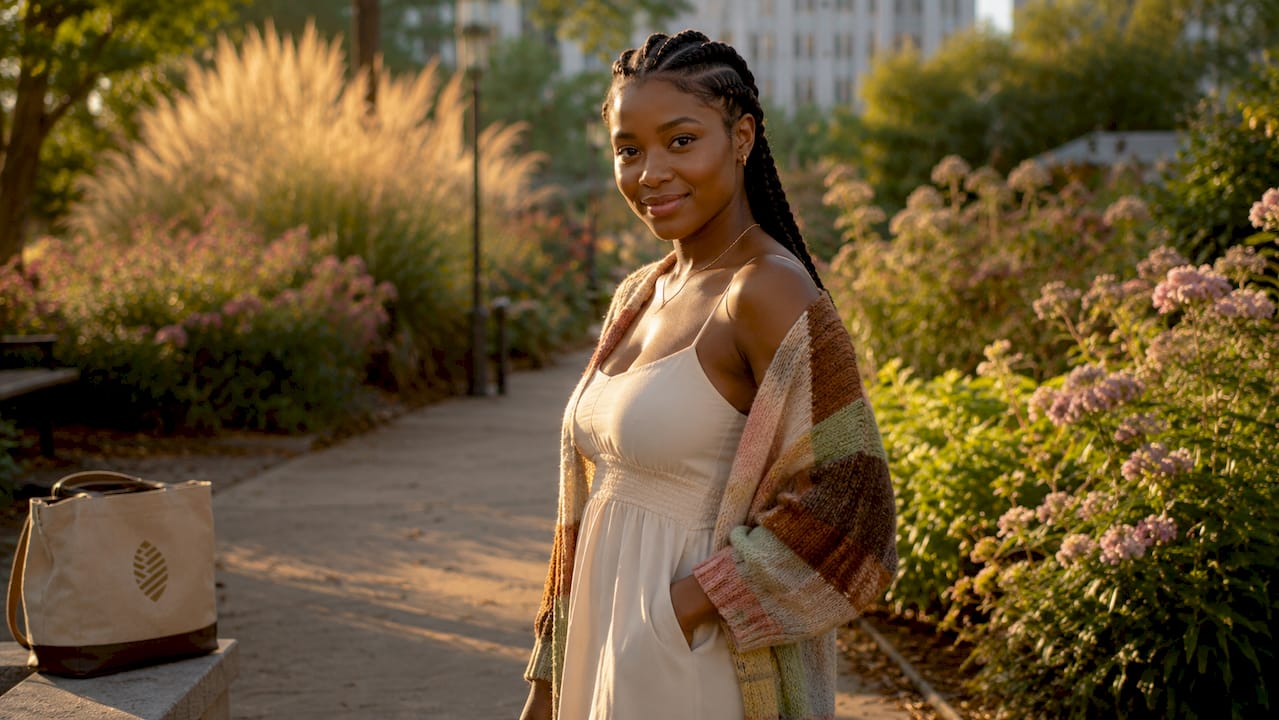
Twists include Senegalese twists, Marley twists, and Havana twists. They tend to be gentler to install than braids and are easier to remove, which reduces takedown damage. Two-strand twists on natural hair also work as a low-manipulation style without added extensions.
Buns and updos are the most accessible option. A pineapple bun, a high puff, or a tucked updo requires no extensions and can be done in minutes. These styles work best as short-term protective options between longer installs.
Locs offer long-term protection once they are established. Starter locs, freeform locs, and interlocked locs all keep hair ends enclosed for months at a time. The trade-off is that locs require a long-term commitment and specific maintenance to prevent buildup.
Wigs and weaves protect natural hair by keeping it fully tucked underneath. They offer the most styling flexibility since you can change your look without touching your real hair. The protective benefit depends entirely on how well the natural hair underneath is cared for.
2. How to prepare your hair for protective styles
Preparation is the step most people skip, and it is also where most protective style failures begin. Hair that goes into a style dry, tangled, or protein-deficient will break during wear and especially during takedown.
The preparation process follows a clear sequence:
- Clarify your scalp and strands. Use a clarifying shampoo to remove product buildup before installing any style. Buildup under a protective style causes itching and scalp irritation.
- Deep condition with a protein treatment. Deep condition for 20–30 minutes using a protein-rich treatment before installation. Protein strengthens the hair shaft and reduces mid-style breakage.
- Detangle thoroughly in sections. Work from ends to roots with a wide-tooth comb or your fingers. Never install a protective style on tangled hair.
- Seal in moisture. Apply a leave-in conditioner followed by an oil or butter to lock in hydration. Hair sealing before installation keeps strands moisturized for longer during wear.
- Let hair dry before braiding or twisting. Installing on wet hair can cause mildew under extensions and weaken the strand.
Pro Tip: Apply a lightweight scalp oil to your parts before installation. This reduces the friction from braiding and gives your scalp a head start on moisture retention.
The most common preparation mistake is skipping the deep conditioning step because it feels time-consuming. That 20–30 minute investment directly reduces how much hair you lose during the weeks the style is in.
3. Maintenance and care during wear
A protective style is not a set-it-and-forget-it situation. Active maintenance during wear is what separates styles that help your hair grow from styles that quietly cause damage.
The most critical maintenance rule is tension awareness. Tight styles that cause pain can lead to traction alopecia, a form of hair loss caused by repeated pulling at the follicle. If your scalp throbs or hurts after installation, that is a warning sign, not something to push through.
Key maintenance habits during wear:
- Moisturize weekly. Spray your scalp and braids or twists with a water-based moisturizer, then follow with a light oil. Scalp moisturizing during wear prevents the dryness and buildup that compromise hair health.
- Cleanse your scalp every 2–3 weeks. Use a diluted shampoo or a scalp-specific cleanser applied directly to the parts. Buildup left too long causes inflammation and weakens the follicle.
- Sleep with a satin or silk bonnet. Cotton pillowcases pull moisture from braids and cause frizz and breakage at the hairline.
- Watch for lint and buildup. Lint accumulates in twists and locs faster than in braids. A light oil applied to the style helps repel lint.
- Respect the wear time limit. Standard protective styles last 4–8 weeks. Wearing a style beyond 8 weeks increases the risk of matting, breakage, and scalp issues.
Pro Tip: Use a scalp massager during your moisturizing sessions. Stimulating circulation at the scalp supports follicle health even while your hair is fully tucked away.
4. How to take down a protective style safely
Takedown is the phase where most breakage actually happens. Rushing through removal undoes weeks of careful maintenance.
Follow these steps to protect your hair during takedown:
- Saturate the style with conditioner or oil. Apply generously before you start unraveling. This softens the hair and reduces the friction that causes snapping.
- Work in sections. Divide the style into four or more sections and work through one at a time. This keeps the process manageable and prevents tangling across sections.
- Unravel slowly from the ends up. Never pull or yank. Work the extension or twist apart gently, moving upward toward the root.
- Detangle shed hair as you go. During a protective style, shed hairs collect inside the style rather than falling out naturally. Detangle each section before moving to the next to prevent those shed hairs from locking into knots.
- Rinse and deep condition immediately after. Follow takedown with a full wash day, including a deep conditioning treatment, before styling again.
Patience in takedown combined with proper lubrication and sectioning prevents breakage. The word “protective” applies to the full cycle of the style, not just the installation. Rushing removal is the single most common reason people lose length despite wearing protective styles consistently.
5. Choosing the best protective hairstyle for your hair type and lifestyle
The right protective style depends on four factors: your hair’s texture and density, your tolerance for tension, how much maintenance time you have, and how long you want the style to last.
| Style category | Maintenance effort | Typical wear time | Tension risk | Moisture retention |
|---|---|---|---|---|
| Knotless braids | Medium | 6–8 weeks | Low | Good |
| Box braids | Medium | 4–8 weeks | Medium | Good |
| Senegalese twists | Low to medium | 4–6 weeks | Low | Very good |
| Cornrows | Low | 2–4 weeks | Medium to high | Moderate |
| Buns and updos | Very low | Days to 1 week | Low | Excellent |
| Wigs and weaves | Medium | 4–8 weeks | Low (if installed correctly) | Depends on care |
| Locs | Low (once established) | Months | Low | Moderate |
For people with active lifestyles, wigs offer the most flexibility. You can remove them before workouts and reinstall without disturbing your natural hair. For people who want a low-touch option, Senegalese twists or knotless braids require the least daily attention while still delivering strong protection.
Protective styling for afro textures often works best when you rotate between style categories. Wearing cornrows every cycle, for example, repeatedly stresses the same hairline points. Rotating between braids, twists, and buns gives different areas of the scalp a break.
A few practical tips for choosing well:
- If your scalp is sensitive, prioritize knotless braids or twists over traditional box braids.
- If you want styling variety, wigs let you change your look daily without touching your natural hair.
- If you are new to protective styling, start with a simple bun or updo before committing to a 6-week braid install.
- If you have fine or low-density hair, avoid heavy extensions that add weight and pull at the root.
Protective styling success depends less on which style you choose and more on how you install, maintain, and remove it. A simple bun done well protects more than a complex braid install done carelessly.
Key takeaways
The most effective protective hairstyles combine tension-free installation, consistent moisture, and careful takedown to retain length and support scalp health.
| Point | Details |
|---|---|
| Tension is the top risk factor | Pain after installation signals follicle stress and potential traction alopecia. |
| Preparation determines results | Deep condition for 20–30 minutes with protein before every install. |
| Wear time has a hard limit | Most styles should come out by week 8 to prevent matting and breakage. |
| Takedown causes the most damage | Saturate with oil or conditioner and detangle in sections before removing. |
| Rotation protects the hairline | Switching between style categories prevents repeated stress on the same scalp points. |
What I have learned from years of protective styling
The biggest myth in the protective styling world is that putting your hair away means you can stop thinking about it. That belief causes more damage than any single style ever could.
Tension-free installation is the single most important factor in whether a style actually protects your hair. A style installed too tightly is not a protective style. It is a slow-moving problem. I have seen people wear the same style for years and wonder why their edges keep thinning. The answer is almost always tension combined with skipping scalp care during wear.
Scalp health does not pause because your hair is braided. Your follicles still need circulation, moisture, and occasional cleansing. A consistent hair care routine during your protective style phase is not optional. It is the difference between a style that helps you retain length and one that sets you back.
The other thing most people underestimate is the wash day before and after a protective style. A thorough coily hair wash day before installation sets your hair up for success. A proper wash day after takedown closes the cycle. Skip either one, and you are working against yourself.
Protective styling done right is genuinely one of the best tools for growing and maintaining textured hair. Done carelessly, it creates the exact problems it is supposed to prevent.
— Cocomera
Products that support your protective style routine
Protective styling works best when your products match your hair’s needs at every stage of the process.
Cocomera carries a curated range of hair styling products formulated specifically for wavy, curly, and afro textures, including leave-in conditioners, curl creams, and edge control products that work with braids and twists rather than against them. For pre-install prep, the hair treatments collection includes deep conditioners and protein treatments that strengthen strands before installation. For maintenance during wear, the hair oil range gives you lightweight options for scalp oiling without weighing down your style. Every product at Cocomera is selected with textured hair in mind, so you are not sorting through formulas designed for straight hair.
FAQ
What are the main types of protective hairstyles?
The main categories are braids (box braids, knotless braids, cornrows), twists (Senegalese, Marley, Havana), buns and updos, locs, and wigs or weaves. Each style protects hair by reducing manipulation and shielding the ends.
How long should you keep a protective style in?
Most protective styles should be worn for 4–8 weeks. Wearing a style beyond 8 weeks increases the risk of matting, scalp buildup, and breakage.
Do protective hairstyles actually help hair grow?
Protective styles support length retention by reducing breakage, not by speeding up growth. Hair grows at the same rate regardless of style, but less breakage means more length is preserved over time.
What makes a hairstyle truly protective?
A style is truly protective when it is installed without excessive tension, keeps ends tucked away, and is maintained with regular moisturizing and scalp care. Tight, painful styles are not protective regardless of the style type.
How do you remove a protective style without breakage?
Saturate the style with conditioner or oil before unraveling, work in sections from ends to roots, and detangle shed hair as you go. Never force through resistance during takedown.