TL;DR:
- Curl definition loss occurs when moisture imbalance, product overload, and mechanical stress weaken curl structure. Proper hydration, gentle styling, and correct product application are essential to maintain and enhance natural curls. Changing environmental factors and routine habits significantly impact curl shape and longevity.
Curl definition loss is the breakdown of your hair’s natural curl pattern caused by moisture imbalance, product overload, and mechanical stress on the hair shaft. If your curls have been falling flat, turning frizzy, or losing their shape by midday, the cause is almost always one of these three factors working against your hair’s structure. Understanding why do curls lose definition is the first step toward fixing it. Curly hair’s bends and curves prevent natural scalp oils from traveling down the strand, which makes moisture balance more critical for textured hair than for any other hair type. Get that balance right, and your curls spring back. Get it wrong, and they collapse.
Why do curls lose their definition?
Curl definition loss has several root causes, and most people are dealing with more than one at the same time. The good news is that each cause has a clear fix.
Moisture imbalance is the most common culprit. Curly hair is structurally prone to dryness because the natural oils from your scalp cannot coat the full length of a curved strand the way they coat straight hair. When strands are under-hydrated, the cuticle lifts and curls separate into frizz instead of clumping together. When strands are over-moisturized through repeated soaking, hygral fatigue sets in. Repeated wetting and drying weakens the curl’s springiness, leaving it limp and floppy.
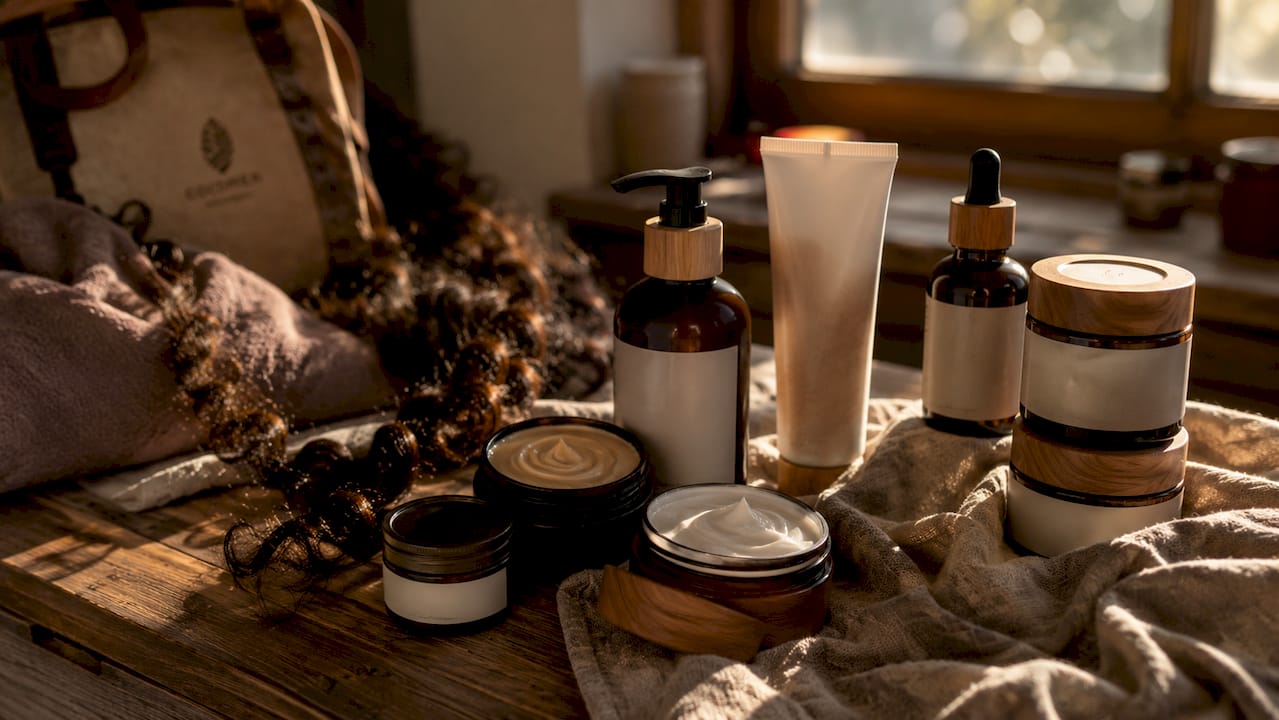
Product buildup and overload are the second major cause. Heavy butters, dense oils, and layered styling products create a water-resistant film on the hair shaft. That film weighs curls down and blocks moisture from getting in, which is the opposite of what most people expect. Using more product does not fix flat curls. It usually makes them worse.
Mechanical stress during styling and drying also breaks curl clusters apart. Touching, scrunching, or raking through curls while they are still wet disrupts the clumps that form your curl pattern.
Environmental and structural factors round out the list:
- Hard water deposits calcium and magnesium on the hair shaft, creating a mineral layer that blocks product absorption
- High humidity pulls moisture into the hair unevenly, causing frizz and curl separation
- Dry heat from indoor heating or hot climates strips moisture from the strand
- A haircut without proper layering leaves curls too heavy to spring up, so they hang limp
- Excessive glycerin in products can over-soften curls in humid climates, making them stringy rather than defined
Each of these factors affects curl structure differently, but they all lead to the same result: curls that lose their shape before you even leave the house.
How do styling products affect curl definition?
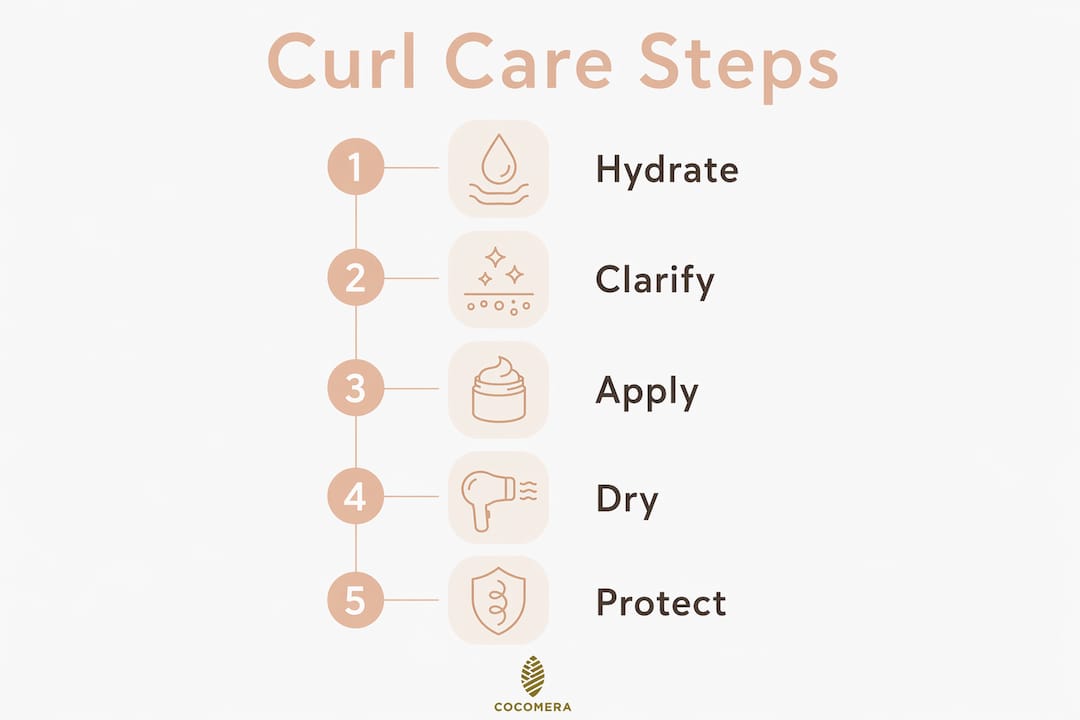
The most common misconception about curl care is that more product equals more definition. Loss of curl definition is often caused by overloaded strands, not a lack of product. Products define curls by locking in the shape that water and hydration create. They do not create definition from scratch.
Applying products the right way
The single biggest technique mistake is applying styling products to damp hair instead of soaking wet hair. Applying product to wet hair improves distribution and helps curls clump together naturally. When hair is already partially dry, product concentrates unevenly, which leads to crunchy patches and frizzy sections.
Work products through your hair in sections. Use your fingers or a wide-tooth comb to distribute evenly from root to tip. Less product applied well beats more product applied carelessly every time.
Understanding gel cast and crunch
Gel is one of the most effective curl-defining products available, but many people scrunch out the crunch too early. The crunchy feeling after gel dries is actually a protective cast around each curl cluster. Breaking that cast while hair is still damp destroys the structure the gel built. Wait until your hair is completely dry, then scrunch gently with clean hands or a microfiber cloth to release soft, defined curls.
Choosing the right product weight
- Lightweight curl creams and gels work best for type 2 and type 3 curls, which need definition without added weight
- Heavy butters and thick oils suit type 4 coils that need intense moisture, but should be used sparingly on the lengths
- Avoid layering multiple heavy products in one session, since each layer adds weight that pulls curls down
- Check ingredient lists for high concentrations of glycerin if you live in a humid climate, as it can over-soften curls
Pro Tip: Apply your styling products in the shower right after rinsing out conditioner, while your hair is at its wettest. This is when curl clumping is strongest and product distribution is most even.
Best styling and drying techniques to maintain curl definition
How you handle your hair after washing matters as much as what you put in it. The right technique preserves the curl clusters you built in the shower. The wrong technique breaks them apart before they even dry.
-
Stop touching your curls while they dry. Touching hair while it dries breaks curl clumps and causes immediate frizz. Once you have applied your products and styled your curls, put your hands down and leave them alone.
-
Detangle only on wet hair with conditioner in. Dry detangling snaps curl clusters and causes breakage. Use a wide-tooth comb or a detangling brush designed for textured hair, working from ends to roots while conditioner coats the strand.
-
Choose your drying method based on your curl type. Air drying preserves the most definition for type 3 and type 4 curls because there is no heat or airflow to disturb the forming clusters. Diffusing on low heat and low airflow works well for type 2 and type 3 curls that need volume, but high heat disrupts curl formation. Check out wet styling techniques for a full breakdown of how to style each curl type from soaking wet.
-
Get a curl-appropriate haircut. Proper layering removes weight from the ends and lets curls spring up instead of hanging down. Ask your stylist specifically for layers that support your curl pattern, not just a trim.
-
Avoid tight hairstyles on a daily basis. Constant tension from tight ponytails, braids, or buns stresses the hair shaft and weakens the curl’s natural spring over time. Protective styles are valuable, but rotating them with loose styles gives your curl pattern time to recover.
Pro Tip: Plop your hair in a microfiber towel or a cotton T-shirt for 10–20 minutes after styling. This removes excess water without disturbing curl clumps, which speeds up drying and boosts definition. Regular terry cloth towels create friction that causes frizz.
For more on controlling frizz during and after drying, the frizz control guide at Cocomera covers the most effective methods by hair type.
How do environmental and seasonal changes impact curls?
Your curl routine that works perfectly in summer may completely fail in winter. Climate, water quality, and seasonal shifts all change what your curls need to maintain their shape.
| Environmental factor | Effect on curls | Solution |
|---|---|---|
| High humidity | Frizz, curl separation, over-softening | Use anti-humidity gel or cream with a strong hold |
| Dry heat (winter, indoor heating) | Moisture loss, brittle curls, reduced spring | Add a leave-in conditioner and seal with a light oil |
| Hard water minerals | Buildup on shaft, blocked product absorption, limp curls | Use a chelating shampoo monthly to remove mineral deposits |
| Soft water | Over-moisturized, heavy curls | Reduce conditioner use and add a light protein treatment |
| Cold, dry air | Shrinkage, frizz, curl tightening | Protective styles and heavier moisturizers in winter months |
Hard water is one of the most overlooked causes of curl definition loss. Calcium and magnesium build up on the hair shaft over time, creating a mineral layer that prevents conditioners and styling products from penetrating the strand. The result is curls that look dull, feel stiff, and lose their shape quickly. A chelating shampoo cuts through mineral buildup in a way that regular clarifying shampoos cannot.
Clarifying every 4–5 washes removes product residue and keeps the hair shaft clean enough for moisture and styling products to actually work. Skipping clarifying is one of the fastest ways to build up layers of product that flatten curls over weeks. The full process for clarifying textured hair is worth reading before you add a chelating step to your routine. Understanding why hair needs moisture also helps you adapt your routine as seasons change, since the amount of moisture your curls need shifts with the weather.
What I have learned about curl definition after years of working with textured hair
The pattern I see most often is people fighting their natural texture instead of working with it. They add more product when curls go flat, switch to heavier creams when frizz appears, and rewet their hair daily when definition fades. Each of those responses makes the underlying problem worse.
Products do not create curl definition. Water and hydration create it. Products lock that definition in place. When you understand that distinction, your whole approach changes. You stop reaching for more product and start focusing on how well your hair is hydrated before you style it.
The other thing I have seen consistently is that patience during drying is the skill most people never develop. Hands-off drying feels unnatural at first. You want to touch, adjust, and fix. But every time you touch a curl that is still forming, you break the clump. The curls that look best are almost always the ones that were left completely alone from the moment styling ended until they were fully dry.
Balance between hold and softness is also worth thinking about. A gel that gives you a strong cast is not the enemy. It is protecting your curl shape while it dries. The softness comes after, when you break the cast on dry hair. Chasing soft curls while they are still wet is what leads to frizz.
— Cocomera
Curl-defining products that actually work for textured hair
Finding the right products for your specific curl type makes a real difference in how well your curls hold their shape through the day.
Cocomera curates curl-defining styling products for wavy, curly, coily, and afro hair types, with a focus on lightweight formulas that define without weighing curls down. The collection includes curl gels, lightweight curl creams, and leave-in conditioners selected for types 2, 3, and 4. For curls that need a reset, the strengthening shampoo range includes clarifying options that remove buildup without stripping moisture. Every product in the Cocomera catalog is chosen with textured hair in mind, so you spend less time guessing and more time seeing results.
Key Takeaways
Curls lose definition when moisture balance, product weight, and drying technique work against the hair’s natural structure rather than supporting it.
| Point | Details |
|---|---|
| Moisture balance is the foundation | Curly hair needs consistent hydration; both under-moisturizing and over-wetting cause curl loss. |
| Product overload flattens curls | Heavy butters and layered products create a film that weighs curls down and blocks moisture. |
| Apply products on soaking wet hair | Wet application improves distribution and curl clumping for stronger, more defined results. |
| Leave curls alone while drying | Touching hair during drying breaks curl clusters and causes immediate frizz. |
| Clarify regularly to remove buildup | Clarifying every 4–5 washes removes mineral and product residue that blocks curl definition. |
FAQ
Why do my curls lose definition by the end of the day?
Curls lose definition throughout the day mainly due to humidity, product breakdown, or insufficient hold from styling products. Applying a light-hold gel over your styling cream and avoiding touching your hair after styling extends definition significantly.
Does hard water affect curl definition?
Hard water deposits calcium and magnesium on the hair shaft, which blocks product absorption and causes curls to look limp and dull. A chelating shampoo used monthly removes these mineral deposits and restores curl spring.
How often should I wash my curly hair to maintain definition?
Washing too frequently causes hygral fatigue, which weakens curl springiness over time. Most people with curly or textured hair do best washing two to three times per week, with a clarifying wash every 4–5 sessions.
Why are my curls frizzy even after I use products?
Frizz after product application usually means the products were applied to damp rather than soaking wet hair, or the hair was touched while drying. Apply products immediately after rinsing conditioner, while hair is at its wettest, and avoid touching until fully dry.
Can a haircut improve curl definition?
A haircut with proper layering removes weight from the ends and allows curls to spring up instead of hanging flat. Ask your stylist for layers that follow your natural curl pattern rather than a blunt cut that adds bulk at the ends.