TL;DR:
Protein is essential for maintaining curl structure by filling cortex gaps and restoring elasticity.
Consistent protein treatments are necessary because the molecules wash out over time, especially in high-porosity or textured hair.
Balancing protein with moisture is vital for healthy curls, and regular trims support the effectiveness of treatments.
Protein is the structural foundation of every curl, and without enough of it, your hair loses its shape, strength, and bounce. Keratin, the protein that makes up the hair cortex, gives curls their elasticity and ability to spring back after stretching. When heat styling, chemical processing, or environmental stress breaks down that keratin, curls go limp, break easily, and lose definition. Understanding why protein matters for curls is the first step toward building a routine that actually works for your hair type, whether you have loose waves, tight coils, or anything in between.
Why protein matters for curls: the structural basics
Protein physically reinforces damaged hair strands by patching gaps in the cortex, restoring the elasticity that gives curls their signature snap. Think of each curl strand like a rope. When individual fibers fray, the rope loses tension and goes slack. Protein fills those frayed spots and brings the tension back.
The key thing to understand is that this repair is temporary. Protein molecules wash out over time, which means consistent treatment is part of the deal, not a one-time fix. This is not a flaw in the system. It reflects how living hair works: it needs ongoing care, not a single solution.
Curly and coily hair types are especially vulnerable to protein loss. The bends and curves in each strand create natural stress points where the cuticle lifts more easily, letting protein escape faster than it would in straight hair. That is why the benefits of protein for curls go beyond cosmetics. Protein is a structural necessity for textured hair, not just a conditioning bonus.
How protein treatments work at the strand level
Hydrolyzed proteins and amino acids are the two main forms used in protein treatments. Hydrolyzed proteins are broken into smaller fragments that can actually penetrate the hair shaft and reinforce mechanical strength from the inside. Amino acids work similarly but are even smaller, making them useful for finer curl types that get weighed down by heavier treatments.
Protein treatments do not permanently rebuild damaged hair. They patch and reinforce until the next wash cycle. That is why regular trims matter too. Split ends keep splitting no matter how much protein you apply, so removing damaged ends reduces how much work your treatments need to do.
Pro Tip: Start with a protein-infused leave-in or conditioner before moving to stronger treatments. Your curls will tell you quickly whether they need more or less.
Protein vs. moisture: why curls need both
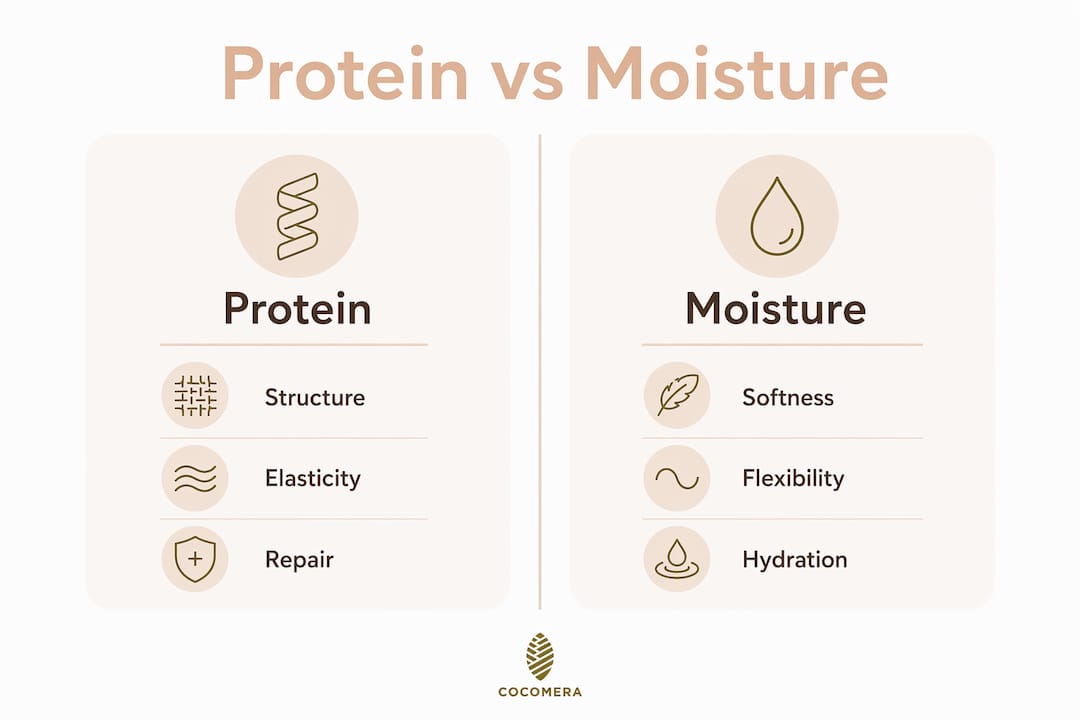
Protein is the internal scaffold of the hair strand, while moisture provides softness and flexibility. These two are not opposites. They are partners. Treating them as competing forces is one of the most common mistakes in curly hair care.
Here is a useful way to think about it: protein is the frame of a building, and moisture is the material that makes it livable. A frame with no interior is cold and rigid. A soft interior with no frame collapses. Your curls need both to function well.
The protein-moisture balance is dynamic, not a fixed ratio you calculate once and stick to forever. It shifts with the seasons, your styling habits, how often you use heat, and even the water quality in your area. Hard water, for example, deposits minerals that damage the cuticle and accelerate protein loss, meaning your curls may need more frequent protein support in areas with hard water.
| Condition | Protein focus | Moisture focus |
|---|---|---|
| Limp, stretchy, no definition | High | Maintain |
| Stiff, brittle, straw-like | Reduce | High |
| Balanced, defined, elastic | Maintain | Maintain |
| Post-color or heat damage | High | High |
Pro Tip: If you have been loading up on deep conditioners but your curls still feel limp, the problem is likely protein deficiency, not lack of moisture. Switch your next treatment to a protein-focused one and observe the difference.
How does curl type and porosity affect protein needs?
Not all curls need protein at the same frequency. High-porosity hair absorbs and loses protein faster because the cuticle layer is raised and porous. This means high-porosity curls benefit from more frequent protein treatments to keep the structure reinforced.
Low-porosity hair sits at the other end. The cuticle lies flat and resists absorption, so protein can build up on the surface rather than penetrating the strand. Overusing protein on low-porosity curls leads to stiffness and product buildup rather than strength.
Type 4 coily hair is more fragile than other curl types because the tight bends create multiple weak points along each strand. Those bending points lose protein faster, making coily hair more protein-dependent overall. Type 2 and 3 curls still need protein, but typically at lower frequency unless they have been chemically processed or heat-damaged.
-
Type 2 (wavy): Light protein treatments every 4–6 weeks, or as needed after heat use
-
Type 3 (curly): Moderate protein every 3–4 weeks, more often if color-treated
-
Type 4 (coily): Regular protein support every 2–3 weeks, with rich moisture follow-up
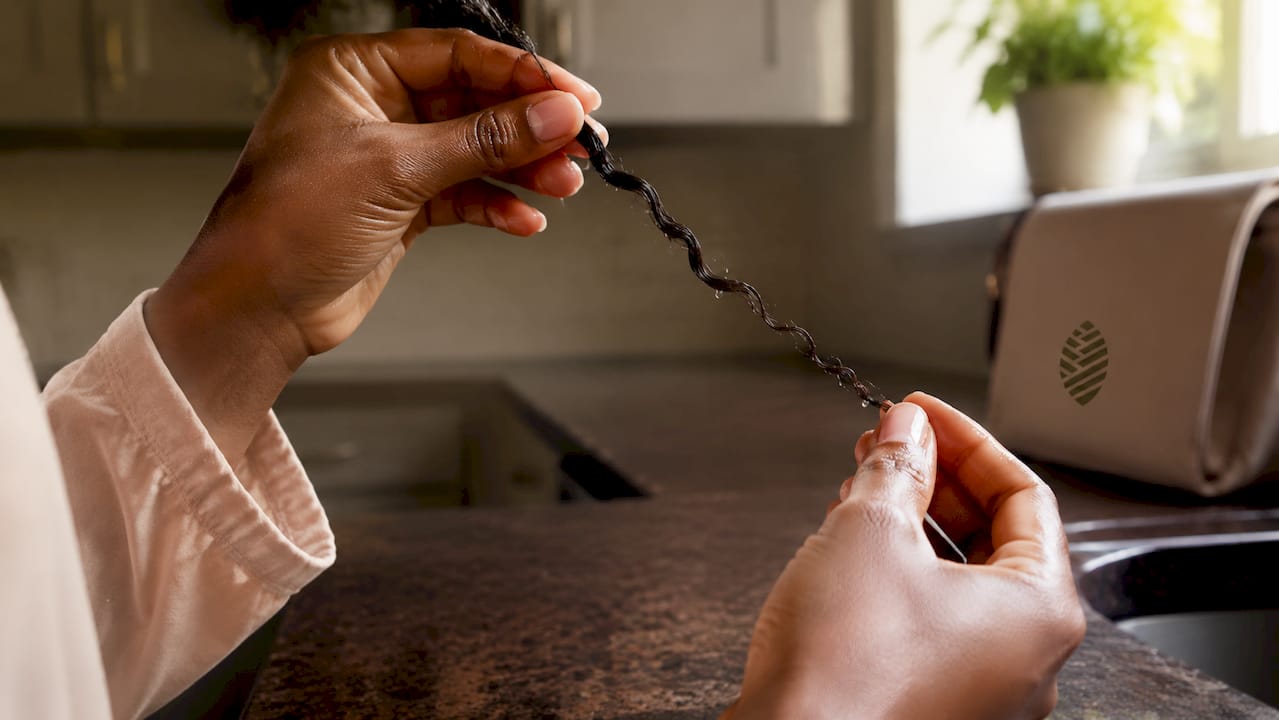
The stretch test is the most reliable way to check your protein levels at home. Take a wet strand and gently pull it. Healthy hair stretches slightly and snaps back. Hair that stretches far without returning lacks protein. Hair that snaps immediately with no stretch has too much protein and needs moisture.
What are the signs of protein deficiency vs. protein overload?
Knowing what to look for saves you from treating the wrong problem. Protein deficiency and protein overload produce opposite symptoms, but both leave your curls looking and feeling off.
Signs your curls need more protein
-
Curls look limp and flat, even after styling
-
Hair feels gummy or mushy when wet
-
Strands stretch far without snapping back
-
Increased breakage, especially mid-shaft
-
Curl pattern has lost definition and looks undefined
Signs of protein overload
Protein overload makes hair feel stiff, rough, and brittle, similar to uncooked straw. Curls that crunch without product, snap easily, and feel dry despite conditioning are showing overload symptoms. The fix is to clarify with a gentle clarifying shampoo, then follow with a rich, protein-free deep conditioner.
One important nuance: hair that feels stiff right after a protein treatment usually just needs better follow-up conditioning, not a full protein detox. Always follow a protein treatment with a moisturizing conditioner to keep curls soft and pliable.
How to add protein treatments to your curly hair routine
Building protein into your curly hair care routine does not require a complicated system. Start simple and adjust based on how your curls respond.
-
Start with protein-infused leave-ins or conditioners. These are the lightest form of protein support and work well for maintenance between stronger treatments. Products with hydrolyzed wheat protein or silk amino acids fall into this category.
-
Add a dedicated protein treatment every 3–6 weeks. Frequency depends on your porosity and damage level. High-porosity or chemically treated hair benefits from more frequent use. Low-porosity hair should stay on the lighter end.
-
Always follow protein with moisture. Apply a moisturizing deep conditioner after every protein treatment. This prevents the stiffness that comes from protein without adequate hydration. The importance of protein in hair care is only realized when moisture follows.
-
Clarify before protein treatments. Product buildup blocks protein from penetrating the strand. A clarifying shampoo before treatment gives protein direct access to the hair shaft.
-
Get regular trims. Damaged ends cannot be repaired by protein alone. Trimming every 8–12 weeks removes the most compromised sections and reduces how much structural support your hair needs overall.
-
Adjust seasonally. Cold, dry winters and humid summers affect how your curls hold moisture and protein. Pay attention to how your hair behaves as conditions change and shift your routine accordingly.
Pro Tip: Keep a simple hair journal for one month. Note what products you used, how your curls felt, and what the weather was like. Patterns emerge quickly, and you will stop guessing what your hair needs.
Key takeaways
Protein is the structural backbone of healthy curls, and getting the balance right between protein and moisture is an ongoing practice, not a one-time fix.
| Point | Details |
|---|---|
| Protein reinforces structure | Protein fills cortex gaps caused by heat, chemicals, and environmental damage. |
| Treatments are temporary | Protein washes out over time, so consistent use is necessary for lasting results. |
| Porosity determines frequency | High-porosity curls need more frequent protein; low-porosity curls need less. |
| Moisture must follow protein | Always condition after a protein treatment to prevent stiffness and breakage. |
| Stretch test guides decisions | Wet hair that stretches without snapping back signals protein deficiency. |
What experience with curly hair actually teaches you about protein
The most common mistake I see with protein care is treating it like a rescue operation rather than a maintenance habit. People reach for a protein treatment only when their curls are already in crisis, limp and breaking, and then expect one application to fix months of neglect. Protein does not work that way.
What actually works is building protein into your routine before things go wrong. Think of it the way you think about eating well. You do not eat a salad once and expect to feel healthy for a year. Your curls need consistent, low-level protein support, with stronger treatments reserved for after chemical services or heavy heat use.
The other thing experience teaches you is that a good haircut does more for your curls than any treatment. Damaged ends drag down the whole strand, making healthy sections look weak. Once you remove the damage, your protein treatments go further and your curls respond faster.
At Cocomera, we have seen this pattern repeatedly across hair types 2, 3, and 4. The people who get the best results are the ones who observe their curls closely, adjust their routine with the seasons, and treat protein as one tool in a larger system, not the whole solution. The role of moisture is just as real. Neither protein nor moisture alone gets you to healthy, defined curls. Both do.
— Cocomera
Protein and curl care products at Cocomera
Cocomera curates hair treatments for curly hair specifically selected for wavy, curly, coily, and afro hair types, including protein treatments, strengthening conditioners, and moisture-rich deep treatments designed to work together.

For curls that need structural support after coloring or heat damage, the strengthening shampoo range at Cocomera offers a solid starting point. Pair those with a curl activator or definer to lock in definition after your protein routine. Cocomera also carries styling products for curly hair that complement protein treatments and help your curl pattern hold through wash day and beyond. Every product in the collection is chosen with textured hair in mind.
FAQ
What does protein actually do for curly hair?
Protein fills structural gaps in the hair cortex caused by heat, chemical processing, and environmental damage. This restores elasticity and helps curls snap back to their natural shape.
How often should I use a protein treatment for curly hair?
Frequency depends on your porosity and damage level. High-porosity or chemically treated curls benefit from protein every 2–3 weeks, while low-porosity hair does better with lighter protein every 4–6 weeks.
Can too much protein damage curly hair?
Yes. Protein overload makes hair stiff, brittle, and prone to breakage. If your curls feel like straw, clarify with a gentle shampoo and follow with a protein-free deep conditioner.
Does protein replace moisture in a curly hair routine?
Protein and moisture serve different functions and cannot replace each other. Protein provides internal structure; moisture provides softness and flexibility. Healthy curls need both.
How do I know if my curls need protein or moisture?
Use the stretch test on a wet strand. Hair that stretches far without snapping back needs protein. Hair that snaps immediately with no give needs moisture and less protein.