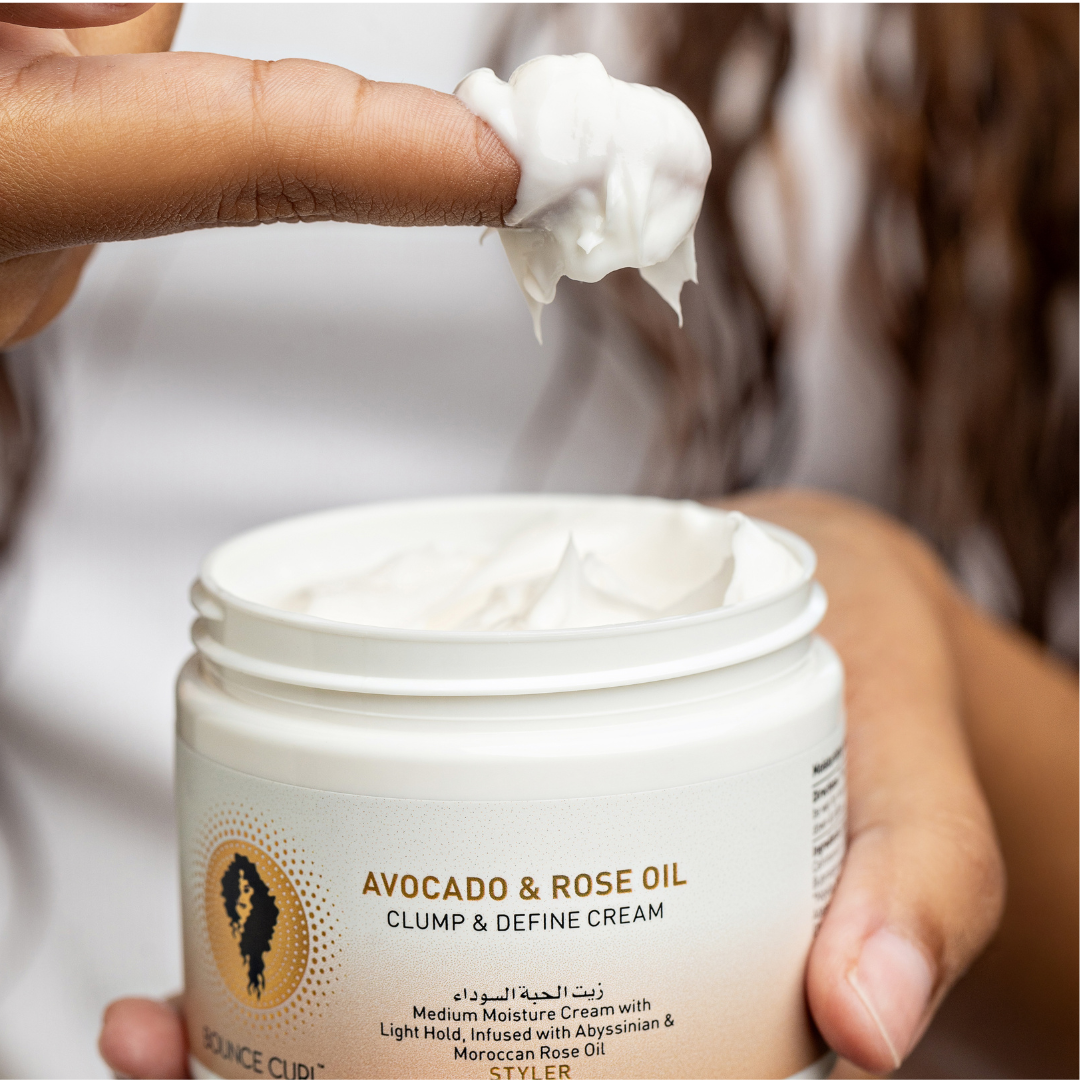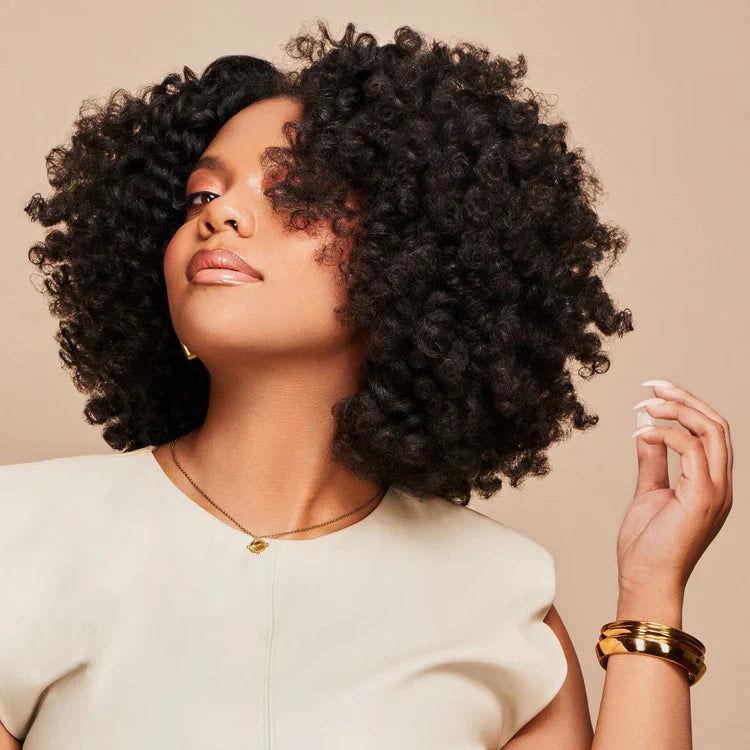
Staring at the back of a hair product bottle and feeling completely lost is a shared experience for so many women with textured hair. Ingredient lists can read like a chemistry exam, and with thousands of products on the market, it’s hard to know what actually works for wavy, curly, coily, or afro hair. Curl patterns and hair care research shows that textured hair has a unique structure that requires specific care. This guide cuts through the noise. You’ll learn how to read labels with confidence, which ingredients to seek out, which to avoid, and how to build a routine that genuinely supports your curls.
Table of Contents
- How to evaluate ingredients for textured hair
- Hydrating essentials: Moisturizers for curly, coily, and afro hair
- Nourishing oils and butters: Nature’s helpers for textured hair
- Strengtheners and protectants: Proteins, ceramides, and UV shields
- Why less is more: Rethinking ingredient overload for textured hair
- Find your best curl products at Cocomera
- Frequently asked questions
Key Takeaways
| Point | Details |
|---|---|
| Prioritize hydration | Look for water-based moisturizers and natural humectants to keep textured hair soft and manageable. |
| Embrace nourishing oils | Coconut, olive, and argan oils support hair health and lock in much-needed moisture. |
| Balance protein and moisture | Strengthening ingredients like proteins are crucial, but balance them with hydrating treatments for best results. |
| Check every product label | Avoid sulfates, harsh alcohols, and parabens to protect your curls from dryness and damage. |
How to evaluate ingredients for textured hair
Every ingredient list tells a story, and once you know how to read it, shopping for hair products becomes much easier. Ingredients are listed in order of concentration, meaning the first few ingredients make up the bulk of the formula. If water or aloe vera appears near the top, the product is likely well-hydrated. If a harmful ingredient appears near the top, that’s a red flag.
Moisture is a key requirement for maintaining healthy textured curls, so hydration should be your first filter when evaluating any product. After that, look for nourishing and strengthening ingredients that support your curl pattern and hair density.
Here’s what to prioritize and what to avoid:
Prioritize these:
- Humectants (glycerin, aloe vera, panthenol) that draw moisture into the hair shaft
- Emollients (shea butter, oils) that soften and smooth the cuticle
- Proteins (hydrolyzed keratin, silk amino acids) that reinforce weakened strands
- Natural extracts that soothe the scalp and reduce inflammation
Avoid these:
- Sulfates like sodium lauryl sulfate, which strip natural oils aggressively
- Drying alcohols such as isopropyl alcohol or SD alcohol, which dehydrate strands
- Non-water-soluble silicones (dimethicone, cyclomethicone) that build up and block moisture
- Parabens, which are preservatives linked to scalp irritation in sensitive individuals
Understanding curly hair care tips also means recognizing that not every “natural” ingredient is automatically good, and not every synthetic ingredient is harmful. Panthenol, for example, is lab-derived but incredibly effective at retaining moisture.
Pro Tip: When trying a new product, check that water or aloe vera is listed within the first three ingredients. If a drying alcohol or sulfate appears in the top five, put it back on the shelf.
Hydrating essentials: Moisturizers for curly, coily, and afro hair
With clear criteria in mind, let’s spotlight must-have moisturizing ingredients and how they perform. Hydration is the foundation of every healthy curl routine, and the right moisturizing ingredients can mean the difference between defined, bouncy curls and dry, brittle strands that break easily.
Hydrating agents like glycerin and aloe vera help retain moisture in curls by acting as humectants. Humectants work by pulling water from the air and binding it to the hair shaft. Emollients, on the other hand, coat the strand to prevent that moisture from escaping.
Top moisturizing ingredients to look for:
- Glycerin: A powerhouse humectant that draws moisture deep into the cortex. Works best in humid climates.
- Aloe vera: Soothes the scalp, conditions the strand, and adds lightweight hydration without weighing curls down.
- Panthenol (vitamin B5): Penetrates the hair shaft and improves elasticity, reducing breakage.
- Honey: A natural humectant with antibacterial properties that adds shine and softness.
- Sorbitol: A gentler humectant that works well for fine or wavy textures that can’t handle heavy products.
Hair hydration research confirms that consistent moisture application reduces frizz and breakage significantly in textured hair types. Regular hydration also keeps the cuticle lying flat, which is what gives curls that glossy, defined look.
Here’s a quick comparison to help you choose:
| Type | Examples | Best for |
|---|---|---|
| Humectants | Glycerin, aloe vera, honey | Drawing moisture into the hair |
| Emollients | Shea butter, olive oil | Smoothing and softening strands |
| Occlusives | Castor oil, beeswax | Sealing moisture in after hydrating |
“The best curl days start with a well-hydrated strand. Moisture isn’t a luxury for textured hair. It’s a necessity.”
Explore moisturizers for textured hair to learn more about building a hydration-first routine. For wash-and-go days, reach for a moisturizing shampoo for curls that won’t strip your natural oils before you even start styling.
Pro Tip: On wash-and-go days, apply your leave-in conditioner to soaking wet hair. Humectants work best when there’s already water present in the strand.
Nourishing oils and butters: Nature’s helpers for textured hair
Now that moisturizers are covered, let’s dive into nourishing oils and butters that help lock moisture into textured hair. Think of oils and butters as the final step in your hydration routine. They seal everything in and keep your curls nourished between wash days.
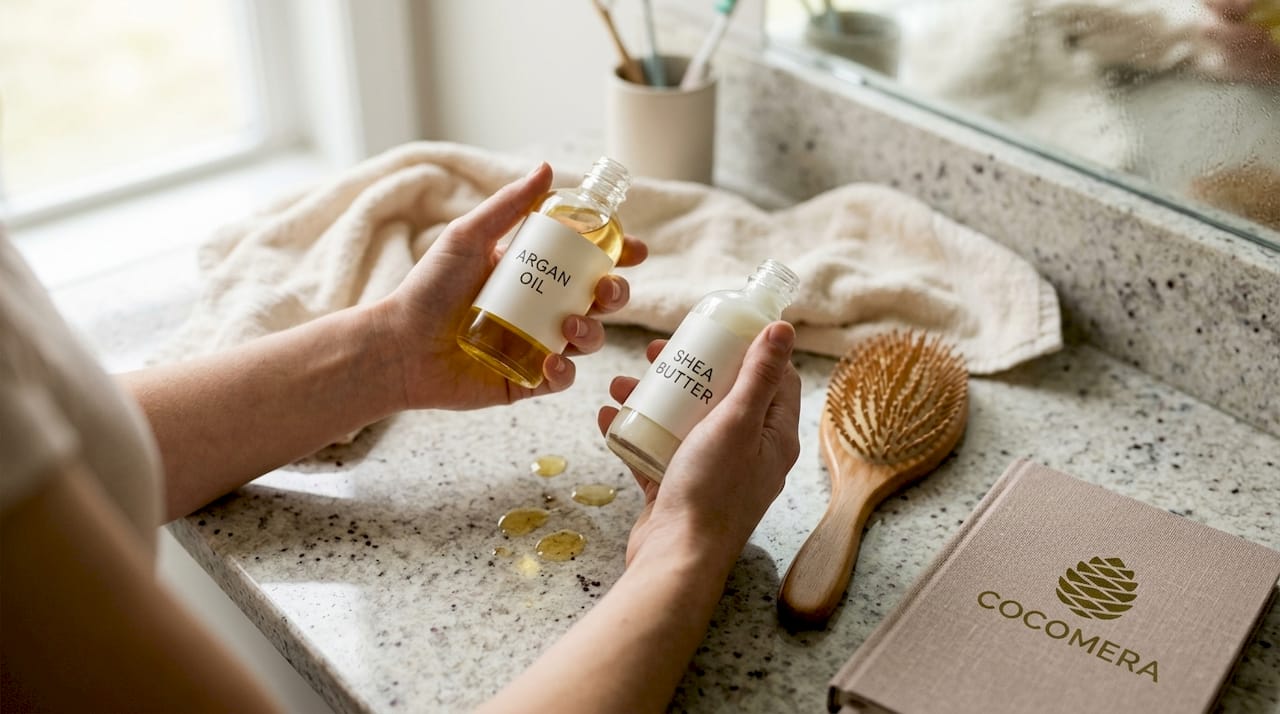
Natural oils such as coconut, olive, and argan oil offer deep nourishment and help lock in moisture, making them essential for coily and afro textures that experience the most moisture loss. Best oils for curly hair vary by porosity and curl pattern, so knowing your hair type helps you choose wisely.
Key oils and butters for textured hair:
- Coconut oil: Penetrates the hair shaft to reduce protein loss. Best for medium to high porosity hair.
- Argan oil: Lightweight and rich in vitamin E. Great for adding shine without heaviness.
- Jojoba oil: Closely mimics the scalp’s natural sebum, making it ideal for scalp health.
- Castor oil: Thick and occlusive. Excellent for sealing moisture and supporting scalp circulation.
- Olive oil: Rich in oleic acid, deeply conditions and softens coarser textures.
- Shea butter: A rich emollient that seals moisture and reduces breakage in coily and afro hair.
- Mango butter: Lighter than shea, with a silky finish that works well for wavy and curly types.
Here’s a comparison to guide your choices:
| Oil or butter | Absorption rate | Best use |
|---|---|---|
| Argan oil | Fast | Frizz control, shine |
| Coconut oil | Medium | Pre-wash treatment, sealing |
| Castor oil | Slow | Scalp massage, sealing |
| Shea butter | Slow | Moisture sealing, styling |
| Jojoba oil | Fast | Scalp health, lightweight moisture |
Using a combination of oils gives you the best of all worlds. A fast-absorbing oil like argan adds shine, while a slower oil like castor seals it all in. Browse natural oils for textured hair for routine ideas, or shop hair oil options directly. If you’re caring for little ones, check out oils and butters for kids for gentler formulas.
Strengtheners and protectants: Proteins, ceramides, and UV shields
We’ve hydrated and nourished your strands. Now discover ingredients that shield and strengthen textured hair. While moisture keeps curls soft and defined, proteins and protective ingredients keep them resilient and damage-resistant.
Proteins and ceramides provide structural support to hair and help prevent damage by reinforcing the cuticle layer. Protein ingredients in hair care research shows they can significantly reduce breakage in chemically treated or heat-styled hair.
Here are the key strengthening and protective ingredients to know:
- Hydrolyzed keratin: Fills gaps in the cuticle, smooths frizz, and restores elasticity. Ideal after heat or chemical processing.
- Hydrolyzed silk: A finer protein that adds softness and shine without stiffness. Great for fine curly hair.
- Hydrolyzed wheat protein: Adds volume and strengthens strands prone to breakage.
- Ceramides: Lipid molecules that bind the cuticle layers together, locking in moisture and preventing split ends.
- Amino acids (arginine, cysteine): The building blocks of hair. They repair micro-damage and improve overall strand integrity.
- UV protectants: Ingredients like benzophenone or UV-absorbing plant extracts shield melanin-rich hair from sun-induced dryness and color fading.
| Strengthener | Key benefit | Best for |
|---|---|---|
| Hydrolyzed keratin | Fills cuticle gaps, reduces frizz | Chemically treated hair |
| Ceramides | Binds cuticle layers, retains moisture | All textured types |
| Amino acids | Repairs micro-damage | Weak or over-processed hair |
| UV protectants | Shields from sun damage | Melanin-rich hair, outdoor lifestyles |
Explore protein shampoos for curls to find formulas that balance strength with hydration. Pair them with a good leave-in conditioner to keep strands flexible.
Pro Tip: Protein overload is real. If your curls start feeling stiff, crunchy, or snapping easily, dial back the protein and add a deep moisture treatment for a week or two.
Why less is more: Rethinking ingredient overload for textured hair
Here’s an uncomfortable truth: the more products you layer, the harder it becomes to know what’s actually working. The textured hair community has embraced the idea that more is more, but product buildup is one of the most common reasons curls lose definition and feel weighed down.
Natural curls thrive on consistency and fewer, well-chosen ingredients. A simple routine built around two or three proven products will almost always outperform a ten-step system loaded with competing ingredients.
At Cocomera, we’ve seen this pattern repeatedly. Customers come in overwhelmed, using six or seven products at once, and their curls are dull and heavy. When they simplify to a cleanser, a leave-in, and a sealing oil, their hair transforms. The ingredients finally have room to do their job.
Multi-textured hair care is especially prone to overcomplication because different sections of the hair respond differently. The solution isn’t more products. It’s smarter, more targeted choices. Pick ingredients that address your hair’s top two or three needs, and stick with them long enough to see real results.
Find your best curl products at Cocomera
Ready to simplify your routine with trusted, effective ingredients? Here’s where to start.
At Cocomera, every product in our collection is carefully chosen for ingredient quality and performance across hair types 2, 3, and 4. We make it easier to find what your curls actually need without wading through hundreds of options.
Whether you’re looking for curly hair treatments that restore moisture and strength, styling essentials that define your curl pattern without buildup, or hair oils for textured hair that seal in hydration between wash days, Cocomera brings it all together in one place. We believe your curl routine should feel simple, effective, and genuinely yours.
Frequently asked questions
What ingredients should I avoid in textured hair products?
Avoid harsh sulfates and drying alcohols as they can dry out or damage textured hair. Non-water-soluble silicones and parabens are also worth skipping for long-term scalp and strand health.
Can I use coconut oil on all curl types?
Coconut oil works well for nourishing textured hair, but fine or wavy types should use it sparingly to avoid buildup. Coily and afro textures can typically handle richer, more generous application.
What’s the best ingredient for defining curls?
Glycerin and aloe vera are top choices for curl definition because they attract and hold moisture, helping curls clump and form their natural pattern.
How do I know if my hair needs protein?
If your curls feel limp, mushy, or stretch without snapping back, they may need protein. Protein restores structure to weak, damaged curls and helps them hold their shape through the day.
Recommended
- Afro hair styling steps for 3 and 4 curls in 2026 – Cocomera
- Why hair needs moisture: essential guide for textured curls – Cocomera
- Curly hair care tips for healthy textured hair - Cocomera
- Cowash Shampoo for Curly & Afro Hair - Cocomera
- Types of human hair textures: 7 key options and 30% less tangling – Gaurash Beauty Supply
- How to Style Curly Hair for Fashion-Forward Looks - Joel C Ma Hair Studio