The fastest fix for high humidity frizz is a layered routine, leave-in, then a curl cream or gel, applied to hair that’s still dripping wet, followed by zero touching until it’s bone dry. Adjust the layers by porosity (heavier sealants for high porosity, lighter oils for low) and skip glycerin-heavy products on the muggiest days. Product picks for this exact routine are listed below.
TL;DR:
- High-porosity hair absorbs and loses moisture quickly, so heavier sealants like butters and oils are essential for managing humidity frizz.
- Applying products to soaking-wet hair ensures even distribution and better curl definition compared to applying them to damp or dry strands.
- Use light, water-based products for low-porosity hair, while high-porosity hair benefits from richer, sealing formulas to prevent excessive moisture uptake.
- Avoid glycerin-heavy products on muggy days, and prefer anti-humectant ingredients or sealants like shea butter to block excess humidity.
- Proper drying techniques, such as diffusing on low heat and refraining from touching curls during drying, help preserve curl clumps and prevent frizz.
Table of Contents
- What Humidity Does to Curly Hair (And Why Porosity Matters)
- How Do You Style Curly Hair to Fight Humidity?
- How Often Should You Wash and Condition Curly Hair?
- Drying Techniques That Actually Preserve Curl Clumps
- Quick Ways to Refresh Curls Without Adding More Product
- Protecting Curls Overnight in Humid Weather
- Picks for a Humidity-Proof Curl Routine
- What Curl Communities Keep Asking About Humidity
- Build Your Humidity Starter Kit
- Sources
- FAQ
What Humidity Does to Curly Hair (And Why Porosity Matters)
Hair is hygroscopic. It pulls moisture straight out of the air, and when the outer cuticle layer absorbs that water vapor, it swells and lifts. Lifted cuticle scales scatter light and catch on neighboring strands, which is the actual mechanical cause of frizz, not just “bad luck” on a humid day.
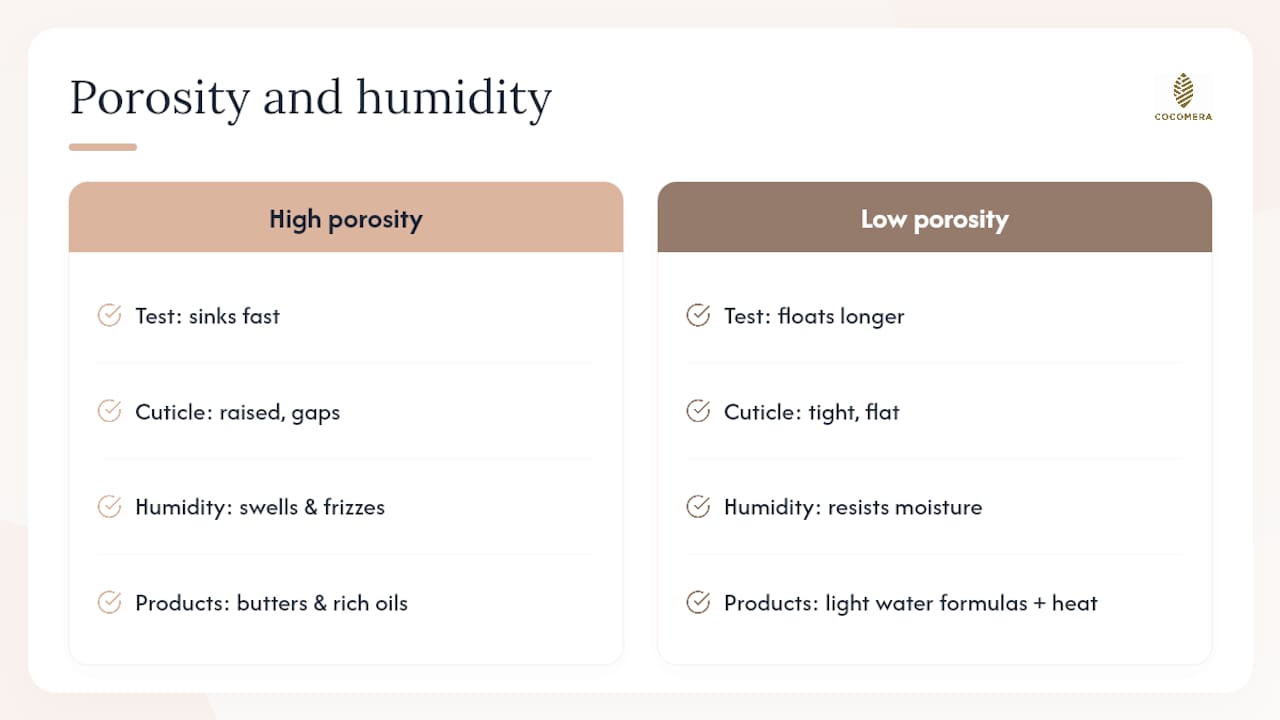
Porosity decides how badly this hits you. High-porosity hair has gaps and raised cuticles already, so it drinks in moisture fast and then loses it just as fast, leaving curls swollen, frayed, and quick to fall flat. Low-porosity hair has tighter, flatter cuticles that resist letting anything in, product included, which means heavy creams tend to sit on top and never absorb.
A rough porosity check: drop a clean strand in a glass of water. If it sinks fast, you’re high porosity and need heavier sealants like butters or richer oils. If it floats for a while, you’re low porosity and want lighter, water-based formulas plus a little heat to help products penetrate. This single test changes which products actually work for you under high humidity conditions.
How Do You Style Curly Hair to Fight Humidity?
The order you apply products in matters as much as which products you pick. Water is what distributes everything evenly through the curl, which is why layering products onto soaking-wet hair works so much better than applying them to hair that’s merely damp. Damp hair has already started drying unevenly, so product clumps in some spots and misses others entirely.
The standard order:
- Leave-in conditioner on dripping wet hair for hydration and slip.
- Curl cream or mousse to define the shape and encourage clumping.
- Gel last, for hold and a protective cast that resists frizz as it dries.
Skip products loaded with glycerin high on the ingredient list when the weather is muggy. Glycerin is a humectant, meaning it pulls moisture from the air into your hair, which is exactly backwards when the air already has too much moisture to spare. On those days, look for anti-humectant ingredients or sealants like shea butter and heavier oils that block excess moisture from getting in, rather than inviting more of it.
Pro Tip: Keep a spray bottle of plain water in the shower. Rewetting sections as you work through your hair keeps every layer distributing evenly instead of drying before the next product goes on.
How Often Should You Wash and Condition Curly Hair?
Most curly hair does best with a wash day every 4 to 7 days, though it depends heavily on scalp oiliness and how much product buildup you’re carrying. Dermatologists recommend leaning on moisturizing conditioners as your daily workhorse and reaching for a clarifying shampoo only every one to two weeks, since curly hair is naturally drier and over-clarifying strips it further.
Condition in the shower with sections, not all at once. Detangle while the conditioner is still in and hair is fully saturated. That slip reduces the friction that snaps strands and roughens cuticles before you’ve even started styling.
- Deep condition regularly if your hair runs dry or has high porosity.
- Rotate in a protein treatment only if hair feels limp or overly stretchy, which can be a sign of protein deficiency rather than moisture deficiency.
- Reserve clarifying washes for buildup weeks, not every wash day.
Drying Techniques That Actually Preserve Curl Clumps
How you dry your curls after washing decides whether they stay defined through a humid afternoon or fall apart by lunch. Rubbing hair with a terrycloth towel roughs up the cuticle and creates instant frizz, so swap it for a microfiber towel or a cotton T shirt and scrunch gently instead of rubbing.
- Squeeze out excess water with the microfiber towel or T shirt.
- Plop your hair, wrapping it up in the towel or shirt for 10 to 20 minutes to let curls set without weight pulling them down.
- Diffuse on low heat and low airflow, cupping sections into the diffuser bowl rather than blasting the whole head.
- Finish with a cold shot if your dryer has one, to help seal the cuticle flat.
- Once fully dry, break the gel cast by rubbing a small amount of oil between your palms and scrunching it through.
The step people skip is the hardest one: stop touching your hair while it dries. Touching hair mid-dry breaks apart curl clumps and lifts the cuticle right when it’s trying to set, which undoes everything the layering routine just accomplished.
Pro Tip: If you catch yourself reaching up to “fix” a curl before it’s dry, that’s the exact moment you’re causing the frizz you’re trying to prevent. Walk away instead.
Quick Ways to Refresh Curls Without Adding More Product
A second-day refresh calls for water, not more product. Misting your hair lightly and reshaping the existing curl clumps reactivates the gel and cream already in your hair rather than layering fresh product on top and causing buildup by day three.
- Carry a small continuous-spray bottle for even, fine misting on the go.
- Add a travel-size gel only where a section has genuinely fallen flat, not across the whole head.
- Pack a compact travel diffuser if you’re refreshing after a swim or a sweaty commute.
This approach also protects the curl definition you already built through your curl clumping technique, instead of drowning it under a second full application.
Protecting Curls Overnight in Humid Weather
Loosely gather hair into a high, soft “pineapple” at the crown, using a scrunchie rather than a tight elastic, so volume stays lifted instead of getting crushed flat overnight. Swap a cotton pillowcase for satin or silk, which cuts down the friction that causes tangles and frizz while you sleep. If your hair feels dry by morning, a light mist of water plus a small dab of leave-in or sealant is usually enough. No need for a full re-styling.

Picks for a Humidity-Proof Curl Routine
Matching the right product to each step of the routine (and to your porosity) is where most curl routines actually fall apart. Here’s how three picks fit the process described above.
- The Bounce Curl Weightless Conditioning Mask works as a weekly deep treatment that adds moisture without the heaviness that weighs down medium-porosity curls, a good match if your strand sank slowly in the porosity test.
- The LETS DRED Locks and Braid Spray is light enough for daily detangling and doubles as a quick refresh mist when you need to reactivate curls without piling on new product.
- The AS I AM Rice Water Mist Spray is a continuous, water-based mist built for exactly the “apply to soaking-wet hair” step, or for spritzing sections back to life between wash days.
**
What Curl Communities Keep Asking About Humidity
Customers writing in almost always ask some version of the same question: why does the routine that worked last month suddenly stop working the moment it gets muggy outside? The answer, nearly every time, traces back to porosity or product weight, not a bad product. Recommendations here have shifted over time toward suggesting readers test one variable at a time rather than overhauling everything at once. If you’re not sure where your own routine is falling short, this humidity-specific guide walks through matching routines to curl type in more depth.
Build Your Humidity Starter Kit
Finding the right products for wavy, curly, coily, and afro hair usually means digging through dozens of brands that were never formulated with textured hair in mind. This site offers products curated specifically for hair types 2 through 4, so you’re choosing between products that actually fit your porosity and curl pattern instead of guessing.
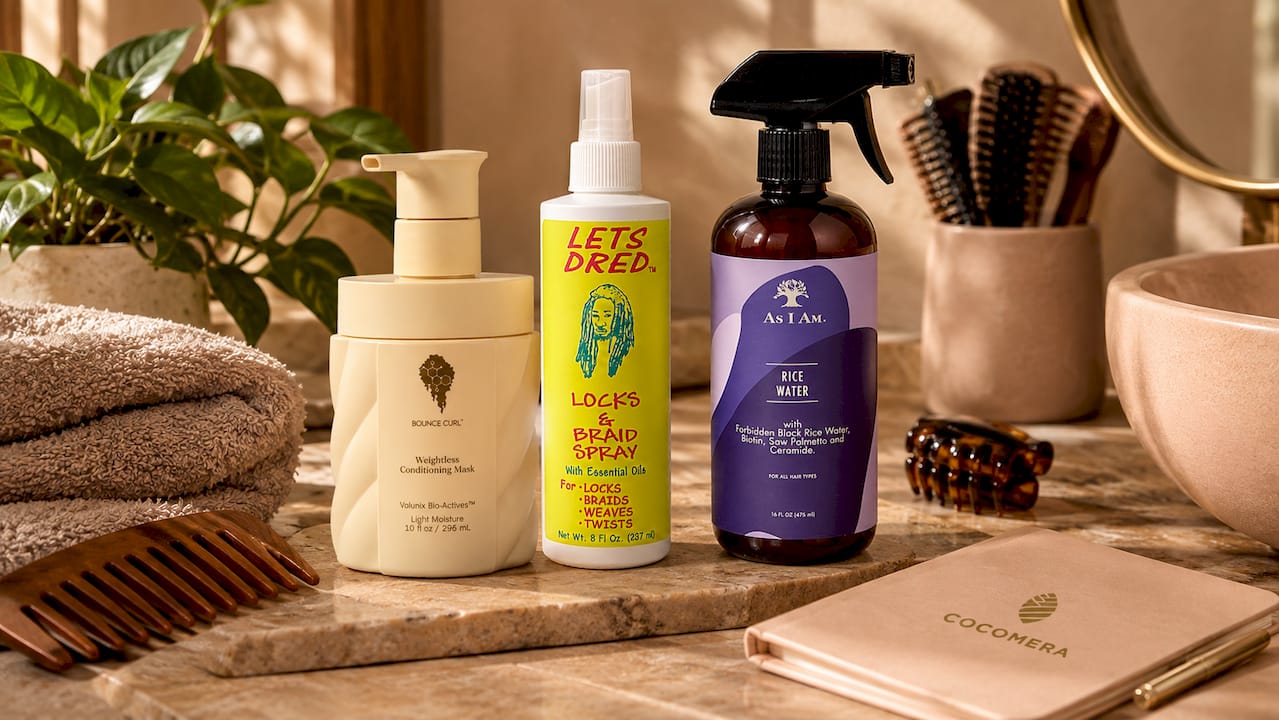
Start with the Bounce Curl Weightless Conditioning Mask for your weekly treatment, add the AS I AM Rice Water Mist for wash-day distribution and refreshes, and browse the full Cocomera collection to round out your leave-in, gel, and sealant lineup for the season. Building a humidity starter kit from products meant for your curl type is a faster route to fewer bad hair days than trial-and-error shopping ever is.
Sources
This guide draws on dermatologist guidance on curly hair care, an expert-led curly hair routine breakdown, a humidity-focused styling guide, and barbering technique advice for textured hair.
- How to Master a Curly Hair Routine, According to an Expert | GQ
- Hur man tämjer frissfria lockar i fuktigt väder: En komplett guide
- 6 curly hair care tips from dermatologists
- Curly hair routine: steps for defined, frizz-free curls - Los Angeles Times
FAQ
Can You Style Curly Hair While It’s Wet?
Yes, and you should. Curl products are meant to be applied to soaking-wet hair so they distribute evenly and lock in the curl clumps water naturally forms, rather than being layered onto hair that’s already partly dry.
Why Does Curly Hair Get Frizzy So Easily?
Curly hair’s cuticle layer sits more raised than straight hair to begin with, so it absorbs ambient moisture faster and swells, lifting the cuticle further and creating the rough, tangled texture known as frizz. High porosity strands are especially prone to this because their cuticles are already more open.
How Do You Keep Curls Intact Overnight?
Gather hair loosely into a high pineapple with a scrunchie to protect volume, sleep on a satin or silk pillowcase or under a bonnet to cut friction, and mist with water plus a touch of leave-in if your hair feels dry by morning.
Are Humectant Ingredients Bad for Curly Hair in Humidity?
Not always, but glycerin and other humectants can pull excess moisture from humid air into your hair, worsening frizz on already muggy days. Anti-humectant formulas or heavier sealants tend to perform better when the air is saturated.
Does Cocomera Sell Products for High-Porosity Curly Hair?
Yes. Cocomera’s collection of curated shampoo, conditioner, and styling products includes options suited to different porosity levels, with current pricing listed on each product page.