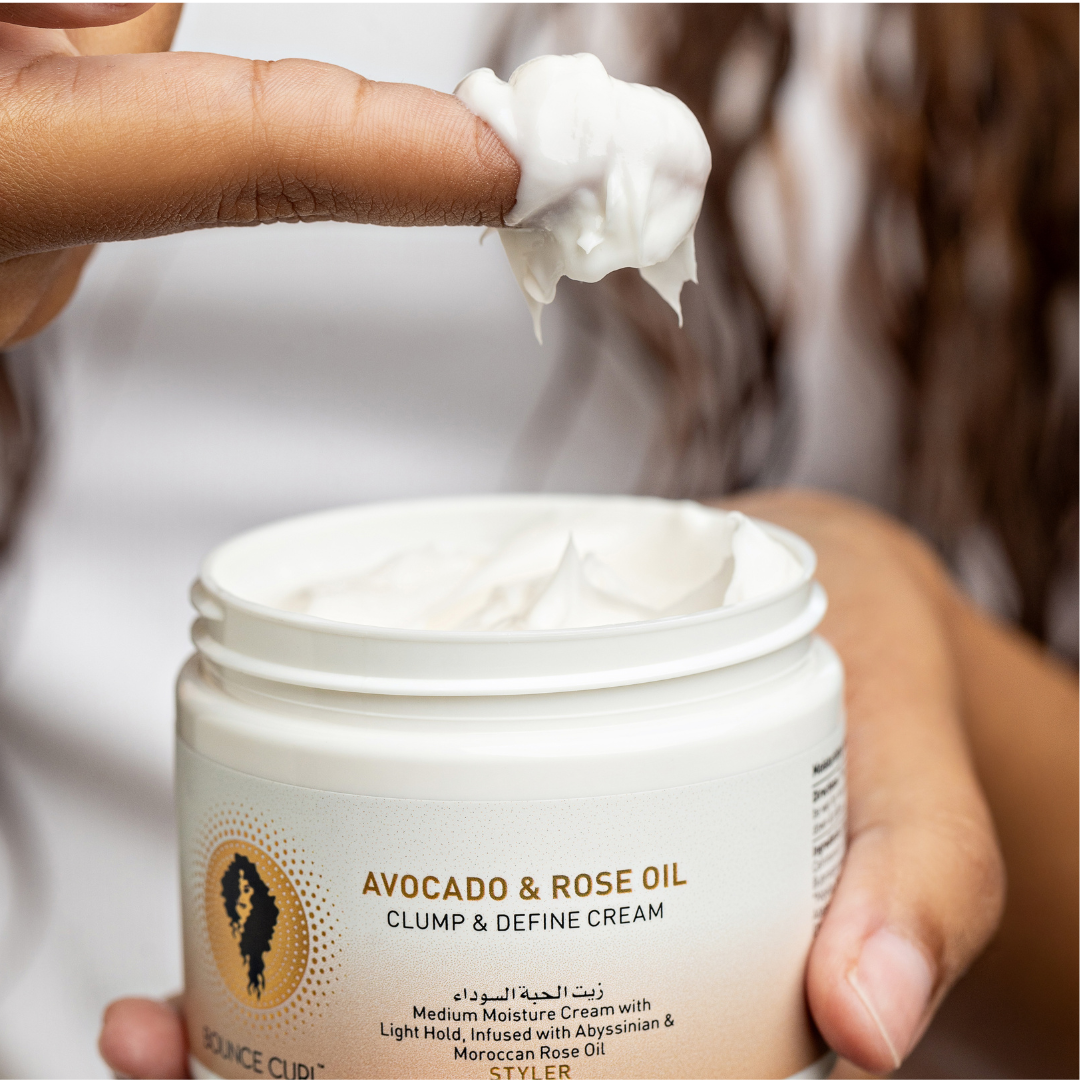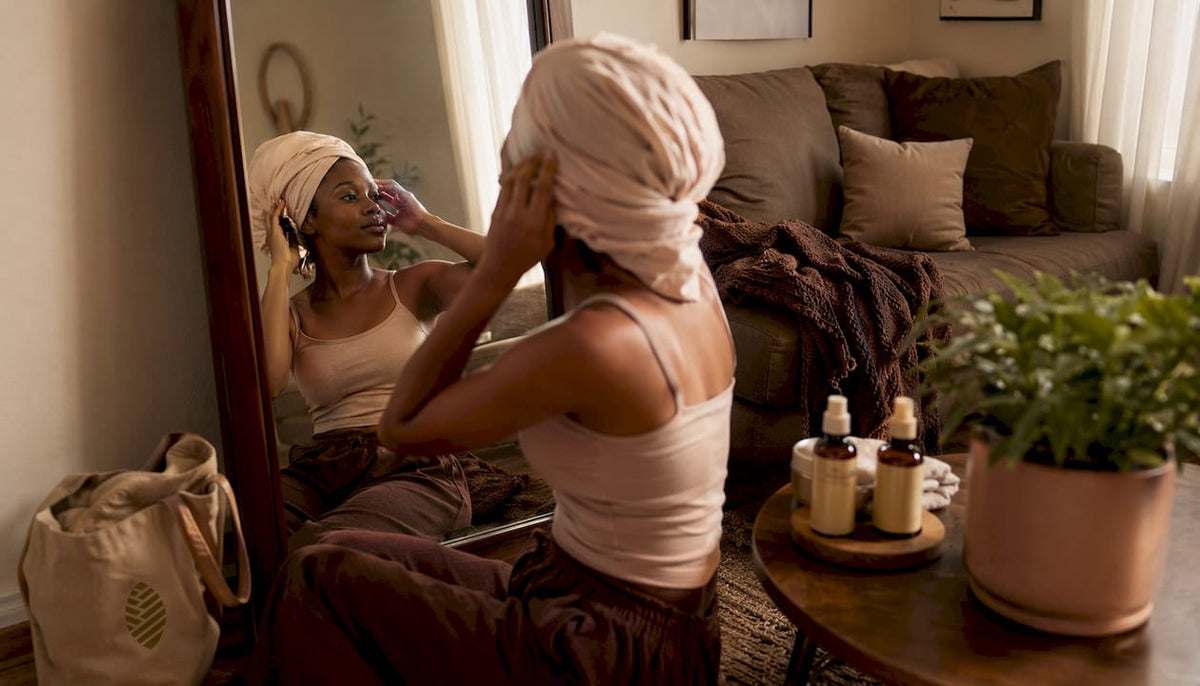
Plopping is one of the most effective curly hair drying techniques you can add to your wash day routine. Start with freshly washed, conditioned hair. Gently squeeze out excess water in the shower without wringing or rubbing. Apply your leave-in conditioner, curl cream, or gel while hair is still damp. Then follow these steps:
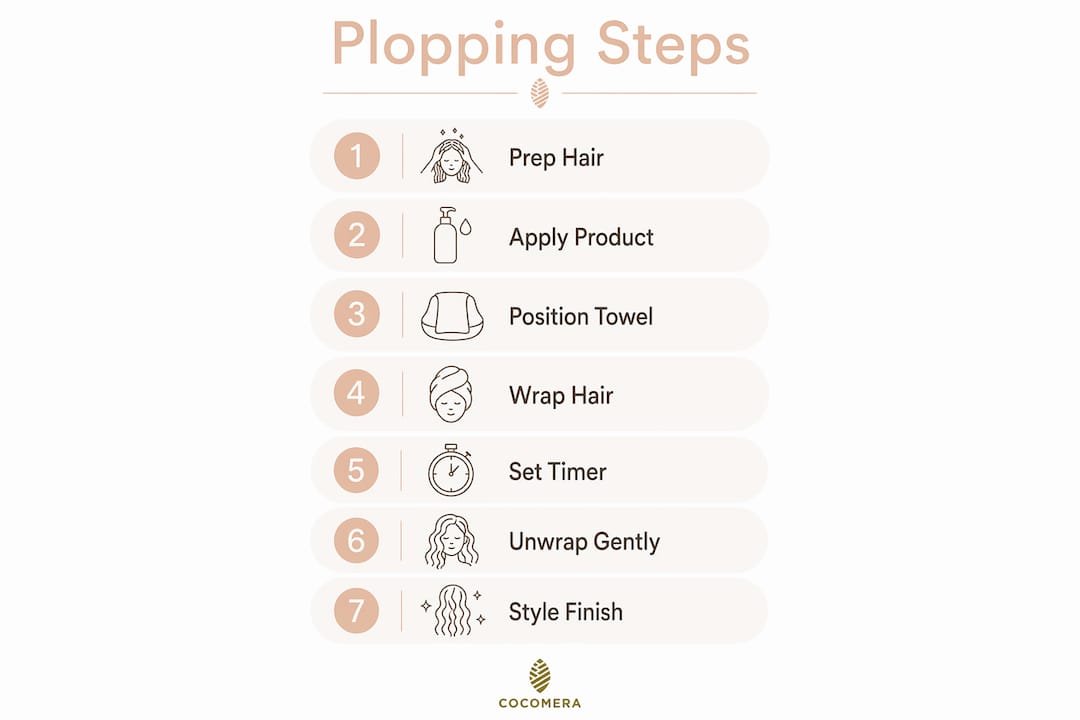
- Lay a cotton T-shirt or microfiber towel flat on a counter or bed, sleeves facing toward you.
- Flip your hair forward so it hangs upside down over the center of the fabric.
- Lower your head until your curls pile naturally onto the fabric in their own pattern.
- Fold the far end of the fabric over the back of your head to the nape of your neck.
- Grab the sleeves or fabric ends and wrap them around your head, tying securely at the front or back.
- Leave your hair plopped for 15–45 minutes depending on your hair density and curl type.
- Unwrap slowly, then finish with air drying or a low-heat diffuser to complete the drying process.
Pro Tip: Gently shake your hair before plopping to loosen curls with minimal touching. This helps prevent frizz before the fabric even touches your strands.
What is hair plopping?
Hair plopping is a heat-free method of drying curly or wavy hair using a soft fabric, typically an old cotton T-shirt or a microfiber towel, to absorb moisture while curls set in their natural pattern. Instead of rubbing hair dry with a terrycloth bath towel, you lower wet hair onto the fabric and wrap it around your head so curls can dry undisturbed.
“Plopping is a heat-free way to dry curly hair. The plopping motion downward onto the towel allows curls to dry in their natural curl pattern.” — Allure
The key difference from regular towel drying is friction. Traditional terrycloth towels have rough fibers that lift the hair cuticle and cause frizz. Cotton and microfiber fabrics absorb moisture without that roughness, so curls stay clumped and defined as they dry. Plopping also differs from heat drying because it never exposes your strands to damaging temperatures. The fabric does the work while you go about your morning routine.
Why does plopping work so well for curly hair?
The benefits of hair plopping go beyond just skipping the blow dryer. Here is what actually changes when you plop consistently:
- Less frizz. By eliminating the rubbing motion of a bath towel, plopping protects the hair cuticle and keeps flyaways from forming as hair dries.
- Better curl definition. Curls pile on top of each other in their natural clumps, so they dry with more shape and consistency.
- More volume at the roots. Gathering hair at the crown while it dries creates lift that flat towel drying cannot replicate.
- No heat damage. Curly hair already skews dry. Removing heat from the drying process helps retain moisture and keeps strands healthier over time.
- Faster drying overall. The fabric wicks excess water efficiently, which shortens the time needed to air dry or diffuse afterward.
- Gentler on strands. Cotton fabrics are lighter and less abrasive than terrycloth, so they remove moisture without stripping the natural oils curls need.
“Microfiber towels are much more gentle on the hair than traditional terry cloth ones: this means that while they absorb just as well, they won’t be rough on the cuticle, which can lead to lifeless looking curls and damaged hair.” — Davines
Curl types 2 and 3 tend to see the most noticeable results. Hairstylist Leigh Hardges, speaking to Allure, specifically recommends plopping for type 2 and 3 curls, which have “more challenges in retaining curl on the ends and minimizing frizz.”
Step-by-step guide to plopping curly hair
Getting the technique right the first time saves a lot of frustration. Follow these steps in order for the best results.
- Wash and condition. Use a shampoo and conditioner formulated for your curl type. A strengthening shampoo designed for curly hair gives your strands a strong, hydrated base before styling.
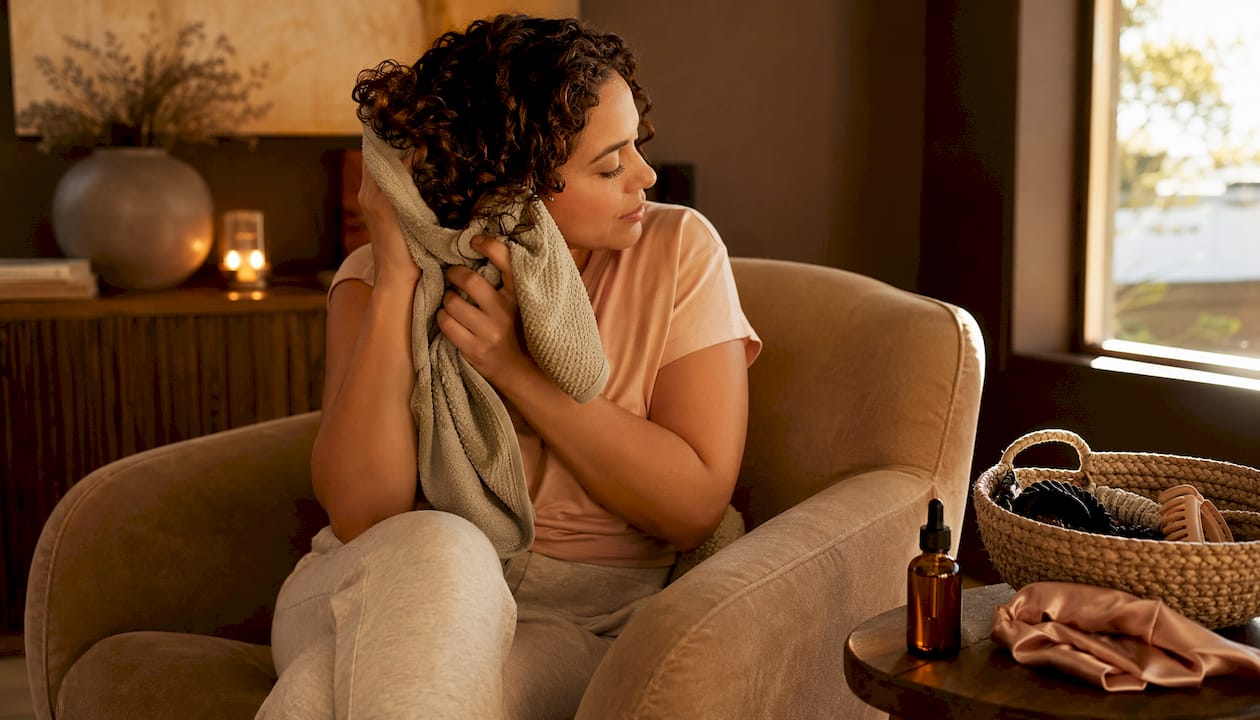
- Remove excess water gently. Squeeze or scrunch water out with your hands. Do not wring, twist, or rub. Hair should be damp, not dripping.
- Apply styling products. Work your leave-in conditioner, curl cream, or styling gel evenly through damp hair from roots to ends. Applying on damp, not soaking wet, hair ensures products grip the strands rather than washing off into the fabric.
- Do not comb. Avoid brushing or combing after product application. Combing disrupts natural curl clumps and increases frizz potential before you even start plopping.
- Lay out your fabric. Place your T-shirt or microfiber towel flat on a counter, bed, or any waist-height surface. If using a T-shirt, position the sleeves closest to you.
- Flip and plop. Bend at the waist, flip your hair forward, and lower your head so curls land centered on the fabric in their natural pattern. Think of it like an accordion compression, curls stacking gently on top of each other.
- Wrap and secure. Fold the far end of the fabric over the back of your head to the nape of your neck. Bring the sleeves or ends around your head and tie them snugly at the forehead or back. Snug, not tight.
- Wait 15–45 minutes. For wavy or fine hair, 15–20 minutes is usually enough. Thicker or denser curl patterns benefit from closer to 30–45 minutes. Leaving hair plopped longer than 1–2 hours risks flat roots and scalp issues from prolonged dampness.
- Unwrap carefully. Peel the fabric back slowly. Avoid tugging or shaking the wrap off, which disturbs the curl pattern you just set.
- Finish drying. Air dry the rest of the way, or use a diffuser on low heat to complete the process and add volume. Either way, keep hands off while curls finish drying.
Post-plopping, a few drops of hair oil scrunched gently through the ends adds shine and seals the cuticle without disturbing the curl pattern.
Tips for getting better results every time
Small adjustments make a real difference with plopping. These are the ones worth knowing before you start.
- Use an old, worn cotton T-shirt. Worn fibers are softer and cause less friction than new cotton or cheap microfiber. That reduced friction directly translates to less frizz.
- Do not plop soaking wet hair. If hair is dripping, styling products absorb into the fabric instead of staying on your strands. Squeeze out the excess first.
- Time it right. Start with 20–30 minutes and adjust from there. Fine or low-porosity hair dries faster; thick or high-density hair may need longer.
- Place hair higher on your head for more volume. The higher your curls sit on the fabric when you wrap, the more lift you get at the roots once you unwrap.
- Avoid touching curls while they dry. Every touch after plopping introduces frizz. Let the fabric and air do the work.
- For healthy hair maintenance, pair plopping with regular deep conditioning. Plopping works best on hair that is already moisturized and in good condition.
Pro Tip: If your curls look stretched after plopping, shorten the plop time. The weight of the bundle can pull looser curl patterns down when left too long.
What hairstylists say about plopping and curl health
Plopping is a technique that sets existing curl patterns, not one that creates new ones. Hairstylist Liana Le, speaking to Allure, is direct about this: do not brush hair before plopping, and shake it out gently to loosen curls with minimal touching before the fabric goes on.
“The gentle ‘accordion’ compression of curls during plopping defines curls without cuticle damage. Plopping mimics the diffuser effect without heat by gently clumping curls, avoiding the frizz caused by rubbing with terrycloth towels.” — Davines
The accordion compression is what separates plopping from every other drying method. Curls stack on themselves rather than being stretched by gravity or roughed up by fabric. That stacking is what produces the definition and clumping you see when you unwrap.
Stylists also consistently flag over-plopping as the most common mistake. Leaving hair plopped past the 1–2 hour mark can flatten roots, reduce volume, and create scalp hygiene concerns from prolonged dampness. Keep it to 45 minutes as a general ceiling, then finish with air drying or a diffuser to complete the process without those downsides.
Ready to get better curls on wash day?
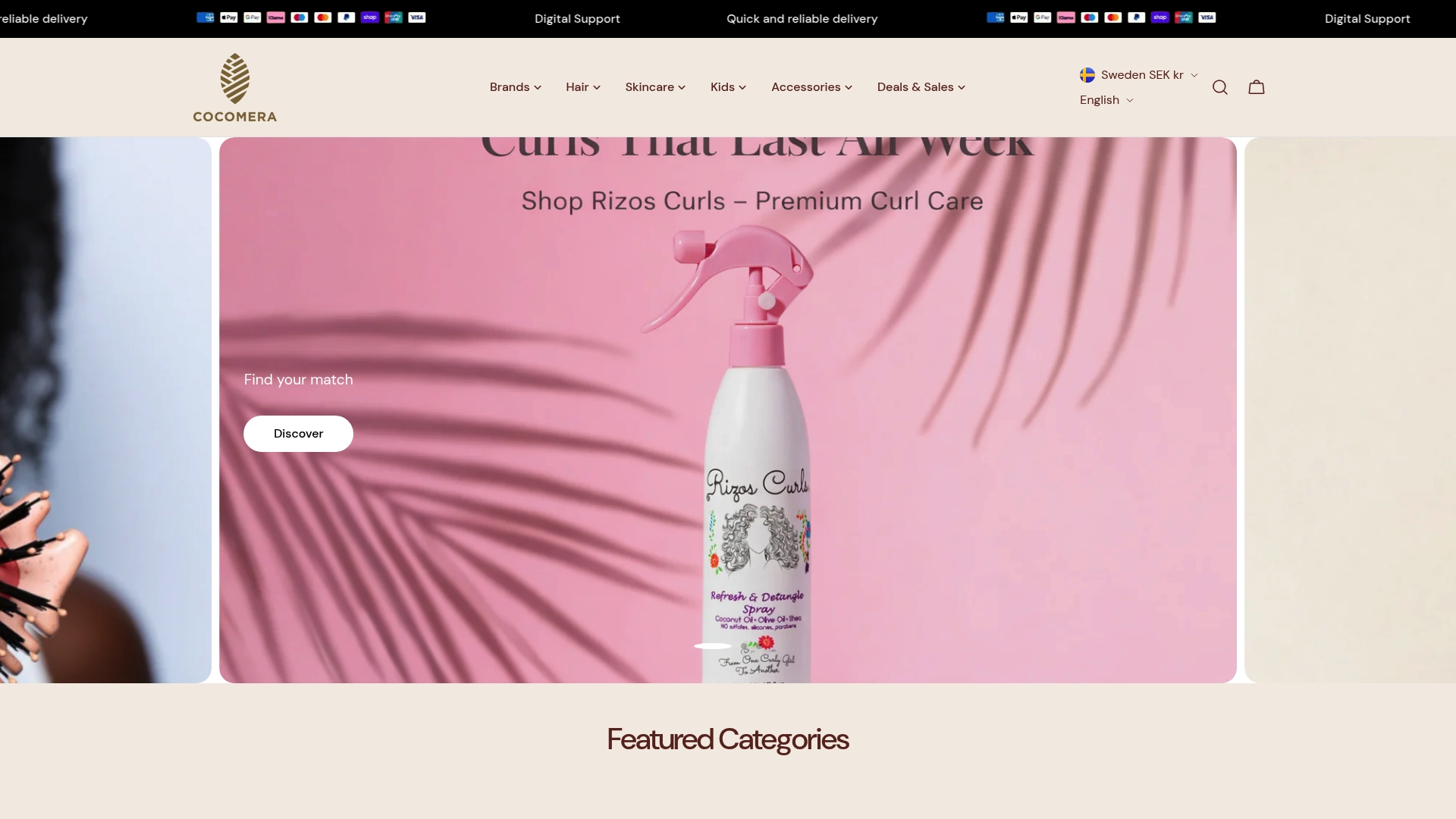
The right products make plopping work harder for you. Cocomera carries a curated selection of styling products for curly hair designed for wavy, curly, coily, and afro hair types, from leave-in conditioners and curl creams to gels that hold definition without crunch. Every product is chosen with hair types 2, 3, and 4 in mind, so you are not guessing at what works for your curl pattern.
Key Takeaways
Plopping works because it lets curls dry in their natural pattern without friction, heat, or gravity pulling them out of shape.
| Point | Details |
|---|---|
| Use the right fabric | An old cotton T-shirt or microfiber towel causes less friction than terrycloth, reducing frizz. |
| Apply products on damp hair | Hair should be damp, not dripping, so styling products grip strands instead of absorbing into the fabric. |
| Time it carefully | Leave hair plopped for 15–45 minutes; going past 1–2 hours risks flat roots and scalp issues. |
| Finish with air or diffuser | Plopping sets curls but does not fully dry them; air drying or low-heat diffusing completes the process. |
| Best for curl types 2 and 3 | These curl patterns see the most improvement in definition and frizz reduction from consistent plopping. |