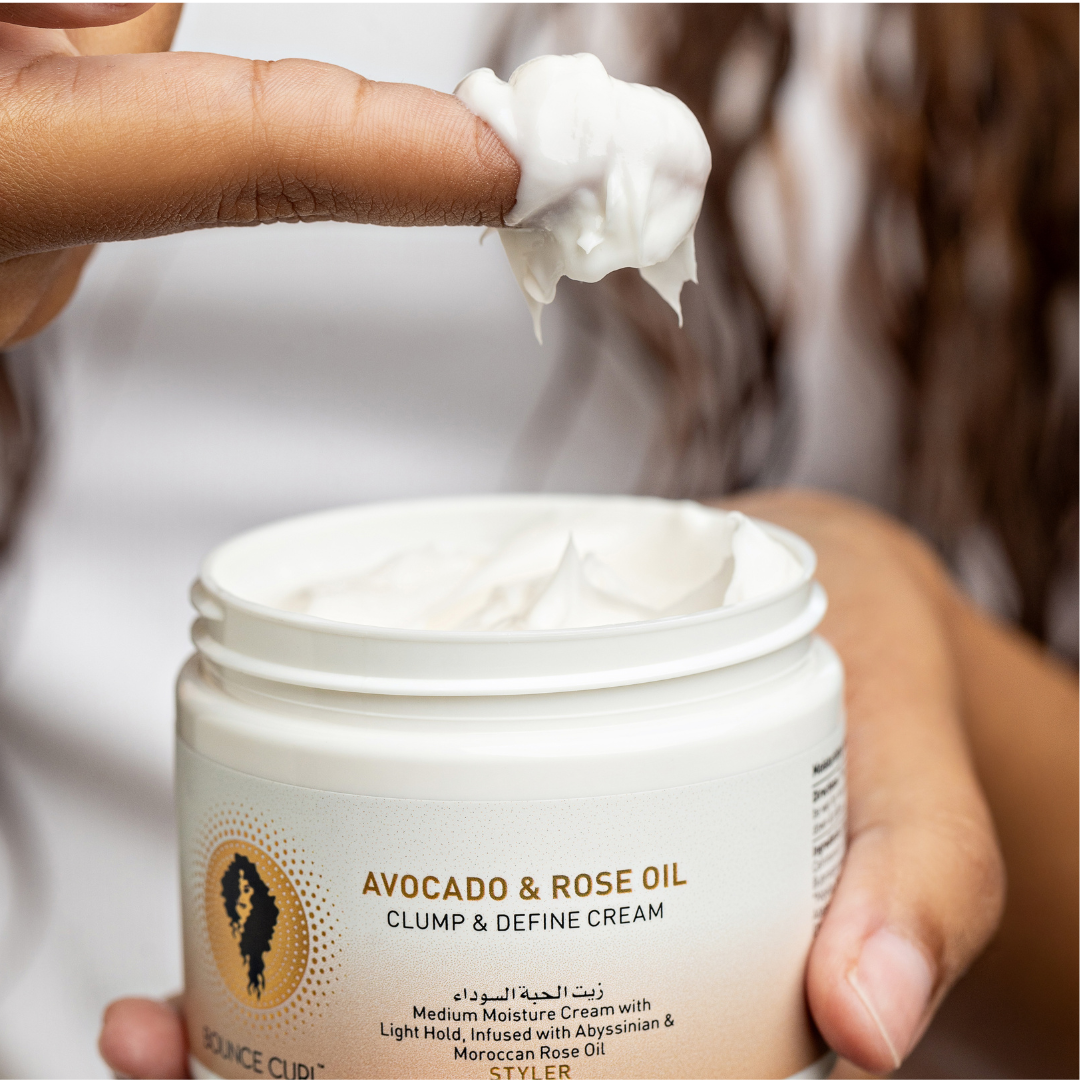
Multiracial hair encompasses a spectrum of textures, often varying within the same person’s head due to complex genetics.
Understanding your unique curl patterns and porosity zones enables personalized, zone-specific hair care routines, improving results significantly.
If you’ve ever bought a product labeled “for curly hair” only to watch it sit heavy on one section while doing nothing for another, you already know the problem. “Multiracial hair” doesn’t describe a single hair type — it refers to hair that comes from a genetic mix and can show a wide range of textures, sometimes all on the same head. That mismatch between expectation and reality is exactly why so many people in Sweden with multiracial or mixed-texture hair feel stuck, frustrated, and chronically under-served by generic curl guides. This article breaks down what’s really going on with your hair and gives you a clear path forward.
Table of Contents
-
What is multiracial hair? Breaking the myth of a single texture
-
Tailoring your routine: Product and technique tips for Swedish shoppers
-
Why focusing on your real hair zones beats relying on labels
Key Takeaways
| Point | Details |
|---|---|
| No single multiracial hair type | Multiracial hair can have many textures on one head due to complex genetics. |
| Individual curl pattern mapping is key | Knowing your own curl and porosity zones enables better product and routine choices. |
| Tailor products by section | Use lighter products on looser sections and richer ones on tighter or drier areas for best results. |
| Local product options exist | Sweden offers a growing range of products for curly and mixed textures, but choose based on your true needs. |
What is multiracial hair? Breaking the myth of a single texture
Now that you know why the term itself is so confusing, let’s break down what multiracial hair truly means in real life.
The word “multiracial” gets thrown around in hair care marketing as if it describes a specific texture — it does not. In reality, multiracial hair refers to a spectrum of textures shaped by complex genetics. Two people with identical ethnic backgrounds can have completely different curl patterns, strand thickness, and porosity. Genetics don’t follow neat rules, and hair is one of the most visible places where that plays out.
What makes this even more interesting is that the variation doesn’t just happen between people. It happens within the same person’s head. You might have loose, wavy sections at your temples, tighter coils at the crown, and something in between at the nape. This is called mosaic patterning, and it’s far more common than most guides acknowledge. The safest approach is to focus on your actual curl, texture, and porosity zones — not your ancestry alone. Your roots are not your routine.
Here’s a quick comparison of what “multiracial hair” actually looks like versus what many people assume:
| What people assume | What is often true |
|---|---|
| One uniform curl pattern | Multiple patterns across the head |
| One porosity level | Different porosity zones by section |
| One product works everywhere | Different zones need different product weights |
| Ancestry predicts texture | Genetics vary, even within families |
| “Mixed hair” products always fit | Label marketing doesn’t equal formula match |
Learning about multi-textured hair care is the single fastest way to stop fighting your hair and start working with it. The shift from “why won’t my hair behave?” to “I know what this section needs” is genuinely life-changing.
Common sources of confusion include:
-
Curl type charts that show one number (like “3b”) but your hair looks like a mix of 2c, 3a, and 3c depending on where you look
-
Products labeled “for multiracial hair” that work brilliantly on one section and leave another section crunchy or dry
-
Stylists who treat the whole head the same way because they’re trained on single-texture hair
-
Online tutorials from people whose hair happens to be one uniform type, even if they call themselves “mixed”
None of this means your hair is difficult. It means your hair is layered, and it deserves a layered approach.
The science behind curl patterns and porosity
Understanding that “multiracial hair” is more of a spectrum, let’s go deeper into how these differences actually happen.
Curl patterns are determined at the follicle level. Follicle shape determines curl pattern — the more oval or asymmetrical the follicle, the curlier the hair strand. Round follicles tend to produce straight hair, while narrow, curved follicles produce tight coils. Because you inherit different follicle shapes from different parts of your genetic code, multiple patterns can exist on the same head without any contradiction.

Porosity is the other critical factor most people overlook. Porosity describes how easily your hair absorbs and holds moisture. High-porosity hair has gaps or raised cuticles and drinks in moisture fast but loses it just as quickly. Low-porosity hair has tightly packed cuticles that resist water and product absorption. Medium porosity sits in between and is generally the easiest to manage. Here’s the critical insight: different zones can have different curl patterns and porosity even on one head. That’s why the same leave-in conditioner can feel perfect on your crown and sticky on your edges.
Here’s a simple breakdown of porosity types:
| Porosity level | Cuticle behavior | Water test result | Best product types |
|---|---|---|---|
| Low | Tightly closed | Hair floats | Light liquids, heat to open cuticle |
| Medium | Balanced | Sinks slowly | Most products work well |
| High | Raised or open | Sinks quickly | Rich creams, sealants, protein treatments |
Why does this matter in practice? Because knowing your porosity by zone tells you where to use a lightweight water-based product and where to layer in a heavier cream or oil. Understanding the best ingredients for textured hair gives you the vocabulary to read labels and choose products that actually address your needs.
How to assess your porosity at home:
-
Take a clean, product-free strand from each major section of your head (nape, crown, temple, front).
-
Drop each strand into a glass of room-temperature water.
-
Watch for 3 to 5 minutes. Floating strands suggest low porosity; strands that sink fast suggest high porosity.
-
Note which zone each strand came from. You may see different results from different areas.
-
Cross-reference with how each section absorbs and holds moisture during your normal wash routine.
Pro Tip: Low-porosity sections often benefit from single ingredient solutions like pure aloe vera juice, which penetrate without building up on resistant cuticles.
If your hair has always felt inconsistent, this is most likely the reason. You’re not imagining it. Different zones genuinely need different treatment.
How to identify and map your unique curl zones
Once you know what shapes your hair’s diversity, you can learn to identify and work with it instead of against it.
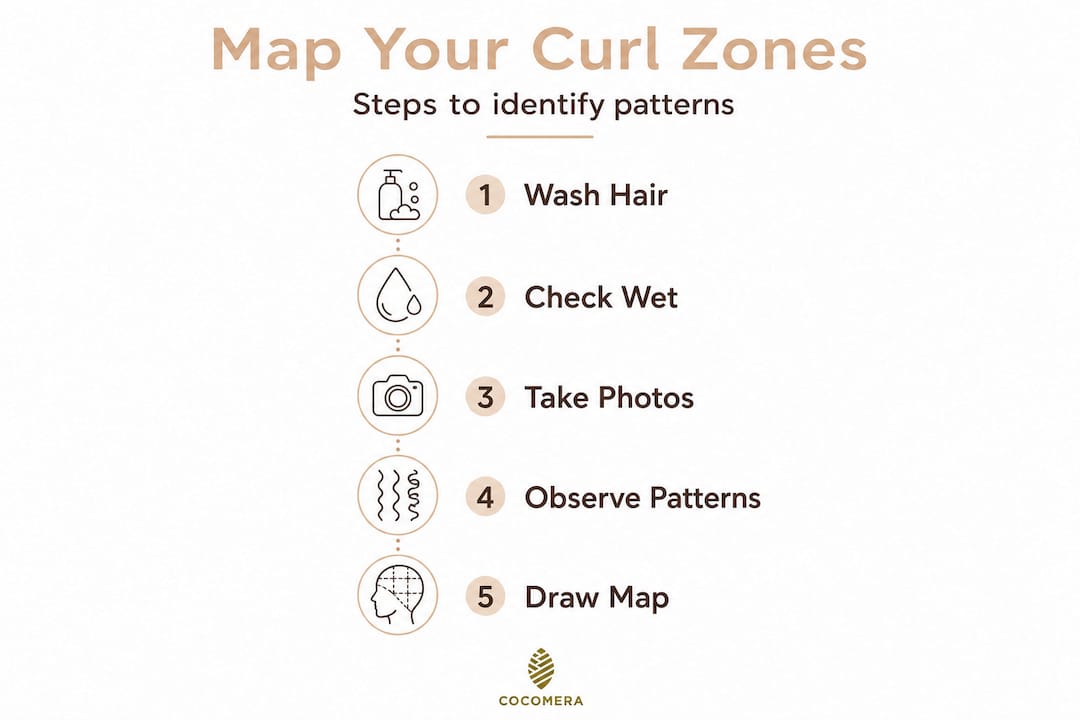
Mapping your curl zones is a practical, one-time investment that pays off every single wash day from that point forward. The goal is to build a clear mental (or written) picture of which sections behave which way, so you stop applying the same product uniformly and start treating each area correctly.
Step-by-step guide to mapping your curl zones:
-
Start with a clarifying wash to remove all product buildup. Buildup distorts your natural pattern and makes accurate assessment impossible.
-
Do not apply any leave-in, conditioner, or gel after washing. You want your hair in its most uninfluenced state.
-
Pattern identification is most accurate when hair is sopping wet, freshly washed, and before applying any products.
-
Section your hair into at least four areas: nape, crown, sides, and front hairline. More sections give more detail.
-
Look at each section individually and use a curl type chart to assess each section after washing and air-drying.
-
Write down or photograph each section. This creates your personal hair map, which you’ll reference when selecting products and building your routine.
-
Repeat the assessment after air-drying completely — some sections change their pattern as they dry, especially if you have wavy-to-curly areas.
The reality of mosaic patterning means that some sections may not fit cleanly into a chart category. A section that’s “between 3a and 3b” is valid information. You don’t need to force it into a box. The point is to notice where your hair acts differently, not to label it perfectly.
Pro Tip: Take photos in natural light right after washing, before touching or disturbing the curl. These photos become your most honest reference for comparing how different products and routines change your pattern over time.
Once you have your map, check out these curly hair care tips to start building zone-specific routines. The first time you apply a technique only to the sections that need it, you’ll feel the difference immediately.
Tailoring your routine: Product and technique tips for Swedish shoppers
With your personal hair map in hand, you can finally build a care routine and shopping plan that fits your hair’s reality instead of the marketing myth.
Shopping for textured hair in Sweden has gotten much easier, but it still requires some navigation. Many products on Swedish shelves are labeled “for curly” or “for mixed hair,” but matching product qualities to your curl pattern and needs is far more important than what the front label claims. A product positioned toward “multiracial” hair may be too heavy for your wavy sections or not rich enough for your coily ones.
Zone-based shopping and routine tips:
-
Match product weight to texture density. Looser, wavier sections (type 2 and 3a) usually need lighter creams, mousses, or gels with a water-based formula. Tighter coils and coily sections (3c and 4) respond better to butters, heavier creams, and layered moisture.
-
Layer by section during your styling routine. Apply your lightest products to wavy sections first, then move to the tighter zones where you apply your richer products.
-
Detangle each zone according to its needs. Tighter coils benefit from detangling in sections with a wide-tooth comb while the hair is soaked in conditioner. Looser waves can often be detangled gently with fingers while wet.
-
Hydration frequency varies by zone. Some coily sections may need refreshing every other day, while your wavy sections hold definition longer and only need refreshing twice a week.
-
Don’t over-apply product to low-porosity zones. These sections resist absorption, so extra product just builds up on the surface, leaving hair feeling heavy and dull.
When choosing curly hair products for your routine, read the ingredient list rather than the brand claims. Look for humectants like glycerin and aloe vera for moisture attraction, heavier emollients like shea butter or mango butter for sealing coily sections, and lighter oils like argan or jojoba for wavy and loose curl zones. Browsing a curated textured hair shampoo selection helps you start the routine with the right foundation without stripping essential moisture.
Pro Tip: Start your routine adjustment with just one zone. Pick your most challenging section, apply a product specifically suited to that texture, and compare the result to the rest of your head. This zone-by-zone experiment gives you faster, clearer feedback than changing your entire routine at once.
Why focusing on your real hair zones beats relying on labels
Here is an opinion that most curl guides skip over entirely: the real problem isn’t that you haven’t found the right “multiracial hair” product. The real problem is that most people are still treating their hair as one uniform texture instead of the layered, zone-specific system it actually is.
The Swedish market is expanding its textured hair options, and that’s genuinely great. But more products labeled “for mixed hair” on the shelf doesn’t solve a routine that hasn’t been personalized yet. Treating different zones with different product weights and techniques consistently delivers superior results for mixed textures. This is not a niche insight for advanced curly hair enthusiasts. It’s a basic truth that gets buried under product marketing.
The frustration most people with multiracial hair experience isn’t because their hair is uniquely difficult. It’s because they’ve been handed a one-size approach in a situation that demands a custom one. Once you experiment by zone rather than by product label, you’ll likely notice more progress in one month than in years of trying new products without changing your method.
Check out more curly hair insight to keep building that zone-first mindset, because the method matters as much as the products you use.
Find the right products and tools for your multiracial hair
If you’re ready to act on what you’ve learned and simplify your routine, there are options for you in Sweden today.
At Cocomera, every product in the store is curated specifically for wavy, curly, coily, and afro hair types. That means you’re not filtering through a sea of products designed for straight hair to find what your texture actually needs.
Browse styling products for curly hair to find lightweight options for your wavy zones and richer stylers for your coily sections. If your hair needs deeper support, explore hair treatments for curly hair that target moisture, strength, and definition by texture. And for daily handling, the right tools make a real difference — the brushes and combs for textured hair collection is designed to work with your curl pattern instead of against it.
Frequently asked questions
Can one person have several hair types at once?
Yes, it’s very common — textured hair commonly has more than one curl pattern on the same head, with some areas being looser or tighter than others.
What’s the best way to identify my curl types?
Identifying curl pattern is most accurate when your hair is sopping wet and freshly washed, before applying any styling products.
Should I use the same product on all parts of my hair?
Not always — using different product weights by zone often gives significantly better results than applying one formula uniformly across mixed textures.
Are products labeled for “multiracial” or “mixed” hair always the best fit?
No — the right product should match your curl pattern and porosity needs, not just match a label that sounds like it describes your background.