Clarifying shampoo is a deep-cleaning formula that removes product residue, mineral deposits, and oils from curly hair. It acts as a periodic reset to restore moisture, curl definition, and product effectiveness, and should be used once or twice a month based on buildup signals. Proper application involves thorough wetting, scalp-focused work, multiple passes if needed, and follow-up hydration to maintain healthy, defined curls.
Clarifying shampoo is defined as a deep-cleansing formula designed to strip product residue, hard water minerals, and excess oils from the hair shaft and scalp. For curly and textured hair, this distinction matters more than most people realize. Curly routines rely heavily on gels, creams, oils, and leave-ins, which means buildup accumulates faster and hits harder. The role of clarifying shampoo in a textured hair routine is not to replace your regular wash day. It is a periodic reset that restores your hair’s ability to absorb moisture, respond to styling, and actually behave the way your curl pattern intends.
What does clarifying shampoo actually remove from curly hair?
Curly and coily hair attracts buildup from multiple sources simultaneously, and that combination is what makes a standard co-wash or moisturizing shampoo insufficient on its own. Product residues from hairsprays, mousses, gels, and waxy conditioners coat the hair shaft over time, creating a film that blocks moisture from penetrating. That film is the reason your twist-out suddenly falls flat or your wash-and-go loses definition after a few weeks of consistent product use.
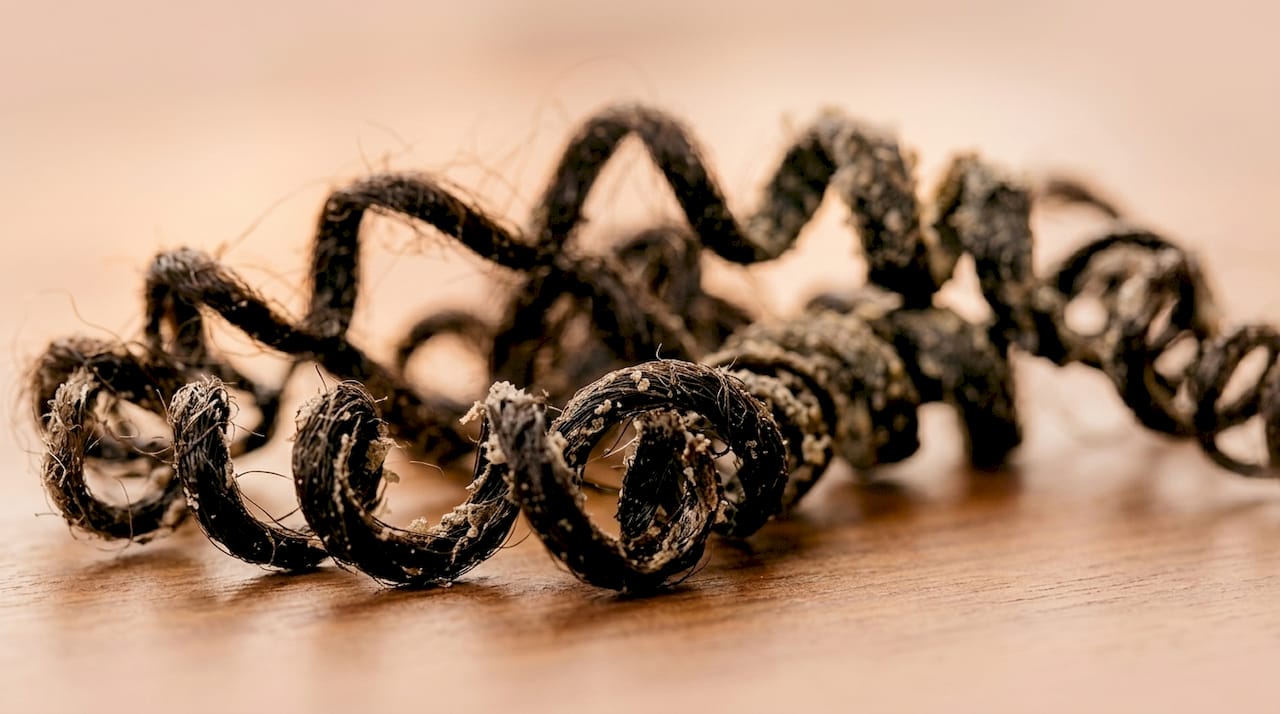
Hard water is the second major culprit, and it is far more common than most people expect. Hard water ions bind with surfactants during washing, forming insoluble mineral deposits that regular shampoo cannot break down. These deposits leave a dull, rough coating on each strand. If you live in a city with hard tap water and your curls feel perpetually dry despite deep conditioning, mineral buildup is likely the reason.
Chlorine from swimming pools and silicone-based products round out the most common offenders. Silicones, found in many smoothing serums and heat protectants, are water-resistant by design. That is useful for frizz control, but it also means they require a stronger cleanser to fully remove.
Here is what buildup actually does to your curls:
-
Dullness and lack of shine: The mineral and product film scatters light instead of reflecting it.
-
Limp, heavy roots: Residue weighs down the root area, collapsing curl volume.
-
Reduced styling response: Conditioners and curl creams sit on top of buildup instead of absorbing into the strand.
-
Scalp congestion: Clogged follicles can slow hair growth and cause itchiness or flaking.
Dermatologist Iris Rubin describes clarifying as a detox that refreshes hair by stripping accumulated product and mineral residue. The result is a clean surface that allows conditioners and styling creams to actually penetrate and perform.
Pro Tip: If your deep conditioner stops making a noticeable difference, that is a reliable signal that buildup is blocking absorption. Clarify before your next deep conditioning session and compare the results.
How often should you clarify curly or textured hair?
Frequency is where most people with curly hair go wrong, in both directions. Clarifying too often strips the scalp’s natural oils and disrupts the moisture balance that curly hair depends on. Clarifying too rarely allows buildup to compound until your products stop working entirely.
Curly hair routines typically involve washing once a week or less, and clarifying should sit within that schedule as a strategic deep clean rather than a replacement for your regular wash. The right frequency depends on three variables: how many products you use, your water hardness, and your hair’s porosity.
Use these signals to determine when it is time to clarify:
-
Your roots feel heavy or greasy even immediately after washing with your regular shampoo.
-
Your curls have lost definition and styling products are not distributing evenly through the hair.
-
Your scalp feels coated or you notice persistent flaking that is not dandruff.
-
Your deep conditioner or leave-in feels ineffective, sitting on top of the hair rather than absorbing.
-
You have been swimming in a chlorinated pool or the ocean recently.
For most people with Type 3 or Type 4 hair who use multiple styling products, clarifying once or twice a month is a reasonable starting point. Type 2 wavy hair with lighter product use may need it more frequently, around every two to three weeks. Clarifying shampoos suit oily scalps and high-buildup situations, while dry scalps common in textured hair need sulfate-free options to avoid stripping moisture.
Overuse causes dryness, scalp tightness, color fading, and a cycle of increased product use to compensate for the dryness. If you color your hair, avoid clarifying in the week immediately following a color treatment, as it accelerates fade significantly.
Pro Tip: Track your clarifying sessions in your phone’s notes app alongside the products you used that month. After three or four cycles, you will see a clear pattern for how often your specific hair actually needs a reset.
How to use clarifying shampoo correctly in a curly routine
Applying clarifying shampoo the same way you apply your regular shampoo wastes most of its potential. The technique matters, and a few specific steps make the difference between a true reset and a surface-level wash.
-
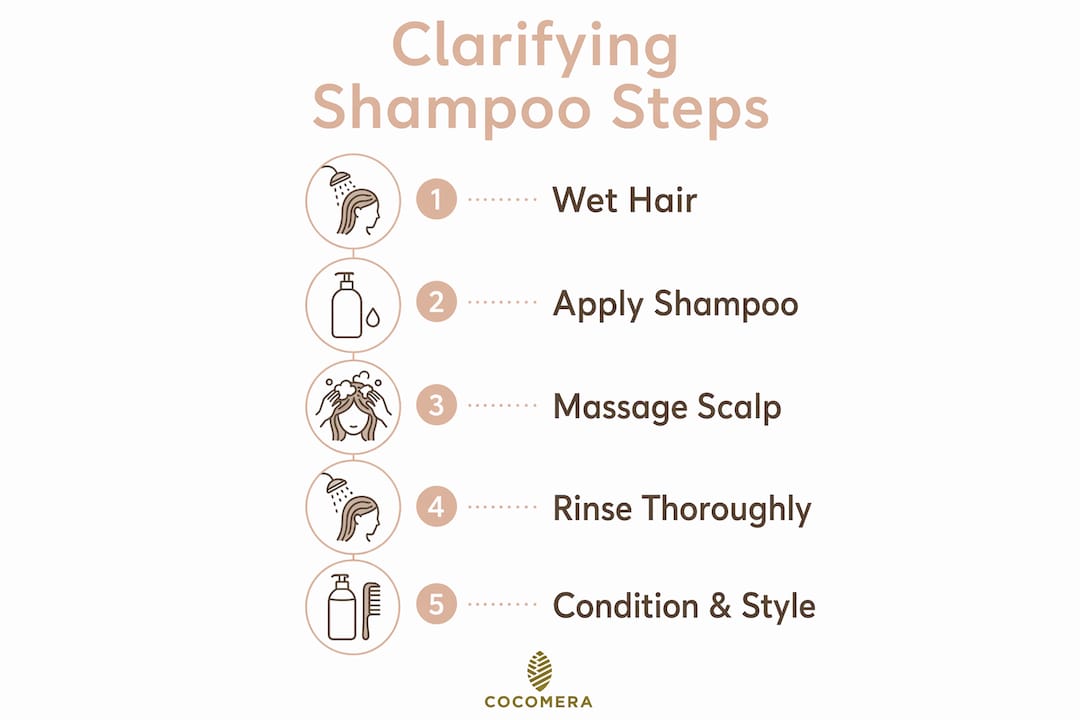
Wet your hair thoroughly before applying. Clarifying shampoos need water to activate and distribute evenly. Dry or damp hair causes uneven application and patchy results.
-
Apply directly to the scalp first. Work the shampoo into the scalp with your fingertips using small circular motions. The scalp is where the majority of buildup concentrates, and it needs the most contact time.
-
Do two passes if buildup is significant. The first application breaks down the outer layer of residue. The second application actually cleanses. You will notice the lather is richer and more consistent on the second pass.
-
Let the product sit for two to three minutes before rinsing. This gives chelating agents time to bind with mineral deposits and lift them from the hair shaft.
-
Rinse thoroughly with warm water. Incomplete rinsing leaves clarifying agents on the hair, which can cause dryness and irritation.
-
Follow immediately with a deep conditioner or hydrating mask. Post-clarifying hydration is not optional for curly hair. Clarifying opens the cuticle and removes protective oils, so moisture must be restored before styling.
-
Avoid clarifying before a protective style installation. Freshly clarified hair is clean but temporarily more vulnerable. Give your hair at least one regular wash day before braids or twists.
The five-step clarifying process for natural hair covers this sequence in detail, including how to adapt it for different curl types and porosity levels.
Clarifying shampoo vs. regular shampoo: what is the actual difference?
The difference between clarifying and regular shampoo is not just marketing language. It is a meaningful formulation distinction that determines what each product can and cannot do.
| Feature | Clarifying shampoo | Regular moisturizing shampoo |
|---|---|---|
| Primary purpose | Remove buildup, minerals, and residue | Cleanse while maintaining moisture balance |
| Surfactant strength | High (often includes sulfates or chelating agents) | Mild (sulfate-free options common) |
| Use frequency | Once or twice a month as needed | Weekly or per wash day schedule |
| Effect on color | Can accelerate fade with frequent use | Color-safe formulas widely available |
| Best for | Oily scalps, heavy product users, hard water areas | Dry scalps, curly and textured hair daily maintenance |
| Follow-up required | Deep conditioner or hydrating mask | Standard conditioner sufficient |
Regular moisturizing shampoos are formulated to clean without stripping. They preserve the scalp’s natural oil balance and maintain the hair’s moisture levels, which is why they are the default choice for curly and textured hair. Clarifying shampoo does not replace this. It resets the surface so that your regular products can work at full capacity again.
Clarifying is a strategic tool, not an everyday cleanser. Think of it as the difference between wiping down a counter and actually scrubbing it. Both are cleaning. Only one removes what the other leaves behind.
The choice between them also depends on your scalp type. Oily scalps benefit from clarifying more frequently, while dry scalps common in Type 4 hair need a gentler approach with sulfate-free clarifying formulas that still remove buildup without triggering a moisture crisis.
Key takeaways
Clarifying shampoo works by removing the buildup that regular shampoo leaves behind, restoring curl definition, moisture absorption, and product performance in textured hair.
| Point | Details |
|---|---|
| Core function | Clarifying shampoo removes product residue, minerals, and oils that block moisture and dull curls. |
| Frequency guideline | Most Type 3 and Type 4 hair benefits from clarifying once or twice a month based on buildup signals. |
| Overuse risk | Too-frequent clarifying causes dryness, scalp irritation, and color fade, especially in textured hair. |
| Correct technique | Apply to scalp first, do two passes for heavy buildup, and always follow with a deep conditioner. |
| Not a replacement | Clarifying resets the hair surface but does not replace your regular moisturizing shampoo routine. |
What Cocomera has learned about clarifying and curly hair
At Cocomera, we have worked with customers across every curl type from 2a waves to 4c coils, and the most consistent mistake we see is treating clarifying like a punishment rather than a tool. People reach for it when their hair is already in crisis: dry, tangled, and unresponsive. By that point, the buildup has been compounding for weeks, and one clarifying session is not enough to fully reset the situation.
The more useful mindset is preventive. Clarify before your hair stops responding, not after. If you use a gel, a cream, and an oil on every wash day, your hair will need a reset sooner than someone using a single leave-in. That is not a flaw in your routine. It is just chemistry.
We also want to push back on the idea that all clarifying shampoos are too harsh for curly hair. Sulfate-free clarifying formulas have improved significantly, and many are specifically designed for textured hair. The key is pairing the right clarifying product with the right follow-up. A strong clarifying shampoo followed by a 20-minute deep conditioning treatment does far less damage than skipping clarifying entirely and wondering why your hair stopped thriving.
Listen to your hair more than you follow a fixed schedule. Heavy roots, dull color, and styling products that seem to evaporate without effect are your hair telling you it needs a reset. Trust those signals.
— Cocomera
Reset your curls with the right products from Cocomera
Cocomera curates clarifying shampoos specifically formulated for wavy, curly, coily, and afro hair types. Every product in the collection is selected to deliver a thorough reset without stripping the moisture that textured hair depends on. Browse the full clarifying shampoo collection to find the right formula for your curl type and buildup level. Pair your clarifying shampoo with a strengthening shampoo for your regular wash days, and explore hair treatments designed to restore moisture and curl integrity after every deep clean. Your next wash day reset starts here.
FAQ
What is the role of clarifying shampoo in a hair care routine?
Clarifying shampoo deep-cleans the scalp and hair shaft by removing buildup from styling products, hard water minerals, and oils that regular shampoo cannot fully eliminate. It acts as a periodic reset that restores moisture absorption and curl definition.
How often should people with curly hair use clarifying shampoo?
Most people with Type 3 or Type 4 hair benefit from clarifying once or twice a month, depending on product use and water hardness. Using it more frequently risks dryness and scalp irritation.
What is the difference between clarifying and regular shampoo?
Clarifying shampoo uses stronger surfactants or chelating agents to remove stubborn residue and minerals, while regular moisturizing shampoo cleans gently without stripping natural oils. Clarifying is a monthly reset; regular shampoo handles weekly maintenance.
Can clarifying shampoo damage curly hair?
Overuse can cause dryness, roughness, and color fade, particularly in textured hair. The risk is minimized by using a sulfate-free clarifying formula and always following with a deep conditioner or hydrating mask.
How do you know when your curly hair needs clarifying?
The clearest signs are limp roots that feel heavy after washing, styling products that stop absorbing evenly, and curls that lose definition despite consistent product use. These signals indicate buildup is blocking the hair surface.