TL;DR:
- Conditioners protect textured hair by sealing the cuticle and reducing friction, which helps prevent breakage. They work through positively charged surfactants that bind to negatively charged hair surfaces, forming a long-lasting protective film. Regular conditioning, especially with appropriate types like deep or leave-in formulas, is essential for moisture retention, shine, and length retention in textured hair.
Conditioners are defined as hair care products that moisturize, protect, and improve the manageability of hair by forming a protective coating over the cuticle. For textured hair, specifically wavy, curly, coily, and afro types, the role of conditioners goes beyond basic softness. Hair is composed of roughly 97% keratin, a protein with negatively charged amino acids that attract the active ingredients in conditioners. Without regular conditioning, textured hair loses moisture faster than straight hair, leading to dryness, breakage, and shrinkage. Brands like Pantene have built entire product lines around this science, but understanding the chemistry yourself puts you in control of your routine.
How do conditioners work on a scientific level?
The chemistry behind conditioners is straightforward once you know what to look for. Hair carries a negative electrical charge on its surface, especially after shampooing. Conditioners use cationic surfactants, positively charged molecules, to bind directly to that negative surface. The attraction is strong and stays active even after you rinse the product out.
Cationic surfactants like behentrimonium chloride are the workhorses of most conditioning formulas. They bind to the negatively charged cuticle, forming a long-lasting protective film. That film does not wash away completely with water because the bond is electrostatic, not just mechanical. This is why your hair still feels smooth hours after rinsing.
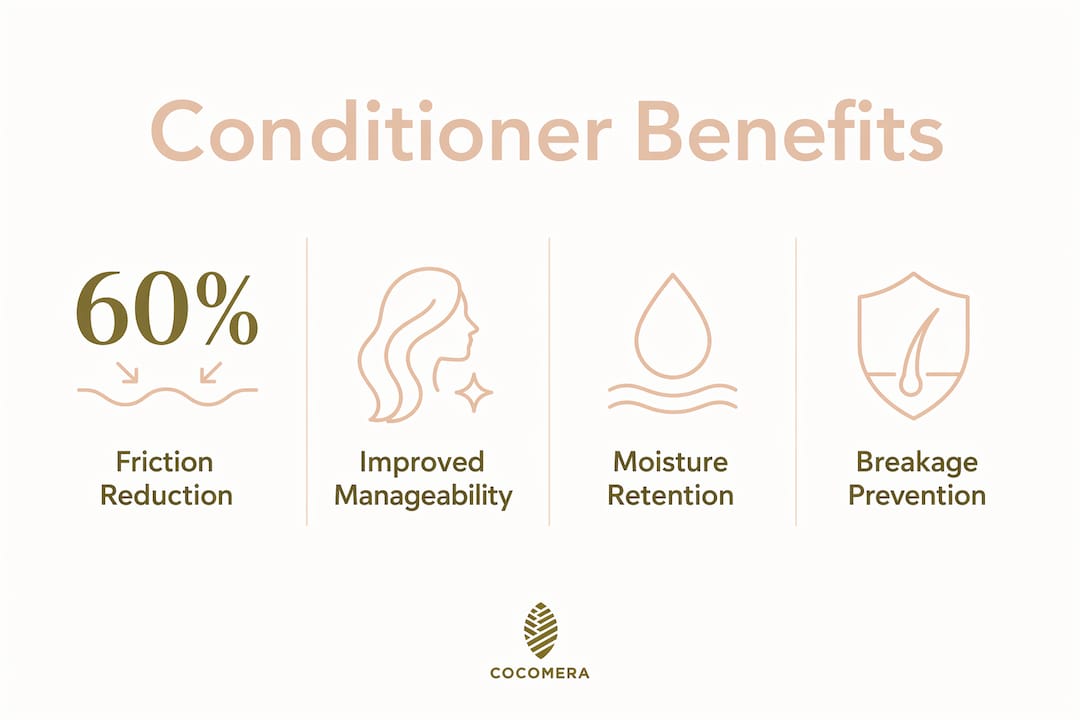
The practical result of this chemistry is significant. Conditioners reduce cuticle-to-cuticle friction by 40–60%, which directly lowers the risk of breakage during detangling and styling. For coily and kinky hair types, where each curl creates multiple points of contact between strands, that friction reduction is the difference between retaining length and losing it.
Not all conditioners work the same way. Here is how the main types differ:
-
Daily rinse-off conditioners are thin, water-based, and designed for quick cuticle smoothing after every wash.
-
Deep conditioners are thicker and left on for 30–45 minutes to allow intensive moisture restoration. They penetrate more deeply than daily formulas.
-
Leave-in conditioners stay on the hair all day, providing ongoing slip and moisture between wash days.
-
Cleansing conditioners combine mild surfactants with conditioning agents, useful for co-washing without stripping natural oils.
The shampoo-then-condition protocol is not just habit. Shampooing increases the negative charge on the hair surface, which creates more binding sites for cationic surfactants. Conditioning after shampooing maximizes how much product actually adheres to your strands.
Pro Tip: Squeeze excess water from your hair before applying conditioner. Overly wet hair dilutes the formula and reduces how well cationic surfactants can bind to the cuticle.
What are the key benefits of conditioners for textured hair?
Textured hair has a unique structure that makes it more prone to dryness and breakage than straight hair. The curl pattern causes the cuticle to lift more easily, which lets moisture escape faster. Conditioners address this directly by sealing the cuticle and replenishing lost hydration.
Conditioners restore moisture lost by shampooing, smooth the cuticle to prevent frizz, and improve detangling by providing slip. Each of these benefits compounds over time. Consistent conditioning builds a healthier baseline for your hair, rather than just fixing problems wash by wash.
The benefits for textured hair specifically include:
-
Moisture retention. Conditioners coat the cuticle and slow water loss between wash days, which is critical for type 3 and type 4 hair that dries out quickly.
-
Frizz control. A smooth, sealed cuticle reflects light evenly and resists humidity. This is why conditioned hair shows improved shine and gloss compared to unconditioned hair.
-
Breakage reduction. Conditioned hair withstands significantly more force before breaking than unconditioned hair. For textured hair, this translates directly into length retention.
-
Easier detangling. The slip provided by conditioning agents lets a wide-tooth comb or your fingers move through curls without snagging. This reduces mechanical damage during styling.
-
Improved elasticity. Conditioned hair’s improved elasticity helps strands stretch under tension and return to their curl pattern without snapping.
One persistent myth is that conditioners cause hair loss. This is false. Hair that sheds during conditioning was already in the telogen (resting) phase and would have shed regardless. Conditioning does not accelerate shedding. It actually reduces the mechanical stress that causes premature breakage.
Consistent conditioning is the single most effective way to retain length in textured hair. Breakage, not slow growth, is the primary reason many people with type 3 and type 4 hair struggle to see length gains.
How to choose and use the right conditioner for textured hair
Choosing the right conditioner starts with knowing your hair’s specific needs. Dry, coily hair needs heavier formulas with fatty alcohols and natural oils. Wavy or fine curly hair does better with lighter, water-based conditioners that add moisture without weighing curls down. Conditioners with fatty alcohols, silicones, and natural oils protect hair from both mechanical and environmental damage.
Matching conditioner type to your hair
-
Rinse-off conditioners work for most hair types as a weekly or post-wash treatment.
-
Deep conditioners suit dry, damaged, or highly porous hair. Use them once or twice a month for intensive care. You can find deep moisturizing options for dry hair that are specifically formulated for this level of restoration.
-
Leave-in conditioners are best for type 3b through type 4c hair, where moisture loss between wash days is a real challenge.
-
Cleansing conditioners work well for those who prefer co-washing, especially for low-porosity hair that gets weighed down by heavy products.
Application technique matters
Where and how you apply conditioner affects the result as much as the formula itself. Apply conditioner from mid-lengths to ends, not the scalp. The scalp produces its own sebum, and adding conditioner there causes buildup and greasiness. The ends are the oldest, driest, and most damaged part of the strand, so they need the most attention.
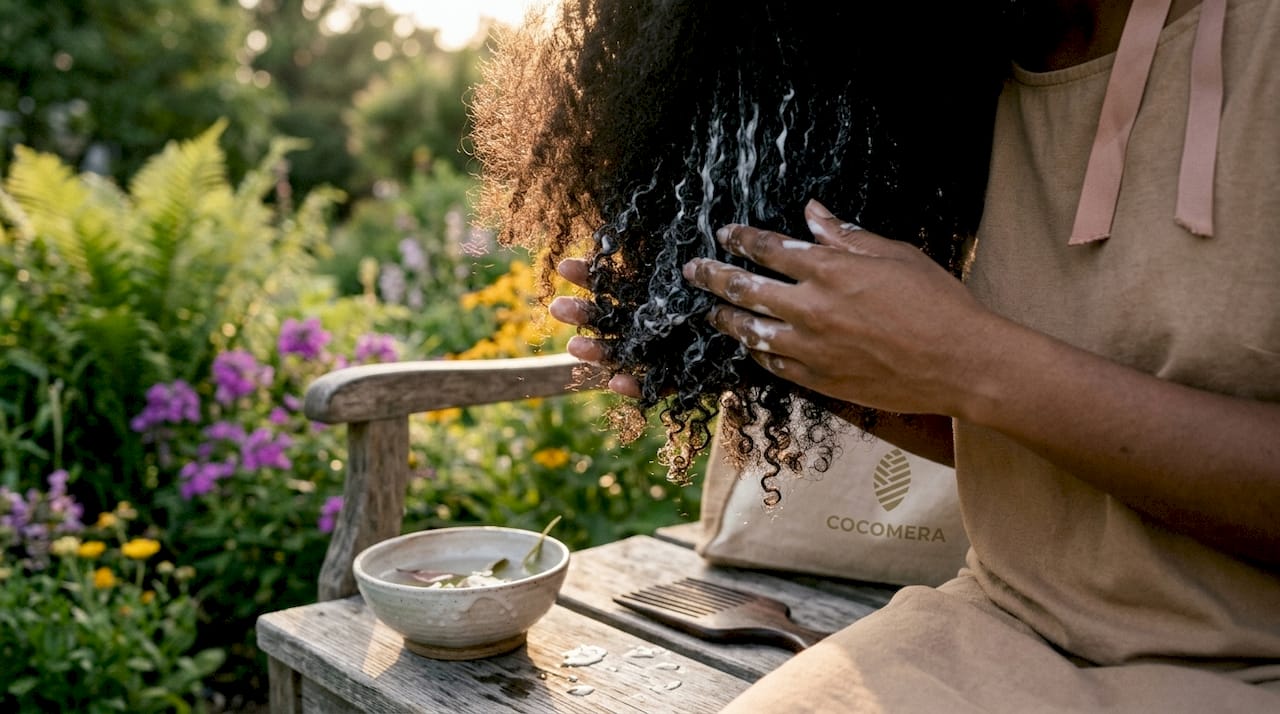
Work the product through your hair in sections. For type 4 hair, finger-detangling while the conditioner is in place reduces breakage more than combing dry. Rinse with cool water to help seal the cuticle after conditioning.
Pro Tip: For a quick moisture boost between wash days, mist your hair lightly with water and apply a small amount of leave-in conditioner to your ends. This refreshes curl definition without a full wash.
pH balance also matters. Conditioners are formulated at a slightly acidic pH, typically between 3.5 and 5.5, which matches the natural pH of healthy hair. This acidity helps the cuticle lie flat. Avoid mixing conditioners with alkaline products in the same step, as this can lift the cuticle and undo the conditioning effect.
A clarifying wash before deep conditioning removes product buildup and opens the cuticle, allowing the conditioner to penetrate more effectively. Learn more about clarifying textured hair to get the most out of your conditioning treatments.
Conditioners vs. other hair care products for textured hair
Conditioners occupy a specific place in a textured hair routine. They do not replace other products. They work alongside them. Understanding where each product fits prevents both overuse and gaps in your care routine.
| Product | Primary function | Best use case |
|---|---|---|
| Shampoo | Cleanses scalp and hair | Removing buildup, sweat, and excess oil |
| Rinse-off conditioner | Smooths cuticle, adds moisture | After every wash |
| Deep conditioner / hair mask | Intensive moisture restoration | Dry, damaged, or high-porosity hair |
| Leave-in conditioner | Ongoing moisture and slip | Between wash days, pre-styling |
| Hair oil | Seals moisture, adds shine | After leave-in, as a sealant |
| Strengthening shampoo | Reinforces hair structure | Weak, breakage-prone hair |
Shampoos cleanse but strip natural oils. Conditioners replenish what shampooing removes. This is why the two always work as a pair. Using a strengthening shampoo for curly hair before conditioning creates the ideal surface for cationic surfactants to bind.
Hair oils and leave-in conditioners are often confused. Oils seal moisture into the hair shaft but do not add moisture on their own. Leave-in conditioners add water-based hydration and slip. The correct order is leave-in conditioner first, then oil on top to lock it in. This is the foundation of the LOC (liquid, oil, cream) method widely used for type 4 hair.
Deep conditioners and hair masks for curly hair serve a similar purpose but differ in formula. Hair masks often contain proteins or bond-building ingredients for structural repair. Deep conditioners focus primarily on moisture. Alternating between the two prevents both protein overload and chronic dryness.
Key takeaways
Conditioners are the most direct tool for protecting textured hair from breakage, dryness, and damage, and consistent use is what separates retained length from chronic breakage.
| Point | Details |
|---|---|
| Friction reduction is key | Conditioners cut cuticle-to-cuticle friction by 40–60%, directly lowering breakage risk. |
| Match type to your needs | Deep conditioners suit dry or damaged hair; leave-ins work best for type 3 and type 4 between washes. |
| Apply from mid-lengths to ends | Scalp application causes buildup; ends need the most moisture and protection. |
| Shampoo first for best results | Shampooing increases negative charge on hair, maximizing how well conditioner binds. |
| Conditioners do not cause hair loss | Shedding during conditioning is normal telogen-phase hair, not conditioner-induced loss. |
What consistent conditioning has taught us at Cocomera
The biggest mistake we see with textured hair is treating conditioning as optional. People invest in styling products, protective styles, and growth serums, then skip the one step that actually prevents the breakage undoing all that effort.
At Cocomera, we have worked with wavy, curly, coily, and afro hair types long enough to see a clear pattern. The people who retain the most length are not the ones using the most products. They are the ones who condition consistently and correctly. Deep conditioning once or twice a month, paired with a leave-in on wash days, covers most of what textured hair needs.
One thing that surprises people is how much application technique matters. The same conditioner delivers dramatically different results depending on whether you apply it to soaking wet hair or hair that has been gently squeezed dry. Squeezing out excess water first concentrates the formula where it needs to work.
The myth that conditioners cause shedding keeps too many people from conditioning frequently enough. Shed hairs during detangling are not caused by the conditioner. They were going to shed regardless. What the conditioner does is make the detangling process gentle enough that you are not also snapping healthy strands in the process.
Conditioning is not a luxury step. For textured hair, it is the foundation of every other result you are trying to achieve.
— Cocomera
Textured hair care products curated for your routine
Cocomera curates hair care products specifically for wavy, curly, coily, and afro hair types, so you are never sorting through products built for straight hair.
The Cocomera collection covers every step of a conditioning-focused routine. From hair treatments for curly hair that include deep conditioners and bond-building masks, to styling products for curly hair that lock in the moisture your conditioner builds, every product is chosen with textured hair in mind. You can also find nourishing options for a dry scalp if scalp health is part of your focus. Browse the full range at Cocomera and build a routine that actually fits your curl type.
FAQ
What is the role of conditioners in a hair care routine?
Conditioners restore moisture lost during shampooing, smooth the hair cuticle, reduce friction, and improve detangling. For textured hair, they are the primary tool for preventing breakage and retaining length.
How often should you use conditioner on textured hair?
A rinse-off conditioner should be used after every wash. A deep conditioner works best once or twice a month for intensive moisture restoration, especially for dry or high-porosity hair.
Do conditioners really prevent hair breakage?
Yes. Conditioned hair withstands more mechanical force before breaking than unconditioned hair. The protective film formed by cationic surfactants reduces the stress placed on the cuticle during styling and detangling.
What is the difference between a deep conditioner and a leave-in conditioner?
Deep conditioners are rinse-off products left on for 30–45 minutes for intensive moisture restoration. Leave-in conditioners stay on the hair all day to provide ongoing hydration and slip between wash days.
Can conditioner cause hair loss?
No. Hair that sheds during conditioning is in the natural telogen phase and would have shed regardless. Conditioners reduce mechanical breakage, which means you may actually lose fewer strands overall with consistent use.