If your hairline is thinning where braids, buns, or wig clips sit, traction alopecia is the most likely cause, and the first move is to stop every tension style immediately. Give your edges sustained rest before trying any product or treatment. Early cases often regrow once tension stops; hair loss that has turned into smooth, scarred skin may be permanent.
Table of Contents
- What Causes Traction Alopecia at the Edges
- How Traction Alopecia Looks: The Fringe Sign and Early vs. Advanced Signs
- Diagnosis and Staging: Dermoscopy, M-TAS, and Biopsy
- Treatment and Regrowth: Stop Tension First, Then Medical and Surgical Options
- Prevention and Safer Styling for Textured Hair
- When to See a Dermatologist and What to Expect
- Cocomera’s Perspective: Products Support Recovery, They Don’t Replace It
- Find Edge-Friendly Products That Fit Your Recovery Routine
- Sources
- FAQ
What Causes Traction Alopecia at the Edges
Traction alopecia starts with repeated pulling on the same follicles until they weaken and stop producing hair normally. Tight braids, slicked-back ponytails, heavy clip-in extensions, and wig combs concentrate that force right along the hairline, where the hair is already finer and more fragile than anywhere else on the scalp. According to the British Skin Foundation, tight ponytails, buns, and braids are the most common triggers, and the damage shows up wherever tension sits highest.
A few practices raise the risk faster than others:
- Chemical relaxers combined with tight styling, which weaken the hair shaft right where it’s under the most stress
- Heat styling near the hairline before or after a tight install
- Reinstalling braids or wigs back to back with little or no rest between sessions
- Adhesive glue or heavy edge control used directly on already-thinning leave-out hair
A loose, low bun worn occasionally is a lower-risk choice. A jumbo box braid pulled tight at the part every six weeks for years is a very different story.
How Traction Alopecia Looks: The Fringe Sign and Early vs. Advanced Signs
Dermatologists look for a specific marker called the “fringe sign”: a thin strip of short, wispy hairs surviving right at the front hairline while the hair just behind it thins out. It’s clinically recognized as one of the clearest tells of marginal traction alopecia, according to the NCBI clinical overview.
Early signs to watch for:
- Short, broken hairs scattered along the hairline that never seem to grow past a certain length
- Tenderness, itching, or soreness right where the style pulls hardest
- Redness or small bumps around individual follicles (perifollicular erythema)
- Hair casts, which are tiny tubes of dead skin cells wrapped around the hair shaft near the scalp
Advanced signs: skin that looks smooth and shiny with no visible follicle openings at all. That’s the visual cue that scarring may have replaced the follicles rather than just stressing them.
Pro Tip: Run your fingertip slowly along your hairline in good light once a week. If you feel bumps, tenderness, or notice the same patch never fills back in after a few months, that’s your signal to escalate care.
Diagnosis and Staging: Dermoscopy, M-TAS, and Biopsy
A dermatologist typically starts with a magnified scalp exam called dermoscopy before recommending anything else. This tool reveals detail invisible to the naked eye:
- Hair casts sitting along multiple shafts near the hairline
- Reduced follicular density compared to unaffected scalp areas
- Miniaturized hairs, thinner and shorter than they should be for that region
Dermoscopy commonly shows exactly these findings in traction alopecia, which helps rule out other causes of edge loss, per the NCBI review. For marginal disease, clinicians sometimes apply the Marginal Traction Alopecia Severity (M-TAS) score, a standardized way to rate how much of the hairline is affected and track change over time. When a patch looks smooth, shiny, or unresponsive to months of rest, a scalp biopsy confirms whether scarring (fibrosis) has set in, since that finding changes which treatments are still realistic.
Treatment and Regrowth: Stop Tension First, Then Medical and Surgical Options
Nothing you apply to your scalp outperforms simply removing the tension. The American Academy of Dermatology is direct about this: stopping the pulling is the primary intervention, and products can only support an environment for regrowth, not override ongoing mechanical damage from the AAD’s guidance on hairstyles that pull.
Once tension stops, non-scarring cases respond to a few evidence-backed options:
- Topical minoxidil, which dermatology reviews cite as helpful support for regrowth in non-scarring traction alopecia
- Topical or intralesional corticosteroids, used when there’s visible perifollicular inflammation
- Oral or topical antibiotics, reserved for cases with pustules or signs of secondary infection
When scarring has already replaced the follicles, medical treatment can’t reverse it, and options shift toward hair transplantation or scalp micropigmentation to camouflage the area. Both carry realistic, not dramatic, expectations, and a dermatologist should guide the referral timing rather than a salon.
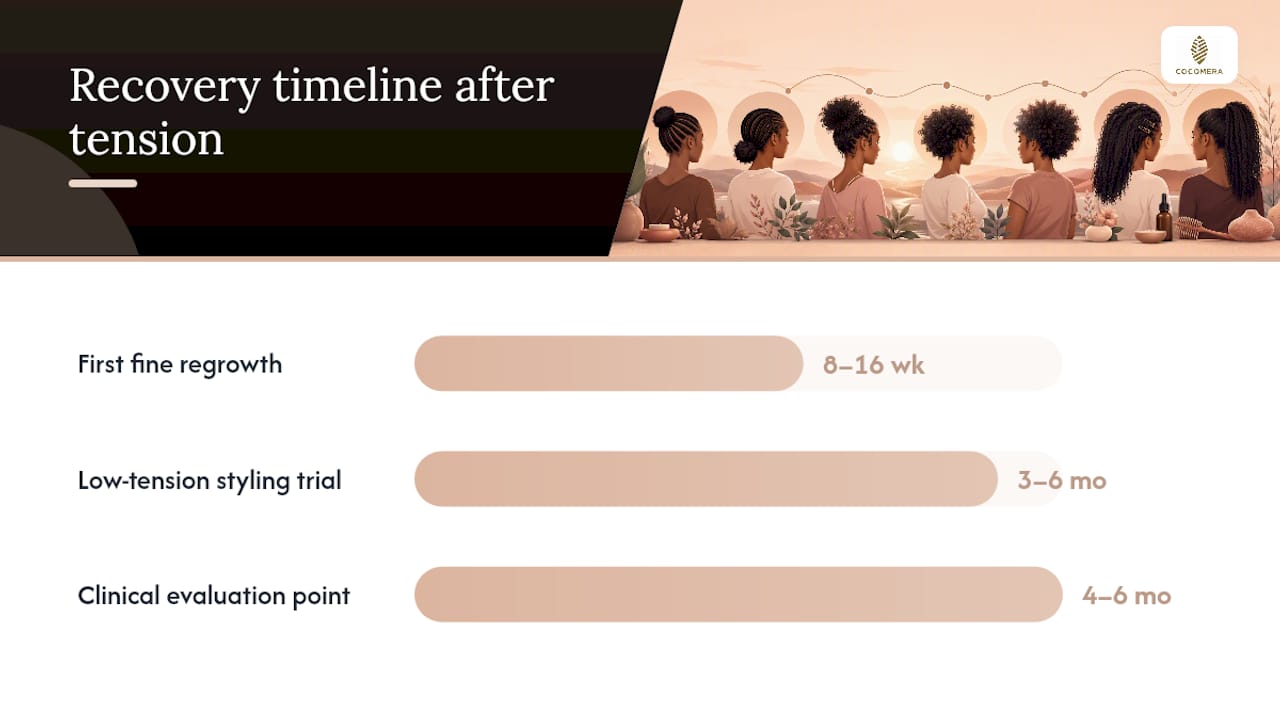
Most people who stop tension early see the first fine, soft regrowth within 8 to 16 weeks, though clinical guidance suggests giving it a genuine 3 to 6 months of low-tension styling before judging results. If four to six months pass with zero visible change, that’s the point to get evaluated rather than keep waiting.
Prevention and Safer Styling for Textured Hair
Protective styling isn’t the enemy. Tension without rest is. A few adjustments make a real difference without giving up braids or wigs entirely.
- Choose knotless braids over traditional ones, and ask your stylist to start braiding slightly behind your natural hairline rather than directly on it.
- Go jumbo instead of micro when possible. Fewer, larger braids mean less cumulative pull per follicle.
- Cap any single install at 6 to 8 weeks, then give your scalp at least a week or two fully loose before reinstalling.
- For wigs, use fewer clips and place them farther back from the hairline instead of clustering them along the edge.
- Skip adhesive glue directly on leave-out hair. A velvet-lined wig grip band holds just as well with far less friction.
- Remove your wig before sleep every night, and rotate clip positions between wears so the same follicles aren’t compressed repeatedly.
- Sleep on a satin pillowcase or under a satin bonnet, cleanse gently, keep the hairline moisturized, and massage the area briefly to support circulation.
Braid or wig removal itself can cause new breakage if it’s rushed. Saturating braids with a slippery detangling conditioner and working section by section protects hair that’s already compromised, and using wider, softer clips on wigs reduces point pressure across repeated wears.
When to See a Dermatologist and What to Expect
A few signs mean it’s time to book an appointment rather than wait it out:
- No visible regrowth after 4 to 6 months of consistently low-tension styling
- Hairline loss that keeps expanding rather than staying put
- Skin that looks shiny, smooth, or scarred in the affected patch
- Ongoing tenderness, bumps, or pustules that don’t settle down
Expect the visit to include a dermoscopic exam and possibly a small biopsy if scarring is suspected, followed by a conversation about whether minoxidil, corticosteroids, or surgical options make sense for your case. Bring photos tracking the hairline over the past several months and a rundown of your styling history (braid size, wear time, wig habits) since that history often points the clinician straight to the cause.
Cocomera’s Perspective: Products Support Recovery, They Don’t Replace It
Stopping tension is still the first and most important step. No edge product reverses damage caused by an install that’s still pulling on the follicle. Once tension is gone, the right products make the recovery window more comfortable and less prone to setbacks from dryness or breakage.
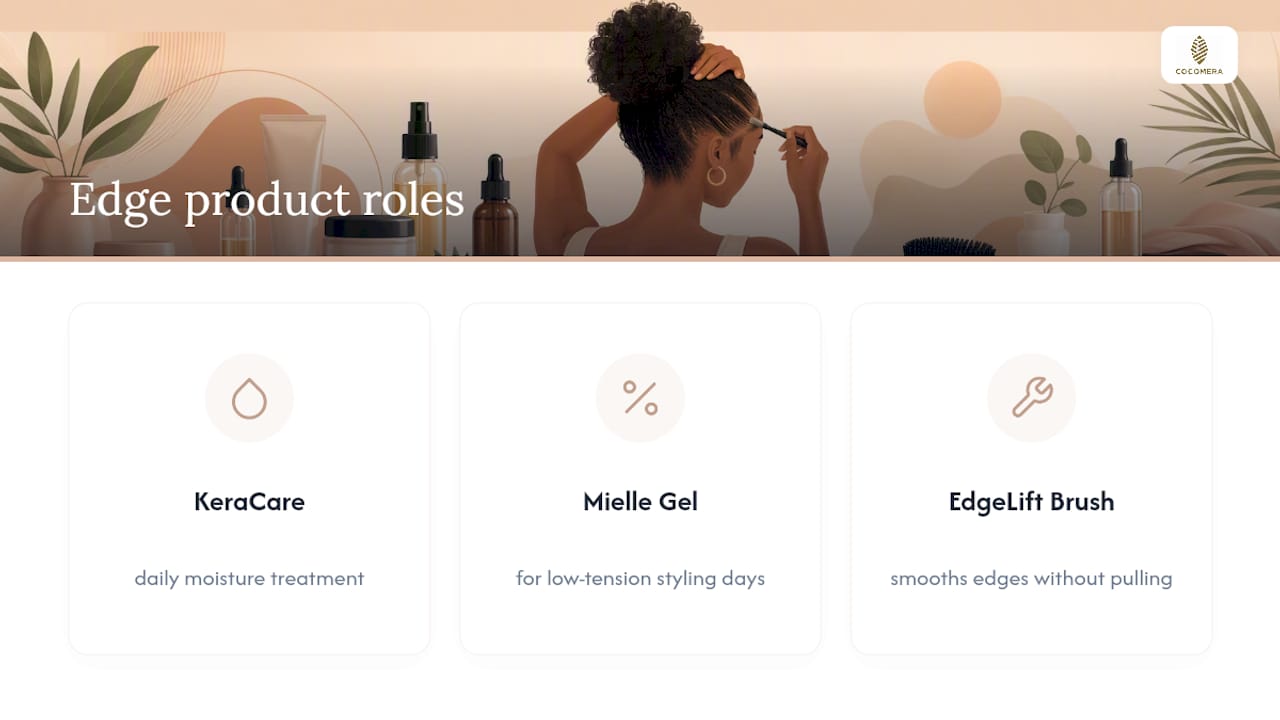
A lightweight hydrator like KeraCare CurlEssence Moisturizing Healthy Edges helps keep fragile new growth from snapping off. For styling with minimal hold, the Mielle Rosemary Mint Edge Gel smooths flyaways without the stiff, tension-prone finish of heavier gels. And the Bounce Curl VOLUME EdgeLift Brush lets you shape edges with a soft touch instead of the aggressive brushing that caused the problem in the first place. For more on building a recovery-friendly routine, see Cocomera’s guide to edge care for textured hair.
— Cocomera
Find Edge-Friendly Products That Fit Your Recovery Routine
Hair care curated specifically for wavy, curly, coily, and afro textures matters here because generic edge products are often formulated for straighter hair patterns that don’t reflect how textured edges actually break and heal. That focus means choosing between products built for specific curl patterns instead of guessing which mainstream formula might work.
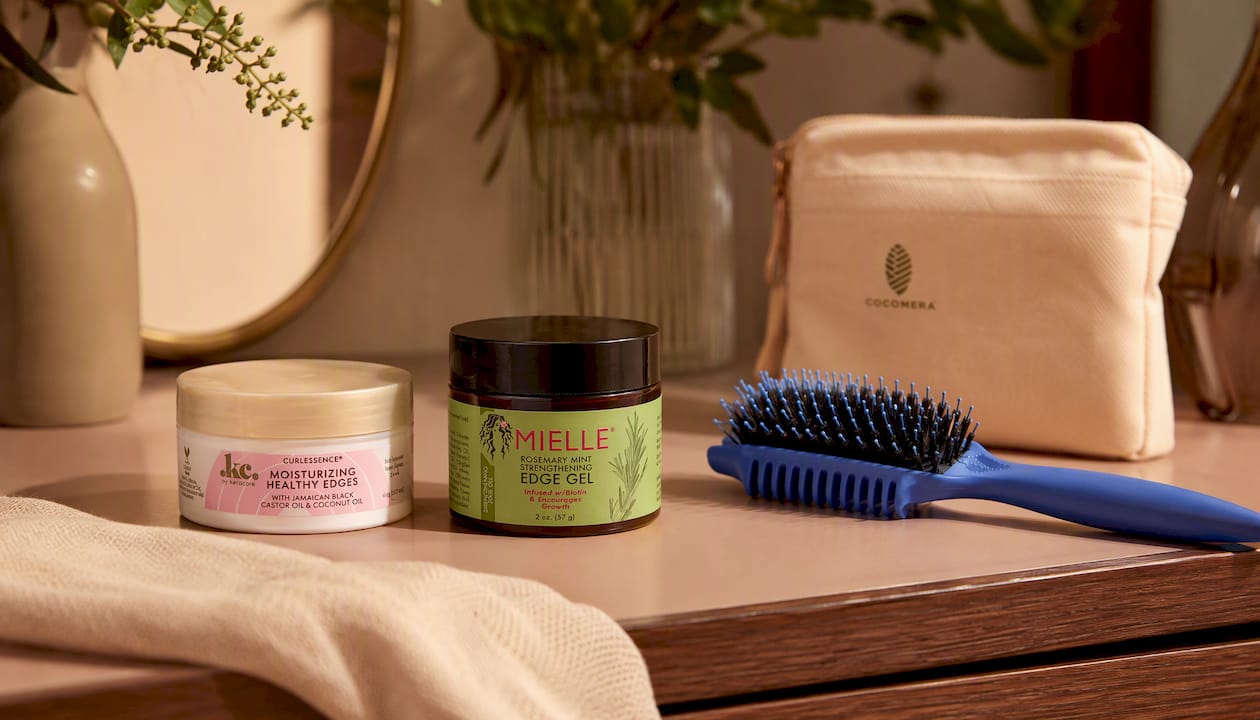
If you’re rebuilding a styling routine around rest periods and gentler handling, start with the KeraCare CurlEssence Healthy Edges treatment for daily moisture, add the Mielle Rosemary Mint Edge Gel for low-tension styling days, and pick up the Bounce Curl EdgeLift Brush to smooth edges without pulling. Browse the full hair care and styling range to build out the rest of your routine while your hairline recovers.
This article is general information, not a substitute for advice from a qualified doctor. Consult a qualified healthcare professional about your own circumstances before acting on anything here.
Sources
For deeper clinical detail, see the NCBI overview of traction alopecia, the AAD’s guidance, and the British Skin Foundation’s patient resource. For practical styling advice, Cocomera’s guide to protective hairstyles for textured hair rounds out the medical picture.
- Traction alopecia — NCBI Bookshelf
- American Academy of Dermatology — Hairstyles that pull can cause hair loss
- Traction alopecia — British Skin Foundation
- How to grow your edges back after braids — Edge Naturale
FAQ
How can you tell if traction alopecia is permanent?
Permanence usually comes down to whether the follicle has scarred. A dermatologist checks this through dermoscopy and sometimes a biopsy; smooth, shiny skin with no visible follicle openings signals scarring, while follicles that are still present, even if thinned, generally mean regrowth is still possible once tension stops.
Why is hair loss showing up earlier in younger people now?
Earlier and more visible edge thinning in younger people is often tied to styling habits starting sooner and continuing longer, including tighter installs, frequent reinstalling with little rest, and heavier extensions worn for extended periods. The mechanism is the same regardless of age: sustained tension on the same follicles eventually wears them down.
Can hair grow back from traction alopecia?
Yes, in early, non-scarring cases. Removing the tension and following a consistent low-manipulation routine often produces the first visible regrowth within 8 to 16 weeks, though full results can take several months.
How do I grow my edges back fast?
There’s no shortcut faster than removing the tension causing the damage in the first place. Pair that with gentle moisturizing, avoiding heat and heavy product near the hairline, and giving your scalp real rest between styles. Products like a lightweight edge moisturizer can support the process, but consistency over 3 to 6 months matters more than any single product.