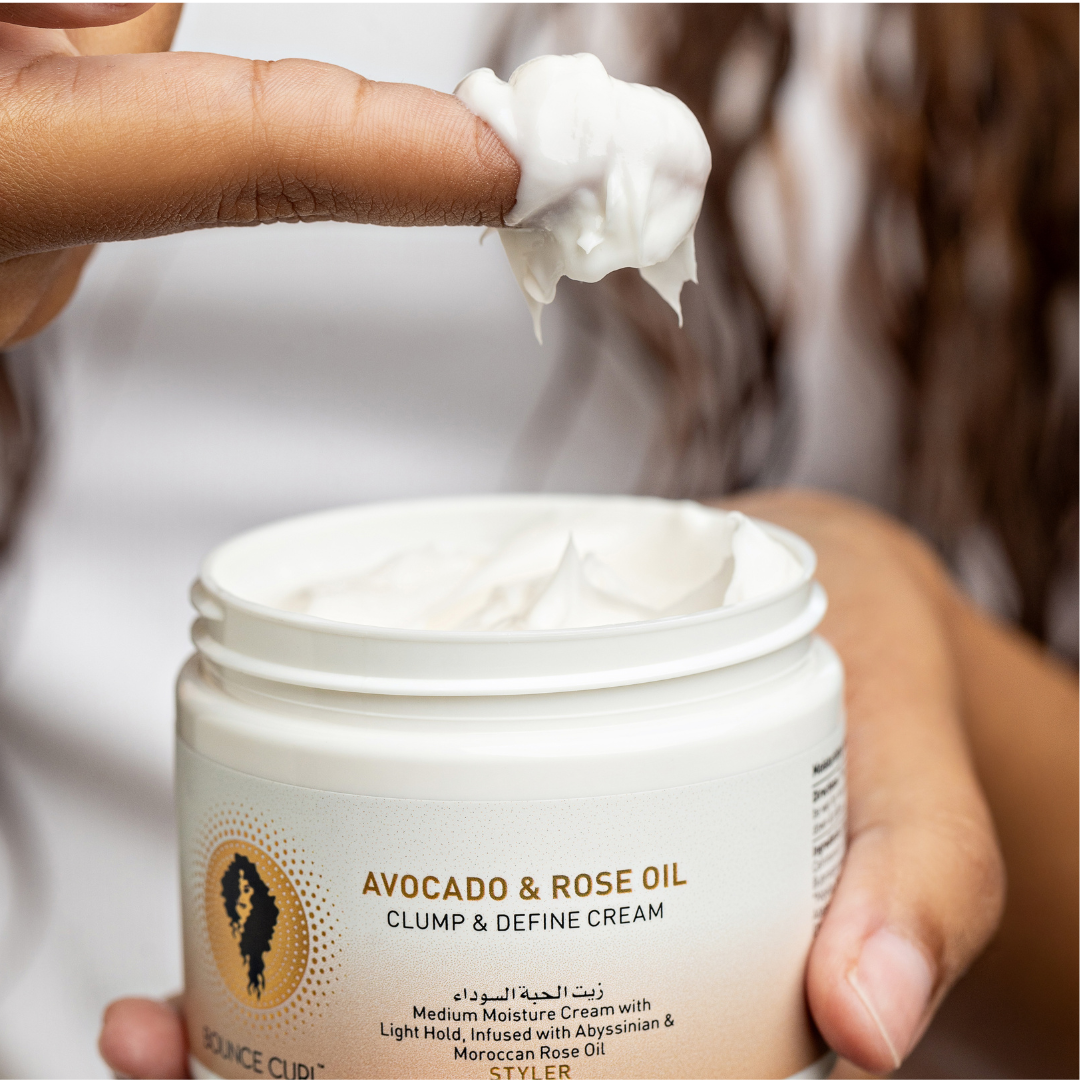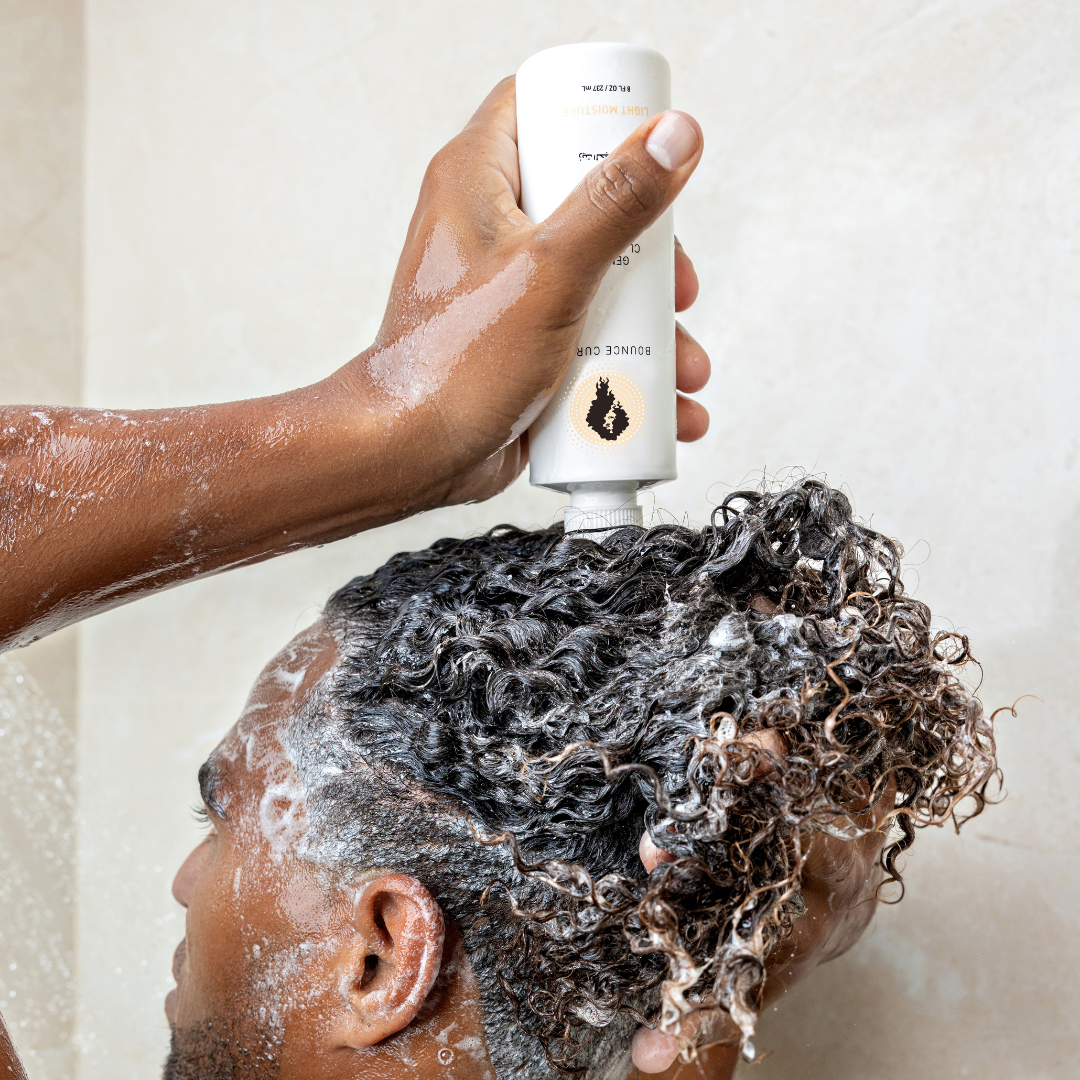
You wash your hair, apply your favorite products, and still your curls look flat, dull, and lifeless. Sound familiar? For many women with textured hair living in Europe, this is a weekly frustration. The culprit is rarely the wrong styling product. More often, it is invisible buildup from heavy creams, oils, and hard water minerals coating each strand and blocking moisture from getting in. Clarifying is the reset your curls actually need. This article breaks down what clarifying is, why it matters for types 2, 3, and 4 hair, and how to do it safely without stripping your strands.
Table of Contents
- What is clarifying and why is it essential for natural hair?
- How clarifying revives curls: Benefits for types 2, 3, and 4 hair
- How often should you clarify? Frequency by curl type, porosity, and lifestyle
- How to clarify natural hair safely: Step-by-step and what to avoid
- Special cases and expert debates: CGM, over-clarifying, and European water challenges
- Our take: What most curl guides overlook about clarifying in Europe
- Connect clarifying with your best curl routine
- Frequently asked questions
Key Takeaways
| Point | Details |
|---|---|
| Clarifying removes buildup | It resets curls by eliminating product and mineral residue that block moisture and definition. |
| Hard water matters | European cities’ hard water makes clarifying or chelating more crucial for textured hair health. |
| Frequency depends on you | How often you clarify should match your curl type, routine, and local water to avoid dryness. |
| Proper technique is essential | Use the right shampoo and always follow with deep conditioning for best curl results. |
| Expert advice is nuanced | While some avoid sulfates, most benefit from periodic clarifying, especially in Europe’s water conditions. |
What is clarifying and why is it essential for natural hair?
Clarifying is a deep cleansing process that goes beyond your regular shampoo. While everyday cleansers lift surface dirt, a clarifying shampoo removes stubborn residue that builds up over time from styling products, conditioners, and environmental factors. Think of it as a reset button for your scalp and strands.
For women with textured hair, this buildup is a serious problem. Product buildup from heavy creams, oils, butters, and styling products weighs down curls, leading to limp, dull hair and reduced definition. When your curl pattern starts looking less like itself, buildup is usually the first thing to investigate.
Hard water is another major factor, especially in Europe. Many European cities, including London, Paris, Stockholm, and Amsterdam, have water with high concentrations of calcium and magnesium. These minerals coat the hair shaft over time. Hard water minerals like calcium cause dryness, stiffness, and prevent moisture absorption, which is why your deep conditioner sometimes feels like it is doing nothing at all.
Here is what clarifying actually removes:
- Silicones from styling products and conditioners
- Wax and butter residue from heavy leave-ins
- Calcium and magnesium deposits from hard water
- Chlorine from tap water or swimming pools
- Excess oils that have oxidized on the scalp
Clarifying is not about stripping your hair. It is about clearing the path so that every product you apply afterward can actually reach your strands and do its job.
Once you clarify, your moisture and textured hair relationship completely changes. Conditioners absorb better, curl creams activate more easily, and your natural curl pattern has room to spring back. If you are building a routine from scratch, the European curl products guide is a great starting point for choosing products that work with your local water conditions. For those curious about ingredient simplicity, pure haircare solutions can also complement a clarifying routine beautifully.
How clarifying revives curls: Benefits for types 2, 3, and 4 hair
Understanding the process is helpful, but what does clarifying actually do for your curls? Let’s break down the benefits by curl type.
After a good clarifying session, most women notice an immediate difference. Post-clarifying curls show improved definition, softness, shine, and manageability as hair cuticles open better to products. Curlsmith’s research found their clarifying formula removes 86% of buildup, resulting in visibly brighter curls.

Here is how the benefits break down across curl types:
| Curl type | Main challenge | Clarifying benefit |
|---|---|---|
| Type 2 (wavy) | Flatness, oiliness, frizz | Restored wave pattern, lighter feel |
| Type 3 (curly) | Product overload, undefined coils | Springier curls, better hold |
| Type 4 (coily/kinky) | Mineral buildup, dryness | Softer texture, moisture absorption |
For type 2 wavy hair, buildup tends to happen fast because the hair lies closer to the scalp and picks up natural oils quickly. Clarifying lifts that weight and brings back the natural wave shape without the greasiness.
Type 3 curly hair often suffers from product overload. Women with type 3 curls tend to layer multiple products, which is great for definition but creates residue fast. After clarifying, those curl clumps form more easily and hold their shape longer.
Type 4 coily and kinky hair is the most porous and absorbs minerals and residue deeply. This is the curl type that benefits most from chelating shampoos (those that specifically bind and remove mineral deposits) rather than standard clarifying formulas. The payoff is significant: softer, more elastic coils that respond to moisture the way they should.
- Fewer tangles during wash day
- Styling products actually penetrate the strand
- Scalp health improves with less buildup clogging follicles
- Natural curl pattern re-emerges without extra manipulation
Pro Tip: Apply your clarifying shampoo to soaking wet hair. The extra water helps the formula spread evenly and lifts buildup without over-concentrating on one area, which can cause uneven results.
For women focused on improving natural hair health long term, clarifying is one of the highest-impact steps you can add to your routine.
How often should you clarify? Frequency by curl type, porosity, and lifestyle
With the results in mind, the next question is how often to clarify your specific hair type for optimal results.
There is no single answer that works for everyone. Clarifying every 4 to 6 weeks is a general guideline, but women using heavy products, living in hard water areas, or with high porosity hair may need to clarify every 2 to 3 weeks. Type 4 hair, on the other hand, often does best with monthly clarifying to avoid dryness.
Here is a quick comparison to help you find your starting point:
| Factor | Less frequent clarifying | More frequent clarifying |
|---|---|---|
| Water type | Soft water | Hard water (most of Europe) |
| Product use | Lightweight gels, sprays | Heavy butters, oils, waxes |
| Porosity | Low porosity | High porosity |
| Curl type | Type 4 (moisture sensitive) | Type 2 and 3 (buildup prone) |
Signs that your hair is telling you it is time to clarify:
- Your curls look limp even after styling
- Your scalp feels itchy or congested
- Conditioners and leave-ins are not absorbing
- Products are sitting on top of the hair instead of soaking in
- Your curl pattern looks different from its usual shape
European cities like Stockholm, Berlin, and Paris are known for moderately hard to very hard water. If you live in one of these cities and use curl creams or butters regularly, leaning toward the more frequent end of the scale makes sense.
Pro Tip: Keep a simple hair journal for two months. Note your wash day results before and after clarifying. Patterns will emerge quickly and help you find your personal sweet spot.
For a structured wash day approach, the coily hair wash day routine is a practical guide worth bookmarking. You will also find helpful context in these curly hair care tips and a breakdown of the best moisturizers for textured hair to use right after clarifying.
How to clarify natural hair safely: Step-by-step and what to avoid
Knowing when to clarify is important, but doing it the right way takes your curls to the next level. Here is the safest approach.
First, understand the difference between clarifying and chelating shampoos. Clarifying shampoos use surfactants to remove product buildup. Chelating shampoos go further by using binding agents to grab and rinse away mineral deposits. Chelating shampoos use surfactants and agents to bind and rinse minerals and residue, making them the better choice for hard water areas across Europe.
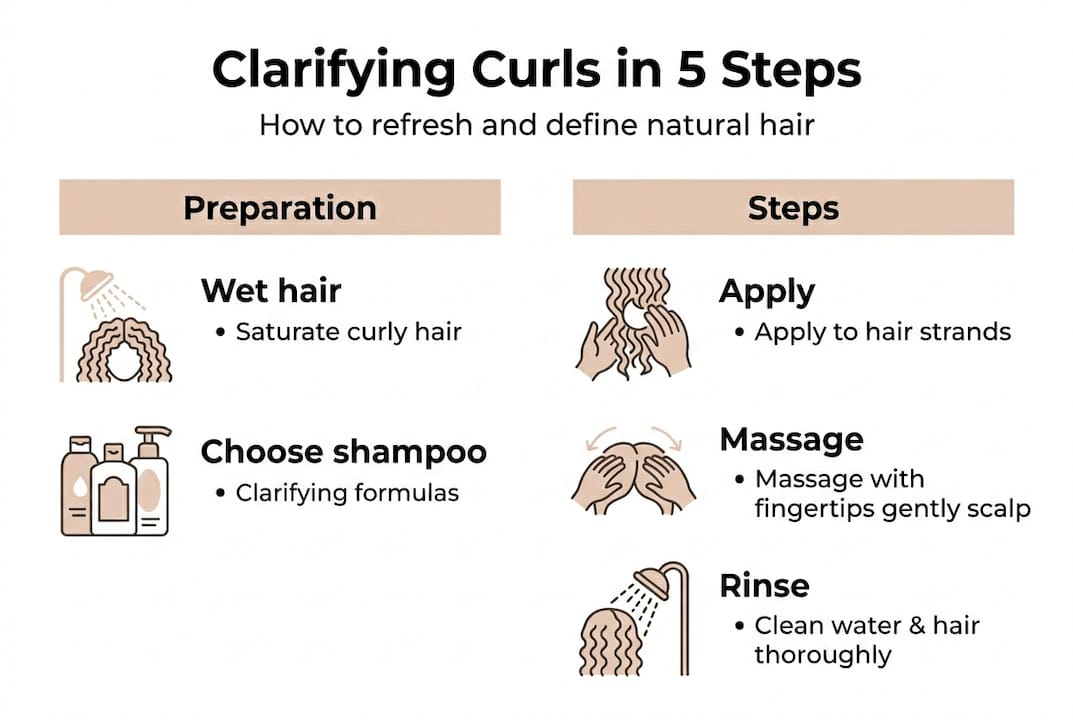
Here is a step-by-step process:
- Wet your hair thoroughly with warm water before applying anything
- Apply the clarifying shampoo to your scalp first, massaging gently with your fingertips
- Work the lather down through the lengths, letting the formula do the work rather than scrubbing
- Rinse completely until the water runs clear and no slipperiness remains
- Follow immediately with a deep conditioner, leaving it on for at least 15 to 20 minutes
Skipping the deep conditioner after clarifying is the single biggest mistake women make. Clarifying opens the cuticle and removes oils, so your hair is in its most vulnerable state right after rinsing.
Things to watch out for:
- Over-clarifying strips natural oils, causing dryness and frizz, especially for type 4 hair. Color-treated hair also fades faster with over-clarifying.
- Avoid sulfate-based clarifying shampoos if your hair is color-treated. Look for sulfate-free chelating options instead.
- Low porosity hair (where water beads on the surface) needs clarifying less often because buildup sits on the cuticle rather than penetrating deeply.
You can explore a curated range of clarifying shampoo options suited for different curl types and porosity levels to find the right match for your hair.
Special cases and expert debates: CGM, over-clarifying, and European water challenges
Finally, with so much advice online, you might wonder: is clarifying right for you, and what do experts actually say?
The Curly Girl Method (CGM) recommends a one-time clarifying wash at the very start of the routine to remove silicones. After that, many CGM followers avoid sulfates entirely. However, experts advocate occasional clarifying over strict no-sulfate rules for buildup prevention, especially for women dealing with hard water.
- Type 4 hair carries higher risk of dryness from over-clarifying
- Type 2 and 3 hair often needs more frequent resets due to faster buildup
- Hard water in European cities increases the need for chelating versus standard clarifying
- Color-treated hair needs gentler, sulfate-free formulas regardless of curl type
The bottom line is that your choosing curly hair products decisions should always factor in your local water quality. A routine that works perfectly for someone in California may leave your hair dull and stiff in Copenhagen or Milan.
Our take: What most curl guides overlook about clarifying in Europe
You have now seen the main approaches, but European women face unique challenges that most guides miss. Here is our perspective.
The overwhelming majority of curl content online is written with American tap water in mind. American water varies widely but is often softer than what flows through taps in Germany, France, the Netherlands, or Sweden. This matters enormously. Standard clarifying shampoos are designed to remove product residue. But if your water is depositing calcium and magnesium onto your strands every single wash day, a regular clarifying shampoo is not enough. You need chelating.
We also see a pattern with type 3 and 4 hair in Europe specifically. Women follow the same deep conditioning routine as someone in a soft water region and still feel like their hair is dry. The moisture is not getting through because the mineral layer is still there. Chelating first, then deep conditioning, changes everything.
Generic timelines like “clarify once a month” were not written for someone in Stockholm using well-water. Adapting your schedule to your actual water hardness, not a content creator’s recommendation, is the most impactful shift you can make. Look for products formulated to work with hard water conditions and build your routine around your environment, not around someone else’s.
Connect clarifying with your best curl routine
Ready for better curls? Take the next step and upgrade your routine with expert-approved solutions.
At Cocomera, we have curated a selection of clarifying shampoos specifically suited for European hard water conditions and textured hair types 2, 3, and 4. These are not generic drugstore picks. They are formulas that actually address mineral buildup and product residue without leaving your curls feeling stripped.

After clarifying, your hair needs to rebuild moisture fast. Our collection of hair treatments for curls includes deep conditioners and masks designed to restore softness and elasticity right after a clarifying wash. Then lock in your results with styling products for natural hair that amplify definition and hold for every curl type. Your best wash day starts with the right reset.
Frequently asked questions
How do I know if my hair needs clarifying?
Limp curls, itchy scalp, or styling products that suddenly stop working are classic signs you need to clarify. Tighter curl types like 3C and 4 are especially prone to buildup from heavy oils.
What is the difference between clarifying and chelating shampoos?
Clarifying shampoos remove product buildup, while chelating shampoos also target mineral deposits from hard water. If you live in Europe, chelating beats standard clarifying for most textured hair types.
Can I clarify color-treated hair?
Yes, but use sulfate-free clarifying products to prevent color fading. Color-treated hair fades faster with aggressive clarifying, so always follow with a rich deep conditioner.
How soon will I see results after clarifying?
Most women notice softer, shinier, and more defined curls after the very first clarifying wash if buildup was present. Improved definition and manageability are usually visible immediately.
How do I avoid over-clarifying?
Stick to every 4 to 6 weeks as a baseline and never skip deep conditioning after. Over-clarifying causes dryness and frizz, especially for type 4 hair, so let your hair’s response guide your frequency rather than a fixed schedule.