TL;DR:
- Embracing natural hair means accepting your curl pattern, volume, and porosity instead of using heat or chemicals. It reduces damage, saves time and money, and promotes confidence and self-love. Societal acceptance is growing, with laws like the CROWN Act protecting natural hair in workplaces and schools.
Embracing natural hair texture is defined as accepting and working with your hair’s innate curl pattern, porosity, and volume instead of altering it through heat or chemicals. The reasons why embrace natural texture matters go far beyond aesthetics. Reducing heat and chemical styling protects the hair shaft, cuts your morning routine, and supports a more sustainable beauty practice. The natural hair movement in 2026 has shifted its focus from rigid curl pattern labels toward scalp health and individual hair characteristics, which means the goal is no longer a perfect curl type. It is healthy, authentic hair that works for you.
What are the key benefits of embracing your natural hair texture?
The most direct benefit of embracing natural hair is reduced damage. Heat tools and chemical relaxers weaken the hair shaft over time, causing breakage, dryness, and split ends. Cutting back on both gives your hair a real chance to recover and grow stronger.
The advantages of natural texture extend well beyond hair health:
- Less breakage and dryness. Skipping flat irons and relaxers removes the two biggest sources of structural damage for curly and coily hair types.
- Shorter styling time. A wash-and-go or a simple diffuse session takes far less time than blow-drying and flat-ironing every morning.
- Lower cost. Fewer heat tools, fewer chemical treatments, and a simpler product routine add up to real savings over a year.
- Reduced environmental impact. Styling natural hair minimizes reliance on heat and chemical treatments, which lowers your personal carbon footprint in the beauty space.
- Stronger confidence. Wearing your hair as it grows builds a relationship with your appearance that is grounded in reality, not performance.
The confidence piece is not a soft benefit. Embracing natural hair fosters self-love and improves self-esteem by challenging narrow beauty standards that have historically excluded textured hair. That shift in self-perception affects how you show up at work, in social settings, and in front of the mirror every morning.
Pro Tip: Start tracking your hair’s health improvements after six weeks without heat. Most people notice reduced breakage and improved moisture retention within that window.
How does natural hair fit into shifting workplace and social norms?
Societal acceptance of natural hair has changed significantly, and that change is accelerating. Two-thirds of Black women previously reported changing their hair for job interviews. That number is shifting as more people choose natural hair to express authenticity in professional settings.
The CROWN Act, which stands for Creating a Respectful and Open World for Natural Hair, has been enacted in multiple U.S. states. It prohibits discrimination based on hair texture and protective styles in workplaces and schools. Its growing adoption signals that natural hair is not just culturally accepted. It is legally protected in a growing number of jurisdictions.
“Natural hair is no longer a statement of rebellion. It is a statement of identity. The workplace is catching up to what many people have always known: your hair does not determine your professionalism.”
This cultural shift matters because it removes one of the most persistent reasons people avoid embracing their natural texture. The fear of professional consequences is real and historically justified. As that fear decreases, more people feel free to make choices based on hair health and personal expression rather than external pressure.
What misconceptions make natural hair harder to accept?
The biggest misconception about natural hair is that frizz and shrinkage are problems to fix. They are not. Frizz is a natural part of hair movement, and shrinkage signals healthy elasticity in the hair strand. Reframing these traits as signs of vitality rather than failure changes everything about how you approach your hair.
Professional stylists frame shrinkage and volume as positive properties that indicate the hair is responding well to moisture. A strand that shrinks dramatically when dry is a strand that still has elasticity. That is a good sign.
Other common misconceptions worth addressing:
- “Natural hair is unmanageable.” Textured hair requires specific techniques, not more effort. Learning to detangle on wet hair with conditioner, for example, makes a dramatic difference.
- “My curl pattern should look like someone else’s.” Curl patterns vary by individual, and even vary across different sections of the same head. Comparison is the fastest route to frustration.
- “The transition period means something is wrong.” The transition to natural hair can feel emotionally challenging. That is normal. Patience and a realistic timeline matter more than any single product.
Pro Tip: Step away from social media feeds that show only one type of natural hair result. Follow accounts that show your specific curl type, including the bad hair days.
What practical routines actually support natural hair?
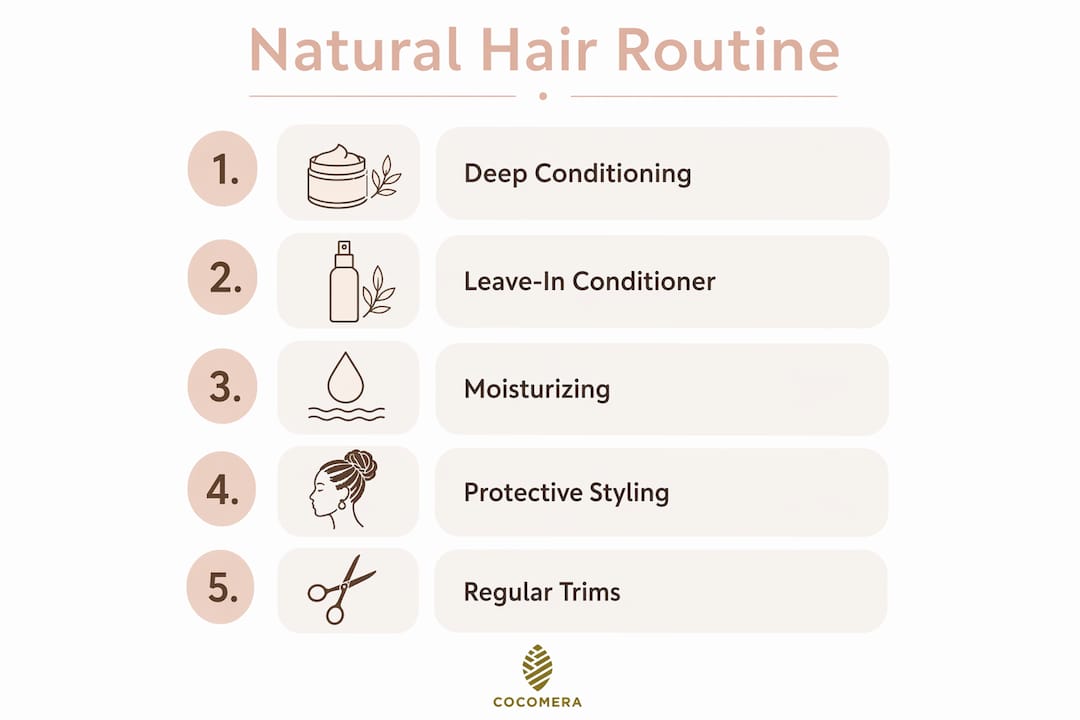
A consistent routine is the foundation of healthy natural hair. The goal is not perfection. It is a repeatable process that keeps your hair moisturized, detangled, and protected.
- Moisturize regularly. Curly and coily hair is structurally drier than straight hair because the curl shape makes it harder for scalp oils to travel down the strand. Hair needs moisture consistently, not just on wash day.
- Detangle gently on wet hair. Always detangle with a wide-tooth comb or your fingers while the hair is saturated with conditioner. Dry detangling causes unnecessary breakage.
- Let hair dry mostly naturally. Frizz is minimized when hair dries to about 95% naturally before any diffuser is used. Rushing the drying process with high heat disrupts the curl formation.
- Use heat tools sparingly. A diffuser on low heat enhances curl definition without the damage of a flat iron. Reserve high-heat tools for occasional use only.
- Schedule regular cuts. Layered cuts enhance natural hair movement and make the hair easier to style. A trim every 10–12 weeks removes split ends before they travel up the shaft.
The “lived-in hair” concept, popularized by stylists who work with textured hair, captures this approach well. “Lived-in” hair means maintaining hair with thoughtful cuts, minimal washing, and targeted product use to enhance texture without forcing perfection. It is the opposite of high-maintenance styling. It is intentional simplicity.
| Routine Step | Frequency | Key Benefit |
|---|---|---|
| Deep conditioning | Weekly | Restores moisture and elasticity |
| Gentle detangling | Every wash day | Reduces breakage significantly |
| Scalp massage | 2–3 times per week | Stimulates circulation and growth |
| Protective styling | As needed | Reduces daily manipulation |
| Trim | Every 10–12 weeks | Maintains shape and removes damage |
Pro Tip: Apply a leave-in conditioner to soaking wet hair right after rinsing. The water acts as a carrier, pushing the product deeper into the hair shaft.
How does the sensory experience of natural hair affect your wellbeing?
The connection between natural texture and mental wellness is grounded in sensory psychology. Natural textures reduce stress by providing familiar tactile stimuli that help regulate the nervous system. Touching your own hair, running your fingers through your curls, and feeling the weight of your natural volume are all forms of sensory input that ground you in the present moment.
“The act of caring for natural hair, oiling the scalp, finger-coiling curls, or simply touching your own texture, is a form of self-care that connects you to your body in a way that straightened or heavily processed hair rarely allows.”
This is why so many people describe the transition to natural hair as more than a beauty change. It becomes a form of self-care practice. The daily ritual of moisturizing, styling, and protecting your hair creates a consistent moment of attention directed at yourself. That kind of routine has real psychological value.
The 2026 natural hair movement reinforces this by shifting focus to scalp health and personal hair characteristics. When you stop chasing a curl pattern and start caring for your actual scalp and strands, the experience becomes less stressful and more rewarding.
Key Takeaways
Embracing natural hair texture reduces damage, builds confidence, and creates a sustainable beauty routine that works with your hair instead of against it.
| Point | Details |
|---|---|
| Health comes first | Reducing heat and chemical styling protects the hair shaft and reduces breakage over time. |
| Frizz and shrinkage are healthy | Both traits signal elasticity and moisture retention, not damage or poor hair quality. |
| Routine consistency matters | Regular moisturizing, gentle detangling, and scheduled trims build the foundation of healthy natural hair. |
| Workplace acceptance is growing | The CROWN Act and shifting corporate culture make natural hair a protected and increasingly normalized choice. |
| Sensory care supports wellbeing | Touching and caring for natural hair provides tactile stimuli that reduce stress and support mental wellness. |
What I’ve learned from watching people fall in love with their hair
The most common thing I hear from people who finally commit to their natural texture is: “I wish I had done this sooner.” Not because it was easy, but because the relief of stopping the fight against their own hair was immediate.
What I’ve observed at Cocomera is that the people who thrive with natural hair are not the ones who found the perfect product first. They are the ones who changed their relationship with their hair before they changed their routine. Once you stop seeing your curls as something to control and start seeing them as something to work with, the right natural hair care approach becomes obvious.
The artistry of natural hair is real. Every curl pattern, every shrinkage level, every frizz halo is individual. No two heads of natural hair look the same, and that is the point. The goal was never uniformity. It was always authenticity.
— Cocomera
Cocomera’s curated range for natural, curly, and textured hair
Cocomera carries a carefully selected range of products built specifically for wavy, curly, coily, and afro hair types. Every product in the catalog is chosen with textured hair in mind, from cleansers that preserve moisture to treatments that rebuild strength without stripping curl definition.
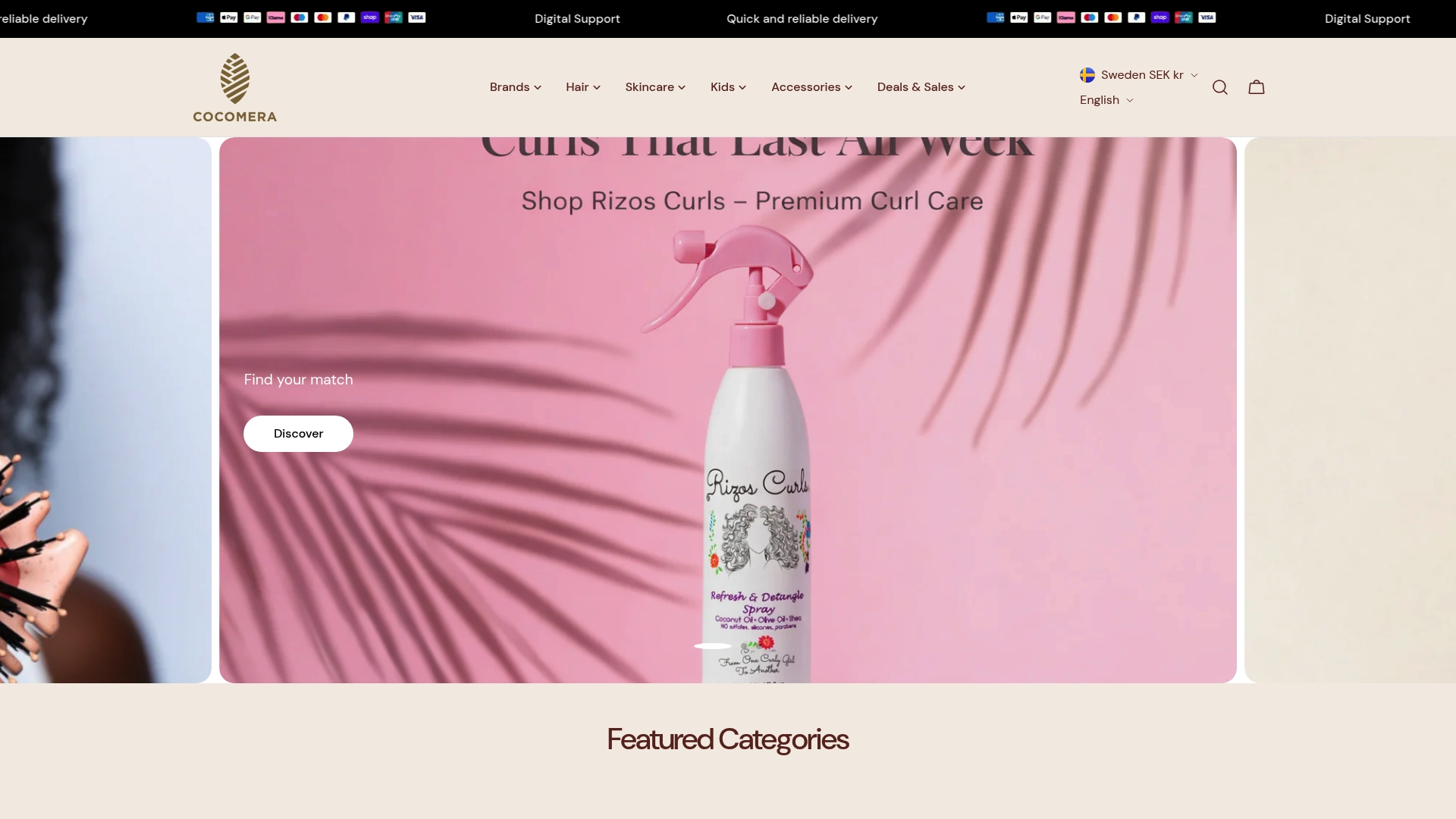
Whether you are just starting your natural hair routine or refining one that already works, Cocomera’s styling products for curly hair and targeted hair treatments give you the tools to work with your texture, not against it. The full range covers hair types 2, 3, and 4, so you can find products matched to your specific curl pattern without the guesswork of a general beauty store.
FAQ
What does “embracing natural texture” mean for curly hair?
Embracing natural texture means accepting your hair’s innate curl pattern, volume, and behavior instead of altering it with heat or chemicals. The focus is on working with your hair’s natural properties to keep it healthy and expressive.
Is frizz a sign of damaged hair?
Frizz is not a sign of damage. It is a natural part of hair movement that indicates the hair is responding to humidity and moisture. Healthy frizz is different from breakage, which appears as short, uneven strands.
How long does the transition to natural hair take?
The transition period varies by individual, but most people experience the most significant adjustment in the first 6–12 months. Emotional challenges during transition are normal, and patience with the process is the most important factor in long-term success.
Does natural hair care reduce environmental impact?
Yes. Styling natural hair reduces reliance on heat tools and chemical treatments, both of which carry environmental costs in energy use and chemical runoff. Simpler routines with fewer products also reduce packaging waste.
What is the most important step in a natural hair routine?
Consistent moisturizing is the single most important step for curly and coily hair. Because the curl structure limits how far scalp oils travel down the strand, external moisture application keeps the hair flexible, reduces breakage, and supports curl definition.