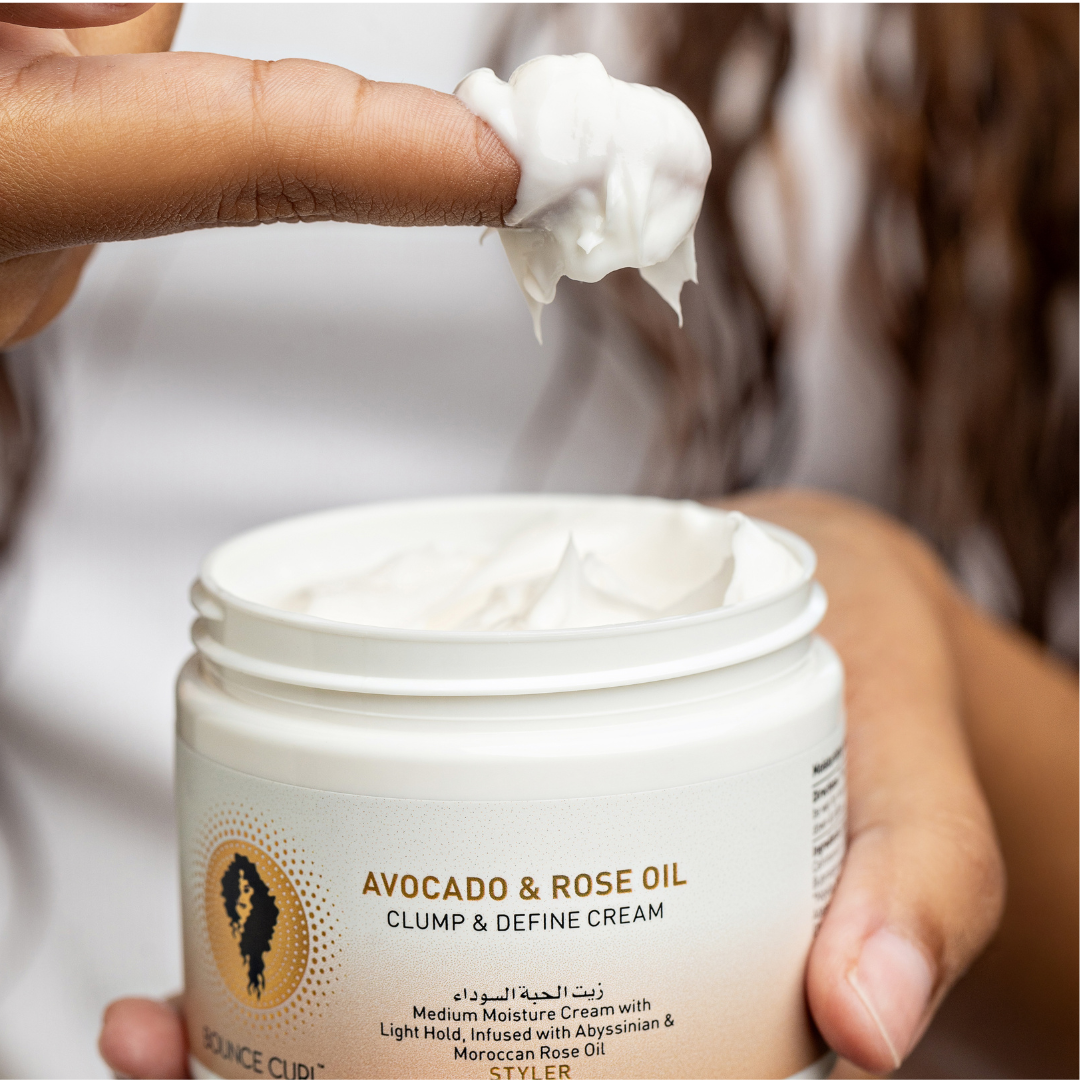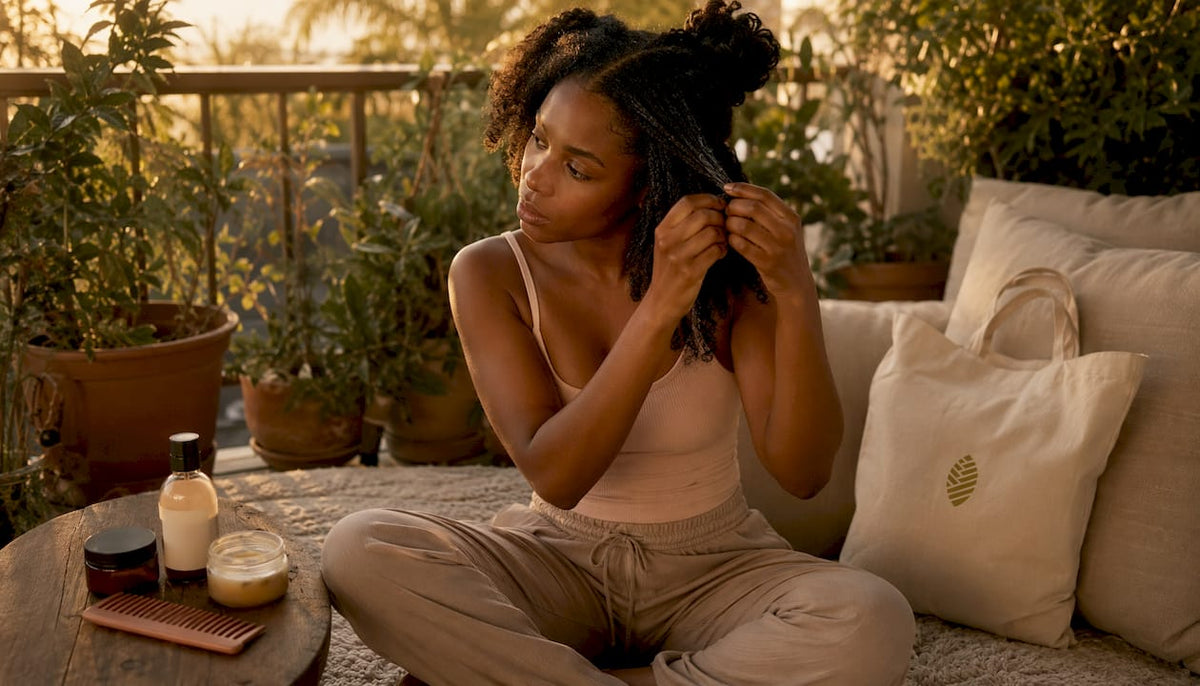
What is a twist out, exactly?
A twist out is a natural hair styling technique where you twist sections of damp hair, let them dry completely, and then carefully unravel each twist to reveal defined, voluminous curls. No heat required. The result is a curl pattern that looks intentional and full, somewhere between a wash-and-go and a set style. Think of it as using the twist itself as a curling rod.
The technique works best on curl types 2, 3, and 4, covering everything from loose waves to tightly coiled afro-textured hair. What you get at the end depends heavily on your starting texture, the size of your twists, and how long you let them set.
Here is what makes a twist out recognizable:
- Defined curl pattern with consistent shape from root to tip
- Volume and elongation, since the twisting stretches the curl slightly before releasing it
- Soft, touchable texture rather than the crunch of a gel cast
- No heat damage, making it a go-to for people focused on length retention
- Protective qualities, since hair stays twisted and tucked for hours or days before the take-down
Hairstylist Martika Cogdell describes it well: a twist out provides definition and curls to natural hair while leaving it looking full and voluminous, maintaining its natural texture and adding body throughout. As a low-manipulation style, it also reduces the daily handling that causes breakage over time.
How to do a twist out on natural hair
Getting a great result comes down to preparation, product, and patience. Rush any of those three and you will end up with frizz instead of curls.
Step-by-step instructions
-
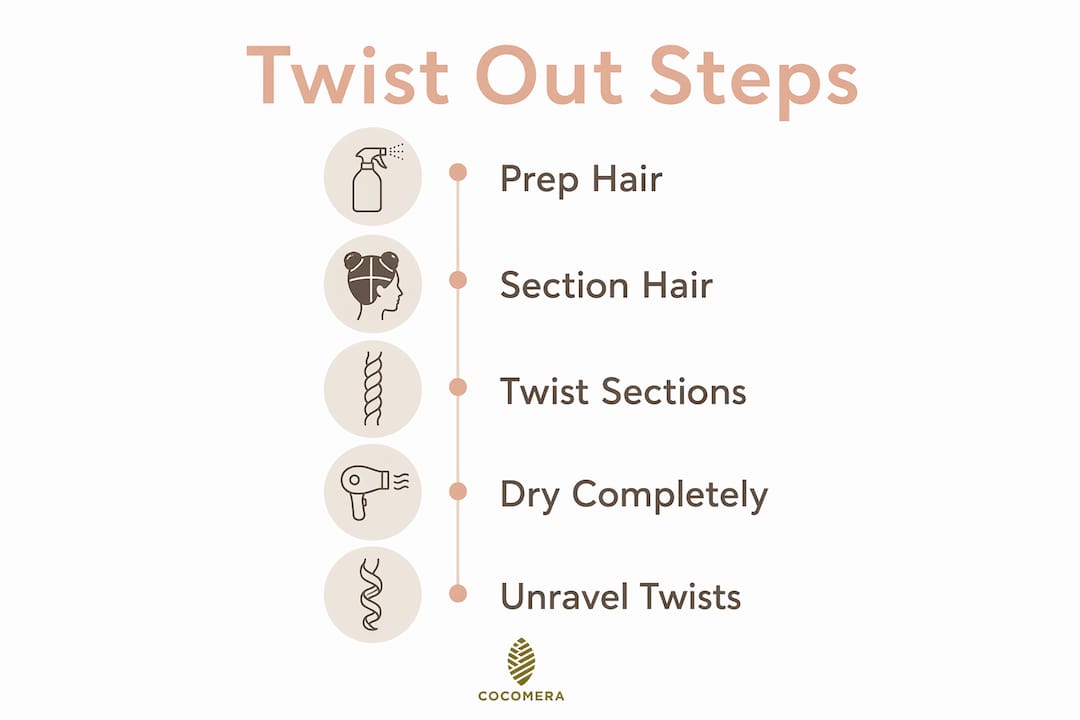
Wash and condition your hair. Start with clean, freshly conditioned hair. Product buildup and dry strands both work against curl definition. A strengthening shampoo followed by a deep conditioner sets the foundation. Twist outs are best done on freshly washed and conditioned hair.
-
Detangle thoroughly. Run your fingers through each section first to loosen knots, then follow with a wide-tooth comb or detangling brush. Start at the ends and work toward the roots. Skipping this step leads to uneven twists and patchy curl definition.
-
Section your hair while it is still damp. Divide hair into several sections using clips to keep them separate. Larger sections give you looser, fuller curls; smaller ones produce tighter coils. The drying method you choose at this stage also affects how the curl sets.
-
Apply your styling products. Work a moisturizing cream or curl lotion through each section before twisting. This is where you lock in moisture and create the slip that helps the twist hold its shape. Gels add definition and hold; creams add softness. Many people layer both.
-
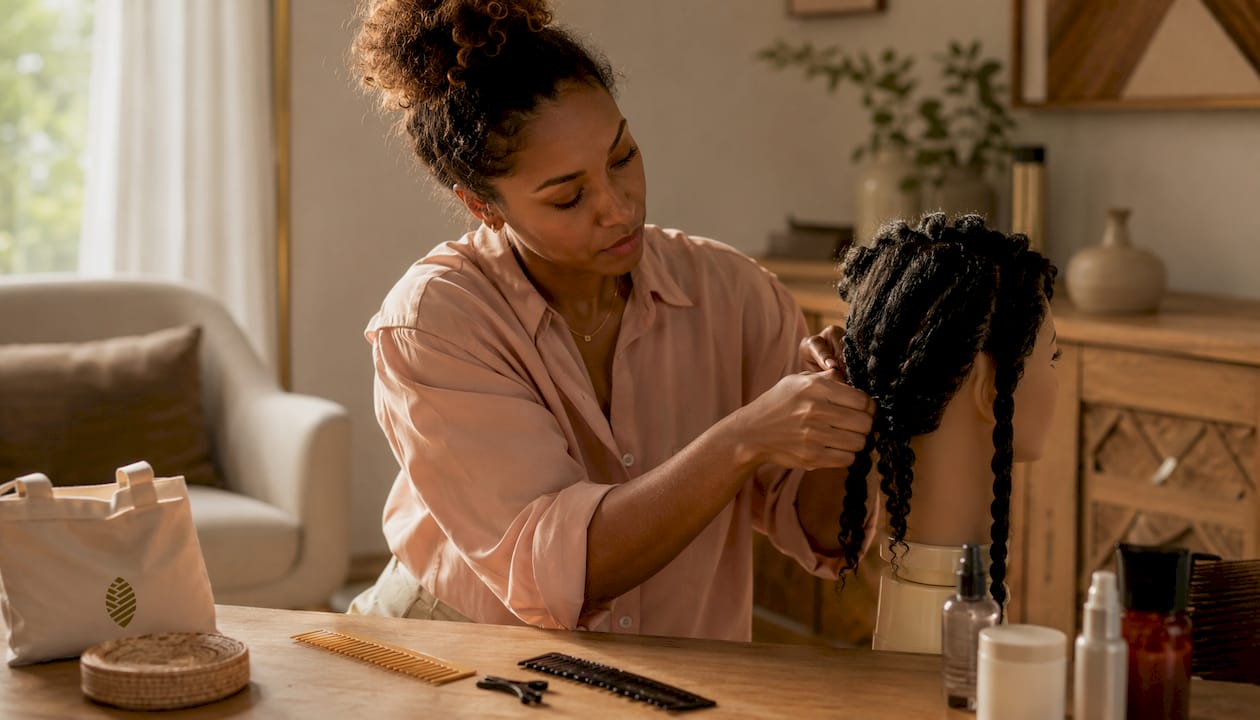
Twist each section tightly. Split a section into two equal strands and wrap them around each other like a rope, all the way to the ends. Hairstylist Lacy Redway, whose clients include Lupita Nyong’o and Tracee Ellis Ross, says to twirl strands as tightly as possible for the most definition. Loose twists produce loose, undefined results.
-
Let the twists dry completely. This is the step most people skip too soon. Set your twists overnight, or longer if your hair is thick or dense. Redway is direct about this: “The longer the twists stay in before unraveling the better the result you will achieve.” Unraveling before the hair is fully dry is the single most common cause of frizz.
-
Unravel carefully. In the morning, apply a small amount of oil or serum to your fingertips before touching the twists. Then untwist each piece in the reverse direction you originally twisted it. Go slowly. Pulling or rushing tears the curl pattern apart before it has a chance to set.
-
Separate and fluff. Once all twists are down, use your fingers or a hair pick at the roots to lift and add volume. Avoid combs at this stage. The goal is to blend the sections without disrupting the curl shape.
Pro Tip: Rub a few drops of a lightweight hair oil between your palms before unraveling each twist. The oil reduces friction between strands, which is what causes frizz during the take-down.
Twists vs. twist outs: what is actually different?
People use these terms interchangeably, but they describe two different things. A twist is the base style, the installed hairstyle where sections of hair are wrapped around each other and worn as-is. A twist out is what happens after you take the twists down.
Wearing your twists is a protective style on its own. The hair is contained, manipulation is minimal, and the style can last several days. The twist out is the transformation that happens when you unravel those twists, releasing the curl pattern they created.
Here is how the two compare:
- Twists (worn in): Hair is coiled and contained; style looks neat and structured; great for multi-day wear without touching the hair
- Twist outs: Hair is released and free; style looks voluminous and textured; curl pattern mimics the shape of the twist
The type of twist you install also changes the final result. Twist outs can be achieved with two-strand twists, flat twists, box twists, or finger coils, and each produces a different curl size and texture. Flat twists, which lie against the scalp like cornrows, create a wavier, more uniform pattern. Two-strand twists produce rounder, more defined coils. Box twists fall somewhere in between.
Twist size matters just as much as twist type. Larger twists produce looser, fuller curls; smaller twists create tighter, more coiled results. If you want a big, fluffy afro-inspired look, go bigger. If you want defined ringlets, go smaller and tighter.
Expert tips for a defined, long-lasting twist out
Getting the technique right once is satisfying. Getting it right consistently, and keeping the style fresh for days, takes a bit more intention.

Patience is the most important factor. Hairstylist Lacy Redway warns that rushing the take-down reduces both the longevity and the clarity of the curl. Some stylists recommend leaving twists in for multiple days before unraveling, especially for thicker or coarser textures. The longer the set time, the more defined the result.
Use your fingers for sectioning, not a comb. Hairstylist Yene Damtew, founder of Brown Beauty Summit and stylist to Michelle Obama, points out that imperfect part lines allow the twist to come out more naturally. Straight, combed parts require extra blending after take-down because the sections look too uniform. Finger-parted sections blend on their own.
Protect your style overnight. Once your twist out is down, sleeping on it without protection will flatten and frizz the curls by morning. A few approaches that work:
- Sleep on a satin or silk pillowcase to reduce friction
- Wrap your hair loosely in a satin bonnet or scarf
- Pineapple your hair (gather it loosely at the top of your head) to preserve the curl shape
Choose products that match your hair’s needs. For the wet styling process, a leave-in conditioner or moisturizing cream applied before twisting keeps strands hydrated throughout the set time. A gel or curl-defining cream on top adds hold. The right combination depends on your curl type and porosity. High-porosity hair tends to need heavier creams; low-porosity hair does better with lighter, water-based products.
Troubleshoot common problems:
- Frizz: Almost always caused by unraveling too early or skipping oil on the fingertips during take-down. Let the hair dry longer next time and use a serum before touching the twists.
- Unraveling twists: Your ends need more product or a tighter coil at the tip. Coil the ends around your finger before finishing each twist.
- Dryness after take-down: Seal with a light oil after unraveling. Hair oils benefit strands by locking in moisture and reducing water loss from the strand.
- Flat, lifeless curls: Use a hair pick at the roots, not the ends. Lifting at the root adds volume without disturbing the curl pattern.
Styling variations once the twist out is down. The style does not have to stay as-is after take-down. You can pin sections up into a half-up style, pull the front back with a headband, or gather everything into a high puff. The curls also hold well for braiding or twisting back into a protective style for day two and three. For detailed styling ideas tailored to type 3 and 4 curls, the afro hair styling guide at Cocomera covers the full process.
Pro Tip: On day two, mist your hair lightly with water and scrunch in a small amount of your original styling cream before fluffing. This refreshes the curl without restarting the whole process.
Get the right products for your twist out

A great twist out starts with the right products for your curl type. Cocomera carries a curated selection of styling products for curly hair chosen specifically for wavy, curly, coily, and afro-textured hair types. Whether you need a moisturizing cream for the twist-in stage or a lightweight oil for the take-down, the collection covers curl types 2, 3, and 4. If your hair needs extra care between styles, the hair treatments range includes masks and deep conditioners that keep textured hair healthy and hydrated.
Key Takeaways
A twist out creates defined, voluminous curls by twisting damp hair in sections, letting it dry fully, and unraveling each twist carefully in reverse.
| Point | Details |
|---|---|
| Full drying is non-negotiable | Unraveling before hair is completely dry causes frizz and ruins curl definition. |
| Twist size controls curl size | Larger twists produce looser, fuller curls; smaller twists create tighter, coiled results. |
| Oil your fingers before take-down | A light oil or serum on fingertips reduces friction and preserves the curl shape during unraveling. |
| Finger sectioning beats comb parts | Imperfect part lines blend more naturally after take-down than straight, combed sections. |
| Overnight protection extends the style | A satin bonnet or pillowcase keeps curls intact and reduces frizz between styling days. |