Scalp exfoliation removes dead skin cells, excess sebum, and product residue that regular shampoo often leaves behind, and the payoff is real: cleaner follicles, less flaking, and a better environment for hair to grow. Think of it the way dermatologist Gary Goldenberg, MD, of the Icahn School of Medicine at Mount Sinai describes it: the goal is to open clogged sebaceous glands so oil flows freely without blockages, preventing the inflammation that leads to hair fragility and loss. Trichologists echo this, noting that a healthy scalp is the foundation every strand grows from.
Key benefits at a glance:
- Reduces dandruff and flaking by clearing the buildup that feeds scalp yeast
- Removes product residue from dry shampoo, gel, and mousse that clogs follicles
- Stimulates blood flow to hair follicles, supporting stronger growth
- Improves product absorption so conditioners and treatments actually reach the scalp
- Boosts shine and volume by lifting the debris that weighs hair down
When scalp exfoliation can do more harm than good
Exfoliation is not for every scalp, every week. Board-certified dermatologist Oyetewa Asempa is direct: for people without itching, flaking, or thick scales, regular cleansing is enough. Push past what your scalp needs and you risk disrupting its natural pH and barrier, which can trigger more flaking and oil production, not less.
Watch for these warning signs:
- Active eczema or psoriasis: physical exfoliants especially can worsen inflammation; get professional guidance first
- Redness or burning after use: a clear signal to reduce frequency immediately
- Increased flaking or a tight, dry feeling: signs you have over-exfoliated and disrupted the scalp barrier
- Sensitivity or bleeding: stop entirely until the scalp heals
How to exfoliate your scalp properly
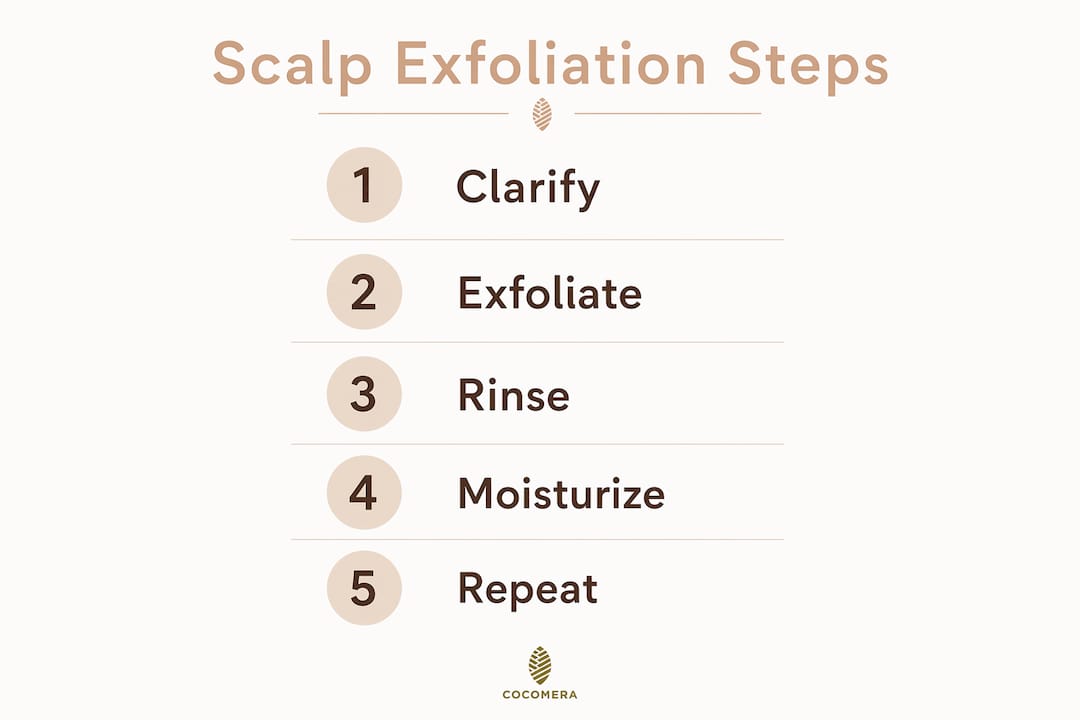
Start with a clarifying shampoo before you reach for any exfoliant. It strips away surface oils and product residue so the exfoliant can actually reach the scalp rather than just sitting on top of buildup.

Physical vs. chemical exfoliation: Physical scrubs use salt, sugar, or charcoal particles to buff away dead skin manually. They work fast but carry a real risk of micro-tears if you press too hard or use them too often. Chemical exfoliants, using AHAs like glycolic acid or BHAs like salicylic acid, dissolve buildup without abrasion and tend to be gentler on sensitive scalps. For textured hair, chemical formulas are usually the safer starting point.
Application tips:
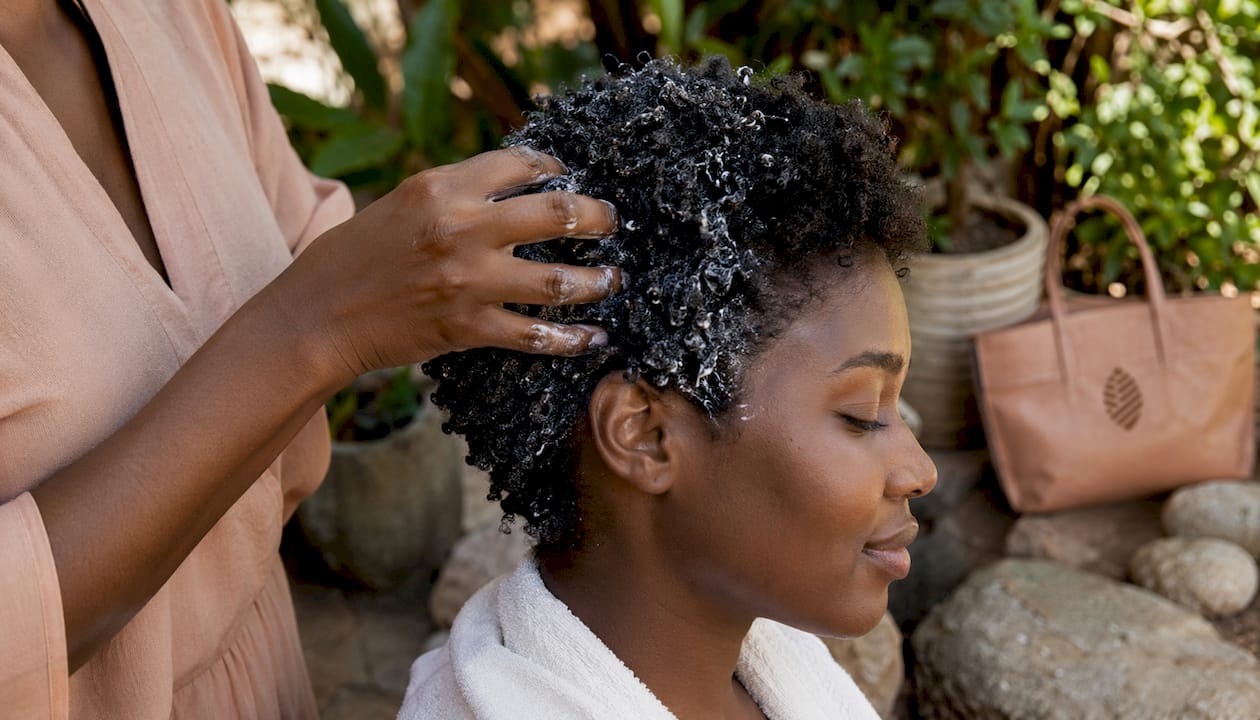
- Section your hair first. For curly, coily, or afro hair, parting into four or more sections lets the product reach the scalp instead of coating the strands
- Use gentle circular motions with fingertips, not nails, for 2–3 minutes
- Rinse thoroughly and follow with a moisturizing conditioner
- Avoid exfoliants with alcohol or harsh sulfates if your scalp runs dry
Three products worth knowing: AS I AM Dry & Itchy Scalp Care Conditioner soothes while it cleanses, making it a good option for sensitive scalps prone to irritation. Olive Tea Tree Cowash combines cleansing with moisture, useful for coily hair types that cannot afford to lose hydration during the process. Aunt Jackie’s Kids E-Blast Vitamin E & Flaxseed Scalp Remedy is formulated gently enough for children’s scalps, with vitamin E to support scalp health without stripping.
Pro Tip: For a deeper clean before exfoliating, try a rosemary and mint scalp scrub on an oily scalp. The mint stimulates circulation while the scrub lifts buildup.
How often should you exfoliate your scalp?
Once every 7–10 shampoos is the expert consensus for most people, roughly translating to once a week for frequent washers. That frequency keeps buildup in check without stressing the scalp barrier.
Adjust based on your scalp:
- Oily scalp: weekly exfoliation is reasonable
- Dry or sensitive scalp: every two weeks, or less
- Active scalp condition: consult a dermatologist before starting
- Heavy product users (dry shampoo, gel, mousse): may benefit from the higher end of the frequency range
Scalp care for textured and melanin-rich hair
Curly, coily, and afro hair types face a specific challenge: dense curl patterns make it harder for exfoliants to reach the scalp at all. Sectioning before application, as noted above, is not optional for these hair types. It is the step that separates a product doing its job from one just sitting on your hair.
Gentle formulations matter more here too. Textured hair tends to be drier along the strand, so any exfoliant that strips moisture from the scalp will compound an existing problem. Look for products with natural oils, aloe vera, or flaxseed that cleanse without leaving the scalp parched. Cocomera curates scalp treatments for curly hair specifically chosen for types 2, 3, and 4, where the balance between cleansing and moisture retention is the whole game.
Pro Tip: Pair your exfoliation routine with a hair care routine built for textured hair to get consistent results, not just a one-off fix.
Key Takeaways
Scalp exfoliation clears follicle-blocking buildup, reduces flaking, and creates the clean scalp environment that supports stronger, shinier hair growth.
| Point | Details |
|---|---|
| Exfoliate every 7–10 shampoos | This is the recommended frequency to maintain scalp health without disrupting its natural barrier. |
| Chemical exfoliants are gentler | AHAs and BHAs dissolve buildup with less irritation risk than physical scrubs. |
| Section hair before applying | For textured hair, sectioning ensures the exfoliant reaches the scalp, not just the strands. |
| Stop if irritation appears | Redness, burning, or increased flaking means you need to reduce frequency or pause entirely. |
| Not everyone needs it | People without flaking or buildup get enough from regular cleansing alone. |