TL;DR:
- Vitamins for hair mainly correct deficiencies that affect follicle function, not enhance growth in healthy individuals. Blood testing guides targeted supplement use, as excess intake of nutrients like vitamin A and selenium can cause hair loss. External hair care and internal nutrition together support healthier hair, but improvement takes at least 8 to 12 weeks.
Vitamins for hair are defined as micronutrients that support the biological processes behind hair growth, follicle cycling, and strand strength. The role of vitamins for hair is primarily corrective. They work best when they address a confirmed deficiency, not as a general performance booster. Biotin, vitamin D, iron, and zinc are the most clinically studied nutrients in this space. Understanding which ones you actually need, and which ones you’re wasting money on, is the difference between real results and expensive urine.
Which vitamins are essential for healthy hair and how do they function?
Hair is one of the fastest-growing tissues in the body. That growth demands a steady supply of nutrients, and when any one of them runs short, the follicle is often the first to suffer.
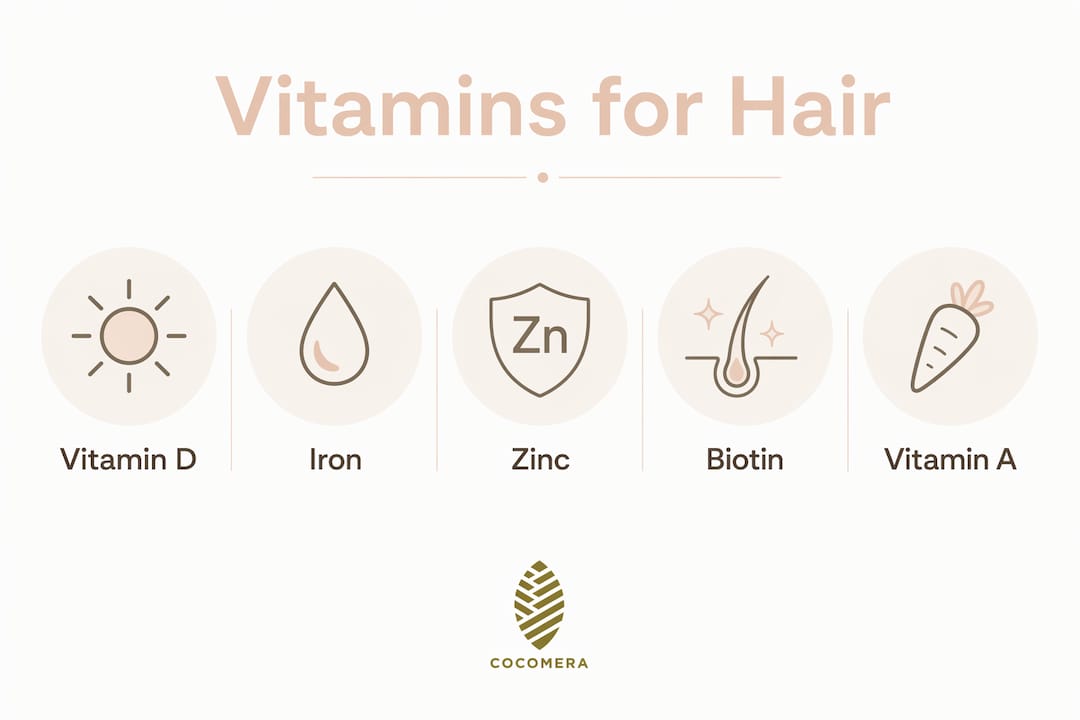
The most clinically relevant nutrients for hair health include:
- Vitamin D: Supports immune regulation and follicle cycling. Deficiency is frequently observed in alopecia cases, making it one of the most studied nutrients in hair loss research.
- Biotin (Vitamin B7): Supports keratin production. Along with zinc and selenium, biotin holds authorized health claims for normal hair maintenance under EU regulatory standards.
- Iron/Ferritin: Delivers oxygen to the hair follicle through red blood cells. Low ferritin is one of the most common and correctable causes of diffuse hair shedding, especially in women.
- Zinc: Regulates the hair growth and rest cycle. Clinical links between zinc deficiency and hair loss are among the strongest in the literature.
- Vitamin A: Supports sebum production, which keeps the scalp moisturized. Too little causes dryness; too much causes shedding.
- Vitamin C: Aids collagen synthesis and improves iron absorption from plant-based foods.
- Vitamin B12 and Folate: Support red blood cell production and DNA synthesis, both critical for active follicle cells.
- Vitamin E: Acts as an antioxidant, protecting follicle cells from oxidative stress.
| Vitamin/Mineral | Primary hair function | Key food sources |
|---|---|---|
| Vitamin D | Follicle cycling, immune balance | Fatty fish, fortified dairy, sunlight |
| Biotin (B7) | Keratin infrastructure | Eggs, almonds, sweet potato |
| Iron/Ferritin | Oxygen delivery to follicles | Red meat, lentils, spinach |
| Zinc | Growth and rest cycle regulation | Oysters, pumpkin seeds, beef |
| Vitamin C | Collagen synthesis, iron absorption | Bell peppers, citrus, kiwi |
| Vitamin B12 | Red blood cell production | Meat, fish, dairy, fortified foods |
The table above shows that most of these nutrients come from whole foods. Supplementation becomes relevant only when diet falls short or absorption is impaired.

What scientific evidence supports taking vitamin supplements for hair growth?
The supplement industry markets vitamins for hair growth aggressively. The clinical evidence tells a more measured story.
A systematic review of 10 studies found no consistent benefit of biotin supplementation for hair growth in people without a confirmed biotin deficiency. Biotin deficiency itself is rare in healthy adults. That means the majority of people buying biotin supplements are unlikely to see any measurable hair improvement from them.
Vitamin D presents a stronger case. Vitamin D deficiency appears frequently in people with alopecia areata and other forms of hair loss. Correcting that deficiency, typically with 2,000 IUs daily when confirmed by blood work, can support follicle recovery. The key word is “correcting.” Supplementing when levels are already normal does not produce additional benefit.
Iron and zinc show the most robust clinical links to hair loss among all the nutrients studied. When ferritin levels are low, diffuse shedding is a predictable outcome. Restoring iron stores through supplementation or dietary changes reliably reduces that shedding over time.
The pattern across the research is consistent: supplementation benefits apply almost exclusively to people with confirmed deficiencies. For everyone else, the evidence for hair-specific supplements is thin.
Pro Tip: Before buying any hair supplement, get a blood panel that includes ferritin, vitamin D (25-OH), zinc, and B12. That one test tells you exactly where to focus your money.
What are the risks of over-supplementing vitamins for hair?
More vitamins do not equal more hair. Several nutrients have a narrow therapeutic window, and exceeding it causes the exact problem you are trying to fix.
-
Vitamin A toxicity: Excess vitamin A is one of the most well-documented dietary causes of hair shedding. Many multivitamins and skin supplements contain high doses of vitamin A or beta-carotene. Stacking multiple supplements without checking total intake is a common mistake.
-
Selenium overdose: Excess selenium can trigger diffuse hair loss. Selenium is present in many “hair, skin, and nails” formulas, and it is easy to exceed safe levels when combining supplements with selenium-rich foods like Brazil nuts.
-
Iron toxicity: Iron is essential, but supplementing without a confirmed deficiency is dangerous. Excess iron accumulates in organs and can cause serious systemic harm. Never supplement iron without a blood test confirming low ferritin.
-
Biotin and lab test interference: High-dose biotin interferes with immunoassay-based lab tests, producing false positives or false negatives for thyroid hormones, troponin, and other critical markers. This is a real clinical hazard. If you take biotin supplements, tell your doctor before any blood work.
Pro Tip: Always check the total daily intake of fat-soluble vitamins (A, D, E, K) across all supplements you take. Fat-soluble vitamins accumulate in the body, unlike water-soluble ones that flush out daily.
Treating vitamins as harmless because they are “natural” is a mistake. Dose matters. Supervision matters. The goal is correction, not saturation.
How to integrate vitamins effectively into a hair care routine
Getting the most from vitamins for stronger hair requires more than buying a bottle. It requires a structured approach.
- Start with testing. A blood panel covering ferritin, vitamin D, zinc, B12, and thyroid function gives you a baseline. Without it, you are guessing.
- Prioritize food first. Eggs, leafy greens, fatty fish, legumes, and seeds cover most of the nutrients your follicles need. Supplements fill gaps; they do not replace a poor diet.
- Use targeted supplements only. If your ferritin is low, supplement iron. If your vitamin D is deficient, supplement vitamin D at 2,000 IUs daily under medical guidance. Avoid broad-spectrum “hair growth” blends with unverified ingredient ratios.
- Support your scalp externally. Nutrition works from the inside, but gentle cleansing routines and scalp-friendly products reduce mechanical stress on already vulnerable strands.
- Set realistic timelines. Visible improvement after correcting a deficiency takes 8–12 weeks at minimum. Hair grows slowly, and the growth cycle means you will not see new growth overnight.
- Revisit your levels. Retest after 3–4 months of supplementation to confirm levels have normalized and adjust dosage accordingly.
Combining internal nutrition with natural hair care practices gives your follicles the best environment to respond. Neither approach alone is as effective as both together.
How does individual variation affect vitamin needs for hair health?
No single vitamin works for every person experiencing hair loss. The right nutrient depends entirely on what is missing in your specific body.
Someone with iron deficiency anemia will shed hair for a different reason than someone with a zinc deficiency or a vitamin D deficiency. The symptoms can look identical from the outside. Diffuse shedding, slower growth, and dull texture are common to multiple deficiency types. Only diagnostic testing separates them.
Genetics, diet patterns, medical conditions, and even medications affect how well you absorb and use specific vitamins. People following plant-based diets are at higher risk for B12 and iron deficiency. People with limited sun exposure are more likely to be vitamin D deficient. People with gut conditions like celiac disease or Crohn’s may struggle to absorb zinc regardless of dietary intake.
“The best vitamin for your hair is the one your blood work says you are missing. There is no universal answer, and treating hair loss without testing first is guesswork dressed up as self-care.” — Cosmedica
One-size-fits-all supplementation is not just ineffective. It can actively cause harm, as the risks of vitamin A and selenium toxicity demonstrate. Personalized diagnosis is the only reliable starting point.
Key Takeaways
The role of vitamins for hair is to correct specific nutritional deficiencies that disrupt follicle function, not to enhance hair growth in people who are already nutritionally sufficient.
| Point | Details |
|---|---|
| Vitamins correct deficiencies | Supplementation benefits hair health only when a confirmed deficiency exists. |
| Test before you supplement | Blood panels for ferritin, vitamin D, zinc, and B12 identify the actual gap. |
| Over-supplementing causes harm | Excess vitamin A, selenium, and iron can trigger or worsen hair shedding. |
| Results take time | Visible improvement after correcting a deficiency requires at least 8–12 weeks. |
| Individual needs vary | Iron deficiency, zinc deficiency, and vitamin D deficiency each require different targeted responses. |
Cocomera’s take on vitamins and real hair health
Vitamins are corrective tools, not shortcuts. That is the single most important thing I have learned from working with people who have textured, coily, and curly hair. The curl community is particularly vulnerable to supplement marketing because textured hair is already prone to dryness, breakage, and slow visible growth. Those characteristics make it easy to believe a supplement is the missing piece.
What I consistently see is that people who test first and supplement specifically get results. People who buy a popular biotin gummy because an influencer recommended it usually do not. The hair does not lie. If your ferritin is fine and your vitamin D is fine, no supplement is going to change your growth rate in a meaningful way.
The approach that actually works combines targeted nutrition with a single-ingredient hair care philosophy. Fewer products, better ingredients, and a consistent routine reduce the mechanical and chemical stress that makes deficiency-related shedding worse. Vitamins address the internal environment. Your wash day routine and product choices address the external one. Both matter.
Expect the process to take time. Three months is the minimum before you can fairly evaluate whether a nutritional change is working. Textured hair grows at its own pace, and the growth cycle does not speed up because you are impatient. Commit to the process, track your results, and adjust based on data, not hope.
— Cocomera
Products that work alongside your nutrition
Vitamins build the foundation from the inside. What you apply to your hair and scalp determines how well that foundation holds up day to day.
At Cocomera, the product selection is built around textured hair types 2, 3, and 4, with a focus on ingredients that support rather than strip. If you are working on correcting a deficiency and want your strands to reflect that progress, strengthening shampoos reduce breakage while your follicles recover. Hair treatments and deep conditioning masks add external moisture and protein that complement what your diet is rebuilding internally. Hair oils seal in that work between wash days. Nutrition and topical care are not competing strategies. They are the same strategy from two different directions.
FAQ
What vitamins are most important for hair growth?
Iron, vitamin D, and zinc have the strongest clinical links to hair loss when deficient. Biotin is widely marketed but only benefits people with a confirmed biotin deficiency, which is rare.
How long does it take to see results from hair vitamins?
Visible improvement after correcting a nutritional deficiency takes at least 8–12 weeks because hair grows slowly and follows a multi-phase cycle.
Can too many vitamins cause hair loss?
Yes. Excess vitamin A, selenium, and iron can all cause or worsen hair shedding. Over-supplementing without confirmed deficiency is a documented risk.
Does biotin actually help with hair growth?
A systematic review of 10 studies found no consistent benefit of biotin for hair growth in people without a deficiency. Most healthy adults do not need biotin supplements.
Should I take hair vitamins without a blood test?
No. Individual diagnostic testing is the only reliable way to identify which nutrients you are actually missing. Supplementing without testing risks both wasted money and potential harm from excess intake.