For most people starting 4C locs, Lock It Up is the one to reach for. It delivers strong hold with low residue, grips tightly enough to keep new growth coiled, and its herbal formula is gentle enough for daily use during the first fragile months of loc formation. If your locs are already established and you need something firmer for retwists or hard-to-hold sections, Tight Hold steps up.
Quick match guide:
-
Starting locs (4C, coily): Lock It Up — strong grip, low residue, moisturizing herbs
-
Maintenance, retwisting, or resistant hair: Tight Hold — firmer hold, still flake-free
-
Sensitive scalp or dry hair: Lock It Up — alcohol-free, herbal extracts, gentler formula
Table of Contents
-
How to use Taliah Waajid locking gel for starting and maintaining locs
-
Cocomera’s perspective on locking gels and what actually matters
-
Cocomera carries styling products for textured and loc-prone hair
What are the Taliah Waajid locking gels?
Taliah Waajid’s Black Earth Products line includes two styling gels built specifically for locs and natural hair. They share an alcohol-free base and a commitment to herbal ingredients, but they serve slightly different purposes.
Lock It Up is the flagship. It’s designed for starting locs, maintaining them, and defining curl patterns on wavy, transitioning, or chemically processed hair. The formula leans on plant extracts to grip and moisturize at the same time, which is why it works so well in the early months when locs are still fragile and prone to unraveling.
Tight Hold (also marketed as Tight Hold and Loc It Up) is the stronger sibling. It targets resistant, hard-to-hold hair and established locs that need a firmer grip during retwists. The hold is noticeably stiffer, though the label still claims no flaking and no buildup.
| Variant | Primary Use | Common Sizes (U.S.) |
|---|---|---|
| Lock It Up | Starting locs, curl definition, maintenance | 6 oz, 16 oz |
| Tight Hold | Resistant hair, retwisting, firm styling | 6 oz |
Both are widely available at U.S. retailers in the sizes above. The 16 oz Lock It Up is the better value for anyone using it regularly.
How do Lock It Up and Tight Hold actually compare?
The differences come down to hold strength, finish, and who each gel is really built for.
| Feature | Lock It Up | Tight Hold |
|---|---|---|
| Best for | Starter locs, 4C hair, curl definition | Established locs, retwists, resistant hair |
| Hold strength | Strong (9/10) | Extra firm |
| Finish | Soft-to-medium, natural look | Stiffer, more structured |
| Residue risk | Low with correct amount | Low, but heavier with overuse |
| Key ingredients | Yarrow root, rosemary, nettle, Indian hemp | Similar herbal base, firmer hold agents |
| Alcohol-free | Yes | Yes |
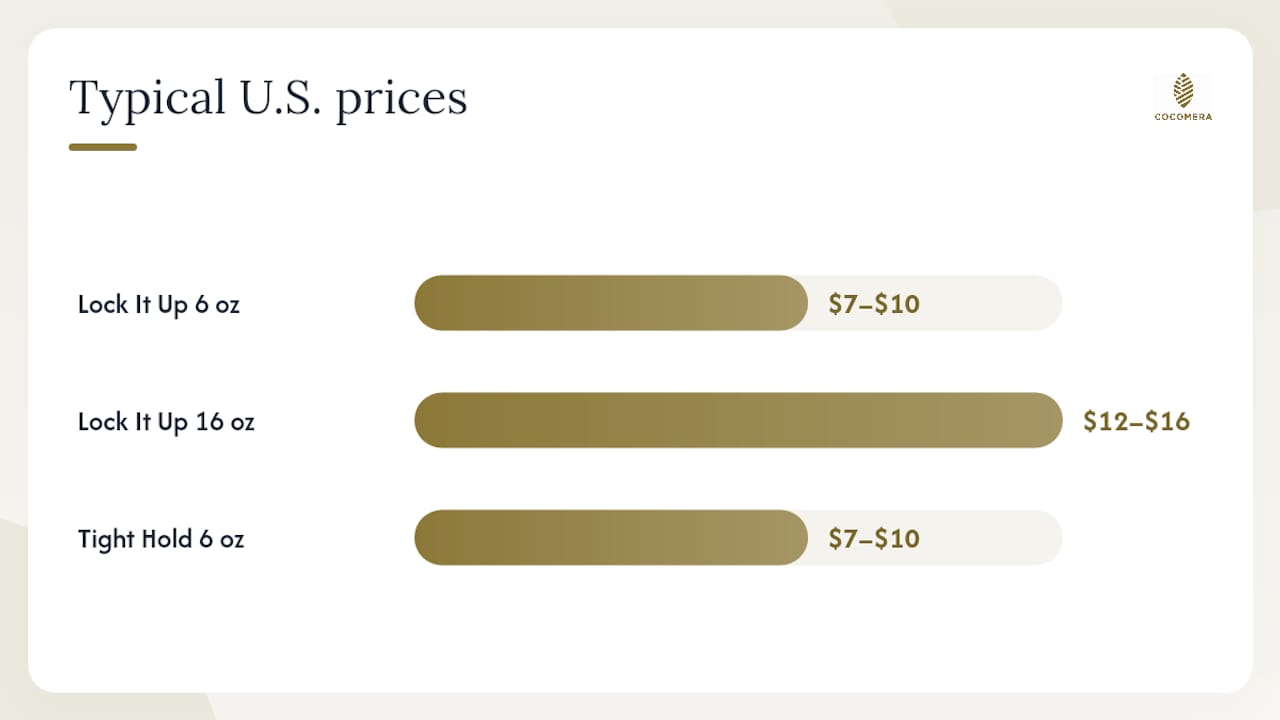
| Typical U.S. price | $7–$10 (6 oz), $12–$16 (16 oz) | $7–$10 (6 oz) |
| Availability | Amazon, Walmart, Sally Beauty, specialty retailers | Amazon, Walmart |
Cultured Grooming’s expert roundup specifically calls out Lock It Up as the top pick for 4C starter locs, citing its tight grip alongside moisturizing additives that prevent unraveling in the first six months. That combination is hard to find in a single product.
A few readers will find either gel works fine for them. If you have medium-density 4C hair and your locs are six months or older, Tight Hold’s extra firmness may feel unnecessary. Conversely, if your hair is coarse and resistant, Lock It Up’s hold might not be quite enough for a clean retwist.
-
Choose Lock It Up if you’re in the starter-loc phase, have 4C or coily hair, or want a gel that doubles as a curl definer
-
Choose Tight Hold if your locs are mature, your hair resists holding, or you want maximum structure for retwists
What’s actually in these gels, and will they flake?
The ingredient story is one of the stronger selling points for both products. Lock It Up’s label lists yarrow root, rosemary, nettle, and Indian hemp as the core herbal extracts. These aren’t just marketing window dressing — yarrow and nettle have long been used in scalp-care formulations for their soothing properties, while rosemary is well-documented for stimulating circulation at the scalp. Indian hemp adds slip and moisture.
Both gels are alcohol-free, which matters more than it sounds. Alcohol-based styling products pull moisture out of the hair shaft over time, a particular problem for textured hair that already tends to lose moisture faster. Skipping alcohol keeps the scalp environment healthier during the months-long locking process.
On flaking: the label claims hold up in practice for most users, but with one important caveat.
Using too much product is the main cause of white residue and crunchiness. Heavy application on dark hair can leave a visible cast. The gel performs as advertised when used in small amounts — a pea-sized portion per section is usually enough.
Pro Tip: Apply Lock It Up or Tight Hold to damp (not soaking wet) hair. Excess water dilutes the hold agents and increases the chance of residue as the product dries unevenly.
Key ingredient and safety notes:
-
Yarrow root, rosemary, nettle, Indian hemp — all label-reported herbal extracts
-
Alcohol-free formula reduces drying risk for textured and loc-prone hair
-
No buildup claims hold when product is used sparingly
-
Patch-test on the inner wrist or behind the ear before first use, especially if you have a sensitive scalp or known plant allergies
-
Neither product is marketed for chemically relaxed hair in active treatment — check with your stylist if you’re transitioning
For a deeper look at which ingredients actually benefit coily and afro hair, the ingredient guide for textured hair at Cocomera breaks down what to look for and what to avoid.
How to use Taliah Waajid locking gel for starting and maintaining locs
Starting locs from scratch
-
Wash and detangle. Start with clean, product-free hair. Residue from previous products interferes with the gel’s grip.
-
Section while damp. Part hair into uniform sections using a rat-tail comb. Smaller sections create thinner locs; larger sections create thicker ones.
-
Apply Lock It Up sparingly. Work a small amount (roughly pea-sized) into each section from root to tip. You want the hair coated, not saturated.
-
Coil or two-strand twist. Use your preferred starter method — comb coils work well for shorter 4C hair; two-strand twists suit longer lengths.
-
Let air dry or sit under a hooded dryer. Avoid touching the locs while they dry. Manipulation at this stage loosens the coil.
-
Night care. Cover with a satin bonnet or sleep on a satin pillowcase. This reduces friction and keeps the coils intact.
Pro Tip: For the first six months, resist the urge to retwist too frequently. Over-manipulation during the locking phase causes thinning at the root. Retwist every three to four weeks at most.
Maintaining and retwisting established locs
For retwists, apply Tight Hold (or Lock It Up if you prefer a softer finish) only to the new growth at the root. There’s no need to coat the entire loc length — that’s how buildup accumulates. Work in small sections, twist firmly, and clip or pin each loc until dry.

Pair any strong-hold gel with a clarifying wash routine every one to two weeks. Community loc forums consistently flag this as the single most effective way to prevent buildup when using gel regularly. A clarifying shampoo cuts through product residue that a moisturizing shampoo alone won’t fully remove.
What users actually say about these gels
The feedback pattern across retail reviews and loc communities is consistent: people who use the right amount love these products; people who overload their hair run into problems.
Lock It Up earns strong marks for hold strength and the fact that it doesn’t leave the stiff, crunchy finish that many drugstore gels produce. The herbal scent gets mentioned often — most find it pleasant, a few find it strong. Tight Hold gets similar praise for retwist performance on mature locs.
Pros users report most often:
-
Strong hold that keeps starter locs coiled without constant retwisting
-
No flaking when used as directed
-
Alcohol-free formula doesn’t dry out the scalp
-
Works on multiple textures, not just 4C
Common cons:
-
White cast with heavy application on very dark hair
-
Slight crunchiness if too much product is used
-
Tight Hold’s firmer hold can feel stiff on softer hair types
-
Scent is noticeable and not universally loved
Cultured Grooming’s expert panel, which evaluated multiple locking gels side by side, rated Lock It Up highly for hold while noting the low residue profile as a key differentiator from competing products.
Where to buy in the U.S. and what to expect to pay
Both gels are widely stocked across major U.S. retailers, which makes them easy to find without resorting to specialty online-only shops.
Common U.S. retail options:
-
Amazon — both Lock It Up (6 oz and 16 oz) and Tight Hold (6 oz); Prime shipping available
-
Walmart — Tight Hold 6 oz is listed; Lock It Up availability varies by location
-
Sally Beauty — carries Taliah Waajid products in-store and online
-
Kiyo Beauty — online retailer stocking Lock It Up 6 oz with detailed product descriptions
-
A One Beauty — online specialty retailer with competitive pricing on both sizes
| Size | Typical Price Range (U.S.) |
|---|---|
| 6 oz | $7–$10 |
| 16 oz (Lock It Up) | $12–$16 |
Price data across U.S. retailers puts the 6 oz in the $7–$10 bracket and the 16 oz Lock It Up closer to $12–$16 depending on the seller. The 16 oz is the better buy for anyone using the gel as a primary locking product.
Authenticity tip: Buy from established retailers (Amazon Fulfilled, Walmart, Sally Beauty) rather than third-party marketplace sellers with limited reviews. Counterfeit or expired stock is a real risk with popular natural hair products. Check the seal and batch code on arrival.
Shelf life is typically 12–24 months unopened. Once opened, store in a cool, dry place away from direct sunlight. A gel that smells off or has separated in the jar has likely degraded and should be replaced.
Final verdict: which gel should you buy?
Before you add to cart, run through this quick checklist:
-
Hair type: 4C or coily? Lock It Up. Coarse, resistant, or mature locs? Tight Hold.
-
Stage: Starting locs? Lock It Up. Retwisting established locs? Either, with Tight Hold for extra grip.
-
Finish preference: Soft and natural? Lock It Up. Firm and structured? Tight Hold.
-
Budget: Both sit in the same price range; the 16 oz Lock It Up offers the best per-ounce value.
-
Scalp sensitivity: Both are alcohol-free; patch-test either if you have known plant sensitivities.
Lock It Up is the right call for the majority of readers here. It handles the hardest part of the loc journey (the first six months) better than most gels at this price point, and it’s versatile enough to use for curl definition and styling once your locs are set. Tight Hold earns its place for anyone with mature, resistant locs who needs maximum grip at the root during retwists. Either way, use less than you think you need.
Key Takeaways
Lock It Up is the best Taliah Waajid locking gel for most 4C and coily hair types, rated 9/10 for hold with low residue risk when used in the right amount.
| Point | Details |
|---|---|
| Lock It Up for starters | Best for 4C starter locs; strong hold, low residue, herbal formula, alcohol-free. |
| Tight Hold for mature locs | Firmer grip suits established locs and resistant hair during retwists. |
| Less product, better results | White residue and crunchiness almost always come from overuse, not the formula itself. |
| Price and availability | Both gels run $7–$16 depending on size; widely available at Amazon, Walmart, and Sally Beauty. |
| Cocomera for textured hair | Cocomera curates styling gels and complementary products for coily and afro hair types. |
Cocomera’s perspective on locking gels and what actually matters
The conversation around locking gels tends to get stuck on hold strength as if that’s the only variable. It isn’t. The more important question is what happens to your scalp and hair shaft over the months it takes for locs to fully form. A gel that grips hard but dries out the scalp or causes chronic buildup is a net negative, even if the hold looks impressive in week one.
That’s why the alcohol-free formulation in both Taliah Waajid gels matters more than the marketing copy around it. Alcohol strips moisture from textured hair faster than almost any other ingredient, and coily hair is already prone to dryness. Choosing a gel that preserves moisture during the locking process isn’t a minor detail — it’s the difference between locs that thrive and locs that thin and break at the root.
The other underrated factor is application discipline. Most gel-related complaints (residue, crunchiness, buildup) trace back to using too much product, not to the product itself. The instinct to load up on gel for a stronger hold is understandable, but it works against you. A small, consistent amount applied to damp hair outperforms a heavy application every time.
Lock It Up earns its reputation not because it’s the strongest gel on the market, but because it gets the balance right: enough hold to keep new locs coiled, enough moisture to keep the scalp healthy, and a residue profile that stays manageable when used correctly.
Cocomera carries styling products for textured and loc-prone hair

Cocomera curates styling gels, leave-ins, and complementary hair care products specifically for wavy, curly, coily, and afro hair types. If you’re building a locking routine or looking for products that work alongside a strong-hold gel, the styling products collection covers gels, curl activators, and finishing products chosen for textured hair.
For wash days between retwists, the clarifying and strengthening shampoo range helps clear product buildup without stripping the scalp. Pair that with a hair oil for sealing moisture after each wash, and you have a complete routine that supports healthy loc formation from day one.
Browse the full collection at Cocomera to find products matched to your curl type and locking stage.
Sources and further reading
-
Taliah Waajid Lock It Up 16 oz — Amazon product page
-
— Amazon product page
For full ingredient lists and current label claims, consult the product packaging or the retailer’s product page directly, as formulations can change between production runs.