You follow every tip you find online. You buy the products with the glowing reviews. But your curls still come out frizzy one day, limp the next, and never quite the way you pictured. Sound familiar? The truth is, most popular routines are built around a different hair reality than yours. Type 3 hair in Europe often has a finer texture, and the cooler, more humid climate here changes everything about how products perform. This article gives you a real workflow, built specifically for your curls, so you can stop guessing and start seeing consistent results.
Table of Contents
- Understanding your hair: Type 3 characteristics and porosity
- Building your European type 3 hair care toolkit
- Step-by-step type 3 hair care workflow
- Troubleshooting and optimizing your routine
- Our perspective: What really matters in your type 3 hair journey
- Take your type 3 curls to the next level with Cocomera
- Frequently asked questions
Key Takeaways
| Point | Details |
|---|---|
| Know your porosity | Testing porosity lets you match products to your hair’s actual needs and avoid wasted time and money. |
| Adapt tools and products | European climates and finer curls do best with lightweight gels, creams, and accessories that protect your strands. |
| Customize your routine | Test layering methods versus minimalist, single-ingredient routines to see which brings out your best curls. |
| Troubleshoot and adjust | Keep a hair diary and tweak products, frequency, and steps until your curls consistently perform at their peak. |
Understanding your hair: Type 3 characteristics and porosity
Type 3 hair sits between wavy and coily. It forms actual spirals or ringlets, ranging from loose S-shapes (3A) to tighter corkscrews (3C). What makes it tricky is that it is naturally prone to frizz, dryness, and uneven curl definition. The curl pattern means moisture has a harder time traveling down the hair shaft, so the ends often feel dry even when the roots are fine.
In Europe, type 3 hair tends to be finer than the same curl type in other regions. That fineness matters a lot. Fine curls lose their shape more easily under heavy products, and the cooler, wetter climate can cause frizz to spike even when you do everything right. Understanding this is the first step toward choosing curly hair products that actually work for your specific situation.
Key type 3 characteristics at a glance:
- Defined spirals or ringlets that can lose shape when dry
- Prone to frizz, especially in humid or cold weather
- Needs regular moisture but can get weighed down easily
- Finer strands (common in European hair) require lighter product weights
- Scalp can get oily faster than the ends dry out
Now, porosity. This is the single most important factor in how your hair absorbs and holds moisture. Low porosity hair has tightly closed cuticles. Products sit on top rather than absorbing, which means buildup is a real problem. High porosity hair has open or damaged cuticles. It absorbs moisture fast but loses it just as quickly.
Here is a quick home test: drop a clean, product-free strand into a glass of room-temperature water and wait two minutes. If it sinks quickly, you likely have high porosity. If it floats near the top, you probably have low porosity.
| Porosity type | How it behaves | What it needs |
|---|---|---|
| Low porosity | Repels moisture, prone to buildup | Lightweight products, gentle heat to open cuticles |
| High porosity | Absorbs fast, loses moisture fast | Sealing oils, protein treatments, heavier creams |
| Medium porosity | Balanced absorption | Flexible, most products work well |
As single-ingredient haircare research confirms, low porosity hair needs lightweight products and occasional heat to help absorption, while high porosity hair benefits from sealing oils and proteins to lock moisture in. Understanding porosity and hair oils together will help you make much smarter product choices.
Pro Tip: Do the porosity test before you buy any new product. It takes two minutes and saves you from wasting money on something your hair will reject.
Building your European type 3 hair care toolkit
With your porosity and curl type clear, you can build a toolkit that actually fits your hair. The goal here is not to collect every product on the market. It is to have exactly what you need, nothing more.
Essential tools:
- Wide-tooth comb or detangling brush for wet hair
- Microfiber towel or old cotton T-shirt to blot dry without frizz
- Diffuser attachment for your hair dryer
- Spray bottle filled with water for refreshing curls between wash days
For products, European type 3 hair generally responds better to lighter formulas. As noted in lightweight product choices for European curls, finer strands need gels and creams that define without weighing the curl down. Heavy butters that work beautifully on coarser 4C hair can flatten your 3A or 3B spirals completely.
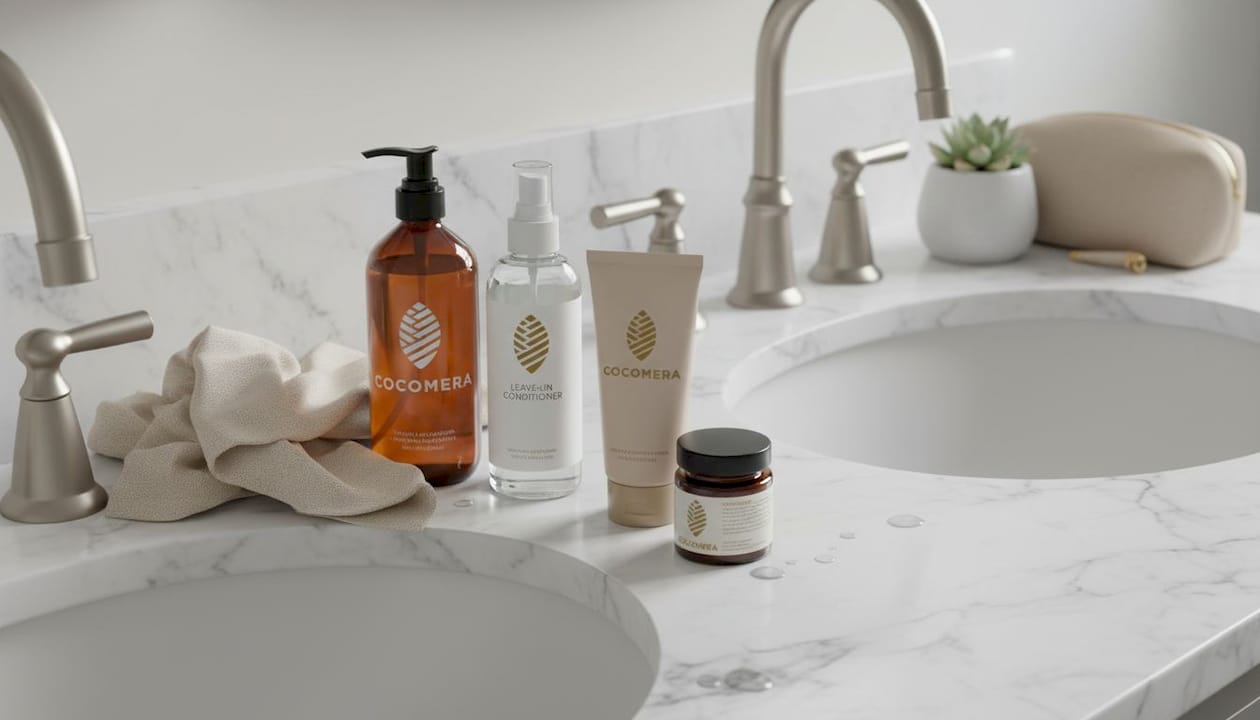
Three ingredients worth knowing: glycerin draws moisture from the air into your hair (great for dry climates, but use carefully in high-humidity weather), baobab oil is lightweight and absorbs well into both low and high porosity hair, and flaxseed creates flexible hold without the crunch. These are the kinds of ingredients that show up in styling gel recommendations that actually perform on European curl types.
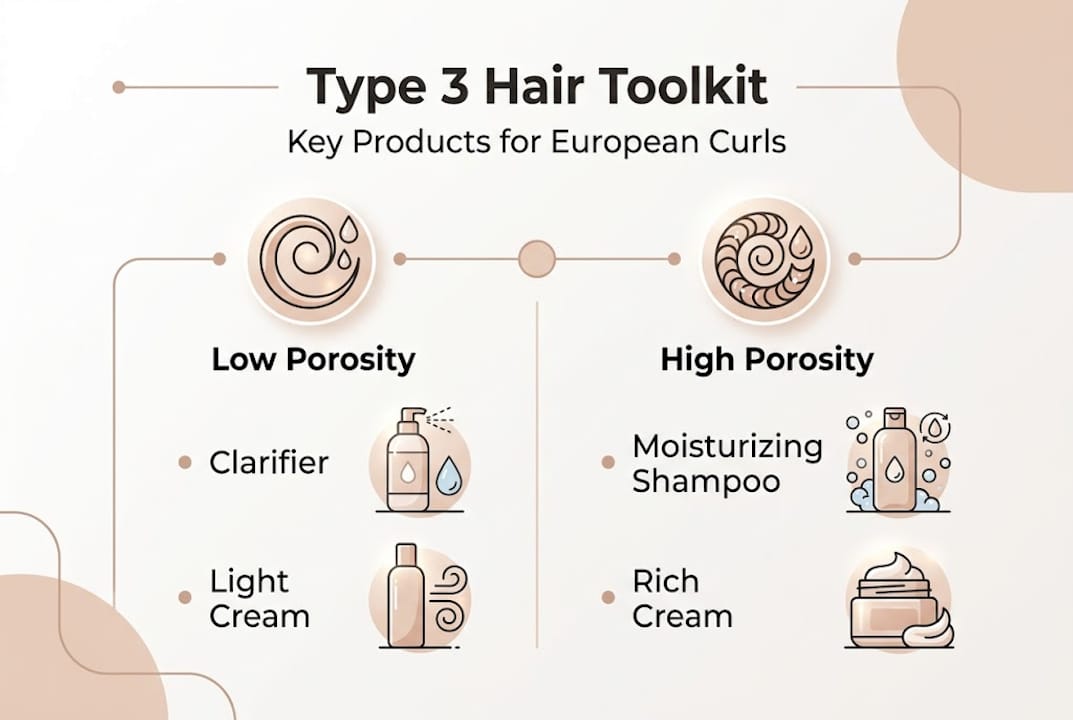
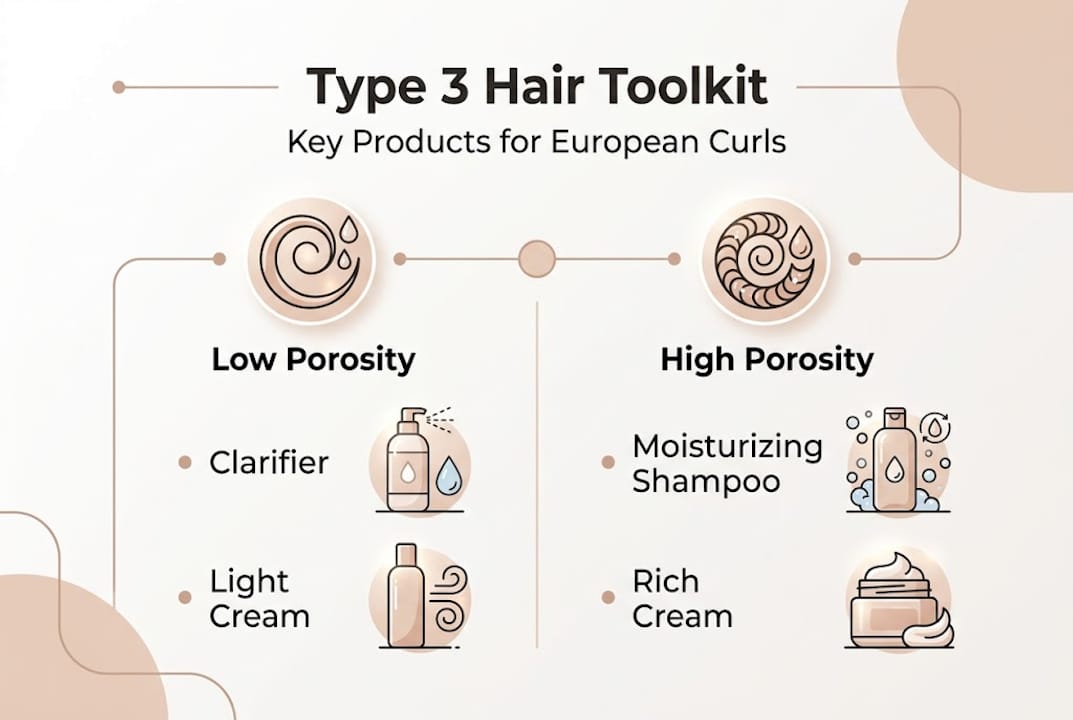
| Product type | Low porosity pick | High porosity pick |
|---|---|---|
| Cleanser | Clarifying shampoo (monthly) | Moisturizing shampoo (weekly) |
| Conditioner | Lightweight, rinse-out | Rich, protein-boosted |
| Leave-in | Water-based spray | Creamy leave-in |
| Styler | Lightweight gel or mousse | Curl cream with hold |
| Sealing oil | Skip or use sparingly | Baobab or argan oil |
For anyone with a sensitive scalp or reactive skin, a single-ingredient approach can be a smart starting point. Using pure baobab or pure aloe vera lets you isolate what your hair responds to before layering multiple products. The ultimate curly hair routine and curly hair care tips from Cocomera both offer solid guidance on building from a minimal base.
Step-by-step type 3 hair care workflow
Here is the wash day workflow that works for most European type 3 hair. Adjust timing and products based on your porosity.
- Pre-cleanse (optional): Apply a lightweight oil to dry hair 20 to 30 minutes before washing. This protects strands from protein loss during shampooing.
- Cleanse: Use a sulfate-free shampoo for regular wash days. Add a clarifying shampoo once or twice a month to remove buildup, especially if you use gels.
- Condition: Apply a generous amount of conditioner from mid-length to ends. Use a wide-tooth comb to detangle while the conditioner is in. Rinse with cool water to help close the cuticle.
- Apply leave-in: On soaking wet hair, apply a water-based leave-in in sections. Work from the bottom up.
- Style: Layer your gel or curl cream over the leave-in while hair is still wet. Scrunch upward to encourage curl formation. This is where LCO (liquid, cream, oil) or LOC (liquid, oil, cream) layering comes in. For low porosity hair, LCO tends to work better since the cream seals before the oil. For high porosity, LOC helps lock moisture in with oil before the cream.
- Dry: Diffuse on low heat and low speed, or air-dry. Avoid touching your hair while it dries.
- Scrunch out the crunch: Once fully dry, scrunch your hair gently to break the gel cast and release soft, defined curls.
Caution: If your curls look flat or stringy after styling, heavy butters or too much product are usually the cause. Start with less than you think you need and build up slowly.
For maintenance days between washes, refresh with water in a spray bottle, then scrunch in a tiny amount of leave-in or gel. This is often enough to revive the curl pattern without a full wash.
The debate between LCO/LOC versus minimalist routines is real. Single-ingredient routines work beautifully for some people and feel incomplete for others. The only way to know is to test one approach for two full weeks before switching.
Pro Tip: Keep a simple hair diary for two weeks. Note what products you used, the weather, and how your curls looked. Patterns show up faster than you expect.
Troubleshooting and optimizing your routine
Even a well-built routine hits rough patches. Here are the most common problems and what actually fixes them.
Top mistakes and how to fix them:
- Too much product: Leads to limp, weighed-down curls. Use smaller amounts and build up only if needed.
- Skipping clarifying: Buildup from gels and creams blocks moisture. Clarify every two to four weeks.
- Wrong product weight for your texture: Finer European curls need lighter formulas. As adapting to European hair needs explains, lightweight gels and creams are the better fit for finer curl types.
- Applying products to dry or damp hair: Most curl products work best on soaking wet hair. Damp is often not wet enough.
- Inconsistent technique: Switching methods every week prevents you from seeing real results.
| Problem | Likely cause | Fix |
|---|---|---|
| Frizz after humidity | Gel not strong enough or no sealing oil | Switch to a stronger-hold gel or add a light oil on top |
| Limp curls | Product overload or too-heavy formula | Use less, go lighter |
| Dry ends | High porosity or skipping sealing step | Add a sealing oil after styling |
| Buildup and dullness | Skipping clarifying shampoo | Clarify every 2 to 4 weeks |
| Uneven curl definition | Inconsistent sectioning during styling | Work in smaller, even sections |
Tracking progress matters. Take a photo on wash day every two weeks. It is much easier to see improvement in a photo than to rely on memory. If something is not working after two full wash cycles, change one variable at a time, not everything at once. This is the same logic behind troubleshooting curly routines and understanding moisture basics for textured hair.
Water hardness is an often-overlooked factor in Europe. Hard water leaves mineral deposits on the hair shaft, which block moisture and cause dullness. A chelating shampoo used monthly can make a noticeable difference if you live in a hard water area.
Our perspective: What really matters in your type 3 hair journey
Here is something the popular curl accounts rarely say out loud: most of the routines you see online were not built for your hair. They were built for someone else’s hair, in a different climate, with a different texture. That does not make them wrong. It just makes them irrelevant to you until you test them yourself.
The biggest mistake we see is people chasing complexity. A six-product routine with three styling steps sounds impressive, but if your hair is fine and your climate is cool and damp, that routine will probably flatten your curls. Simplicity, done consistently, beats complexity done sporadically every single time.
What actually works is boring to say but true: pick a routine, commit to it for two weeks, and listen to what your hair tells you. Not what the product label promises. Not what worked for someone with 4C hair in a warm climate. Your hair’s feedback is the only data point that matters.
Looking at the best ingredients for curls is a great starting point, but ingredients only matter in the context of your porosity, your climate, and your technique. Trust the process, not the hype.
Take your type 3 curls to the next level with Cocomera
You now have the framework. The next step is finding the right products to bring it to life.
At Cocomera, every product is curated specifically for wavy, curly, and coily hair types, with European hair textures and climates in mind. Browse styling products for curly hair to find gels, creams, and mousses that work with finer European curl patterns. Explore treatments for curly hair for targeted moisture and protein solutions based on your porosity. And check out brushes and combs for textured hair to complete your toolkit with tools that protect your curl pattern. Your best curl day is closer than you think.
Frequently asked questions
How do I test my hair porosity at home?
Place a clean, product-free strand in a glass of room-temperature water and wait two minutes. If it sinks quickly, high porosity; if it floats near the top, you have low porosity.
Should I use the LCO or LOC method for my type 3 curls?
Both can work well for type 3 hair. Test each method for two full weeks and compare results, since low porosity hair often prefers LCO while high porosity hair tends to do better with LOC.
What causes limp or stringy curls after styling?
Overapplication or heavy product formulas are usually the cause. Switch to lightweight gels and creams and use noticeably less product per section.
How often should I clarify type 3 European hair?
Clarify once every two to four weeks to remove mineral and product buildup. If you use hard water or heavy styling products regularly, lean toward the shorter end of that range.