Split ends are structural fractures in the hair shaft, caused by cuticle erosion and crack propagation through the cortex. The medical term is trichoptilosis, and once the shaft splits, no product can biologically reverse it. The three fastest things you can do right now: schedule a trim, drop your heat tool temperature below 350°F and apply a heat protectant every time, and swap your terrycloth towel for a microfiber cloth or cotton T-shirt.
-
Trim first. Even a quarter-inch removes the fractured tip and stops the split from traveling further up the shaft.
-
Lower the heat. High temperatures degrade the keratin and disulfide bonds that give hair its tensile strength.
-
Change how you dry. Blot, don’t rub. Wet hair is at its most mechanically vulnerable.
Pro Tip: Cocomera carries heat protectants, strengthening shampoos, and sealing oils curated specifically for textured hair — the product categories that matter most for preventing further splitting.
Table of Contents
-
What causes split ends: the main drivers of hair shaft damage
-
How to tell if you have split ends: visual types and a quick check
-
Practical treatment options: trimming, salon services, and at-home fixes
-
A practical prevention routine: daily habits, weekly rituals, and seasonal care
What split ends actually are: hair anatomy in plain terms
Trichoptilosis is not just a frayed tip. It is a fracture mechanics event. Your hair shaft has two main structural layers: the cuticle, a multi-tile outer sheath of overlapping keratin scales, and the cortex, the protein-dense core that gives hair its strength and elasticity. Disulfide bonds within the cortex act like molecular crosslinks, holding the fibrous structure together under tension and bending stress.
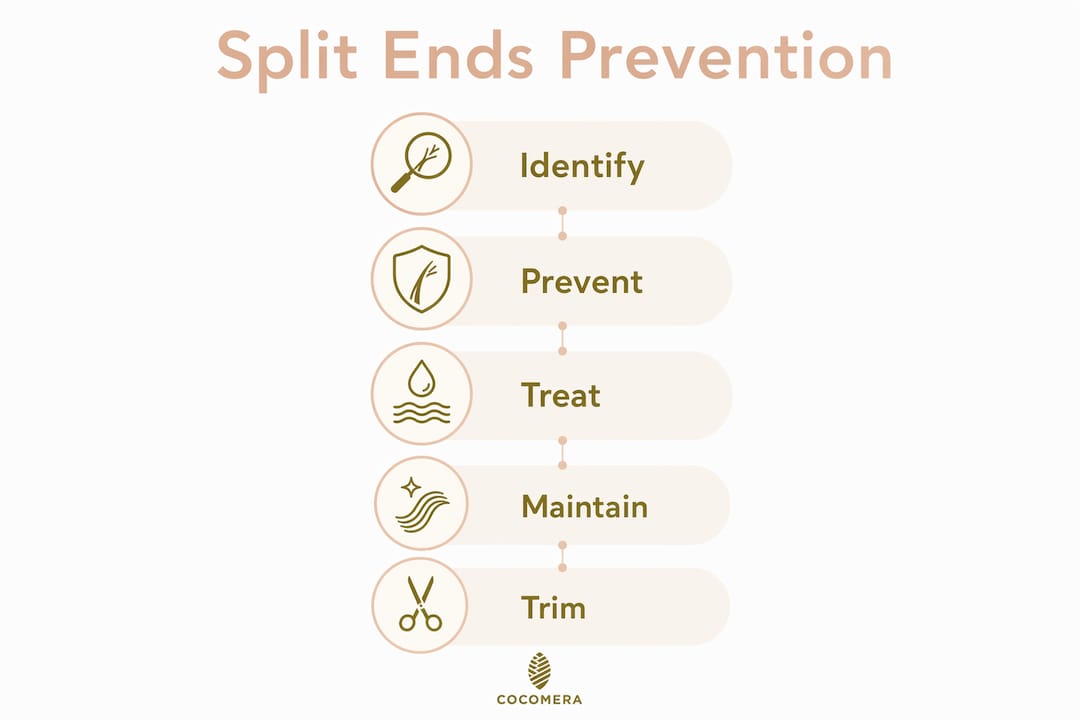
The cuticle’s job is to protect the cortex. When those overlapping tiles wear down through friction, heat, or chemical exposure, the cortex is exposed. Cracks initiate at the surface and propagate longitudinally toward the root, following the path of least resistance through the weakened structure.
This is why “repair” claims on product labels require careful reading. The shaft cannot regenerate. What products can do is temporary, and the next section explains exactly how far that goes.
What causes split ends: the main drivers of hair shaft damage
Mechanical stress: the most underestimated cause
Mechanical friction is responsible for more split ends than most people realize. Hair is anisotropic, meaning its mechanical properties differ depending on direction. It resists tension along its length reasonably well, but it is far weaker against shear stress applied across the shaft. Brushing against the cuticle grain lifts the tile edges and accelerates crack initiation. Aggressive towel-rubbing does the same thing to wet hair, which is already swollen and structurally weaker than dry hair.

Tight hairstyles and friction against rough pillowcases or cotton fabrics apply sustained low-level stress to the same sections of hair night after night. That cumulative load is enough to propagate micro-cracks into visible splits over weeks.
Pro Tip: Switching to a microfiber towel and blotting rather than rubbing is one of the highest-impact, lowest-cost changes you can make. It directly reduces the cuticle tile wear that starts the fracture process.
Heat styling
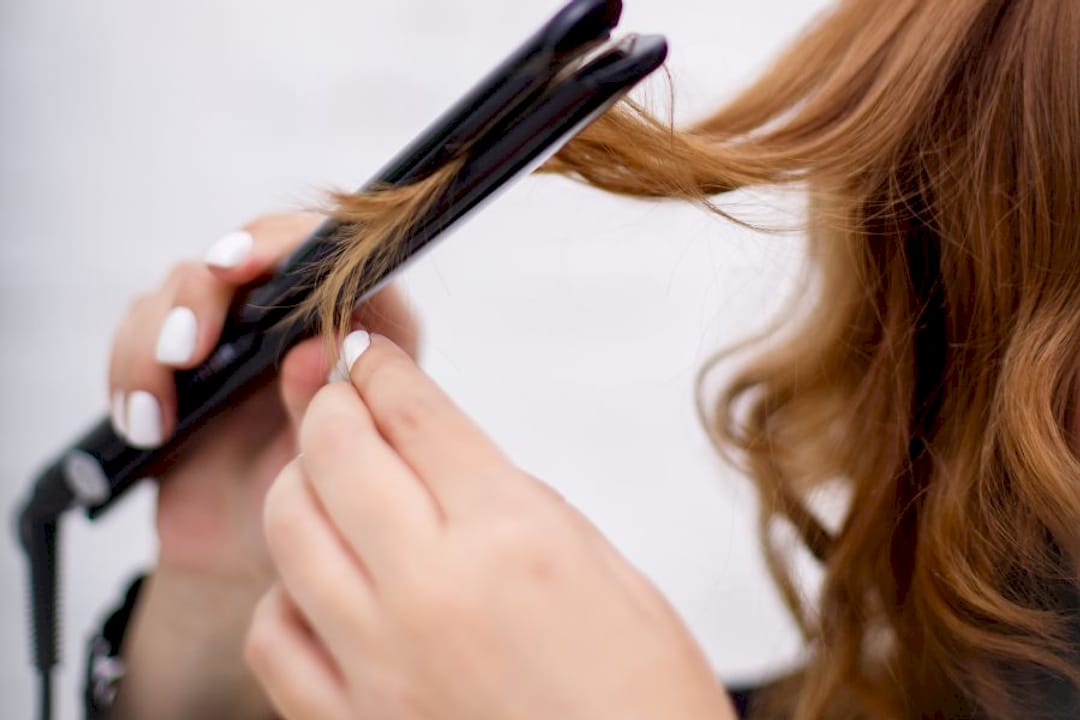
High heat degrades keratin and breaks disulfide bonds, weakening the cortex’s ability to resist bending and fatigue stress. The damage is cumulative. A single session at high temperature may not produce visible splits immediately, but repeated exposure progressively reduces the cortex’s transverse strength, making center splitting more likely. Heat protectants work by creating a physical barrier that reduces direct thermal degradation of those internal bonds, but lowering the tool temperature is more protective than relying on aftercare alone.

Chemical treatments
Bleaching oxidizes melanin and damages structural protein bonds, increasing cuticle porosity and making the cortex more susceptible to longitudinal splitting. Bleached hair fractures faster in mechanical fatigue tests than untreated hair. Relaxers and permanent color work through similar mechanisms: they break and reform bonds to change the hair’s shape or pigment, but each cycle leaves the structure slightly more porous and brittle. The more processing cycles, the lower the hair’s tolerance for additional mechanical or thermal stress.
Environmental damage
Chlorine, sea salt, UV radiation, and hard water all increase cuticle porosity and raise surface friction between strands. UV exposure degrades the cuticle lipid layer, which is the hair’s first line of defense against moisture loss. Chlorine strips that same lipid barrier and raises the cuticle tiles, leaving the cortex exposed. Hard water deposits mineral buildup that roughens the surface and increases strand-to-strand friction during styling.
Nutritional and biological contributors
Dry, brittle hair that splits easily can sometimes reflect what is happening internally. Malnutrition, extreme caloric restriction, and deficiencies in protein, iron, zinc, or biotin all affect the quality of new hair growth at the follicle. The hair shaft that grows out is structurally weaker from the start, making it more prone to splitting under normal mechanical stress. These are worth considering when split ends are persistent despite good external care.
How to tell if you have split ends: visual types and a quick check
Not all split ends look the same, and the type you see gives clues about the damage depth.
-
Y-split (forked end): The classic two-strand fork. Usually surface-initiated, often from cuticle wear.
-
Treeing or flagging: Multiple small splits branching off one strand, resembling a bare tree. Signals more advanced damage and repeated stress.
-
Multiple splits: Several fracture points along the same strand. Common after chemical treatments.
-
Center split: The strand separates from the inside out, often associated with chemically damaged or low-quality hair where transverse strength is compromised.
-
Edge split: Initiates at the surface from lifted cuticle tiles and propagates inward at a shallow angle. More typical in mechanically stressed but otherwise healthy hair.
To check at home, take a single strand in good light or use a magnifying glass. Hold it taut between two fingers and run your other hand slowly from mid-length to the tip. Fraying, visible forks, or a rough texture under your fingertips all indicate splits. Avoid doing this on soaking-wet hair since wet strands are more fragile and over-manipulation can create new damage during the check.
Can split ends be repaired, or only removed?
The honest answer: removed. The hair shaft is dead tissue. Once a crack forms and propagates, no topical product can permanently fuse the cortex back together.
What bond-building treatments and fillers actually do is coat or temporarily bind the exposed cortex fibers, reducing friction and slowing further crack propagation. Leave-in sealants and oils work similarly: they smooth the cuticle surface and reduce the mechanical stress that drives the split further up the shaft. The effect lasts until the next wash, or a few washes at most. Bond-building treatments used consistently alongside reduced heat and chemical exposure can reduce breakage over time, but their protective effect is cumulative only when the underlying damage drivers are also addressed.
Trimming is the only permanent fix. Everything else buys time.
Practical treatment options: trimming, salon services, and at-home fixes
Trimming and dusting
A standard trim removes enough length to cut past the split and into healthy shaft. How much depends on how far the crack has traveled. “Dusting” is a micro-trim technique where only the very tips are removed, typically less than a quarter-inch, to clear early-stage splits without sacrificing length. For most hair types, a trim every 8–12 weeks keeps splits from traveling. Fine or heavily processed hair may need attention every 6 weeks; thick, low-manipulation natural hair can often go 12–16 weeks between trims.
Salon options
A professional stylist can assess how far splits have propagated and recommend a micro-trim or a more significant cut. Salon bond-building treatments applied before or after a cut can reinforce the cortex temporarily and extend the time between trims. If your hair is heavily bleached or chemically relaxed, a stylist can also identify sections where the structural damage is severe enough that home trimming alone will not keep up.
At-home measures
| Option | What it does | How long it lasts | Best for |
|---|---|---|---|
| Trimming with quality scissors | Permanently removes split | Permanent | Anyone; use hair-specific scissors |
| Bond-building mask | Temporarily reinforces cortex | 2–4 washes | Chemically treated hair |
| Leave-in sealing oil | Smooths cuticle, slows propagation | Until next wash | Daily maintenance |
| Temporary filler/serum | Coats and conceals split | 1–2 washes | Quick fix before an event |
Household scissors are a common mistake. A dull or serrated blade crushes the shaft instead of cutting cleanly, creating a new fracture point at the cut site. Use scissors designed for hair, or visit a stylist.
A practical prevention routine: daily habits, weekly rituals, and seasonal care
Daily habits
-
Detangle from tips to roots, never root to tip. Work in sections with a wide-tooth comb or a detangling brush designed for textured hair.
-
Apply a heat protectant before any heat tool, every time. Reducing tool temperature is more protective than the product alone, so aim for 300–350°F for textured hair.
-
Sleep on a silk or satin pillowcase, or use a satin bonnet. Cotton creates friction against the cuticle all night.
-
Seal your ends with a light oil after styling. This reduces moisture loss and the surface friction that drives edge splitting.
Weekly rituals
-
Deep condition or use a bond-building mask once a week if your hair is chemically treated or heat-styled regularly. For lower-manipulation natural styles, every two weeks is often enough.
-
If you swim or live in a hard-water area, do a clarifying wash periodically to remove mineral and chlorine buildup that roughens the cuticle.
-
Schedule at least one or two low-manipulation days per week where hair stays in a protective style and styling tools stay off.
Seasonal and activity adjustments
Before swimming, saturate hair with clean water and apply a light oil or leave-in conditioner. A saturated strand absorbs less chlorine or salt water. Rinse thoroughly after swimming and follow with a moisturizing shampoo to clear chemical residue. In summer, UV exposure degrades the cuticle lipid layer, so a UV-protective leave-in or a swim cap for textured hair adds meaningful protection.
Choosing the right shampoo and conditioner
Harsh detergents in standard shampoos strip the hair’s natural lipid barrier, increasing dryness and brittleness. For textured hair especially, a sulfate-free or low-lather formulation preserves the cuticle’s moisture seal and reduces the brittleness that accelerates splitting. Look for shampoos that list gentle surfactants and include conditioning agents. A strengthening shampoo formulated for curly or coily hair addresses both cleansing and structural support in one step.
Pro Tip: For textured hair, the LOC or LCO method (Liquid, Oil, Cream in layered application) seals moisture into the shaft after washing and significantly reduces the dryness that makes ends brittle and prone to splitting.
When split ends could signal a medical or nutritional issue
Most split ends trace back to mechanical, thermal, or chemical stress. But sudden, widespread brittleness that appears without a change in your routine deserves a closer look.
Red flags worth taking to a clinician:
-
Rapid, diffuse hair brittleness or breakage across the whole head, not just the ends
-
Hair loss or thinning alongside the brittleness
-
Systemic symptoms: extreme fatigue, cold intolerance, unexplained weight changes, or digestive problems
-
No identifiable external cause (no new heat tools, no chemical treatments, no dietary changes)
A primary care physician can order thyroid function tests and a nutrient panel (iron, ferritin, zinc, vitamin D, B12) to rule out the most common medical contributors. A dermatologist or trichologist can assess the scalp and hair shaft directly. The MedlinePlus dry hair guide lists hypothyroidism, hypoparathyroidism, and malnutrition among recognized medical causes of dry, brittle hair. For guidance on strengthening practices while you investigate, the Cocomera blog covers how to stop hair breakage with at-home routine adjustments.
This article is general information, not medical advice. If you suspect a medical cause, consult a qualified clinician for evaluation specific to your situation.
Key Takeaways
Split ends are permanent structural fractures in the hair shaft: trimming removes them, prevention reduces how fast they return, and the right daily routine makes the biggest long-term difference.
| Point | Details |
|---|---|
| Trimming is the only permanent fix | No product biologically repairs a split shaft; cut past the fracture to stop it traveling further. |
| Mechanical stress is underestimated | Brushing against the cuticle grain and towel-rubbing are major crack initiators, especially on wet hair. |
| Heat and chemicals compound damage | Both degrade disulfide bonds and reduce the cortex’s transverse strength, accelerating splitting. |
| Prevention is a daily practice | Gentle detangling, heat protectants, sealing oils, and a sulfate-free shampoo reduce split-end formation significantly. |
| Cocomera for textured hair | Cocomera curates strengthening shampoos, sealing oils, and heat protectants formulated for wavy, curly, and coily hair types. |
The split-end problem most routines get backwards
The conventional advice on split ends focuses almost entirely on products: use this serum, apply that mask, buy a bond-building treatment. Products matter, but they address the symptom rather than the source. What the biomechanics research makes clear is that the primary drivers of splitting are mechanical. How you handle your hair physically, the direction you brush, whether you blot or rub, the tension you apply during detangling, accounts for a significant share of the damage that eventually shows up as splits.
For textured hair, this is especially worth sitting with. Coily and curly strands have more natural points of curvature, and each curve is a stress concentration point where crack propagation is more likely. That means the same brushing force that causes minimal damage on a straight strand creates more localized stress on a type 3 or type 4 curl. Gentle handling is not optional for textured hair; it is structurally necessary.
The other thing routines get wrong is the order of operations. Readers reach for a repair product before they have reduced the damage input. A bond-building mask used on hair that is still being heat-styled at 450°F and towel-dried aggressively will not keep up. The sequence that works: reduce the mechanical and thermal load first, then add strengthening and sealing products to protect what is already there.
What Cocomera offers for split-end prevention

Cocomera curates hair care specifically for wavy, curly, coily, and afro-textured hair, which means every product category on the site is chosen with the structural vulnerabilities of textured hair in mind. For split-end prevention, the most relevant categories are styling and heat protection, bond-building treatments, and strengthening shampoos formulated without harsh sulfates.
If you are building a prevention routine from scratch, a good starting point is a sulfate-free strengthening shampoo, a weekly deep conditioning treatment, a sealing oil for your ends, and a heat protectant for any days you use tools. Cocomera’s product pages include curl-type guidance so you can match products to your specific hair type rather than guessing. Browse the full range and find the routine that fits your hair.
Useful sources
-
The biomechanics of splitting hairs (Royal Society / Interface Focus): The primary scientific study on crack initiation, propagation modes (center vs. edge splitting), and the role of anisotropy and cuticle structure in split-end formation.
-
PMC full text of the biomechanics study: Open-access version of the same paper with figures showing cuticle tile lifting and fracture propagation.
-
MedlinePlus: Dry Hair (National Library of Medicine): Government medical reference listing medical and nutritional causes of dry, brittle hair including thyroid disorders and malnutrition.
-
Medical News Today: Medical causes of brittle hair and hair loss: Clinician-reviewed overview of systemic conditions associated with hair brittleness and breakage.
-
Dyson: How to prevent and get rid of split ends: Practical explanation of how heat damages internal bonds and why temperature control outperforms aftercare products.
-
Wella Professionals US: How to prevent split ends: Industry guidance on sulfate-free cleansing, lipid preservation, and microfiber towel use for reducing mechanical damage.
-
L’Oréal Paris: How to remove split ends: Explains the limits of cosmetic repair products and the role of bond-building treatments as temporary measures.