TL;DR:
- Curl clumping is the natural grouping of curly and textured hair strands that enhances curl definition and reduces frizz. Working with your hair’s natural tendencies through techniques like rake and shake promotes healthy, long-lasting clumps, especially when paired with moisture-rich products. Hair type, density, and health influence clumping results, making personalized care essential for optimal curl formation.
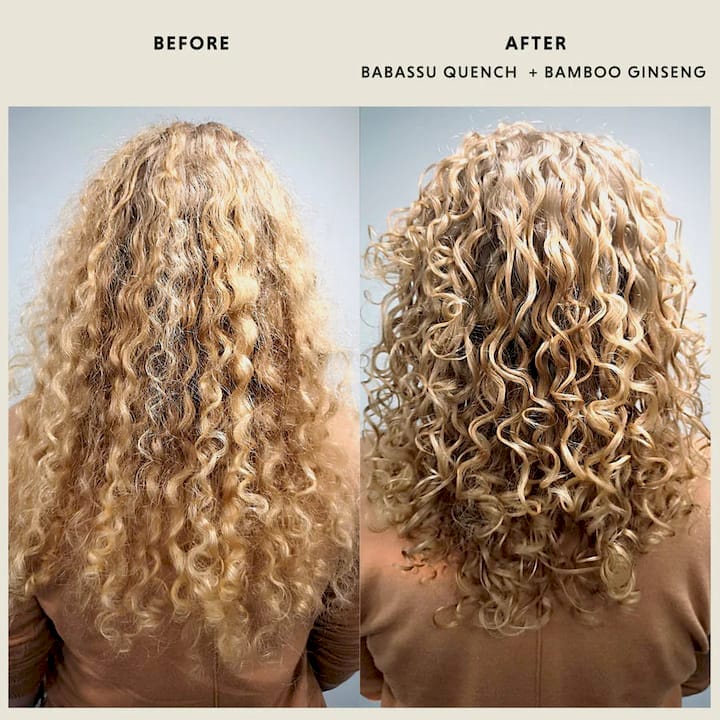
Curl clumping is defined as the natural or enhanced grouping of curly and textured hair strands into larger, more defined clusters that improve curl pattern visibility and reduce frizz. The process happens because of the spiral geometry built into each hair follicle, and you can strengthen it with the right techniques and products. Understanding curl clumping is the first step toward getting the bouncy, defined curls you actually want instead of a frizzy, undefined mass. Cocomera has put together this guide to walk you through the science, the methods, and the products that make it work.
What is curl clumping and why does it matter?
Curl clumping is a natural structural feature where curly hair strands group together like clusters of grapes due to the spiral geometry of hair follicles. That grouping reduces frizz and increases curl definition across all textured hair types, from wavy 2a to coily 4c. Without clumping, individual strands go their separate ways and create the poofy, undefined look that most curly people are trying to avoid.
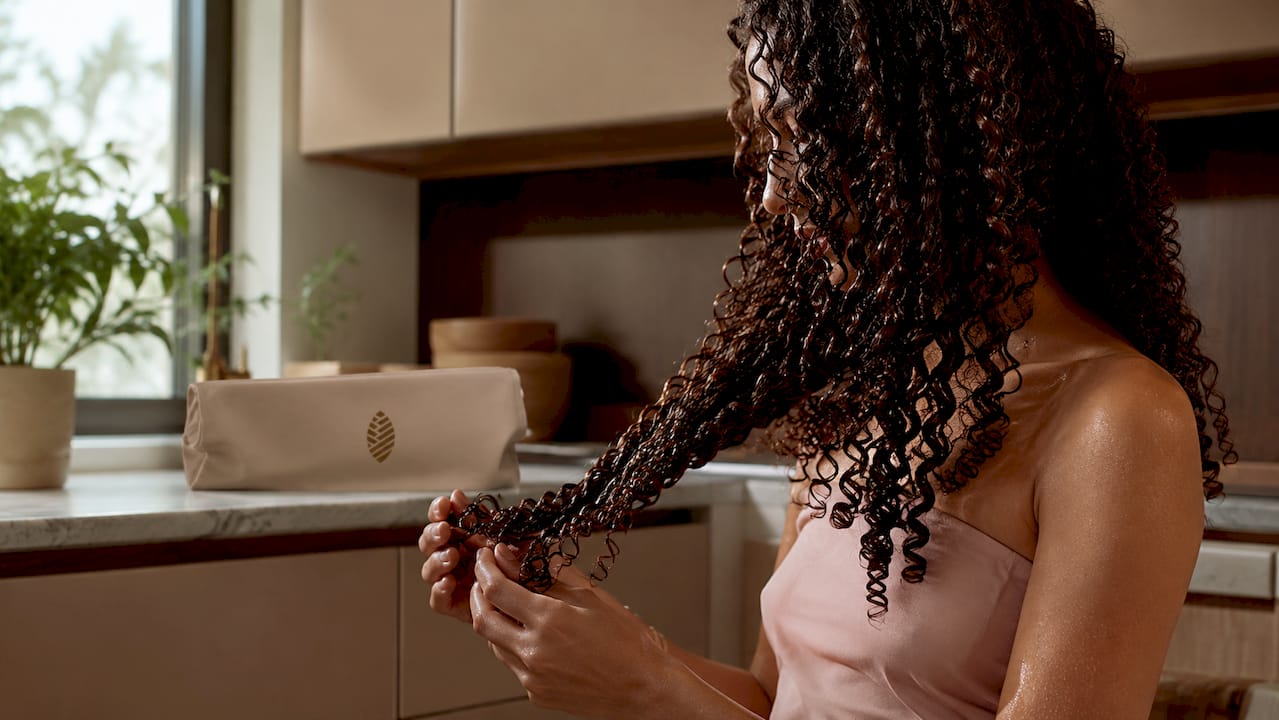
A common misconception is that clumping is a problem to fix. Trichologists advise encouraging natural clump structures rather than fighting them, because forcing unnatural separation leads to frizz, matting, and breakage. The goal of any curl clumping technique is to work with what your hair naturally wants to do, then amplify it. That philosophy shapes every method and product choice covered here.
The benefits of curl clumping go beyond looks. Defined clumps protect individual strands from environmental friction, reduce the need for heavy product layering, and make your curl pattern easier to maintain between wash days. For anyone with curly or textured hair, clumping is the foundation of a healthy styling routine.
What causes curls to clump naturally?
Several biological and physical factors drive natural curl clumping. Understanding them helps you work with your hair instead of against it.
-
Follicle shape. Curly hair grows from an asymmetrical, oval-shaped follicle. That shape forces the strand to grow in a spiral, and spirals naturally coil around neighboring spirals. The tighter the curl pattern, the stronger the pull between adjacent strands.
-
Hydrogen bonds and moisture. Water molecules form temporary hydrogen bonds between hair strands. When your hair is wet, those bonds pull neighboring strands together into clusters. This is why wet curls almost always look more defined than dry ones.
-
Cuticle texture. Curly hair has a raised cuticle layer that creates friction between strands. That friction helps strands grip each other and stay grouped as they dry.
-
Genetics and hair health. Your genetics determine your base curl pattern and follicle shape. Hair health determines how well your cuticles can grip and hold a clump. Frizzy or damaged ends prevent strands from adhering, resulting in stringy curls that resist clumping.
-
Hair density. High-density hair has more strands per square inch, which means more opportunities for strands to find each other and form larger clumps.
Genetics set the ceiling for your natural clumping ability, but hair health and technique determine how close you get to that ceiling. Regular trims and bond-building treatments improve hair integrity and directly support better clumping results.
What are the most effective curl clumping techniques?
Technique matters as much as product. The right application method distributes product evenly, encourages strands to find their natural partners, and locks in definition without forcing unnatural shapes.
-
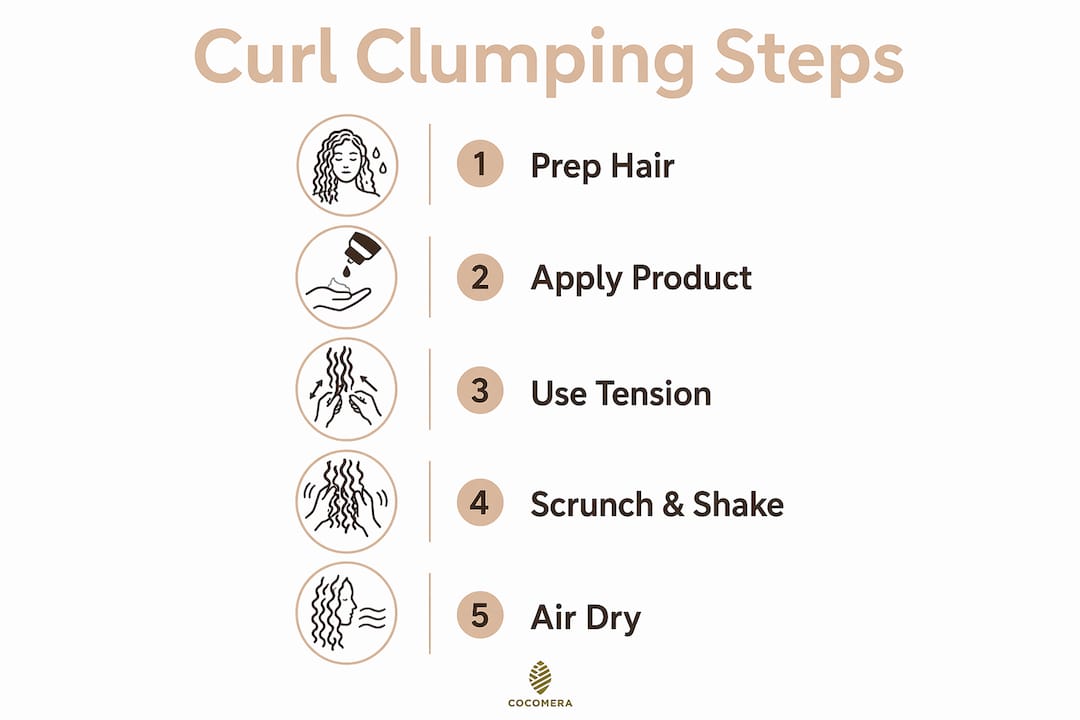
Rake and shake. The rake and shake method uses a two-step process to achieve defined curl clumps in minutes. First, rake your product through wet hair using your fingers or a wide-tooth comb, working from roots to ends to coat every strand evenly. Then shake each section gently for 1–3 seconds. That shaking motion encourages natural strand alignment and lets curls find their own cluster patterns without forcing. This method works across curl types from 2a to 4c and minimizes manipulation, which reduces frizz.
-
Praying hands. Press your palms together with a section of hair between them, then smooth downward from root to tip. This technique groups strands without separating them and works especially well for wavy and loose curly hair types that need gentle encouragement rather than aggressive raking.
-
Scrunching. Cup sections of hair in your palm and squeeze upward toward your scalp. Scrunching compresses the curl and pushes strands together while the product is still wet. It works best after raking to reinforce the clumps already formed.
-
Diffusing. Drying method affects clumping just as much as styling method. Curly hair drying techniques like diffusing on low heat preserve clumps formed during styling. Air drying works too, but avoid touching your hair while it dries, since any separation breaks the clumps before they set.
Pro Tip: Style on evenly damp hair, not soaking wet or dry. Water acts as a glue that holds strands together while product sets. Soaking wet hair dilutes product too much; dry hair has lost the moisture needed for strands to bond.
The right moisture balance combined with tension techniques creates defined clumps that last. Apply product in sections and work quickly so hair stays at the right dampness level throughout your styling session.
Which styling products promote and support curl clumping?
Product choice directly affects how well your curls clump and how long those clumps hold. The wrong product either weighs curls down into limp, greasy clumps or provides no hold at all, leaving strands to separate as they dry.
-
Curl creams and styling milks. These provide moisture and slip, which helps strands slide together and form clumps. They work best for type 2 and 3 hair that needs definition without a hard hold. Look for curl creams formulated for your specific curl density.
-
Gels and curl activators. Gels create a flexible cast around each clump, locking in the shape as hair dries. Curl activators add moisture and definition simultaneously, making them a strong choice for type 3 and 4 hair. The cast breaks when you scrunch out the crunch after drying, leaving soft, defined clumps.
-
Leave-in conditioners. A lightweight leave-in applied before styling products adds the slip needed for strands to group together. It also reduces friction between cuticles, which helps clumps form more easily.
-
Film-forming polymers. Products containing Polyquaternium-69, PVP, or VP/VA Copolymer enhance curl clumping by creating a flexible cast that encourages strands to adhere without weighing hair down. Check ingredient lists for these when choosing a gel or curl cream.
Avoid heavy butters and oils as primary styling products. They coat the strand and reduce the friction that helps curls grip each other. Use oils as a finishing step after clumps have set, not as a base layer. Product buildup from silicones also blocks moisture absorption and prevents strands from bonding, so use a clarifying shampoo regularly to keep your hair ready to clump. Maintaining hair integrity through consistent care routines supports the strand health that clumping depends on.
How do hair type and curl pattern influence your results?
Your curl pattern sets the rules for what clumping looks like on your hair. Adapting your technique to your specific type produces better results than following a one-size-fits-all approach.
| Curl type | Clump size | Common challenge | Best approach |
|---|---|---|---|
| Wavy (2a–2c) | Large, loose sections | Clumps fall flat or separate | Praying hands, lightweight gel |
| Curly (3a–3c) | Medium, defined spirals | Frizz at the crown breaks clumps | Rake and shake, curl cream plus gel |
| Coily (4a–4b) | Small, tight clusters | Shrinkage hides clump definition | Scrunching with rich cream, diffuse |
| Kinky (4c) | Very small, dense clusters | Low clump visibility due to tight coils | Section styling, heavy cream, finger coiling |
Hair density also plays a major role. High-density hair forms larger, juicier clumps more easily than low-density hair, which tends to produce smaller clumps or stringy results. Low-density hair benefits from lighter products and smaller styling sections to encourage strands to group together. High-density hair can handle richer products without going limp.
Curl tightness affects shrinkage, which affects how visible your clumps look when dry. Type 4 hair can shrink significantly, making clumps appear smaller than they are when wet. That is not a failure of technique. It is the natural behavior of tight coils, and working with it rather than against it produces healthier, more consistent results. Check Cocomera’s essential curl products guide for product recommendations matched to each curl type.
Key Takeaways
Curl clumping works best when you respect your hair’s natural architecture, use moisture-activating products, and apply them with low-manipulation techniques on evenly damp hair.
| Point | Details |
|---|---|
| Clumping is natural | Curly strands group due to follicle geometry; work with it, not against it. |
| Moisture is the foundation | Style on evenly damp hair so water bonds strands together before product sets. |
| Technique drives results | Rake and shake distributes product evenly and lets curls find natural clusters. |
| Polymers hold clumps | Ingredients like PVP and Polyquaternium-69 create a flexible cast without weight. |
| Hair type shapes your approach | Density and curl tightness determine clump size and which products work best. |
What I’ve learned from watching curls clump (and fail to clump)
The biggest mistake I see is people treating clumping as something to manufacture rather than something to support. When you rake too aggressively, apply too much product, or style on hair that is either too wet or too dry, you are fighting your hair’s natural tendencies. The result is always worse than what your hair would do on its own with a little help.
The rake and shake method changed how I think about curl styling entirely. The shaking step feels almost too simple, but that gentle motion is what lets strands find each other without being forced into artificial groups. Forcing curls together with your fingers creates clumps that look great for five minutes and fall apart by noon.
Hair health is the variable most people underestimate. Split ends and damaged cuticles physically cannot grip neighboring strands. No product fixes that. Regular trims, coily hair wash day routines, and consistent moisture practices build the strand integrity that makes clumping possible in the first place.
The last thing worth saying: your clumps do not need to look like anyone else’s. Type 4c clumps look nothing like type 2b clumps, and they are not supposed to. The goal is the best version of your own curl pattern, not a replica of someone else’s wash-and-go.
— Cocomera
Cocomera’s curl styling collection for better clumping
Cocomera curates styling products specifically for wavy, curly, coily, and afro hair types, so you are not sorting through products designed for straight hair and hoping for the best.

The styling products collection includes curl creams, gels, and activators selected for their ability to support natural clumping without buildup or heaviness. Each product category is matched to hair types 2, 3, and 4, so you can find what fits your curl pattern without guesswork. If your curls need extra repair before they can clump well, the hair treatments range covers bond-building and moisture-restoring options that build the strand health clumping depends on.
FAQ
What is curl clumping in simple terms?
Curl clumping is when curly or textured hair strands naturally group together into defined clusters instead of separating into individual frizzy strands. The result is more visible curl definition and less frizz.
Why won’t my curls clump together?
Damaged or frizzy ends prevent strands from adhering to each other, and styling on hair that is too wet or too dry also blocks clumping. Try trimming split ends, balancing moisture, and applying product on evenly damp hair.
Does the rake and shake method work for all curl types?
The rake and shake technique works across curl types from 2a to 4c by evenly coating cuticles and letting strands naturally align. Adjust product richness based on your curl density for best results.
What ingredients in products help curls clump?
Film-forming polymers like Polyquaternium-69, PVP, and VP/VA Copolymer help curls form and hold clumps by creating a flexible cast around each strand cluster without adding weight.
How does hair density affect curl clumping?
High-density hair forms larger, fuller clumps more easily because more strands are available to group together. Low-density hair produces smaller clumps and benefits from lighter products and smaller styling sections.