TL;DR:
- Hair elasticity is your hair’s ability to stretch and return to its original shape without breaking, indicating its health and resilience. Regular at-home tests involving gentle stretching of damp strands help identify whether your hair needs more protein, moisture, or bond repair treatments. Maintaining balanced protein and moisture levels, handling hair gently, and adjusting routines seasonally are essential for preserving optimal elasticity and reducing breakage.
If your curls snap when you stretch them, go limp after washing, or never seem to bounce back, hair elasticity is almost certainly at the root of it. Understanding what is hair elasticity means understanding why your curl pattern behaves the way it does, whether your strands can survive a detangling session, and whether your products are actually helping or slowly making things worse. This article breaks down the science, gives you a real test you can do at home, and walks you through what to do about it.
Table of Contents
Key takeaways
| Point | Details |
|---|---|
| Elasticity defines curl resilience | It is your hair’s ability to stretch and return to its original shape without breaking. |
| Protein and moisture must stay balanced | Too much moisture causes limpness; too little causes brittleness. Both hurt elasticity. |
| You can test elasticity at home | A simple wet strand test tells you whether your hair needs protein, moisture, or bond repair. |
| Shrinkage is a good sign | High shrinkage in textured hair signals strong elastic recoil, not damage. |
| Targeted products make a real difference | Protein treatments, bond builders, and strengthening shampoos restore and maintain elasticity over time. |
What hair elasticity actually means
Hair elasticity is your hair’s ability to stretch under tension and then return to its original length without snapping. Think of it like a rubber band. A healthy rubber band stretches, then springs back. An old, dried-out one breaks the moment you pull it.
Healthy wet hair stretches 30 to 50 percent of its original length and bounces back without breaking. That number matters because textured hair goes through a lot of tension during everyday styling, detangling, and wash days. Without strong elasticity, each one of those moments is a breakage risk.
The biology behind this comes down to two things: structure and moisture. Your hair’s cortex, the inner core of each strand, is made primarily of keratin proteins arranged in coiled chains. Keratin proteins make up 65 to 95 percent of hair’s dry weight, which tells you just how much your hair’s physical behavior depends on having enough of them. These protein chains act like springs. When hair is well hydrated and protein-rich, they flex and recover. When they are depleted or waterlogged, they fail.
Moisture plays an equally important role. Water enters the cortex and allows those protein chains to move freely. Too little water and the chains become rigid. Too much, and a condition called hygral fatigue sets in. This happens when hair absorbs and releases water repeatedly without the structural proteins to hold its shape, leaving it stretched out and unable to recoil. Balancing protein and moisture is not optional. Excess of either causes limpness or brittleness, and both outcomes destroy elasticity.
Pro Tip: If your hair feels soft and moisturized but still snaps or stretches too far, moisture alone is not your problem. Your cortex may be protein-depleted and in need of structural support.
How to test your hair elasticity
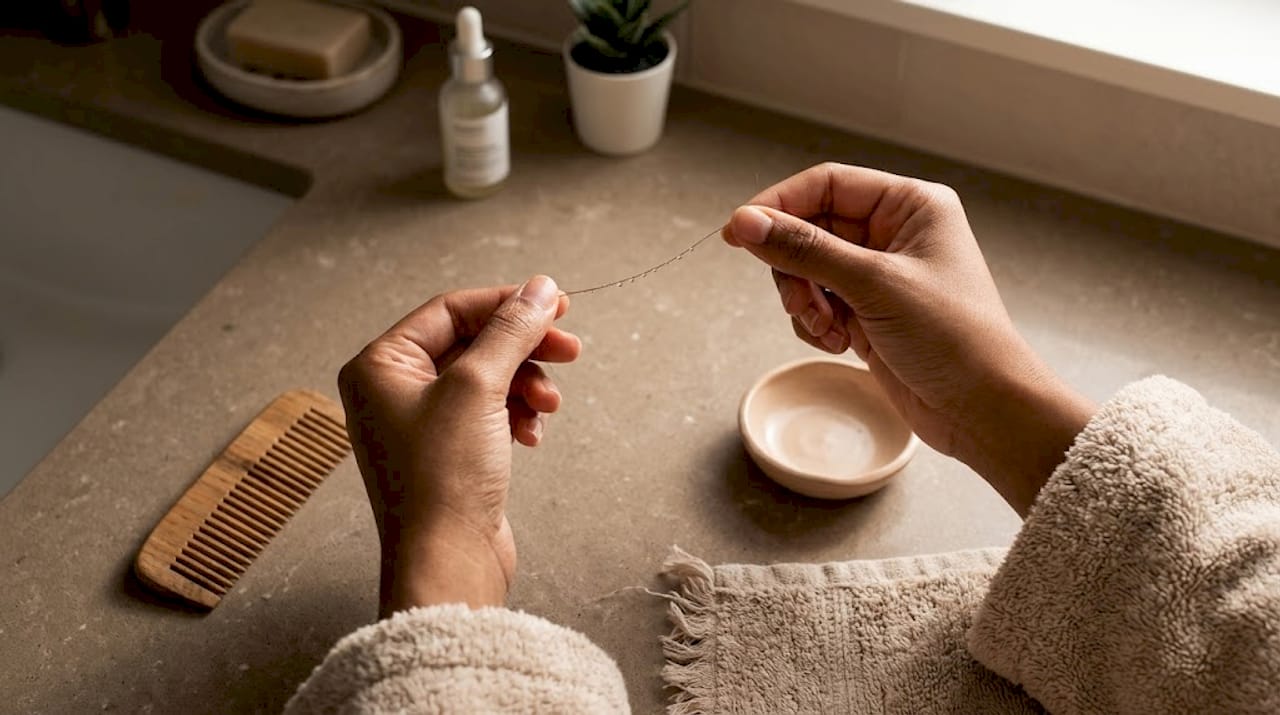
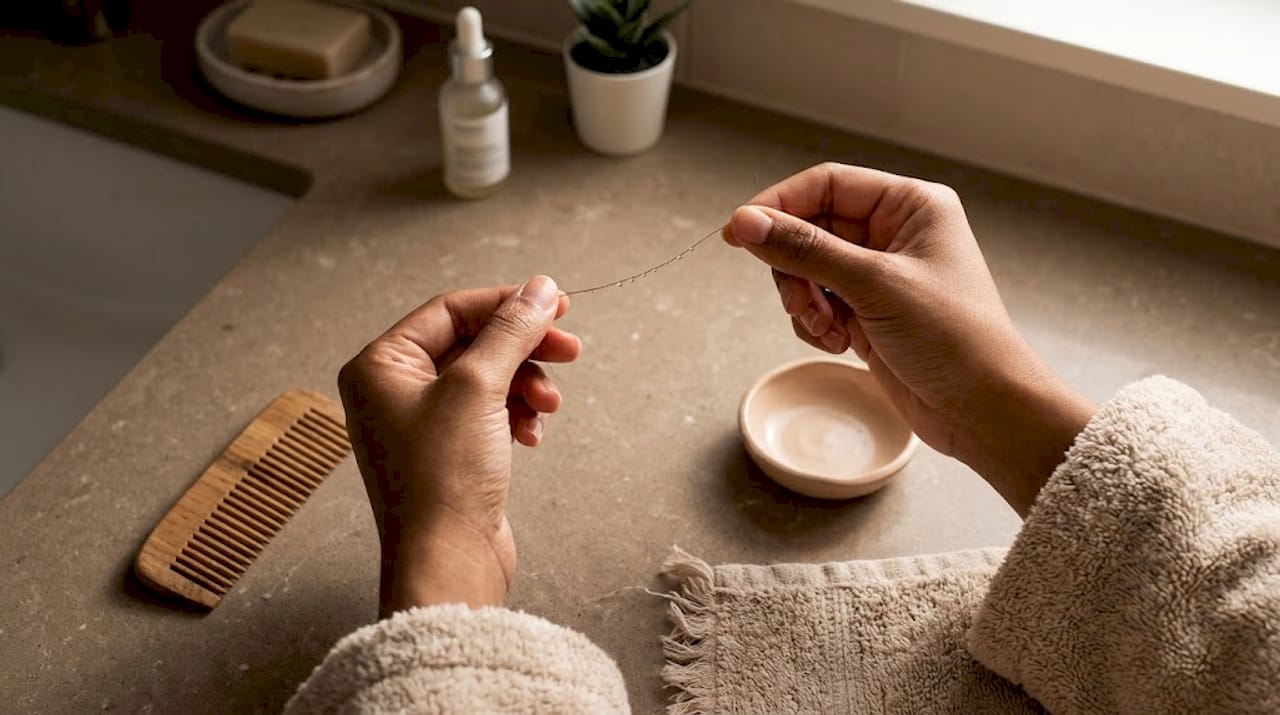
You do not need a lab or a stylist to measure your hair elasticity. The test takes about 30 seconds and gives you real, usable information. Do it on freshly washed, damp hair for accurate results.
-
Take a single strand of hair from your head, ideally from the middle section of your scalp.
-
Hold each end between your thumb and index finger with a gentle, steady grip.
-
Slowly stretch the strand and observe what happens.
-
Release the tension and watch how the strand responds.
Here is how to read your results:
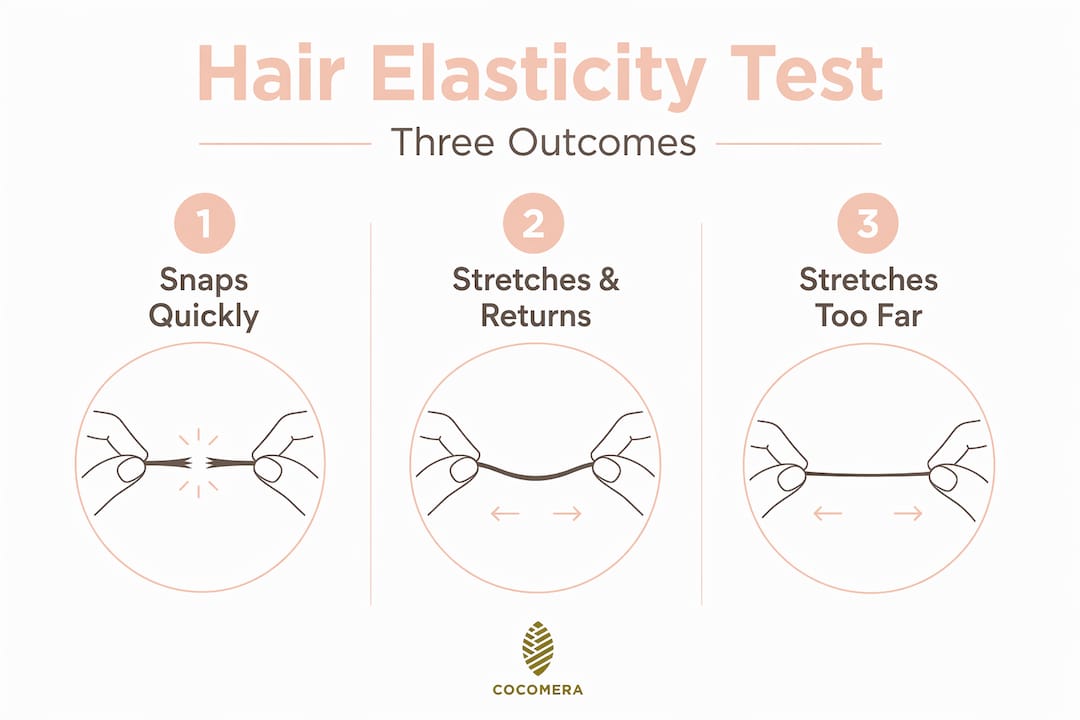
If the strand stretches slightly and snaps back to its original length, your elasticity is healthy. Your protein-moisture balance is working.
If it stretches very little and breaks almost immediately, your hair is brittle and likely protein-starved or severely dry. It needs deep moisture and possibly a protein treatment.
If it stretches far, feels gummy or mushy, and does not return to its original shape, you are looking at hygral fatigue or protein deficiency. This is sometimes called over-elasticity, and it requires bond repair treatments, not more moisture.
The gummy result is the one most people misread. Because the hair feels soft and stretchy, the instinct is to add more conditioner. That is exactly the wrong move. Mushy wet hair signals a structural problem that moisture cannot fix on its own.
Pro Tip: Test strands from different parts of your head. The nape, crown, and ends often have different elasticity levels, especially if you color, heat style, or have longer strands with older ends.
What causes elasticity to change
Elasticity rarely fails overnight. It shifts gradually because of repeated habits, product choices, and styling practices. Understanding the causes helps you spot problems early and correct them before breakage becomes severe.
The most common causes of altered elasticity in textured hair include:
-
Protein deficiency. When hair lacks the keratin it needs, the cortex loses its structural integrity. Strands become limp, weak, and unable to hold tension.
-
Over-moisturizing. Constantly using heavy conditioners and hydrating products without protein eventually waterlogs the cortex. Hygral fatigue develops, and the hair loses its snap.
-
Chemical processing. Relaxers, color treatments, and texturizers break disulfide bonds inside the cortex. These are the same bonds that give hair its strength and elasticity. Repeated processing compounds the damage significantly.
-
Heat styling. High heat disrupts hydrogen bonds in the hair shaft and, over time, degrades the keratin structure. Flat irons and blow dryers are particularly harsh on already-vulnerable textured hair.
-
Friction and rough handling. Cotton pillowcases, aggressive towel drying, and improper detangling all create friction that weakens the cuticle and strains the cortex. Wet hair snapping is often accumulated damage, not a single incident.
The signs to watch for are equally important. Gummy texture when wet, strands that stretch like taffy without recovering, hair that lies flat instead of curling back up, and persistent breakage at the mid-shaft all point to elasticity problems. So does limp curl definition that products cannot seem to fix.
Shrinkage is one of the most misunderstood signs in textured hair. Many people see their curls shrink to half their length and assume something is wrong. The opposite is true. Shrinkage is a positive indicator of healthy elasticity. It shows that your hair can stretch, coil, and return to its natural shape, which is exactly what elastic hair does. If your hair has stopped shrinking, that is the time to pay attention.
How to improve and maintain hair elasticity
Once you understand where your elasticity stands, you can build a routine that targets the actual problem. There is no single product that fixes everything. What works is a consistent, balanced approach.
Balance your protein and moisture inputs
This is the foundation. For most textured hair types, wash days should rotate between moisturizing products and protein-based treatments. If your hair feels dry and brittle, lead with deep moisture. If it feels soft but limp or gummy, bring in protein. A strengthening shampoo with keratin or hydrolyzed proteins is a strong starting point because it begins the balancing act before you even condition.
Use targeted treatments regularly
Protein treatments and bond builders address elasticity at the structural level. A 90-day keratin supplement trial showed improved tensile strength by 5.9 percent and a 34 percent reduction in hair loss, which demonstrates that supporting keratin from within the strand makes a measurable difference. Look for hair treatments that include ingredients like hydrolyzed keratin, amino acids, and bond-building technology such as maleic acid or bis-aminopropyl diglycol dimaleate.
Here is a quick comparison to help you choose the right treatment type:
| Hair symptom | What it signals | Treatment type |
|---|---|---|
| Brittle, snaps with little stretch | Protein and moisture deficit | Deep conditioning mask plus protein |
| Gummy, overstretches when wet | Protein deficiency or hygral fatigue | Bond repair treatment, reduce moisturizing |
| Limp curls, soft but no definition | Protein deficiency | Light protein treatment or strengthening mask |
| Dry, rough texture with normal stretch | Moisture deficit only | Deep moisture treatment or hair oil |
Handle your hair gently, always
This matters more than most people realize. Wide-tooth combs reduce force spikes during detangling compared to denser tools, which directly reduces overstretching and breakage in already-elastic wet hair. Start detangling at the ends and work your way up. Never pull through knots. Detangle on damp, conditioned hair with enough slip to let the comb move freely.
-
Sleep on a satin or silk pillowcase to minimize friction overnight.
-
Limit direct heat and always use a heat protectant when you do.
-
Avoid back-to-back chemical treatments. Give your hair recovery time between sessions.
-
Use protective styling to reduce daily manipulation and tension on vulnerable strands.
Pro Tip: Do your elasticity test every four to six weeks. Your hair’s needs change with the seasons, your diet, and your styling habits. Treating your hair the same way year-round without checking in is one of the most common reasons progress stalls.
My take on elasticity after years of working with textured hair
I have learned something counterintuitive about hair elasticity that most product-focused advice gets wrong. The problem is rarely a lack of products. It is almost always a lack of information about what the hair actually needs right now.
In my experience working with textured hair across all curl types, the most common mistake I see is treating every hair problem with moisture. Someone notices breakage, and they pile on leave-ins, oils, and heavy conditioners. Sometimes that helps. But when the hair is already waterlogged or protein-depleted, adding more moisture makes things worse. The strand cannot absorb what it cannot use.
The shrinkage conversation is the other one that stays with me. I have watched people fight their shrinkage with heat and stretching techniques, not realizing that shrinkage is one of the clearest signals of healthy, elastic hair. When curls stop shrinking, that is not a styling win. That is often a structural loss.
What I have found actually works is treating hair elasticity as a moving target rather than a fixed condition. Curly hair care tips that account for seasonal shifts, styling habits, and processing history will always outperform a static routine. Test your elasticity regularly, rotate your products thoughtfully, and trust what your hair tells you instead of following a formula designed for someone else’s curl pattern.
— Cocomera
Support your curls with the right products
At Cocomera, every product in our collection is chosen specifically for wavy, curly, coily, and afro hair. We know that improving hair elasticity is not about buying more products. It is about buying the right ones. Whether you need a deep treatment to repair protein-depleted strands, curl styling products that work with your elasticity rather than against it, or nourishing hair oils to protect strands between wash days, you will find carefully curated options built for your curl type. We also carry hair masks for textured hair that help you maintain that protein-moisture balance your strands need to stay resilient and defined.
FAQ
What is hair elasticity in simple terms?
Hair elasticity is your strand’s ability to stretch and return to its natural shape without breaking. It reflects the health of your hair’s internal protein structure and moisture balance.
How do you test hair elasticity at home?
Take a single damp strand, stretch it gently, and release it. Healthy hair stretches 30 to 50 percent and bounces back. Hair that breaks immediately or stretches without returning signals an elasticity problem.
What causes low hair elasticity in textured hair?
Low elasticity is most often caused by protein deficiency, excessive heat styling, chemical processing, or chronic dehydration. Rough detangling and friction from daily styling also deplete elasticity over time.
Is shrinkage a sign of good or bad elasticity?
Shrinkage is a sign of healthy elasticity. It shows your curls can stretch and coil back to their natural shape, which is exactly what well-structured, protein-rich textured hair does.
How often should I do a protein treatment to maintain elasticity?
This depends on your hair’s current state, but most textured hair types benefit from a light protein treatment every four to six weeks, with a deeper treatment every two to three months or after chemical processing.