- A curly cut is a dry, curl-by-curl technique that works with your natural texture and shrinkage for accurate shape. It is distinct from traditional wet cuts and offers better results for textured hair by shaping each curl individually while dry. Choosing a stylist experienced in this method and maintaining a tailored routine ensures long-lasting, beautifully defined curls.
Getting a haircut should feel exciting, not like a gamble you regret for the next three months. Yet for so many people with wavy, curly, or coily hair, the story is always the same: you leave the salon looking great, and two weeks later your curls are uneven, shapeless, or way shorter than expected. The problem is almost never your hair. It is the technique. A curly cut is specifically engineered to change that outcome by working with your curl pattern rather than against it, and understanding what it actually involves is the first step to finally getting the cut you have always wanted.
Table of Contents
-
Is every curly cut the same? Key techniques and questions to ask
-
The real secret: What we wish more people understood about curly cuts
Key Takeaways
| Point | Details |
|---|---|
| Curly cut defined | A curly cut is a dry haircutting technique that shapes textured hair by following each curl’s natural fall. |
| Why dry matters | Cutting dry prevents the uneven shrinkage that occurs with standard wet techniques. |
| Not all cuts are alike | ‘Curly cut’ is an umbrella term—methods can vary, so clarify your stylist’s approach. |
| Personalization is key | Great curly cuts are tailored to your specific curl patterns, not treated as one size fits all. |
| Aftercare keeps shape | Using the right products and communicating with your stylist keeps your cut looking fresh and healthy. |
What is a curly cut? Core principles explained
Traditional haircuts were built around one core assumption: wet hair is easier to manage and measure. A stylist wets your hair, combs it flat, and cuts in a straight line. That method works fine for straight hair. For curls, it is essentially cutting blindfolded because wet hair can stretch several inches beyond its natural dry length, and curls spring back unpredictably when they dry.
A curly cut is a specialized haircutting method designed specifically for wavy, curly, or coily hair. The defining feature is dry cutting. As described by Salong Barock, a curly cut means clipping hair dry so the stylist can see exactly how each curl falls and create a shape that highlights the individual curl pattern. This is not just a trendy name. It is a completely different philosophy.
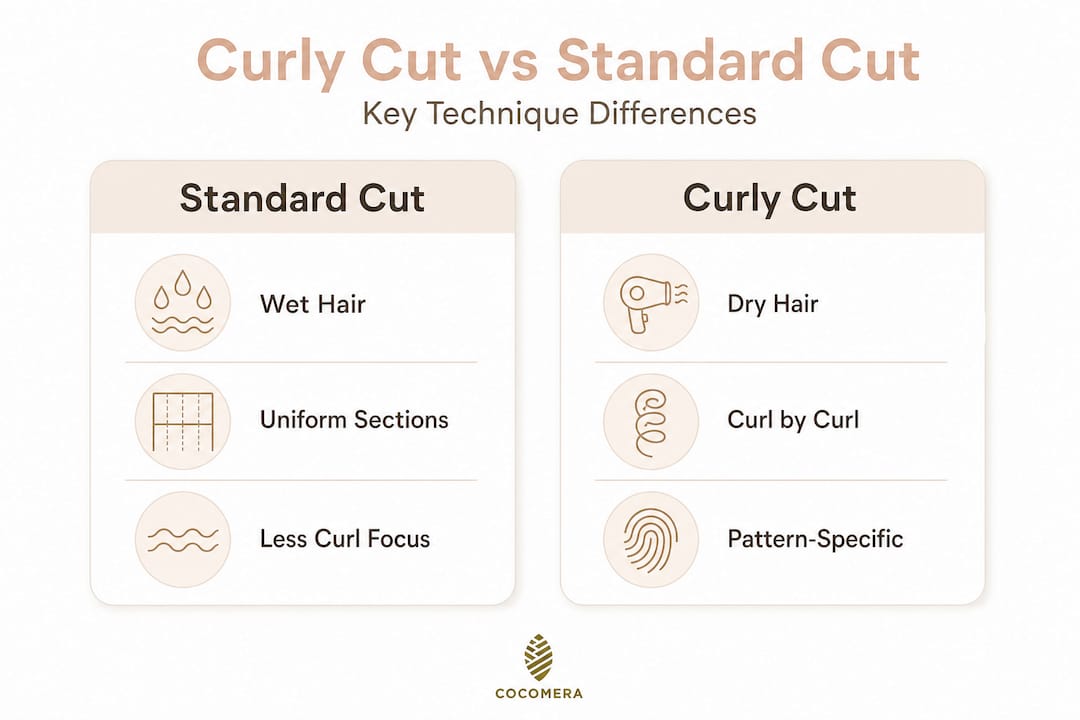
Dry cutting gives the stylist the ability to see your hair’s true fall, texture, and movement without water or styling products distorting the picture. They shape it exactly as you would wear it every day. That means what you see on the salon chair is genuinely close to what you will see at home.
Here is what separates a curly cut from a standard trim:
-
Hair is dry or lightly styled before any scissors touch it
-
Each curl is observed and shaped individually or section by section
-
The stylist works with shrinkage, not against it, so length is accurate when dry
-
Bulk and volume removal are handled carefully to preserve curl structure
-
The result mirrors how you actually wear your hair, not an idealized wet version
Proper curly hair care extends far beyond the salon chair, but the cut is the foundation everything else builds on. Understanding why hair needs moisture becomes much more relevant once your curls have the right shape to hold that moisture evenly.
“The difference between a bad curl cut and a great one often comes down to whether the stylist ever actually saw your real curl pattern before picking up the scissors.”
Pro Tip: If a stylist wets your hair before asking any questions about your curl pattern or texture, it is a signal to pause and have a conversation first.
In Sweden, curly cuts are increasingly available, but what salons mean by the term can vary. Always ask specifically whether the cut involves dry cutting before you book.
How does a curly cut differ from a standard haircut?
Now that the basic idea is clear, let’s see how curly cuts break the rules and why that matters for real results.
The biggest difference is how shrinkage is handled. Shrinkage is how much a curl “loses” in length when it springs back into its natural shape after being wet and stretched. For type 3 and type 4 hair, shrinkage can be 30 to 75 percent. A stylist cutting wet hair at 10 inches might leave your dry curl at 6 inches. This can be different across your head.
Dry cutting avoids this problem because the stylist sees the shrunken, coiled length from the start. What you are cut to is what you get.
The most popular method in the curl community is the DevaCut. According to TheBeautyFoodie, this means cutting each curl by itself when the hair is completely dry and styled as you usually wear it. The stylist sees how each curl falls and how much volume it has. They create a shape that fits your curls, considering shrinkage and how curls group together. This is very different from cutting wet hair in sections where all strands are treated the same.
Here is a practical comparison of both approaches:
| Feature | Standard wet cut | Curly cut (dry method) |
|---|---|---|
| Hair state during cut | Wet and stretched | Dry or lightly styled |
| Shrinkage accounted for | No | Yes |
| Curl pattern visible | No | Yes |
| Volume distribution assessed | No | Yes |
| Result consistency | Lower for curly hair | Higher for curly hair |
| Good for straight hair | Yes | Less necessary |
| Good for curly hair | Often disappointing | Significantly better |
For people managing a multi-textured hair situation where curl patterns shift from root to tip or section to section, the dry method is not just better. It is often the only approach that produces a balanced result.
The real-world impact of this difference is significant. Many people with curly hair have spent years assuming they just have “problem” hair that does not hold a style, when in reality they have been getting cuts that were never designed for their texture in the first place.
Is every curly cut the same? Key techniques and questions to ask
Understanding the curly cut’s main difference raises another question: do all curly cuts provide the same benefits, or should you ask your stylist?
No, they don’t. “Curly cut” is a broad term, and practices vary widely. Some stylists use a true DevaCut curl-by-curl method, while others use damp or section-based cuts that differ from traditional wet cuts. Knowing the difference helps set realistic expectations.
Before booking, ask these questions:
-
Do you cut the hair dry, damp, or wet?
-
Do you work curl by curl or in sections?
-
How do you handle bulk or weight removal without disrupting curl formation?
-
How familiar are you with my specific curl type (2, 3, or 4)?
-
Can you show examples of curly cuts you have done with similar textures?
-
Will we do a consultation before any water touches my hair?
Preparing for a hair consultation is a skill worth developing, especially for textured hair. Walking in with clear questions puts you in control of the outcome.
Here is a quick reference for the most common curly cut variations:
| Technique | Hair state | Method | Best for |
|---|---|---|---|
| DevaCut | Fully dry | Curl by curl | Type 3 and 4 curls |
| Rezo cut | Dry or damp | Section-based, parallel | Type 2 and 3 waves/curls |
| Curl-by-curl | Fully dry | Individual curl shaping | Mixed curl patterns |
| Damp cut | Slightly damp | Section-based | Looser waves, type 2 |
Pro Tip: Bring photos of your hair on a good day, not styled hair from someone else. Your stylist needs to understand your specific texture, not a reference image of an ideal.
Having an established curly hair routine before your appointment also helps. When your curls are healthy and moisturized, the stylist can see your real pattern more clearly, which leads to a better, more accurate cut.
How curly cuts are tailored for your unique curl pattern
After recognizing the importance of method, let’s see how a truly custom curly cut adapts to individual curl differences.
Most booking pages overlook this: few people have a single curl pattern. It’s common to have looser waves at the temples, tighter coils at the nape, and different textures at the crown. This variation is why curl-specific cutting exists and why a skilled stylist customizes the cut for each area.
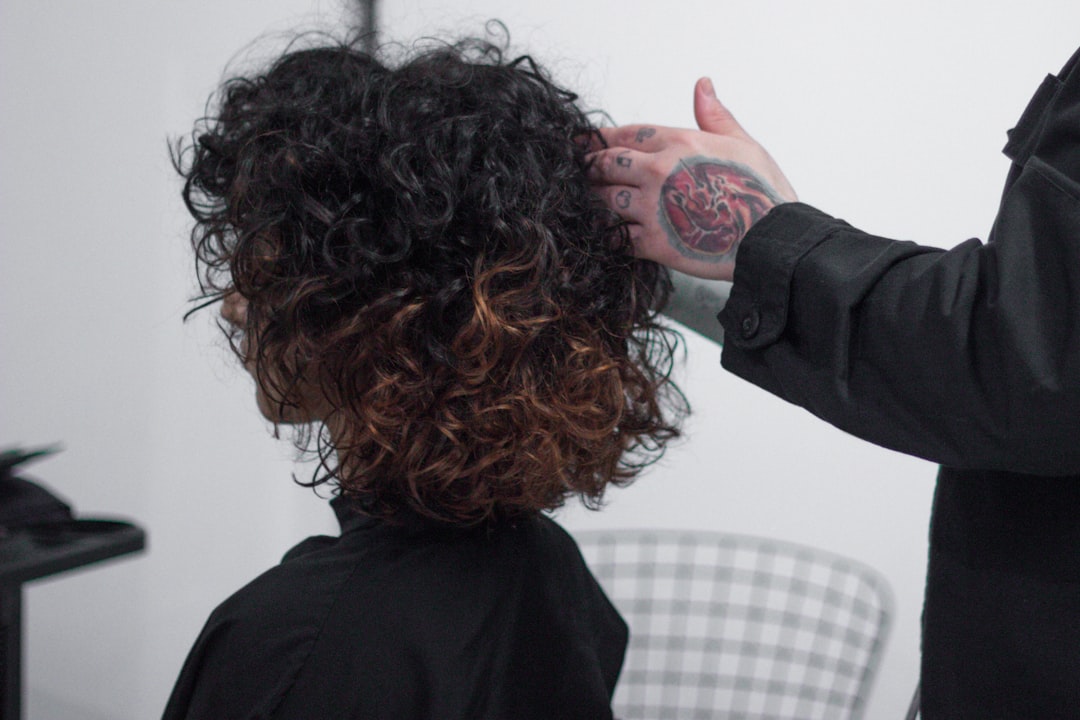
As noted by TheBeautyFoodie, when curl patterns vary across the head in terms of density and curl size, dry cutting approaches are intended to tailor shaping section by section rather than assume one uniform behavior for all hair. This section-by-section awareness is what separates a truly experienced curl stylist from someone simply marketing the service.
What a personalized curly cut considers:
-
Curl diameter and tightness variation across different zones of the head
-
Density differences (for example, thicker at the crown, thinner at the edges)
-
Shrinkage rates at the nape versus the sides
-
Natural growth patterns that affect how curls sit when loose
-
Personal styling habits and whether you diffuse, air dry, or use a wash-and-go method
“A curly cut is not a single haircut. It is a series of small, informed decisions made curl by curl, zone by zone.”
Face-framing layers on curls are another tool skilled stylists use to enhance shape and balance the overall silhouette. The right face-framing technique can soften a round face, add length to a square jaw, or simply draw attention to your best features. For curly hair, these layers need to be placed with curl spring in mind, otherwise they can look choppy or too short once dry.
Your consultation is the moment to share all of this. Tell your stylist where your curls behave differently, which areas feel too heavy, and which spots you feel are underdefined. Stylists who specialize in styling type 3 and 4 curls understand that these conversations are not extras. They are core to getting the cut right.
The real secret: What we wish more people understood about curly cuts
Here is something the salon industry rarely admits openly: not every stylist who offers a curly cut has the training to deliver one well. The term has become popular, and some salons have adopted it as a marketing label without investing in the specialized skills it actually requires. That is not cynicism. It is just the reality of how quickly trends move.
The single biggest factor in a great curly cut is not the technique name. It is the stylist’s genuine understanding of your curl pattern combined with real dialogue before anything else happens. A skilled stylist who listens carefully and asks the right questions will consistently outperform someone who learned the name “DevaCut” without mastering the underlying philosophy.
We also see a lot of people focus entirely on the cut itself and underestimate aftercare. The cut creates the shape, but the products and routine you use at home determine how long that shape actually lasts. Knowing the best ingredients for curly hair makes a real difference in preserving definition between salon visits. Without the right moisture balance, even a perfect cut will look dull and undefined within a week.
Our honest advice: treat the first appointment with a new stylist as a test run. Come with photos of your hair on its best day, ask every question on your checklist, and pay close attention to how they respond during the consultation. A stylist who rushes past your questions or skips straight to wetting your hair is showing you something important. One who genuinely engages with your pattern, texture history, and styling habits is someone worth returning to.
The right combination of skilled cutting and consistent at-home care is where the real transformation happens. Neither one alone is enough.
Support your curls with the right products and care
With a new appreciation for expert curly cut care, here is how to keep your curls healthy, defined, and gorgeous in daily life.
A fresh curly cut is a great starting point, but your daily routine is what keeps the shape alive. After a custom cut that follows your natural pattern, the right products amplify everything your stylist worked to create.

At Cocomera, we curate hair care specifically for wavy, curly, coily, and afro hair types so you do not have to search through products designed for someone else’s hair. Whether you need styling products that lock in definition without crunch, restorative hair treatments that rebuild moisture between cuts, or gentle shampoos that cleanse without stripping your curl pattern, everything is selected with your texture in mind. A consistent routine of cleansing, deep moisture, and protective styling between cuts is what keeps your curls looking like you just left the salon.
Frequently asked questions
Why is dry cutting preferred for curly hair?
Dry cutting lets stylists follow each curl’s natural pattern and shrinkage, which means the length and shape you see on the chair is the length and shape you keep when you go home.
Is a curly cut suitable for wavy hair or just coily hair?
The curly cut works across all textured hair types, from loose type 2 waves to tight type 4 coils, because the technique adapts to any natural texture rather than forcing all hair into the same shape.
How often should I get a curly cut?
Most people with curly or coily hair benefit from a trim every 3 to 4 months to maintain their shape, remove any split ends that disrupt curl definition, and encourage healthy growth.
What questions should I ask my stylist before booking a curly cut?
Ask whether they cut dry or wet, whether they work curl by curl or in sections, and how they manage different curl patterns across the head. Clarifying the exact technique before booking is the best way to make sure you are both working toward the same result.
Will the curly cut look good as my hair grows out?
Because the cut follows your natural curl pattern and volume distribution, regrowth tends to look more balanced and natural than with a traditional cut. Customized cuts grow out more evenly because the shape was built around how your curls actually behave, not how they look when stretched wet.