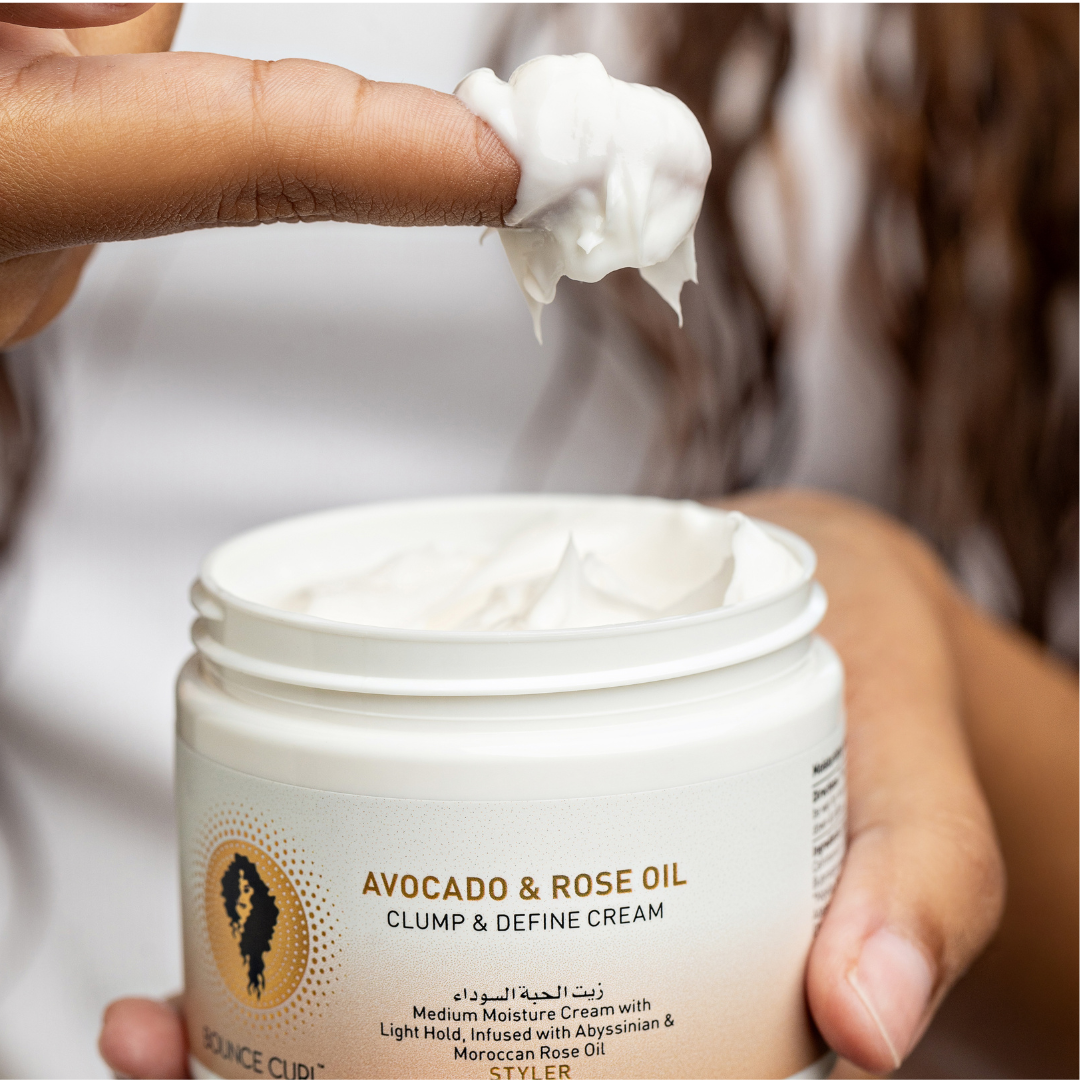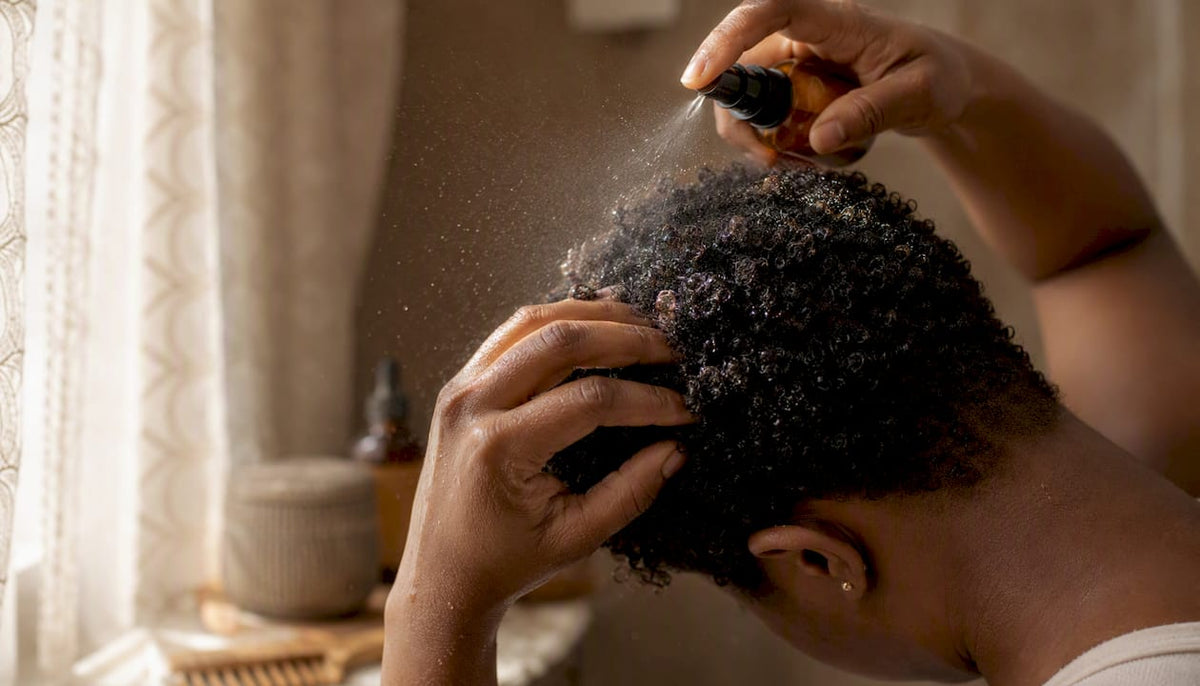
A TWA, short for “teeny-weeny afro,” is a cropped natural hairstyle generally described as very short in length. It’s the go-to cut for people with type 3 and type 4 textured hair who want to simplify their routine, start fresh after a big chop, or finally get to know their natural curl pattern without the weight of longer hair.
Here’s what to expect at a glance:
- Care level: Low-to-moderate. Short hair still needs moisture, detangling, and regular trims.
- Styling options: Wash-and-go, finger coils, sponge curls, tapered fades, and accessory styling.
- Growth timeline: Most people see noticeable length gain over several months, though shrinkage can make progress feel slower than it is.
Table of Contents
- What does TWA stand for, and where did the term come from?
- Who actually looks great in a TWA?
- Daily care and maintenance for a TWA
- Easy styling ideas you can try today
- Common TWA concerns and how to handle them
- Key Takeaways
- Cocomera’s take on the TWA
- Products that support your TWA routine
- Sources and further reading
What does TWA stand for, and where did the term come from?
TWA stands for “teeny-weeny afro,” a phrase that became widely used during the natural hair movement of the early 2000s as more Black women began cutting off chemically relaxed ends to embrace their natural texture. The teeny-weeny afro became a symbol of that transition, a fresh start that was equal parts practical and political.
Stylists generally use these length markers to define the cut:
| Length | What it looks like |
|---|---|
| 1/4 inch | Buzz-cut close; very little definition visible |
| 1/2 inch | Coils beginning to form; texture becomes apparent |
| 1 inch | Clear curl pattern; wash-and-go works well |
| 2 inches | Upper limit of a TWA; twists and coils are fully defined |
“Once hair can be grabbed, twisted, or braided from the root, most stylists consider it to have moved past TWA territory into longer afro styles.” CurlyNikki
One thing worth knowing: shrinkage can make hair that is technically longer than 2 inches look like a TWA. Stretched length is always a more reliable measurement than what you see in the mirror after a wash.
Who actually looks great in a TWA?
The short answer: most people with type 3 or type 4 coily or tightly curled hair. The cut works with the hair’s natural tendency to spring upward and form compact coils, rather than fighting it.
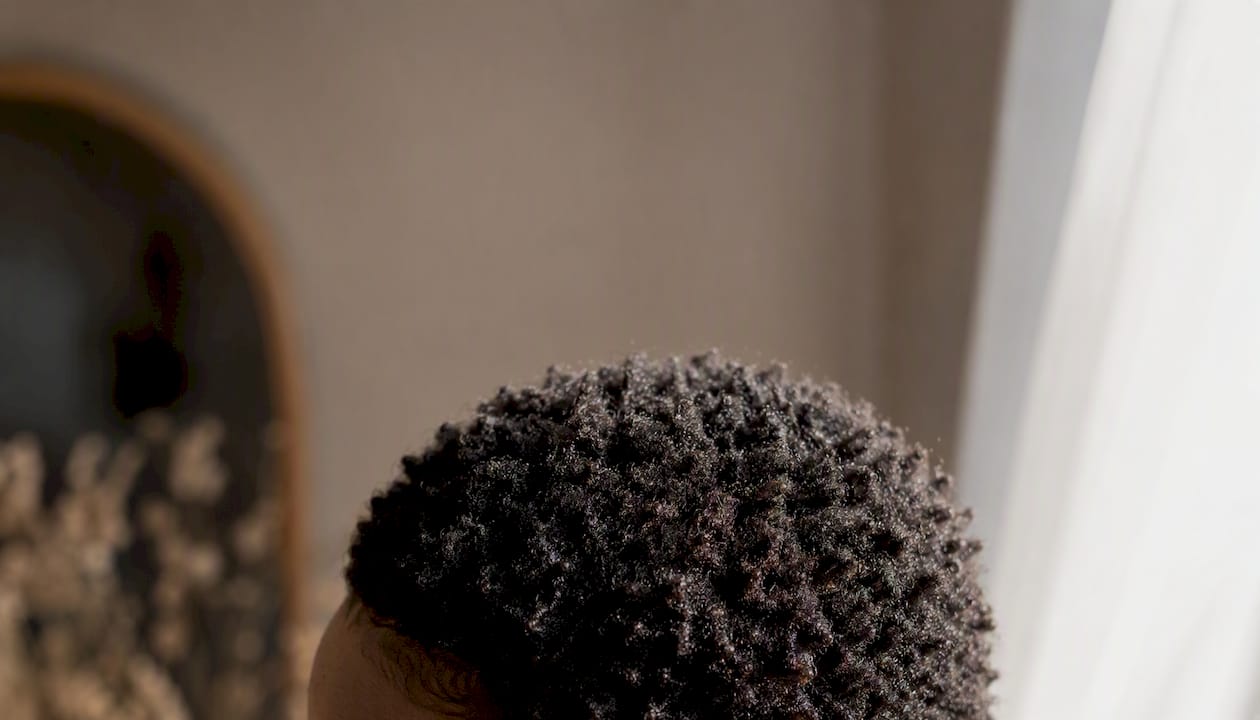
People most commonly choose a TWA for three reasons. First, transitioners who are doing a big chop after years of chemical relaxers get to see their true curl pattern for the first time. Second, those who want a genuinely fast morning routine. Third, people who are dealing with heat or color damage and need to cut back to healthy hair.
Face shape matters less than most people think. A tapered TWA with a fade at the sides elongates a round face. A fuller, even crop suits a longer or more angular face. Your stylist can adjust the shape at the edges to flatter almost any face.
Avlon Educator Pashcan’el Mitchell describes the TWA as “a powerful transition tool that allows individuals to embrace their natural curls after years of chemical treatments, helping them learn their hair’s true texture.” Modern Barber
Pro Tip: Texture discovery takes time. Your curl pattern in the first few months after a big chop may look different from what you’ll see at six months, once your scalp and strands have had time to recover from chemical stress.
Daily care and maintenance for a TWA
Short hair is not the same as no-effort hair. As barber Roy Long points out, detangling and split-end care remain real considerations even at TWA length. The good news is that a consistent routine takes under ten minutes once you know what you’re doing.
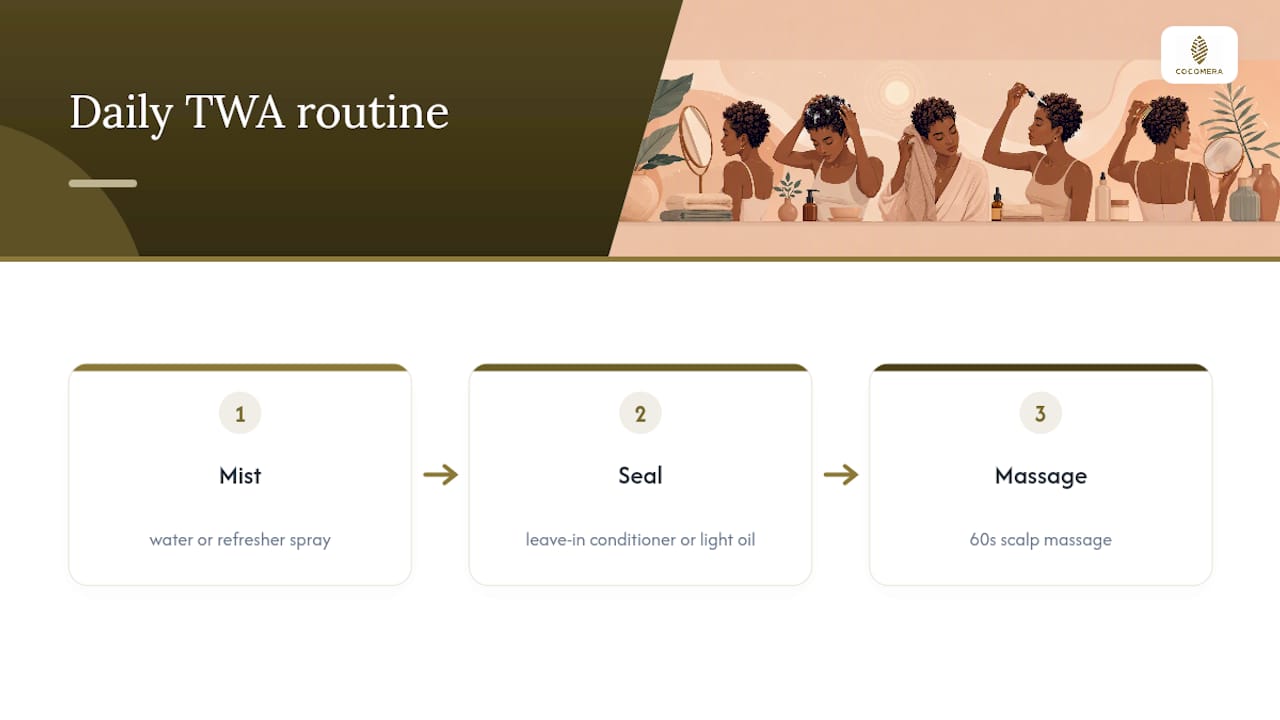
Daily: Lightly mist hair with water or a water-based refresher spray, then seal with a small amount of leave-in conditioner or a light oil. Scalp massage for 60 seconds stimulates circulation and keeps the scalp from drying out.
Weekly: Co-wash (conditioner-only wash) is ideal for most TWAs because it cleans without stripping moisture. Follow with a leave-in and a curl cream for definition. Check out Cocomera’s natural hair care guide for a fuller breakdown of wash-day principles.
Monthly: Use a clarifying shampoo once a month to remove product buildup, then follow with a deep conditioning treatment or hair mask. This is also when to assess split ends and book a trim if needed.
“Both very short and mid-length natural hair require real effort — detangling and split-end care remain important.” Barber Roy Long, via CurlyNikki
Pro Tip: Sleep on a satin or silk pillowcase, or wrap your hair in a satin bonnet. Cotton pillowcases pull moisture from short coils overnight, which leads to dryness and breakage faster than almost anything else.
Easy styling ideas you can try today
A TWA is more versatile than it looks. Here are three techniques worth trying, plus a few quick-change ideas.
Wash-and-go
- Wash or co-wash hair and leave it damp, not dripping.
- Apply a leave-in conditioner section by section, smoothing it through with your fingers.
- Follow with a curl cream or styling product, scrunching upward to encourage coil formation.
- Air dry or diffuse on low heat. Do not touch until fully dry.
Finger coils
- On damp, product-loaded hair, take a small section and wrap it around one finger from root to tip.
- Slide your finger out slowly and let the coil set.
- Repeat across the whole head. Air dry completely before separating.
Sponge curls
- On dry or slightly damp hair, press a curl sponge against your hair and move it in small circular motions.
- Work section by section. The holes in the sponge grab the hair and form uniform coils in seconds.
- Finish with a light oil to reduce frizz.
For quick variety, try a printed headwrap on days when your hair needs a break, or ask your stylist about a subtle color accent at the crown. As galleries of modern TWA looks show, a single-process color or a tapered fade can completely change the feel of the same basic cut.
Pro Tip: Less product is almost always better on short hair. A pea-sized amount of curl cream is usually enough for a full TWA. Too much product weighs down short coils and creates buildup fast.
Common TWA concerns and how to handle them
Shrinkage looks dramatic. Hair that stretches to two inches can shrink to half an inch when wet. This is normal. Stretched measurements are what matter when you’re tracking growth or communicating with a stylist. For more on how curl patterns affect shrinkage, Cocomera’s curl-type guide breaks it down by texture.
Split ends on short hair. Yes, they happen. Trim regularly to stay ahead of them. If your ends feel rough or look frayed between trims, a deep conditioning treatment or hair mask can buy you time, but it won’t replace the scissors.
Uneven growth. Some sections grow faster than others. This is normal and usually evens out. A shape-up from your stylist can make uneven growth look intentional while you wait.
When is a TWA no longer a TWA? Once your hair is long enough to be grabbed, twisted, or braided from the root, you’ve moved past TWA territory. That’s usually around the 2-inch mark, though shrinkage can make it feel like you’re still in TWA range long after you’ve crossed it.
If you’re in the transition phase and considering protective styles while your hair grows, braiding for transitioning hair is worth reading before your next salon visit.
Key Takeaways
A TWA (teeny-weeny afro) is a very short cropped natural style that suits type 3–4 textured hair and requires consistent moisture, regular clarifying, and scheduled trims to stay healthy.
| Point | Details |
|---|---|
| TWA length range | Typically 1/4 inch to 2 inches; beyond that, it’s medium-length afro territory. |
| Best candidates | Type 3–4 textured hair, transitioners doing a big chop, and anyone wanting a faster wash-day. |
| Core care priorities | Co-wash weekly, clarify monthly, and seal with a leave-in and light oil daily. |
| Trim schedule | Regular trims keep split ends managed and the shape looking intentional. |
| Cocomera’s role | Cocomera curates hair oils, treatments, and styling products suited to short textured hair routines. |
Cocomera’s take on the TWA
The TWA sits at the center of what Cocomera is built around: helping people with textured hair figure out what actually works for their specific curl type, without wading through products designed for straight hair. Short coily hair has real needs — moisture retention, gentle cleansing, scalp health — and the right product categories make a noticeable difference from the first wash day.
What often gets overlooked is how much the TWA phase teaches you. When hair is short and unmanipulated, you see your true curl pattern clearly, sometimes for the first time. That’s the moment to pay attention and build a routine around what you actually have, not what you expect. Cocomera’s curated selection is organized by hair type precisely for that reason: so you can match products to your texture rather than guessing.
Products that support your TWA routine
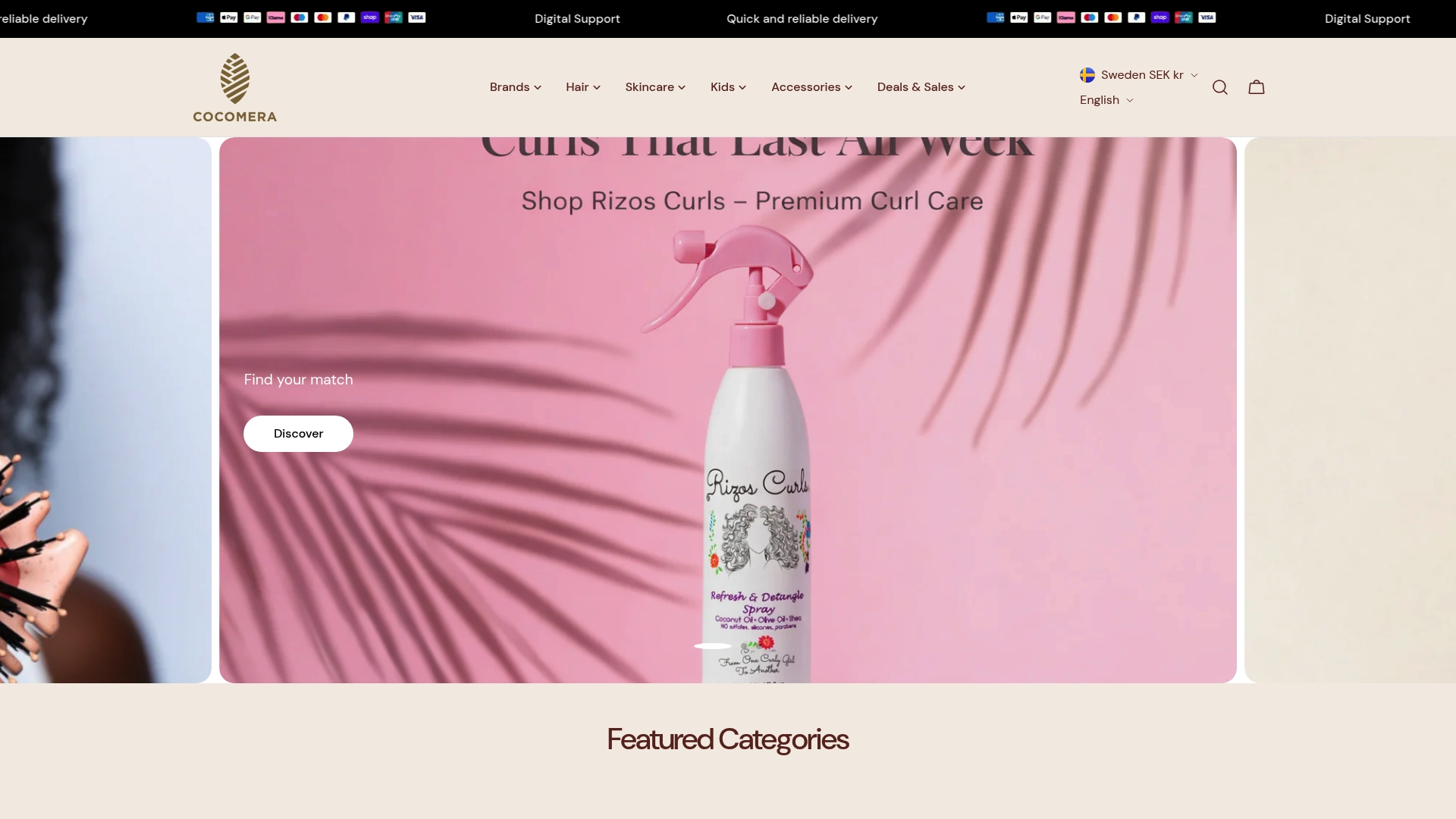
Short textured hair needs a focused product lineup, not a crowded shelf. A few well-chosen products cover everything a TWA requires.
- Hair oil: A lightweight oil applied daily seals in moisture and keeps the scalp hydrated without weighing down short coils.
- Styling products: A curl cream or styling gel gives definition on wash-and-go days and holds finger coils without crunch.
- Hair treatments: Monthly deep conditioning keeps short strands strong and reduces split-end frequency.
- Strengthening shampoo: A gentle co-wash or low-sulfate shampoo cleans without stripping the moisture short hair depends on.
Browse Cocomera’s full collection to find products matched to your curl type and build a TWA routine that works from day one.
Sources and further reading
The claims in this article draw from the following sources. Each one is worth bookmarking if you want to go deeper on TWA history, length definitions, or styling ideas.
- Have You Heard of the Teeny Weeny Afro (TWA)?
- When is a TWA No Longer a TWA?
- Twa: The Ultimate Guide To Black Hair Acronym | ShunSalon
- 23 TWA Hairstyles That Feel Chic and Modern - Blush Fizz