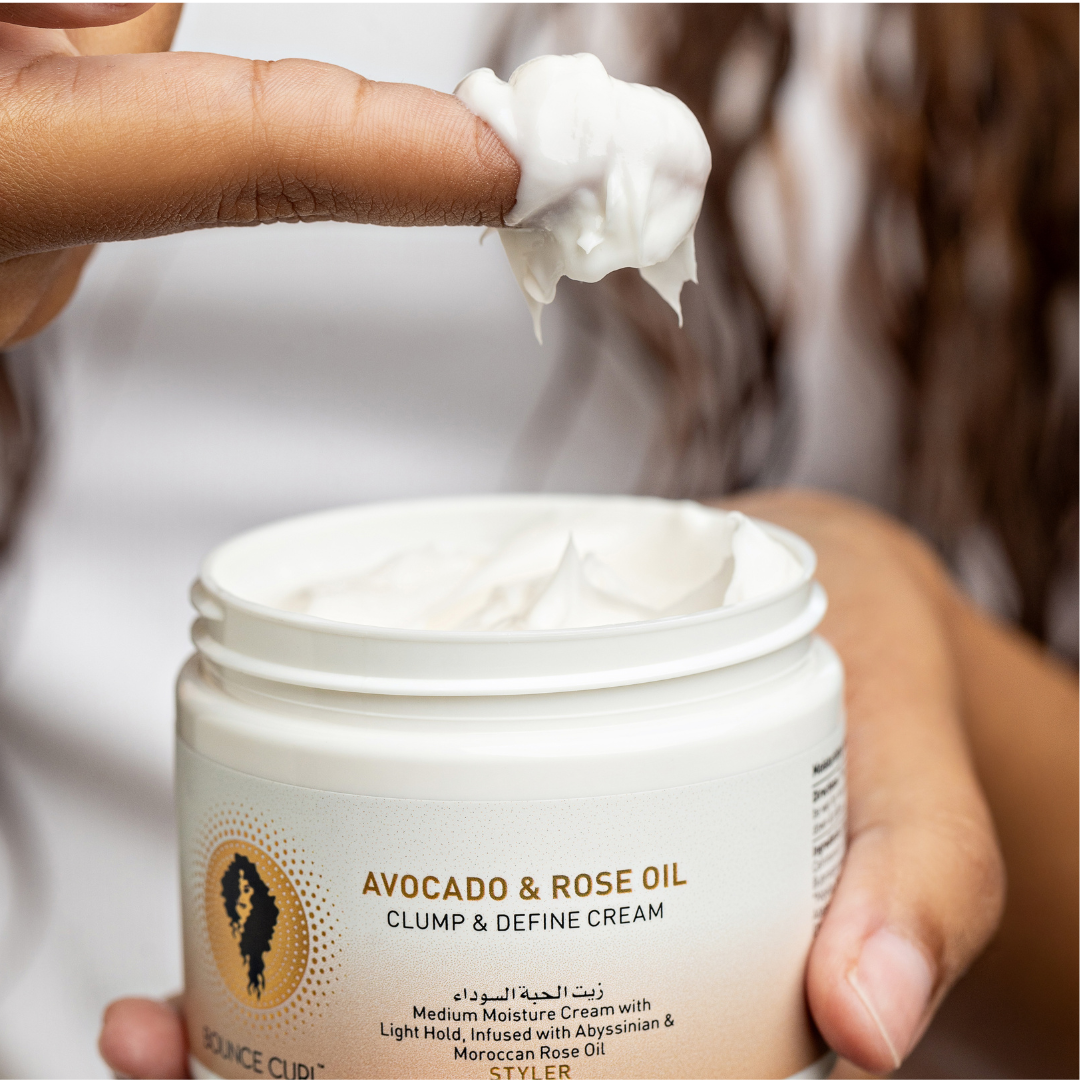
Many women discover their hair doesn’t behave the same way all over. You might have tight coils at your crown, loose waves near your temples, and something in between everywhere else. This isn’t unusual or wrong. It’s multi-textured hair, a natural variation where two or more distinct curl patterns exist on one head. Standard hair care advice rarely accounts for this complexity, leaving you confused about which products to use or routines to follow. This guide explains what multi-textured hair is, why it requires customized care, and how to build effective routines with the right products for your unique texture blend.
Table of Contents
- Key takeaways
- Understanding multi-textured hair: types, porosity, and challenges
- Tailoring hair care routines for multi-textured hair
- Product recommendations and styling tips for multi-textured hair
- Explore tailored hair care solutions at Cocomera
- Frequently asked questions about multi-textured hair
Key Takeaways
| Point | Details |
|---|---|
| Definition of multi textured hair | Multi textured hair refers to two or more distinct curl patterns on one head that respond differently to moisture and products. |
| Care by texture zones | Routines should divide hair into texture zones and apply different products to each area. |
| LOC LCO method | Use the LOC LCO order to tailor moisture delivery for each texture. |
| Texture specific products | Choose products formulated for different textures and porosity levels so no section is over damp or under nourished. |
Understanding multi-textured hair: types, porosity, and challenges
Multi-textured hair means your head features multiple distinct textures like wavy Type 2, curly Type 3, and coily Type 4 patterns simultaneously. This isn’t a flaw. It’s a natural characteristic that affects how your hair responds to products, moisture, and styling. Your crown might have tight 4C coils while your nape shows 3B curls and your edges display 2C waves. Each texture has different needs for hydration, protein, and handling.
Type 2 hair forms loose S-shaped waves with minimal volume. Type 3 creates defined spiral curls ranging from loose ringlets to tight corkscrews. Type 4 produces tightly coiled or zigzag patterns with significant shrinkage. When these textures coexist, you face unique challenges because what works for your waves might weigh down or dry out your coils.
Porosity adds another layer of complexity. Porosity variations affect moisture absorption, with high-porosity ends needing sealing products and low-porosity roots requiring lightweight formulas. Your coily sections often have higher porosity from manipulation and age, while newer growth at your scalp typically shows lower porosity. This mismatch creates uneven hydration where some areas stay dry while others get oversaturated.
Common challenges include breakage at texture transition points, difficulty achieving uniform curl definition, and frustration when products that work for one section fail elsewhere. You might experience faster drying in coily areas, excessive oiliness in wavy zones, or tangling where textures meet. Understanding these variations is the first step toward effective care.
Porosity types and care needs:
- Low porosity requires heat during deep conditioning, lightweight oils like argan or grapeseed, and humectant-rich products to encourage moisture absorption
- Medium porosity maintains moisture balance easily, benefits from regular protein treatments, and works well with most product types
- High porosity needs heavy sealants like shea butter, protein-moisture balance, and anti-humectants in humid weather to prevent frizz
- Mixed porosity demands zone-specific application, with different products for roots versus ends and careful attention to each section’s response
| Texture Type | Porosity Range | Primary Care Needs | Common Issues |
|---|---|---|---|
| Type 2 (Wavy) | Low to Medium | Lightweight moisture, volumizing products, minimal protein | Weighing down, lack of definition, greasiness |
| Type 3 (Curly) | Medium | Balanced hydration, regular protein, curl enhancers | Frizz, inconsistent curl pattern, mid-shaft dryness |
| Type 4 (Coily) | Medium to High | Deep moisture, protein balance, sealants | Shrinkage, breakage, severe dryness, tangling |
| Mixed Textures | Variable | Sectioned care, customized products per zone | Uneven moisture, styling difficulty, texture clash |
Your curly hair routine must account for these differences. Treating all your hair the same way guarantees some sections will suffer. Recognizing your specific texture combination and porosity profile lets you build a targeted approach that addresses each area’s unique requirements.
Tailoring hair care routines for multi-textured hair
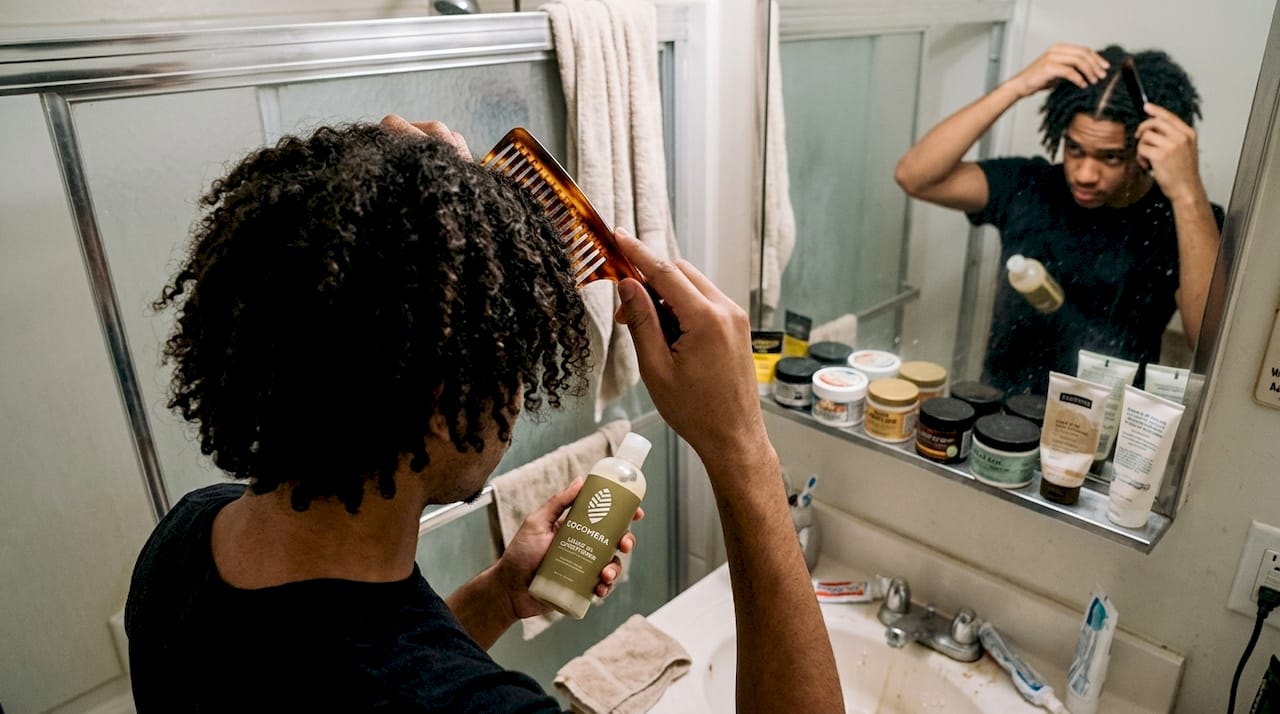
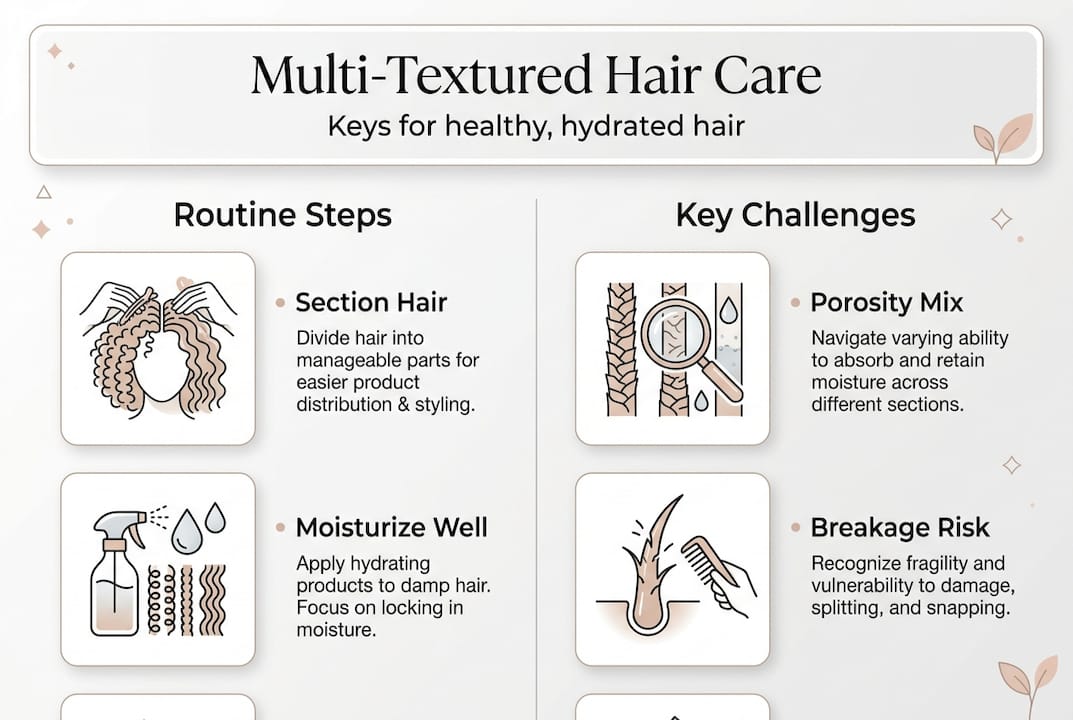
Creating an effective routine requires strategic sectioning and customized product application. Care routines emphasize sectioning hair by texture using LOC/LCO methods, washing once weekly with sulfate-free shampoos, and deep conditioning weekly to reduce breakage. This systematic approach prevents the common mistake of applying heavy products to fine sections or lightweight formulas to coarse areas.
Step-by-step multi-textured hair care routine:
- Divide your hair into sections based on texture zones, typically separating crown, sides, back, and nape areas that show distinct curl patterns
- Assess each section’s porosity by conducting a water test, observing how quickly strands absorb and release moisture
- Cleanse weekly with sulfate-free shampoo, applying more product to oilier wavy sections and less to drier coily areas
- Apply deep conditioner with heat for 20-30 minutes, using protein treatments monthly and moisture treatments weekly based on section needs
- Use the LOC method (liquid, oil, cream) on low-porosity sections and LCO method (liquid, cream, oil) on high-porosity areas to lock in moisture
- Style each section according to its texture, using lighter products on waves and richer formulas on coils
- Seal ends with oil or butter to prevent moisture loss, focusing extra attention on high-porosity coily sections
- Refresh between washes with water-based sprays on dry sections and dry shampoo on oily areas as needed
The LOC and LCO methods represent different moisture-sealing approaches. LOC works best for low-porosity hair because the oil layer helps products penetrate the resistant cuticle. LCO suits high-porosity hair better because cream applied before oil provides moisture that oil then seals inside the porous shaft. You might use LOC on your wavy sections and LCO on your coily areas during the same styling session.
Washing frequency matters significantly. Overwashing strips natural oils your hair needs, while underwashing allows buildup that blocks moisture. Once weekly works for most multi-textured hair, but adjust based on your scalp’s oil production and product use. Your detangling shampoo and conditioner bundle should be sulfate-free to preserve moisture and gentle enough for weekly use without causing dryness.
Protein-moisture balance prevents the 60% of breakage due to moisture-protein imbalance. Too much protein makes hair stiff and brittle. Too much moisture without protein causes limp, mushy strands that stretch and snap. Alternate protein treatments monthly with moisture-focused deep conditioning weekly. Watch for signs: if your hair feels gummy or stretches excessively, add protein; if it feels rough or breaks with minimal tension, add moisture.
Pro Tip: Test porosity every three months because chemical treatments, heat styling, and environmental factors change how your hair absorbs moisture. Adjust your product choices and application methods based on current porosity rather than assuming your hair stays the same.
Common mistakes to avoid:
- Applying heavy butters and creams to fine wavy sections, causing greasiness and weighing down natural texture
- Using lightweight serums on coarse coily areas, leaving them under-moisturized and prone to breakage
- Treating all sections identically without considering texture and porosity differences
- Skipping deep conditioning or doing it inconsistently, leading to cumulative dryness and damage
- Over-manipulating hair during styling, especially at texture transition points where breakage occurs most easily
- Neglecting to trim regularly, allowing split ends to travel up the shaft and worsen texture irregularities
Your ultimate curly hair care routines provide additional guidance for specific texture types. Reference these resources when fine-tuning your approach for each section. Consistency matters more than perfection. A simple routine you follow regularly beats an elaborate system you abandon after two weeks.
Product recommendations and styling tips for multi-textured hair
Choosing products that address multiple textures simultaneously saves time and reduces confusion. Recommended products like Moisture Balance Cream and Bounce Curl Hydra-Lite reduce detangling time and cater to mixed curls, waves, and coils. These formulas provide enough moisture for coily sections without weighing down wavy areas.
| Product Type | Best For | Key Benefits | Application Zone |
|---|---|---|---|
| Lightweight leave-in conditioner | Types 2-3, low porosity | Hydration without weight, detangling, heat protection | Wavy and loose curl sections, roots |
| Rich curl cream | Types 3-4, medium-high porosity | Deep moisture, curl definition, frizz control | Curly and coily sections, mid-shaft to ends |
| Curl defining gel | All textures, styling | Hold, definition, shine without crunch | Applied over cream on all sections for styling |
| Deep conditioning masque | All textures, weekly treatment | Intensive moisture, repair, strengthening | Full head application with extended time on coily areas |
| Light oil (argan, jojoba) | Types 2-3, sealing | Shine, light sealing, smoothing | Wavy sections, used sparingly |
| Heavy butter (shea, mango) | Type 4, high porosity | Maximum moisture retention, sealing, protection | Coily sections, ends, high-porosity areas |
Your curl defining cream bundle combines cream and gel for a complete styling system. Apply cream first to moisturize and define, then layer gel for hold. This two-step approach works across texture types because you control the amount used in each section. Use more cream on coils, less on waves. Add gel uniformly for consistent hold.
Styling techniques that blend textures create cohesive looks while protecting hair health. Twist-outs work beautifully on multi-textured hair because they create uniform texture across different curl patterns. Section hair, apply products appropriate for each area, then twist each section. When you unravel the twists, all sections show similar texture regardless of their natural pattern. Braid-outs achieve similar results with a wavier finish.
Protective styles like mini twists help length retention in highly coily textures. These styles tuck ends away, reducing manipulation and breakage at vulnerable points. Install protective styles on freshly deep-conditioned hair and maintain moisture throughout the style’s duration with light oil application and satin protection at night.
Diffuse drying preserves curl definition across textures. Use low heat and high airflow, cupping each section in the diffuser bowl without disturbing the curl pattern. Start with coily sections that take longest to dry, then move to wavy areas. This prevents over-drying delicate sections while ensuring coily areas dry completely.
Styling do’s and don’ts:
- Do apply products to soaking wet hair for better distribution and curl formation across all texture types
- Do use a microfiber towel or t-shirt to remove excess water without creating frizz
- Do scrunch products upward into curls rather than raking through, which disrupts natural curl patterns
- Do allow hair to air dry partially before diffusing to reduce heat exposure
- Don’t brush or comb dry hair, which causes breakage and destroys curl definition
- Don’t use high heat settings that damage coily sections while trying to dry wavy areas faster
- Don’t skip leave-in conditioner, which provides essential moisture and detangling for all textures
- Don’t apply the same product amount to every section without considering texture density and porosity needs
Pro Tip: Apply styling products in reverse order of porosity. Start with your highest-porosity coily sections when products are most concentrated, then move to medium-porosity curls, finishing with low-porosity waves. This ensures each area gets appropriate product concentration without waste.
Your deep moisturizing masque should be used weekly as a treatment, not a daily conditioner. Apply generously to coily sections, moderately to curly areas, and lightly to wavy zones. Cover with a processing cap and apply heat for 20 minutes to maximize penetration. This intensive treatment addresses the deep moisture needs of coily hair without overwhelming wavy sections.
Patience is essential when styling multi-textured hair. Rushing through application causes uneven product distribution and poor results. Set aside adequate time to section properly, apply products thoughtfully, and allow hair to dry completely. The investment pays off in healthier hair and better-looking styles that last longer between washes.
Explore tailored hair care solutions at Cocomera
Now that you understand your multi-textured hair’s unique needs, finding the right products becomes straightforward. Cocomera curates specialized formulas designed specifically for wavy, curly, coily, and afro textures. Our selection addresses the challenges you face with mixed curl patterns and varying porosity levels.
The Mielle Pomegranate & Honey shampoo and conditioner bundle provides sulfate-free cleansing and deep moisture that works across texture types. This foundation set detangles effectively while maintaining your hair’s natural oils. Pair it with the Bounce Curl defining cream bundle for complete styling control that enhances definition without crunch. For weekly deep conditioning, the Shea Moisture deep moisturizing masque delivers intensive hydration that transforms dry, brittle sections into soft, manageable hair. These products support the sectioning and customized care routines outlined earlier, making it easier to maintain healthy multi-textured hair.
Frequently asked questions about multi-textured hair
Can I use the same product on all my hair textures?
You can use the same product across textures, but adjust the amount based on each section’s needs. Apply more to coily, high-porosity areas and less to wavy, low-porosity sections. Some products work universally while others are texture-specific, so test and observe how each area responds.
How often should I wash multi-textured hair?
Wash once weekly for most multi-textured hair to balance cleansing with moisture retention. Your scalp’s oil production and product buildup determine exact frequency. If your wavy sections get oily faster, use dry shampoo between washes rather than washing your entire head more frequently.
What’s the best way to detangle hair with different textures?
Detangle in the shower with conditioner and a wide-tooth comb, working section by section from ends to roots. Start with your most tangle-prone coily sections when you have the most patience and energy. Use more conditioner on areas that tangle easily and less on sections that detangle quickly.
Are protein treatments safe for mixed porosity hair?
Protein treatments are safe when applied appropriately by section. High-porosity coily areas benefit from monthly protein, while low-porosity wavy sections need it less frequently. Watch for signs of protein overload like stiffness or brittleness, and adjust treatment frequency accordingly for each zone.
How can I protect my hair overnight to preserve styles?
Use a satin bonnet or pillowcase to reduce friction that causes frizz and breakage. For twist-outs or braid-outs, retwist or rebraid sections before bed. Apply a light oil to coily sections and leave wavy areas dry to prevent greasiness. This preserves definition and extends your style’s lifespan.
Do I need different brushes for different texture sections?
You don’t need multiple brushes, but you do need the right tools. A wide-tooth comb works for detangling all textures when hair is wet and conditioned. A denman brush helps define curls in Type 3 sections. Avoid brushing Type 4 coily hair when dry, as this causes breakage and destroys the curl pattern.
Recommended
- The Ultimate Curly Hair Routine – Cocomera
- Innersense Hydrating Cream Hairbath 295ml – Cocomera
- Mielle Babassu Conditioning Shampoo 240ml – Cocomera
- Innersense Hydrating Hair Mask 177ml – Cocomera
- 7 Proven Hair Wellness Habits for Luxurious, Healthy Hair – LUXEVA
- Types of human hair textures: 7 key options and 30% less tangling – Gaurash Beauty Supply