TL;DR:
- Frizz occurs when curly hair’s cuticle lifts, allowing humidity to swell and separate the strands. Using the right products, applying them on soaking-wet hair, and protecting curls overnight help maintain smooth, defined curls. Long-term control depends on consistent routine habits and understanding your hair’s porosity and moisture needs.
Frizz is defined as the result of raised or damaged hair cuticles that absorb excess moisture from the air instead of staying sealed and smooth. Knowing how to stop curly hair frizz starts with understanding that your cuticle is the gatekeeper of hydration. When it stays flat, moisture stays in. When it lifts, humidity rushes in and your curls swell, separate, and puff. The good news is that frizz is not a personality trait of your hair. It is a signal. With the right hydration, product application, and protective habits, you can train your curls to stay defined and smooth.
Why does curly hair frizz and what causes it?
Frizz in curly hair comes down to one core problem: the cuticle is open when it should be closed. Curly hair is naturally drier than straight hair because the coiled shape makes it harder for scalp oils to travel down each strand. That dryness leaves the cuticle vulnerable to lifting, especially when humidity, heat, or rough handling enter the picture.
Heat is one of the fastest ways to cause lasting damage. Drying curly hair above 140°C causes irreversible cuticle damage that drives permanent frizz. That means a standard blow dryer on high heat can change your curl pattern for good, not just for the day.
Porosity also plays a major role. High porosity hair has gaps in the cuticle that absorb moisture quickly but lose it just as fast. Low porosity hair resists moisture absorption, which means products sit on top instead of penetrating the strand. Both types frizz, but for opposite reasons.
Common mistakes that make frizz worse include:
-
Overwashing with sulfate-heavy shampoos that strip natural oils
-
Rubbing hair dry with a regular terry cloth towel, which roughs up the cuticle
-
Applying products on damp or dry hair instead of soaking wet hair
-
Skipping conditioner or rinsing it out completely before it can work
-
Touching curls while they dry, which breaks the clump structure
Pro Tip: Check your hair porosity by dropping a clean strand into a glass of water. If it sinks fast, you have high porosity hair and need heavier sealants. If it floats, you have low porosity hair and need lighter, heat-activated products.
What tools and products do you need to stop frizz?
The right products do not just add moisture. They seal the cuticle, define the curl, and protect against humidity. Choosing the wrong product for your porosity type is one of the most common reasons people still frizz even after following a routine.
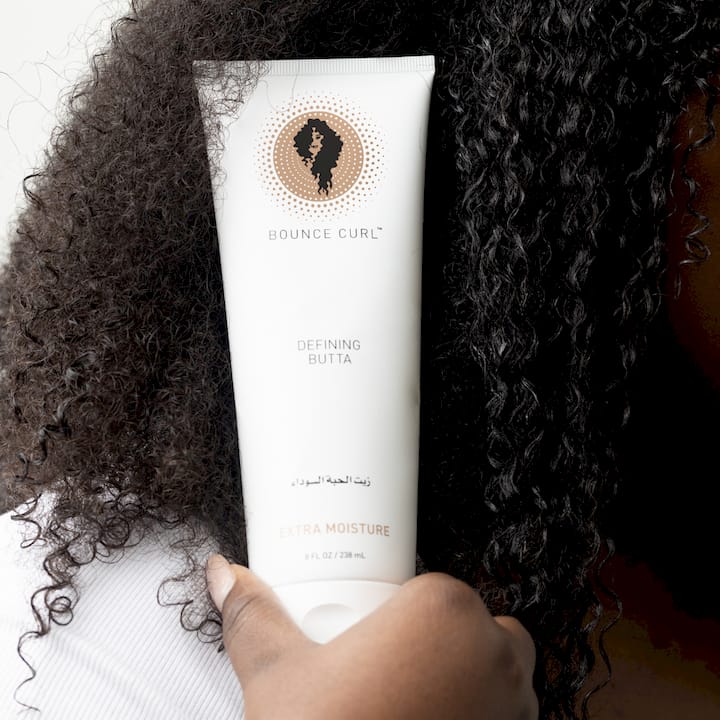
Sulfate-free shampoos and nourishing conditioners smooth the hair cuticle and fight frizz at the source. Sulfates are detergents that clean effectively but strip the natural oils curly hair depends on. A moisturizing shampoo cleans without that trade-off. You can browse moisturizing shampoo options formulated for curly and textured hair at Cocomera.
Here is how each product type functions in a frizz-control routine:
| Product type | Role in frizz control |
|---|---|
| Sulfate-free shampoo | Cleanses without stripping natural oils |
| Conditioner with slip | Smooths cuticle and detangles wet hair |
| Leave-in conditioner | Maintains moisture between wash days |
| Curl cream | Defines curl clumps and adds soft hold |
| Styling gel | Creates a cast that locks curls in shape |
| Hair oil or serum | Seals the cuticle after styling to block humidity |
| Microfiber towel or cotton T-shirt | Reduces friction during drying |
| Diffuser attachment | Distributes heat evenly without disrupting curl shape |
Oils and serums deserve a specific note. They are sealants, not moisturizers. Applying oil to dry hair without moisture underneath traps nothing and adds weight. Apply oil as the last step in your routine, after your leave-in and styling products, to lock in what you have already put in. Sealing with a lightweight serum after styling protects curls from humidity-related swelling throughout the day.
A diffuser is non-negotiable for anyone serious about frizz control. Learn more about why curls need diffusers and how to choose one that gives you temperature and airflow control.
How to apply products and style curly hair to minimize frizz
Technique matters as much as product choice. You can have the best leave-in conditioner on the market and still end up with frizz if you apply it wrong. The single most important rule: apply all styling products on soaking-wet hair. Hair that has started to air-dry traps air pockets inside the strand, and those pockets become frizz.
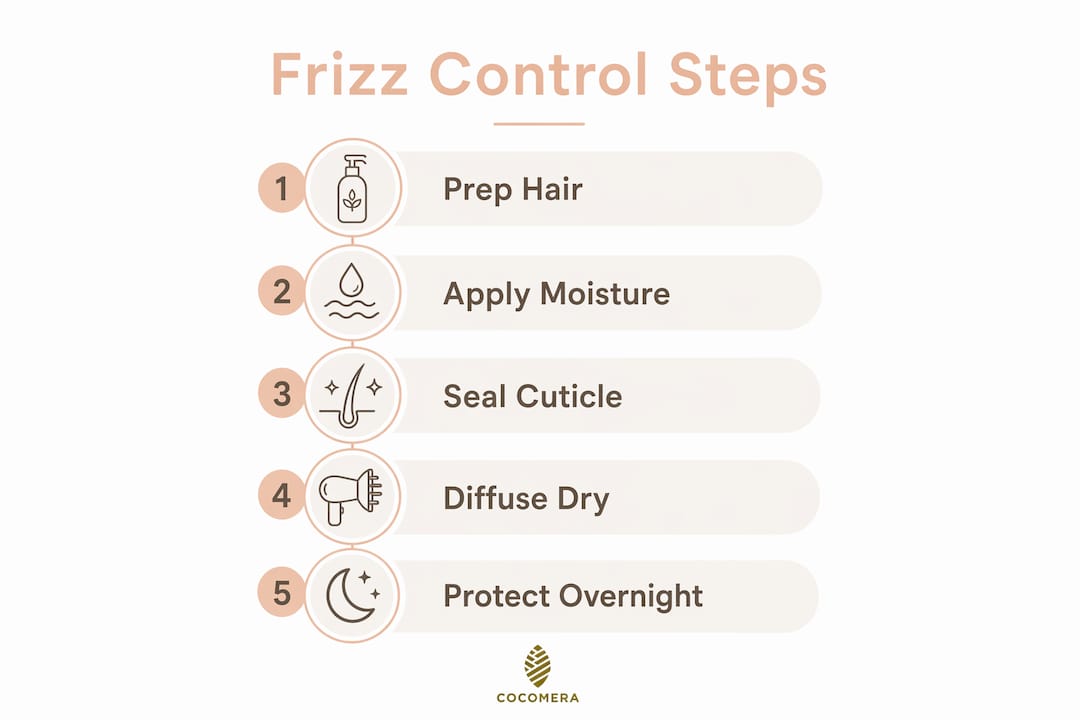
Follow this step-by-step routine on wash day:
-
Rinse conditioner partially. Leave some conditioner in your hair before stepping out of the shower. This adds slip and keeps the cuticle smooth.
-
Blot, do not rub. Use a microfiber towel or a cotton T-shirt to gently press water out. Blotting rather than rubbing preserves curl integrity and prevents the cuticle from roughing up.
-
Apply leave-in conditioner first. Work it through section by section while hair is still dripping.
-
Rake your curl cream root to tip. The raking method involves running your fingers through each section from root to tip, repeating 3–4 times per section. Raking product root to tip creates an even coating that prevents strands from drying unevenly, which is a major driver of frizz.
-
Apply gel over the cream. Press it in with the praying hands technique: flatten your palms around a section and smooth downward. Then scrunch upward gently to encourage curl formation.
-
Seal with a light oil or serum. This is your final layer and your humidity shield.
-
Diffuse on low heat and low speed. Hold each section in the diffuser cup for 10–15 seconds without scrunching or moving the hair. Diffusing on low settings prevents the heat damage that causes permanent frizz.
-
Leave curls completely alone while drying. Over-touching curls while drying breaks the gel cast and disrupts clump formation, increasing frizz throughout the day.
-
Scrunch out the crunch once fully dry. Once the gel cast has hardened and your hair is 100% dry, scrunch gently with your palms to soften the cast and reveal defined, touchable curls.
Pro Tip: If you notice frizz forming while you apply products, your hair has already started to dry. Mist it with water from a spray bottle and start the application step again.
What routine habits support long-term frizz control?
Wash day technique gets the most attention, but what you do between wash days determines whether your curls stay defined or fall apart by day two. Long-term frizz control is a maintenance game.
Adjust wash frequency to your hair, not a schedule. Tying your wash day to a fixed schedule rather than your actual hair condition leads to unbalanced hydration. Some weeks your scalp needs cleansing after four days. Other weeks, six days is fine. Observe your hair and respond to what it tells you. Read more about why hair routines matter and how to build one that adapts to your hair’s real needs.
Nighttime care is where most people lose their curl definition. Sleeping on a cotton pillowcase creates friction that roughens the cuticle and pulls moisture out of your strands. These habits protect your curls overnight:
-
Pineapple your hair by gathering it loosely at the top of your head with a satin scrunchie before bed. This keeps curl clumps intact without flattening them.
-
Use a silk or satin bonnet or pillowcase. Silk and satin reduce friction overnight, preserving curl definition and cutting morning frizz significantly.
-
Refresh curls in the morning by misting with water and applying a small amount of leave-in conditioner or curl cream to reactivate the product already in your hair.
Scalp health directly affects frizz. Clarifying the scalp 1–2 times per week removes mineral buildup that blocks moisture absorption. Buildup from hard water, dry shampoo, or heavy products creates a barrier that prevents your hydrating products from actually reaching the hair shaft. A chelating or clarifying shampoo used periodically resets that absorption capacity. Pair it with a scalp oil or treatment to maintain balance. Healthy scalp care is covered in depth at Shella Bella Beauty.
Heat damage is the one frizz cause that products cannot fix. Repeated high heat changes the protein bonds in the hair cortex, causing zigzag curl distortions and stiffness that go beyond surface damage. Protein treatments can offer temporary improvement, but damaged hair must grow out for lasting results. Limit heat styling to special occasions and always use a heat protectant when you do.
Key Takeaways
Stopping curly hair frizz requires sealing the cuticle with moisture, applying products on soaking-wet hair, and protecting curls with consistent nighttime and maintenance habits.
| Point | Details |
|---|---|
| Cuticle health drives frizz | Raised cuticles absorb humidity and cause frizz; sealing them with products and low heat prevents it. |
| Apply products on wet hair | Soaking-wet application traps moisture and prevents air pockets that become frizz. |
| Raking beats scrunching alone | Raking product root to tip 3–4 times per section creates even coating and tighter curl definition. |
| Protect curls overnight | Silk or satin bonnets and the pineapple method preserve curl shape and cut morning frizz. |
| Clarify to restore absorption | Removing buildup 1–2 times per week lets hydrating products actually reach the hair shaft. |
What I have learned from years of working with textured hair
The most common mistake I see is people chasing products instead of fixing technique. Someone will try five different gels in a month and still have frizz, because they are applying every single one on hair that is already half dry. The product is not the problem. The timing is.
The second thing I have learned is that porosity awareness changes everything. Once you understand whether your hair is high or low porosity, you stop buying products randomly and start buying with purpose. High porosity hair needs heavy creams and butters to fill the gaps in the cuticle. Low porosity hair needs lightweight liquids and gentle heat to open the cuticle enough for moisture to enter. Knowing your curl type and porosity is not optional. It is the foundation.
Consistency also matters more than perfection. A simple routine done correctly every wash day will outperform an elaborate routine done inconsistently. Pick three to five products that work for your porosity, learn the raking method, protect your hair at night, and give it six to eight weeks before you judge the results. Curly hair responds slowly to change, but it does respond.
The last thing I will say: do not be afraid of gel. Many people with curly hair avoid gel because they associate it with crunchy, stiff results. But the crunch is the point. It is the gel cast protecting your curl while it dries. Scrunch it out once your hair is fully dry and you get soft, defined curls with real hold. That cast is your frizz shield.
— Cocomera
Cocomera’s curated picks for frizz-free curls
Cocomera curates products specifically for wavy, curly, coily, and afro hair types, which means every item in the collection is chosen with textured hair in mind, not adapted from a general hair care line.

The curly hair styling collection at Cocomera includes gels, curl creams, and leave-in conditioners selected to work across hair types 2, 3, and 4. If your curls need deeper repair, the hair treatments range covers masks and protein treatments that restore moisture and cuticle integrity. For sealing and shine, the hair oil collection offers lightweight options that lock in hydration without weighing curls down. Browse by product category to build a routine that fits your specific curl pattern and porosity type.
FAQ
What is the fastest way to reduce curly hair frizz?
Apply styling products on soaking-wet hair immediately after washing, then diffuse on low heat. This combination seals moisture into the cuticle before humidity can interfere.
Does the raking method actually work for frizz control?
Yes. Raking product root to tip 3–4 times per section creates an even coating that prevents uneven drying, which is a primary cause of frizz in curly hair.
How often should I wash curly hair to prevent frizz?
Wash frequency should match your scalp condition, not a fixed schedule. Overwashing strips natural oils and increases frizz; adjust based on how your hair and scalp actually feel.
Can a silk pillowcase really make a difference for frizz?
Silk and satin pillowcases reduce overnight friction that roughens the cuticle and pulls moisture from strands. Combined with the pineapple method, they preserve curl definition until morning.
Why does my hair still frizz even when I use good products?
The most likely cause is applying products on hair that has already started to dry. Once the hair begins to air-dry, air pockets form inside the strand and create frizz regardless of product quality.