TL;DR:
- Scalp oils nourish follicles and balance skin, especially vital for textured hair with limited sebum travel. Choosing lightweight, sebum-mimicking oils like jojoba or kukui nut supports scalp health without causing congestion or irritation. Proper application, dilution of essential oils, and tailored frequency are key for optimal results.
Scalp oils are defined as lipid-based treatments applied directly to the scalp to nourish follicles, balance the skin’s natural oil production, and create the conditions hair needs to grow strong. For textured hair, whether wavy, curly, coily, or afro, the role of scalp oils goes further than simple moisture. The coil pattern of type 2, 3, and 4 hair makes it harder for natural sebum to travel down the hair shaft, leaving both the scalp and strands more vulnerable to dryness, breakage, and inflammation. Recent 2026 clinical guidance from trichologists and dermatologists now treats the scalp with the same rigor as facial skin, and that shift changes everything about how you choose and apply your oils.
What is the role of scalp oils for textured hair?
The primary role of scalp oils is to supplement the scalp’s natural sebum where it falls short and to protect the follicle environment from oxidative stress, inflammation, and microbial imbalance. Textured hair types produce sebum at the same rate as straight hair, but the physical structure of the curl prevents that sebum from coating the full length of the strand. The result is a scalp that can swing between dry and congested depending on what products you use.
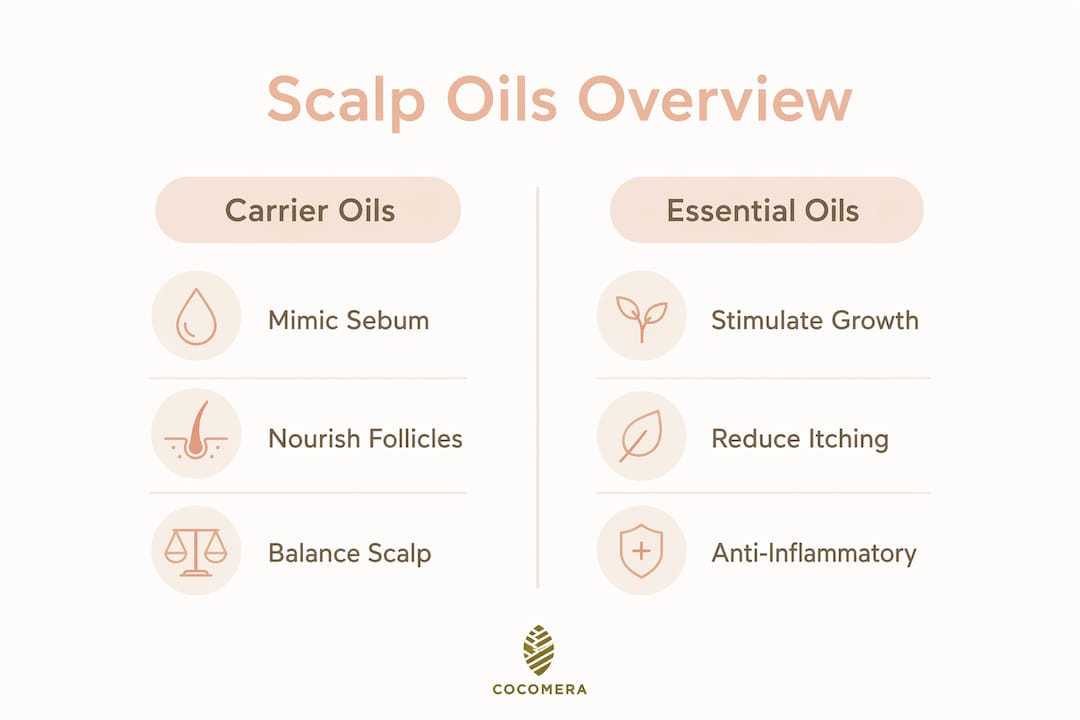
Scalp oils work through three main mechanisms. First, they form a protective barrier on the scalp’s surface that slows moisture loss. Second, certain oils like rosemary and peppermint stimulate microcirculation, which delivers more oxygen and nutrients to active follicles. Third, antifungal and anti-inflammatory oils like tea tree and jojoba help keep the scalp’s microbiome in balance.
The 2026 dermatological consensus, sometimes called “scalp skinification,” treats the scalp as living skin rather than just a base for hair products. This matters for textured hair because many traditional oiling practices use heavy butters and oils that work beautifully on the hair shaft but can cause oxidative stress on the scalp itself, shortening the hair growth phase.
Understanding what scalp health actually means, then, is the starting point. A healthy scalp has a balanced pH, a stable microbiome, good circulation, and no chronic inflammation. Scalp oils, chosen correctly, support all four of those conditions.
How do scalp oils benefit textured hair differently?
Textured hair responds to scalp oils in ways that straight hair simply does not. The tight curl pattern creates more surface area for moisture to escape and more friction between strands, which accelerates breakage at the point where the hair exits the follicle. The right scalp oil reduces that friction and reinforces the follicle opening.
Here is where the differences become specific:
-
Oil penetration varies by texture. Coconut oil’s lauric acid is highly penetrative and reduces protein loss in thicker hair types, making it genuinely useful for type 3 and 4 hair. However, hairstylist Mahogany Grace notes that coconut oil should be used cautiously on the scalp itself to prevent yeast overgrowth, a real risk for coily textures in humid climates.
-
Lightweight oils suit the scalp; heavier oils suit the ends. Jojoba oil closely mimics the scalp’s natural sebum and absorbs without residue. Castor oil, by contrast, is too viscous for direct scalp application and works better on hair ends or edges.
-
Follicle congestion is a real risk. Heavy botanical oils can cause follicular congestion because scalp microbial lipases break down their triglycerides into free fatty acids that irritate the skin. For textured hair, where product layering is common, this risk compounds quickly.
-
Sebum-driven selection matters. Oils that mimic the scalp’s own lipid profile, such as squalane or jojoba, integrate without disrupting the microbiome. Oils that do not match the scalp’s chemistry can trigger the very dryness or flaking you are trying to fix.
Pro Tip: Apply scalp oil to a damp scalp after washing, not a dry one. Water opens the hair cuticle and allows the oil to penetrate more effectively, especially for high-porosity type 4 hair.
Scalp care for textured hair is not about using more oil. It is about using the right oil in the right place at the right concentration.
What types of scalp oils exist and what do they do?
Scalp oils fall into two categories: carrier oils and essential oils. Each plays a distinct role, and the most effective treatments combine both.

| Oil | Type | Primary Benefit | Best For | Caution |
|---|---|---|---|---|
| Jojoba | Carrier | Mimics sebum, balances oil production | All scalp types, especially oily | None significant |
| Coconut | Carrier | Deep penetration, reduces protein loss | Type 3–4 hair ends | Avoid heavy scalp application |
| Kukui Nut | Carrier | Antioxidant, activates hair growth pathways | Thinning or stressed scalp | Patch test recommended |
| Rosemary | Essential | Stimulates microcirculation | Hair growth support | Must be diluted 1–2% |
| Peppermint | Essential | Increases blood flow, cooling effect | Dry, itchy scalp | Must be diluted 1–2% |
| Tea Tree | Essential | Antifungal, antimicrobial | Dandruff, seborrheic dermatitis | Must be diluted 1–2% |
Kukui nut oil stands out in the 2026 research. It activates the Nrf2/ARE-AKR1C pathway in hair follicles, enhancing antioxidant response and prostaglandin synthesis. In practical terms, this means kukui nut oil does not just moisturize. It signals the follicle to stay in its active growth phase longer. For textured hair dealing with stress-related shedding or traction damage, that is a meaningful distinction.
Essential oils like rosemary and peppermint must be diluted to 1–2% in a carrier oil before scalp application. That translates to roughly 6 drops of essential oil per ounce of carrier oil. Applying undiluted essential oils to the scalp causes chemical burns and inflammation, the opposite of what you want.
Pro Tip: Products like Mielle Rosemary Mint Scalp & Hair Strengthening Oil are pre-formulated at safe dilution ratios, which removes the guesswork for anyone new to essential oil blending.
For a deeper look at how porosity affects which oils work best for your specific curl pattern, Cocomera’s guide on oils for curly hair breaks it down by hair science and real results.
How to use scalp oil effectively for textured hair
Correct application matters as much as correct oil selection. The following steps reflect current best practices for type 2, 3, and 4 hair.
-
Start with a clean scalp. Apply scalp oil after shampooing, not on top of product buildup. Buildup blocks absorption and can trap the oil against the follicle, increasing congestion risk.
-
Section your hair. Part your hair into four to six sections. Apply oil directly to the scalp in each parting using a dropper bottle or applicator tip for precision.
-
Massage for five to ten minutes. Scalp massage increases blood flow and nutrient delivery to follicles, potentially lengthening the hair’s anagen (growth) phase. Use the pads of your fingers, not your nails, in circular motions.
-
Adjust frequency by scalp type. Dry scalps benefit from oiling two to three times per week. Oily or acne-prone scalps should limit application to once per week or less. Oiling too often can promote Malassezia yeast growth, triggering dandruff or seborrheic dermatitis.
-
Keep heavy oils off the scalp. Reserve thick oils like castor or shea for your ends and edges. The scalp needs lightweight serums or diluted oils that absorb cleanly.
-
Patch test new oils. Apply a small amount to the inner wrist or behind the ear 24 hours before full scalp use. Reactions to essential oils or new botanicals are common, especially on sensitive scalps.
-
Adjust seasonally. Cold, dry winters call for slightly more frequent application. Hot, humid summers increase the risk of yeast overgrowth, so reduce frequency and choose lighter formulas.
Pro Tip: If you are exploring single-ingredient oils for the first time, start with jojoba. It is the most universally tolerated scalp oil and gives you a clean baseline before adding more complex blends.
What are the biggest mistakes in scalp oiling?
The most common mistake is treating scalp oiling as a volume game. More oil does not mean better results. It means more risk.
-
Applying hair shaft products to the scalp. Heavy conditioners on the scalp cause buildup and follicle occlusion that can resemble or cause hair thinning. The scalp needs lightweight, skin-appropriate treatments, not the same rich creams you use on your ends.
-
Skipping the dilution step for essential oils. Undiluted rosemary or peppermint oil applied directly to the scalp causes irritation and can worsen the inflammation you are trying to reduce.
-
Ignoring the sebum-driven selection principle. Oils that do not match your scalp’s natural lipid chemistry can be broken down by scalp bacteria into irritating fatty acids. This is why a heavy oil that works for your friend’s type 3 hair may trigger flaking on your type 4 scalp.
-
Using the same oil year-round without adjustment. Scalp conditions change with seasons, hormones, and stress. An oil that worked perfectly in winter may cause buildup in summer.
-
Confusing scalp treatments with hair treatments. The scalp is skin. It responds to skincare principles: cleanse, treat, protect. The hair shaft is a fiber. It responds to moisture, protein, and sealing. Mixing up these two categories is the root of most scalp oiling problems.
Recognizing adverse reactions early prevents long-term damage. Persistent itching, increased shedding, or visible flaking after starting a new oil are signals to stop, clarify with a gentle shampoo, and reassess your oil choice. Cocomera’s anti-dandruff shampoo collection is a useful reset tool when buildup or irritation has already set in.
Key takeaways
Scalp oils work best for textured hair when they are lightweight, correctly diluted, and matched to the scalp’s natural lipid profile rather than applied in high volumes.
| Point | Details |
|---|---|
| Scalp vs. hair shaft | Use lightweight oils on the scalp and reserve heavy oils for hair ends only. |
| Oil type selection | Jojoba and kukui nut oil suit the scalp; coconut oil works better on the hair shaft for type 3–4 textures. |
| Essential oil dilution | Dilute rosemary, peppermint, and tea tree to 1–2% in a carrier oil before any scalp application. |
| Massage technique | Five to ten minutes of circular scalp massage improves follicle circulation and supports the growth phase. |
| Frequency control | Oiling too often disrupts the scalp microbiome and can trigger dandruff or seborrheic dermatitis. |
What Cocomera has learned about scalp oiling
The conversation around scalp oiling in the textured hair community has shifted significantly, and not always in the right direction. We have seen a wave of enthusiasm for heavy oils applied directly to the scalp, driven by traditional practices that genuinely work for hair ends but get misapplied to the scalp itself. The science now confirms what careful observation has shown for years: the scalp is skin first, and it needs to be treated that way.
What we find most useful is the sebum-driven selection framework. When you choose an oil that mirrors your scalp’s own chemistry, the results are quieter and more consistent. No dramatic flaking, no sudden congestion, just a scalp that stays balanced. Jojoba remains our starting recommendation for almost every curl type because it is the closest natural match to human sebum.
We also believe strongly in ingredient transparency. Single-ingredient oils give you a clear picture of what your scalp is responding to. Once you know your baseline, you can layer in targeted actives like rosemary or kukui nut with confidence. Sustainable, cruelty-free sourcing matters too, because what goes on your scalp absorbs into your skin.
The most important habit is observation. Give any new oil four to six weeks, watch how your scalp responds, and adjust from there. No article, including this one, replaces the data your own scalp gives you.
— Cocomera
Find the right scalp oil at Cocomera
Choosing the right oil for your scalp and curl type does not have to mean hours of research across dozens of websites. Cocomera curates products specifically for type 2, 3, and 4 hair, with a focus on ingredient quality and scalp-safe formulations.
Whether you are managing a dry, itchy scalp or looking to support hair growth with clinically backed ingredients, the hair treatments collection at Cocomera includes oils, serums, and targeted treatments selected for textured hair. You will also find a curated range of hair oils for curly and afro hair that balance scalp health with the deep moisture your strands need. Every product in the catalog is chosen with your specific curl pattern in mind, so finding the right fit takes minutes, not months.
FAQ
What does scalp oil actually do for hair growth?
Scalp oils support hair growth by improving follicle circulation, reducing inflammation, and maintaining a healthy scalp environment. Oils like rosemary and kukui nut have clinical evidence showing they activate growth-phase signaling pathways in follicles.
How often should you oil your scalp if you have textured hair?
Most textured hair types benefit from scalp oiling two to three times per week for dry scalps, or once per week for oily or acne-prone scalps. Oiling too frequently disrupts the scalp microbiome and can trigger dandruff or seborrheic dermatitis.
Can scalp oils cause dandruff?
Yes, using the wrong oil or applying too much can promote Malassezia yeast growth, which causes dandruff and seborrheic dermatitis. Heavy oils that do not match the scalp’s lipid profile are the most common trigger.
What is the difference between a scalp oil and a hair oil?
Scalp oils are lightweight, skin-appropriate treatments applied directly to the scalp to nourish follicles and balance sebum. Hair oils are typically richer formulas designed to coat and seal the hair shaft, and applying them to the scalp causes buildup and follicle occlusion.
Which scalp oil is best for type 4 hair?
Jojoba oil is the most universally recommended starting point for type 4 scalps because it closely mimics natural sebum and absorbs without residue. For targeted hair growth support, kukui nut oil and diluted rosemary oil are backed by recent clinical research.