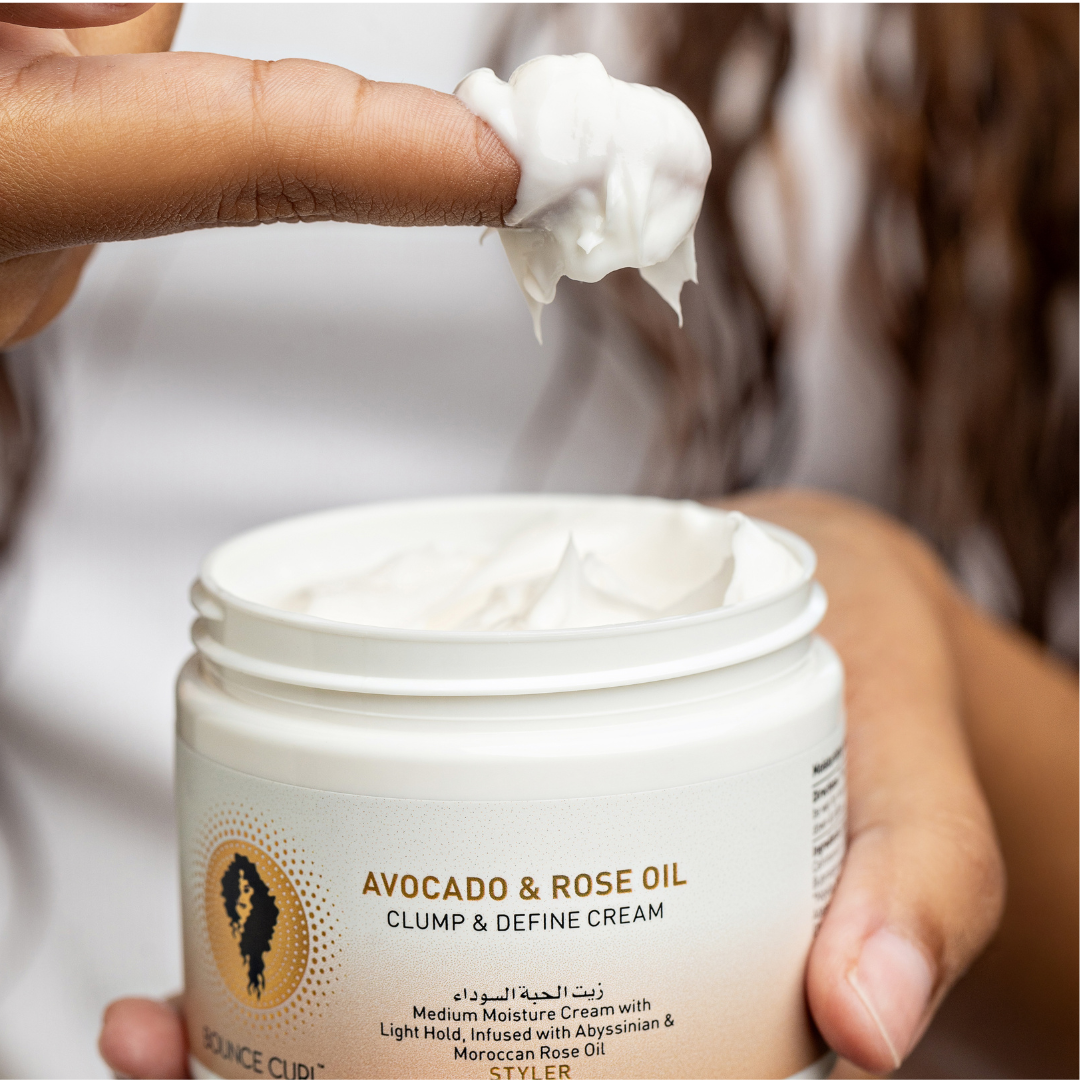
- Learning to refresh curly hair between washes is essential for maintaining definition and minimizing frizz. Using minimal, targeted product with gentle application and proper drying techniques helps revive curls quickly without buildup. Assessing your hair’s condition before refreshing ensures you select the appropriate method, whether dry or hydrated, for optimal results.
Your curls looked perfect on wash day. Now it’s day two or three, and they’re flat, frizzy, or just missing that definition you worked so hard for. Learning how to refresh curly hair between washes is one of the most game-changing skills you can develop for your curl care routine. The good news: you do not need to start over. With the right tools, the right read on your hair’s condition, and a light touch, you can revive your curls in minutes without the frizz.
Table of Contents
Key Takeaways
| Point | Details |
|---|---|
| Minimal product wins | Using less product prevents buildup and keeps curls bouncy rather than heavy. |
| Assess before you refresh | Check whether your curls need a dry refresh or a moisture boost before reaching for any product. |
| Gentle application matters | Emulsify product in your palms and glaze it on. Never rake it through your curls. |
| Drying technique is half the job | Air drying or diffusing on low heat locks in shape and prevents frizz after refreshing. |
| Overnight protection saves time | Protecting your curls at night makes the morning refresh faster and easier. |
Tools and products for an effective curl refresh
You cannot refresh curly hair well with the wrong tools. Before you start, gather everything you need so the process stays quick and controlled.
Hydration tools:
-
A spray bottle filled with water or a dedicated curl refresher spray
-
A lightweight leave-in conditioner for curls that need a moisture boost
-
A curl cream or light styling lotion to redefine shape without weighing curls down
Styling products:
Look for curl creams and gels that are lightweight and water-based. Heavy butters and oils are wash-day products, not refresh-day products. For gels specifically, water-soluble formulas reactivate well when lightly misted. A good starting point is a single product you know your hair loves. Layering too many products on day two leads to buildup fast.
Accessories:
-
A microfiber towel or an old cotton T-shirt for scrunching. Gentle scrunching with these materials encourages curl formation without adding frizz, unlike regular terrycloth towels.
-
Wide-tooth combs or curl brushes for detangling if needed before you begin
-
Clips or pins to lift roots for volume while drying
Pro Tip: Pre-mix a small amount of leave-in conditioner with water in your spray bottle. It distributes moisture more evenly than plain water and gives you a light product layer in one step.
The goal with your product selection is always the same: light, targeted, and minimal. Refreshing should be quick with minimal product to avoid buildup. Think of it as maintaining a style, not creating one from scratch.
How to assess your curls before refreshing
Not all second-day hair needs the same fix. Applying a water-heavy refresh to curls that just need a bit of product will leave you with frizz and frustration. Reading your hair first saves you time and product.
Here is what to look for:
-
Frizz with intact curl clumps. Your curls are still grouped together but the surface looks fuzzy. This usually means you need a dry refresh. Your product cast is still doing its job underneath. Adding too much water will disrupt it.
-
Separated or stringy curls. Individual strands have pulled apart from their clumps. A small amount of product glazed over the sections, without water, can smooth them back together.
-
Flat, stretched, or elongated curls. This is a sign of lost moisture. Your curls have dropped and lost their spring. You need a hydrated refresh with a light mist and possibly a small amount of leave-in conditioner.
-
Hard, crunchy texture throughout. If you used a gel and did not scrunch out the cast after drying, the crunch is still there. This needs no water. Just scrunch the hair gently with dry hands or a small amount of oil on your palms.
-
Buildup or heaviness. If your hair feels coated, greasy, or generally weighed down, no refresh technique will fix it. That is a wash day situation.
Understanding your hair’s actual condition before you do anything is what separates a good refresh from one that makes things worse. The right refresh type depends entirely on what your curls are actually telling you.
Step-by-step refresh techniques for curly hair
There are two main methods for refreshing curls. Which one you use depends on what you found in the assessment above.
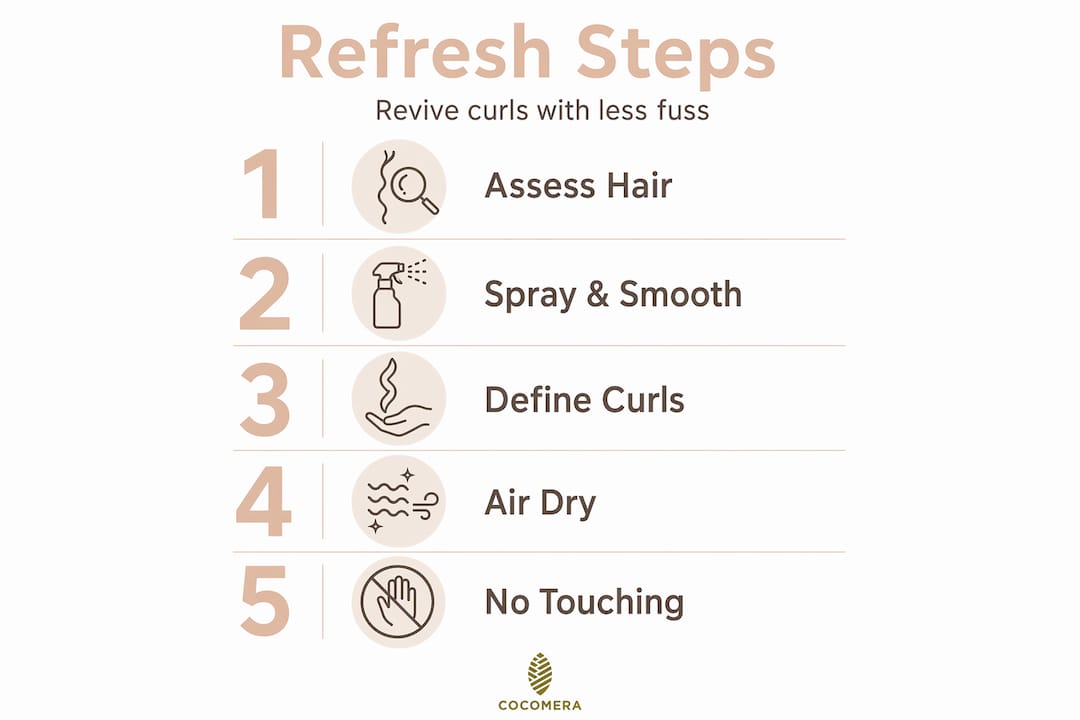
The dry refresh method
This method works best when curls still have their shape but the surface looks frizzy or a few clumps have separated. It is fast and preserves the existing product in your hair.
-
Start with completely dry hair. Do not mist anything yet.
-
Take a pea-sized amount of your chosen styling product, such as a curl cream or light gel. Emulsify it in your palms by rubbing your hands together until it is warm and evenly spread.
-
Lightly glaze your palms over the frizzy or separated sections only. Do not touch the sections that still look defined.
-
Use your fingers to gently re-clump any separated strands by pressing them together from underneath.
-
Leave the hair alone. Do not scrunch aggressively, and do not add heat.
The dry refresh approach is often faster and more effective for day two or three curls than re-wetting the whole head. It keeps your existing product cast intact and only addresses problem areas.
The hydrated refresh method
This method is for curls that have lost their spring, feel dry, or look stretched out.
-
Fill your spray bottle with water, a curl refresher spray, or your water-and-leave-in mix. Mist your hair section by section. The goal is lightly damp, not soaking. Over-wetting your curls disrupts the product cast and increases frizz.
-
Once a section is damp, apply a very small amount of leave-in conditioner or curl cream to your palms. Glaze it over the section. Do not rake it from root to tip.
-
Scrunch the section upward gently to encourage the curl pattern to reactivate. Work from the ends up toward the root.
-
For curls that need more definition, use your fingers to coil individual strands around a finger and release. This brings back shape without disturbing surrounding clumps.
-
Repeat section by section until you have covered all the areas that needed attention.
Pro Tip: Section your hair with clips before you start so you can work methodically. Trying to refresh curls all at once makes it easy to over-saturate some areas while missing others entirely.
Drying and finishing your refreshed curls
How you dry your curls after refreshing matters just as much as how you applied the product. Rushing this step or touching your hair too soon causes frizz even when the application was perfect.
-
Air drying is the most frizz-friendly option. Once you have finished your refresh, simply let your hair fall into its natural position and leave it completely alone. Touching, flipping, or pushing your curls around while they are damp breaks up the clumps and creates frizz.
-
Diffusing is the right call when you need to speed things up. Using a diffuser on low heat and low speed enhances curl definition and adds volume at the root without causing frizz. Cup sections of your hair in the diffuser bowl and hold it still rather than moving it around constantly.
-
Root clips or pins placed at the root while drying give flat roots a lift. Remove them only after the hair is fully dry.
-
Scrunching out the cast. If you used a gel and your curls feel hard after drying, gently scrunch them in an upward motion with your hands or with a microfiber towel. This breaks the film left by the gel and releases soft, defined curls underneath.
The rule that applies to all methods: do not touch your hair until it is at least 80 percent dry. Patience here is what gives you definition rather than frizz.
Common mistakes when refreshing curly hair
Even with the right products and techniques, small errors can undo everything. These are the ones that show up most often.
-
Over-wetting. Soaking your hair during a refresh washes out the styling products still working in your hair. The goal is always lightly damp. Too much water or product causes curls to look heavy or greasy and increases frizz risk.
-
Using too much product. Refreshing is not a new styling session. One small amount of one product is almost always enough. Layering multiple products on top of existing product leads to buildup and limpness.
-
Raking product through curls. Dragging product from root to tip pulls curl clumps apart and disrupts the natural pattern your hair formed on wash day. Always apply with a glazing motion or scrunch from underneath.
-
Touching hair while it dries. This is one of the most common mistakes. Every touch while your hair is still damp separates curl clumps and invites frizz.
-
Skipping the hair assessment. Applying a hydrated refresh when your hair needed a dry refresh, or vice versa, makes things worse. Always take 30 seconds to read your hair before you start.
“Refreshing curls is about subtraction, not addition. The less you do, the more your curls thank you for it.”
What I have learned about refreshing curls the right way
I have watched so many people with genuinely beautiful curl patterns wrestle with second-day hair because they were treating the refresh like a second wash day. Reaching for more product, more water, more manipulation. And the result every time was more frizz, not less.
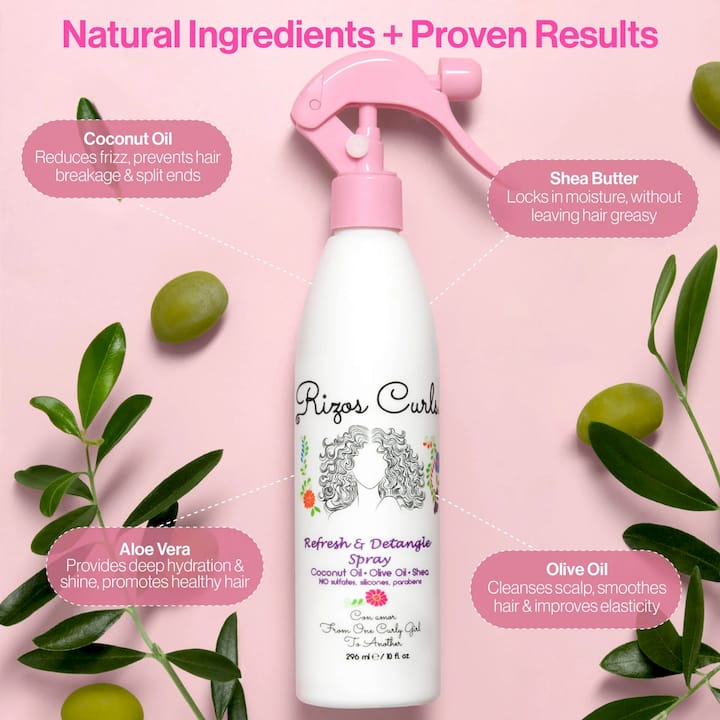
What I have come to believe, from years of working with textured hair and curating products for every curl type at Cocomera, is that the best refreshes are almost boring. A little mist. A pea-sized amount of product. Hands off while it dries. That is genuinely it for most people.
The real work happens earlier. It comes from building a solid curly hair routine on wash day, protecting your curls overnight (a silk pillowcase makes a bigger difference than most people expect), and then trusting that your curls do not need to be rebuilt every morning. They just need a little encouragement.
The other thing I would push back on is the idea that refreshing curly hair is complicated. Curly hair is not difficult. It requires specific hydration, structure, and the right products for your curl type. Once you have those in place, the refresh almost handles itself.
Stop fighting your curls and start listening to them. They usually know what they need.
— Cocomera
Find the right products for your curl refresh at Cocomera
Getting your refresh routine right starts with having products your hair actually responds to.

At Cocomera, every product in the curl styling collection has been curated specifically for wavy, curly, coily, and afro hair types. No guessing, no sorting through products designed for straight hair. Whether you need a lightweight curl cream for a gentle hydrated refresh or a hold gel that reactivates beautifully with a light mist, you will find it here. Cocomera also carries the tools and accessories that make the process easier, from microfiber towels to curl-friendly brushes and combs. Good products combined with the right technique make all the difference. Explore the full collection and build a refresh routine that actually works for your specific curls.
FAQ
What is the easiest way to refresh curly hair?
The easiest refresh is a dry method: take a pea-sized amount of product, emulsify it in your palms, and lightly glaze it over frizzy sections without adding any water. This preserves your existing curl pattern and takes under five minutes.
How often should you refresh curly hair between washes?
Most people with curly hair wash two to three times per week, which means refreshing on the days in between. How often you refresh depends on your curl type, product use, and how well you protect your curls overnight.
Why do my curls get frizzy when I try to refresh them?
Frizz during a refresh is almost always caused by too much water, too much product, or touching the hair while it is still damp. Aim for lightly damp rather than soaking, and keep your hands out of your hair until it is dry.
Can I refresh curly hair overnight?
You cannot fully refresh curls while you sleep, but protecting them overnight makes the morning refresh much faster. Sleep on a silk or satin surface to reduce friction, and use a pineapple (a loose high ponytail) or a silk bonnet to preserve your curl clumps until morning.
What products work best for refreshing curls?
Lightweight, water-based products work best for refreshing. A curl refresher spray, a light leave-in conditioner, or a small amount of the same gel or curl cream you used on wash day are all solid options. Avoid heavy butters and oils on refresh days.