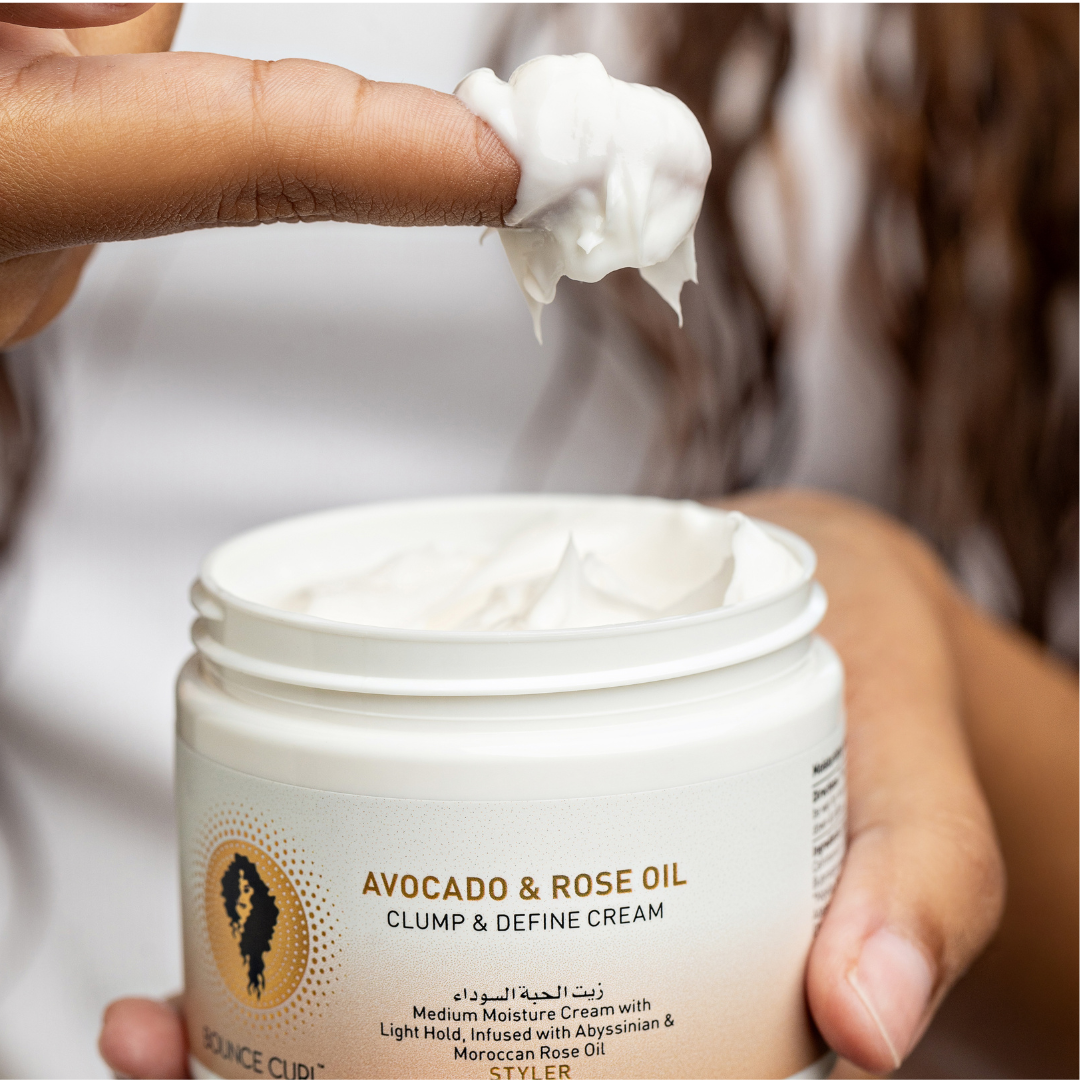
Water has a bad reputation in the curly hair world. Too many women with type 2, 3, and 4 curls have been told that water causes frizz, weakens strands, or ruins their style. The truth is the opposite. Water is essential for curly hair because it provides hydration and enables the elasticity that makes your curls spring, clump, and shine. Once you understand how water actually interacts with your specific curl pattern, European climate, and product choices, everything changes. This guide breaks down the real science and gives you practical tools to use water as the powerful styling ally it was always meant to be.
Table of Contents
- Why water is the foundation for every curl
- How curly hair interacts with water: The science for types 2, 3, and 4
- The truth about water, strength, and the myth of hygral fatigue
- European climate challenges: Humidity, hard water, and balancing moisture
- Practical curl care: Building your water routine for healthy, defined curls
- Why water wisdom beats product obsession for European curls
- Empower your curls with the right routines and products
- Frequently asked questions
Key Takeaways
| Point | Details |
|---|---|
| Water enables curl health | Water is the foundation for elasticity, definition, and manageability in curly and afro hair types. |
| Porosity guides your routine | Understanding your hair’s porosity and environmental factors like humidity or hard water helps tailor your hydration and sealing routine. |
| Seal for lasting moisture | Sealing in water with oils or creams is essential to keep curls hydrated and frizz-free. |
| Technique matters most | How you apply and lock in water impacts curl quality far more than just using new products. |
Why water is the foundation for every curl
Water is not your enemy. It is the most important ingredient in your entire curl routine, and no product can replace it. When water enters the hair shaft, it temporarily breaks hydrogen bonds inside the strand. This is a good thing. Those broken bonds make your hair flexible, pliable, and ready to take shape. Your curls can clump together, stretch without snapping, and spring back into their natural pattern.
Without enough water, your curls become brittle and rigid. They refuse to clump, lose their definition, and feel rough to the touch. You might reach for more product to fix this, but product alone cannot solve a hydration problem. Understanding why moisture matters for curls is step one before anything else in your routine.
Here is what water actually does for your curls:
- Enables stretch and elasticity: Wet hair can stretch 30 to 50% before breaking, reshaping curls via surface tension and making them softer for styling.
- Supports clumping: Water helps strands align and stick together in their natural curl pattern.
- Improves manageability: Hydrated hair is far easier to detangle and style than dry hair.
- Activates products: Most curl creams, gels, and leave-ins need water present to work correctly.
“Hydrated curls are living curls. Dry curls are just waiting to break.”
The myth that water is damaging usually comes from confusing what water does with what happens after the water leaves. It is the drying process, the heat, or the lack of sealing that causes issues, not the water itself. Following solid curly hair care tips means understanding this difference from the start.
Every single curl type, from wavy 2a to tightly coiled 4c, depends on water as its base. This is not negotiable. It is biology.
How curly hair interacts with water: The science for types 2, 3, and 4
Understanding why your hair needs water leads us to how your specific curls handle it. Not all curl types absorb and release water the same way. The structure of your strand, its curvature, its porosity, and its lipid content all change how water moves in and out.
Research confirms that curly hair regains roughly 25% moisture at 95% relative humidity compared to about 23% for straighter hair types. That small difference has real consequences. Curly and afro hair types are both thirstier and more reactive to environmental moisture. In a humid European city like Amsterdam or Stockholm, your type 4 curls will respond to the air differently than a type 2 would in the same room.
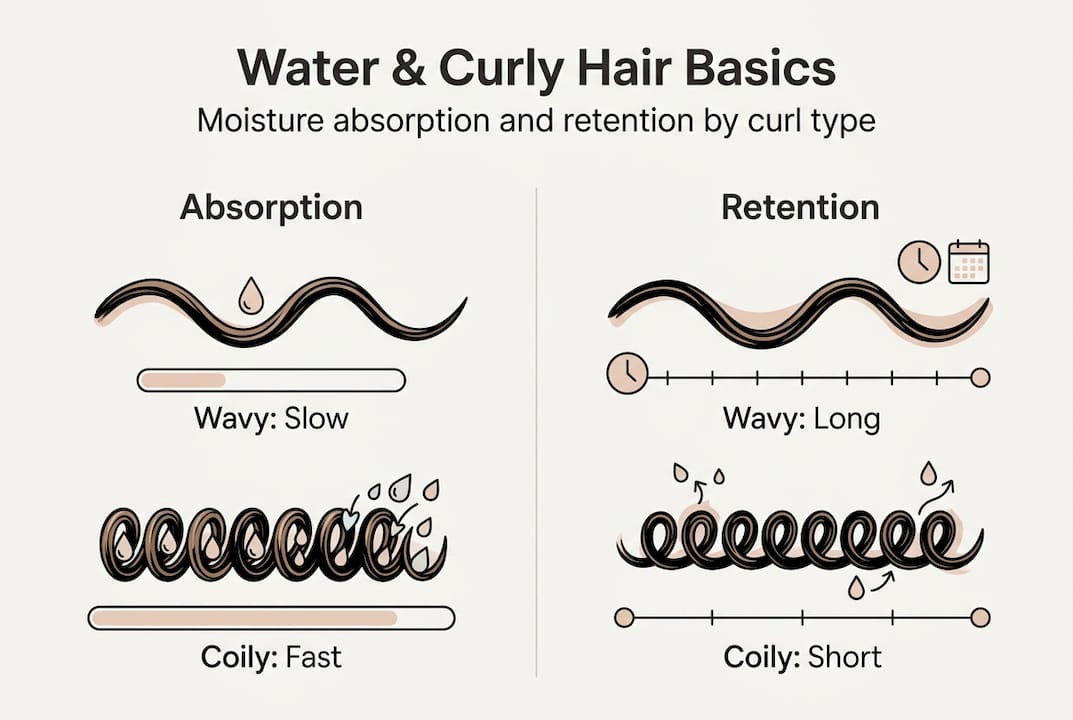
| Curl type | Water absorption speed | Moisture loss rate | Porosity tendency |
|---|---|---|---|
| Type 2 (wavy) | Moderate | Moderate | Often low to normal |
| Type 3 (curly) | Fast | Fast | Normal to high |
| Type 4 (coily/afro) | Very fast | Very fast | Often high |
Higher curl types have more bends and twists along the strand. Those curves are places where the cuticle layer lifts slightly, which is why type 4 hair tends toward higher porosity. High porosity hair drinks up water quickly but loses it just as fast. Low porosity hair resists water at first but holds it longer once absorbed.
What does this mean for your routine?
- Type 2 hair often needs lighter hydration layers and less sealing.
- Type 3 hair benefits from water-rich leave-ins followed by a medium sealant.
- Type 4 hair needs generous water application, deep conditioning, and strong sealants.
Matching your routine to your curl structure is why choosing the right ingredients for textured hair matters so much. A perfect coily hair wash day looks very different from a wavy wash day, and it should.
“Your curl type is not just a shape. It is a water management system.”
The truth about water, strength, and the myth of hygral fatigue
So, with each curl type handling water differently, what really happens to hair’s strength and health when it gets wet? This is where a lot of fear around water comes from, and most of it is misplaced.
When hair is wet, it is temporarily weaker. This is true. Water breaks hydrogen bonds and the strand becomes more pliable. But wet hair detangles more safely because the elasticity increases, meaning strands can flex around knots instead of snapping. The key word is technique.
You may have heard the term hygral fatigue, the idea that repeatedly wetting your hair weakens it permanently. Science does not back this up. For healthy hair, regular wetting causes no lasting structural damage. The concern is largely a myth.
Here is how to detangle and style wet curls without causing real damage:
- Saturate thoroughly: Make sure hair is fully wet, not just damp. Partially wet hair has uneven tension.
- Apply a slippery product first: A conditioner or detangling leave-in reduces friction dramatically.
- Work in sections: Smaller sections mean less pulling and more control.
- Use your fingers first: Finger detangling finds knots gently before a wide-tooth comb ever touches the strand.
- Start from the ends: Always work from tips to roots to avoid compacting knots upward.
Pro Tip: Detangle in the shower while conditioner is still in your hair. The slip from the conditioner combined with water makes the process faster and far less damaging than detangling dry.
Using the right oils for curly hair before or after detangling adds another layer of protection and helps seal the moisture you just worked to get in.
European climate challenges: Humidity, hard water, and balancing moisture
Armed with what water really does to your hair, let’s address how to handle European climate pitfalls. Living in Europe with curly or afro hair means dealing with two very specific water-related problems: atmospheric humidity and mineral-heavy tap water.
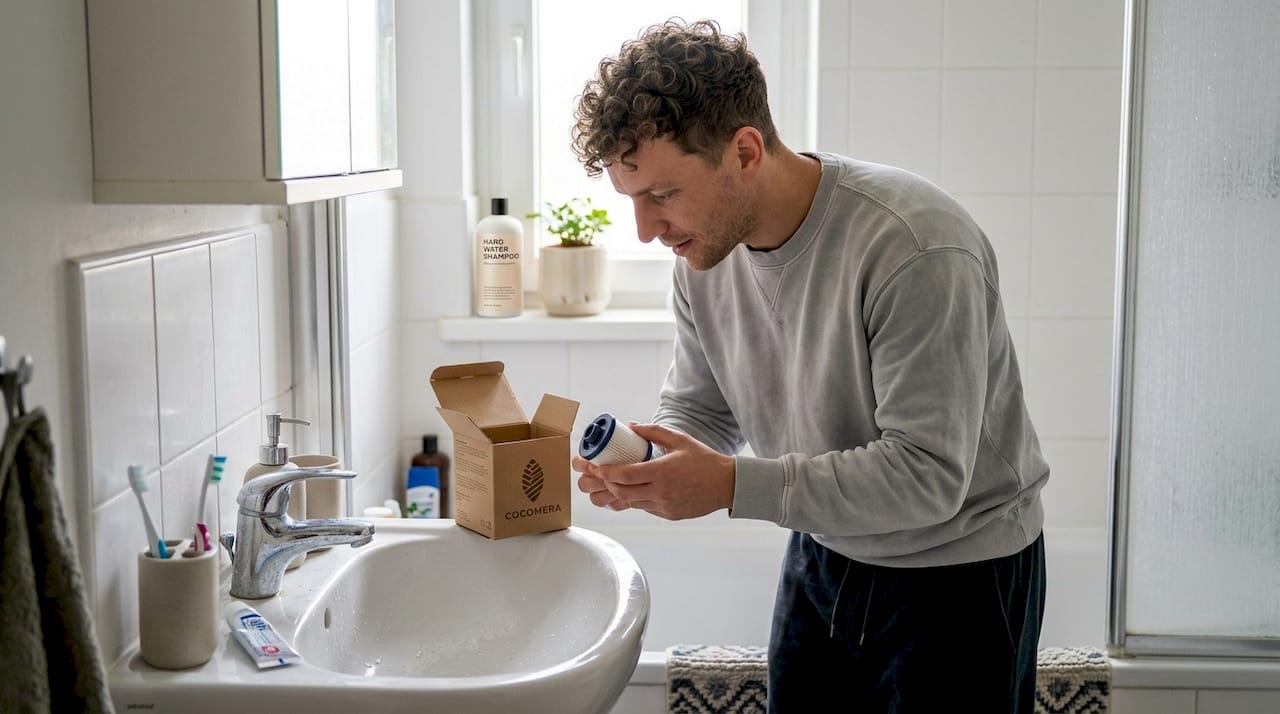
Humidity is a double-edged situation. Your curls love moisture in the air, but if your hair cuticle is open and unsealed, it absorbs ambient humidity unevenly. The result is frizz. High porosity hair absorbs and loses moisture quickly, which makes it especially vulnerable to humidity-driven frizz in European climates. The fix is not to avoid humidity but to seal your hair properly so it absorbs moisture on your terms, not the weather’s.
Hard water is a quieter problem but just as real. Much of Northern and Central Europe has hard tap water, meaning it contains elevated levels of calcium and magnesium. These minerals bind to the hair shaft and build up over time, leaving curls feeling dull, rough, and coated. No amount of conditioner fully compensates for mineral buildup.
Here is how to tackle both challenges:
- Seal after every wash: Use a cream or oil as your final step to lock water inside the strand.
- Clarify monthly: A clarifying shampoo removes mineral and product buildup and resets your curls.
- Use a shower filter: These are widely available in Europe and reduce hard water minerals at the source.
- Adjust by porosity: High porosity curls need heavier sealants like butters or thick creams. Low porosity curls do better with lighter oils applied to damp hair.
Pro Tip: If your curls suddenly feel rough and lifeless despite your usual routine, hard water buildup is often the culprit. A clarifying wash followed by a deep conditioning treatment usually brings them back.
Exploring the right hair moisturizers for curly hair and understanding products for European curls will help you build a climate-smart routine that actually holds.
Practical curl care: Building your water routine for healthy, defined curls
With European challenges in mind, here is how to use water intentionally for your healthiest, best-defined curls. Thinking of water as a styling tool rather than just something that gets your hair wet changes everything about how you approach wash day and daily maintenance.
Follow these steps for a water-smart routine:
- Start with a water-based cleanser: Shampoo or co-wash with enough water flow to fully saturate every strand before you add product.
- Deep condition on wet hair: Apply your conditioner to soaking wet hair so it can penetrate properly. Dry or damp hair will not absorb it the same way.
- Apply leave-in while dripping wet: This is the most important step most people skip. Wet hair carries the leave-in deeper and distributes it more evenly.
- Layer your stylers on wet hair: Curl creams and gels activate on wet hair. Applying them to hair that has started drying gives you less definition and more frizz.
- Seal with an oil or butter: Your final layer traps all that water and product inside the strand. This is what keeps your curls defined and moisturized for days.
- Refresh with water between wash days: A spray bottle with water and a little leave-in is enough to reactivate your curls without starting over.
Pro Tip: Avoid touching your curls while they dry. Every touch disrupts the curl clumps you just formed. Let them set completely before you scrunch out any product cast.
Exploring single ingredient haircare options, like pure aloe vera or glycerin, can also support water retention between wash days without overloading your hair with complex formulas.
Why water wisdom beats product obsession for European curls
Here is an uncomfortable truth that the curly hair community rarely talks about directly: most people’s curl problems are not product problems. They are water problems.
At Cocomera, we see it constantly. Someone buys five new products hoping to finally get defined, frizz-free curls. Their routine improves slightly. Then they buy five more. The real change only comes when they fix how they use water, when they apply it, how much, and how they seal it in afterward. The products matter, but they only work when the water foundation is solid.
Europe adds a layer of complexity because the climate varies so widely from Lisbon to Helsinki. But the principle holds everywhere. Water is not the variable most people think to adjust. They adjust products instead, spending time and money chasing a fix that starts at the showerhead.
Mastering your water routine gives you consistency. Your curls become predictable in the best way. Investing in healthy curl routines built around proper water application will outperform any trending product, every time.
Empower your curls with the right routines and products
Ready to bring all these water-smart strategies to life? You now understand what water does to your curls, why your specific curl type responds the way it does, and how European climate affects everything. The next step is pairing that knowledge with the right tools.
At Cocomera, we have curated products specifically for wavy, curly, coily, and afro hair in European conditions. Whether you need curly hair styling essentials to lock in your curl pattern, curl sealing oils to protect your moisture, or a shampoo for strong curls to cleanse without stripping, we have options matched to your curl type and porosity. Your best curls are not about spending more. They are about using what works, starting with water.
Frequently asked questions
Why does my curly hair feel dry even after adding water?
Water hydrates, but if it is not sealed in with oils or creams, moisture escapes quickly, especially in dry European environments. Always follow water application with a sealant.
Does hard water damage my curls?
Hard water minerals leave residue on the hair shaft, making curls feel rough and less defined over time. Regular clarifying washes remove that buildup and restore curl bounce.
How often should I wet my curly hair?
Wetting your curls every two to three days is a solid starting point, but your ideal wetting frequency depends on your hair’s porosity, your local climate, and how your curls respond between sessions.
What’s the right way to seal moisture after adding water?
After applying water, layer an oil or curl cream designed for textured hair to lock in hydration. For type 4 hair especially, lipid sealing after wetting is essential for preventing rapid moisture loss.